Consumer units & fuse boards · SW3 & SW10
Consumer unit replacement in Chelsea SW3 and SW10
Replacing your fuse box is a practical improvement that needs to fit around the home it serves. Before the power goes off, you should know what is being changed, how the household will be affected and what happens if the existing wiring needs attention.
PEP provides consumer unit replacement in Chelsea SW3 and SW10, from standalone fuse board upgrades to replacements planned alongside other electrical work. We bring the assessment, installation and handover into one clearly defined scope, so you can make arrangements with a realistic understanding of the job.
Assessment · Replacement · Testing & certification
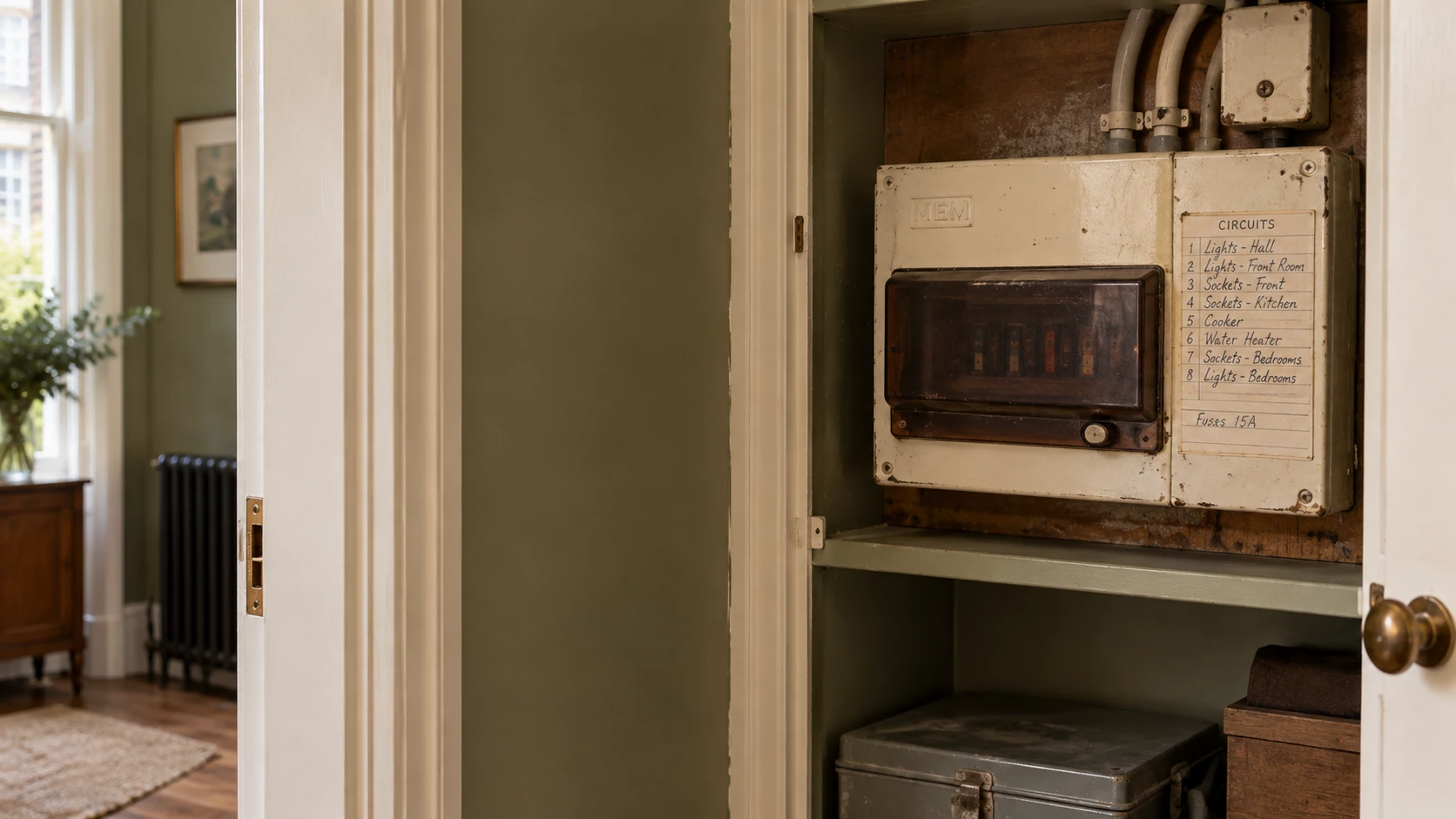
Existing installation
assessed before replacement
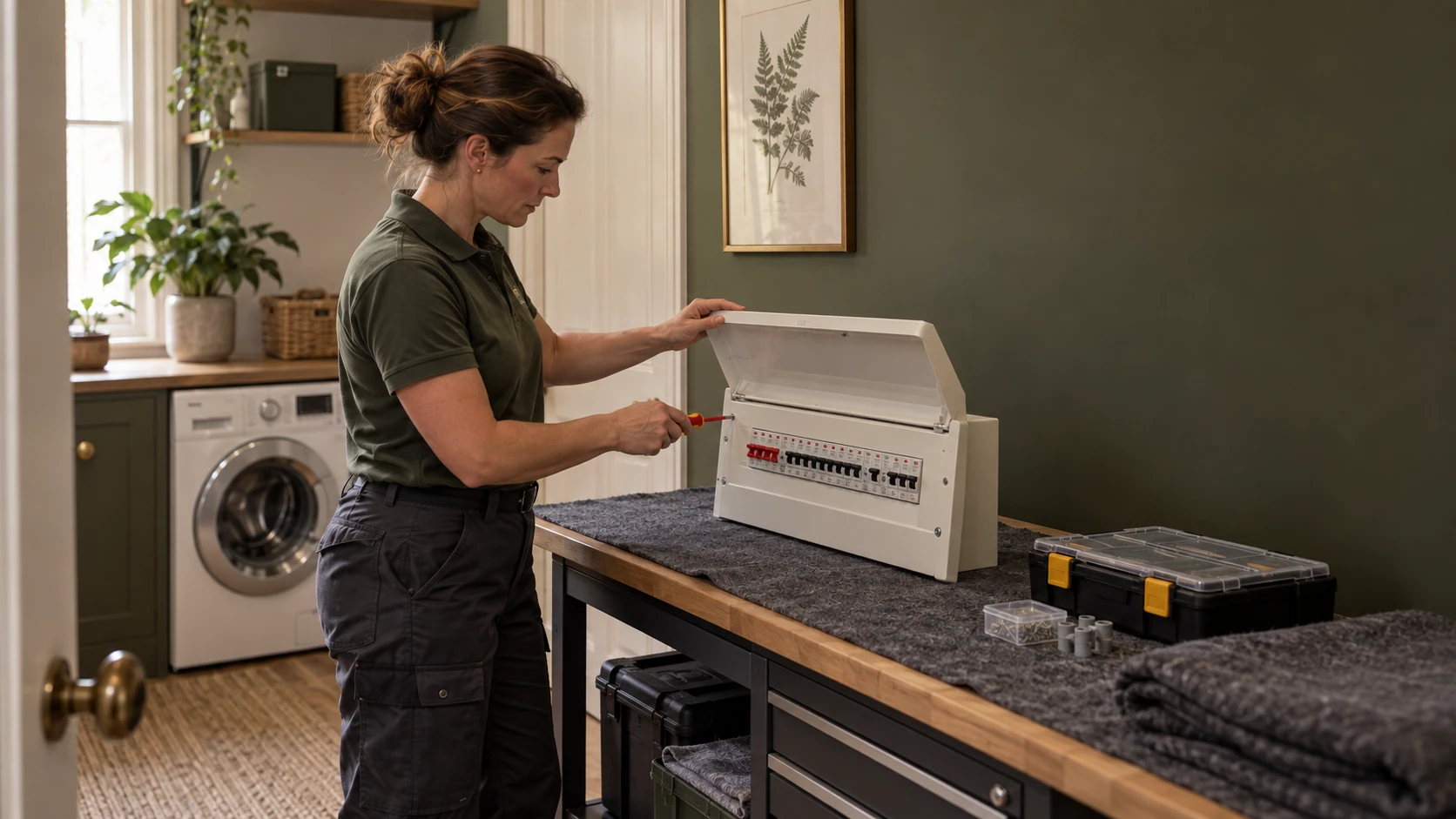
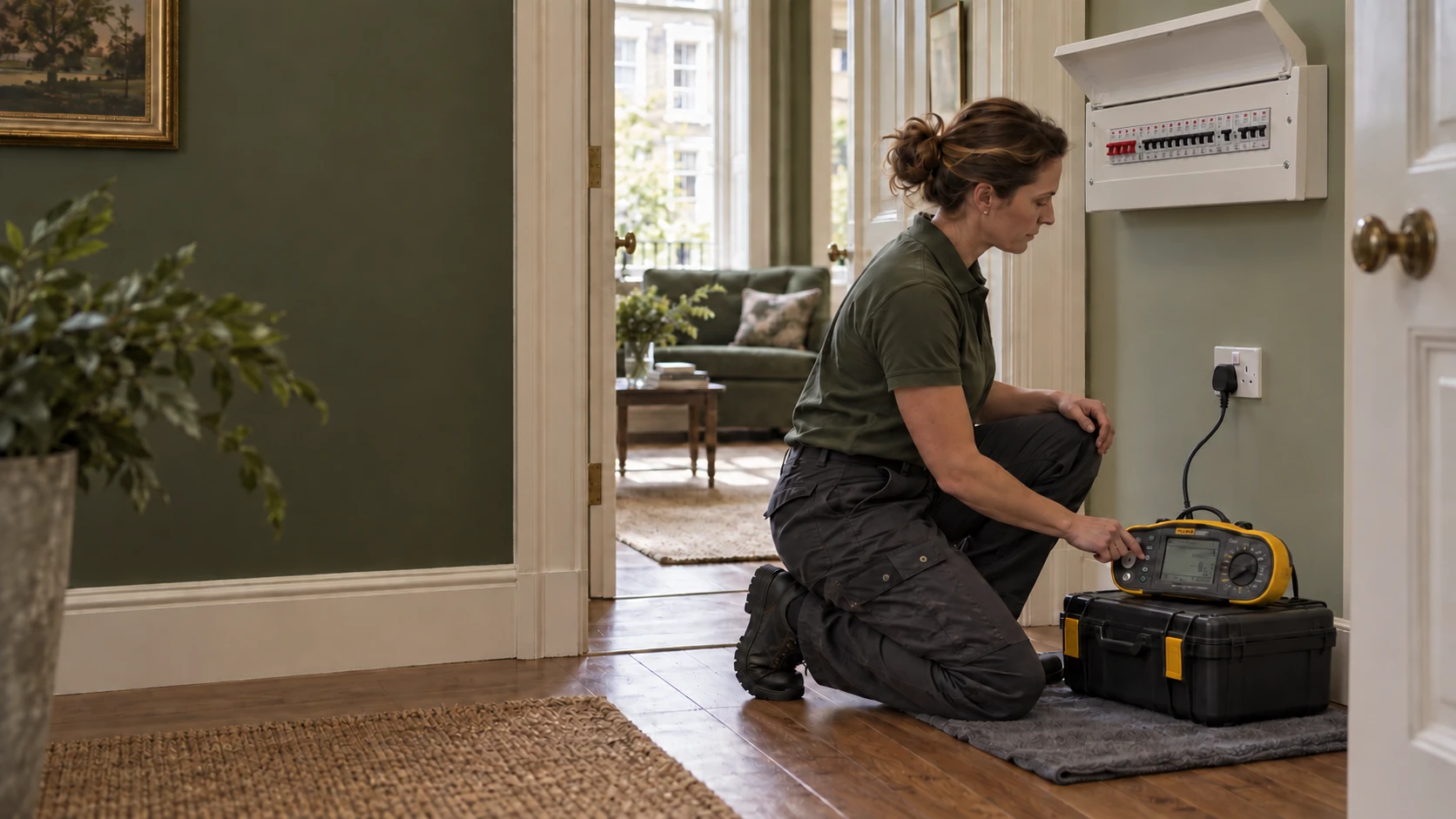
Installation, testing
and documentation

What has prompted the replacement?
An inspection report may have raised concerns about the protective equipment. You might be taking responsibility for a property with incomplete electrical records, or planning changes that the present board cannot suitably accommodate.
Tell us what led you to enquire. An old-fashioned appearance or a plastic enclosure does not, on its own, mean a board must be replaced. Equally, persistent tripping deserves investigation rather than an assumption that a new consumer unit will cure it.
Understanding the reason for the work helps establish whether you need a replacement, fault investigation or a more limited alteration.
A quotation for your installation
Consumer unit replacement cost in Chelsea
The price depends on the installation being handed back to you, including the circuits, protection, testing and associated work—not simply the enclosure being fitted.
For your fuse box replacement quotation, we consider:
- The number of circuits and the protective arrangement required.
- Relevant wiring, earthing and bonding, including identified repairs.
- Whether the board stays in position or needs moving.
- Access, supply-isolation arrangements and any involvement from other parties.
- Inspection, testing, circuit identification and completion documents.
Any additional circuits or work to surrounding finishes should be distinguished from the replacement itself. Where a cost depends on further investigation, that needs to be visible in the proposal.
You do not need a wider renovation budget to contact PEP. A standalone consumer unit upgrade can be assessed and quoted as its own project.

Agree the work before putting a date in the diary
The appointment should follow a decision about the installation, not be the moment when its requirements are first considered.
For a planned change, an Electrical Installation Condition Report (EICR) is strongly recommended beforehand. Share any existing report so we can discuss its findings and the further assessment needed; paperwork alone cannot establish the installation's present condition.
Suitable existing circuits can remain, subject to assessment and testing. If substantial cable replacement is needed, we explain that separately through our house rewiring service in Chelsea.
The agreed proposal should identify the board, protective devices, associated repairs and any exclusions. It should also make clear who can approve a change if further findings affect the work.
Houses · flats · managed buildings
For flats, organise access beyond the front door
Replacing a consumer unit inside a Chelsea flat may involve arrangements elsewhere in the building. A locked meter cupboard, a separate supply position or contractor-access rules can affect when the work can proceed.
Where relevant, involve the managing agent or freeholder early. Confirm working hours, the person providing access and any building-specific permissions. These requirements depend on the property and proposed work; they are not identical for every flat.
Your flat's replacement does not automatically include communal lighting, shared electrical equipment or changes to another resident's supply. Establishing that boundary helps everyone understand their responsibilities.
If a tenant, caretaker or agent will meet the electrician, nominate a separate decision-maker who can be reached during the appointment.

A handover that makes sense after we leave
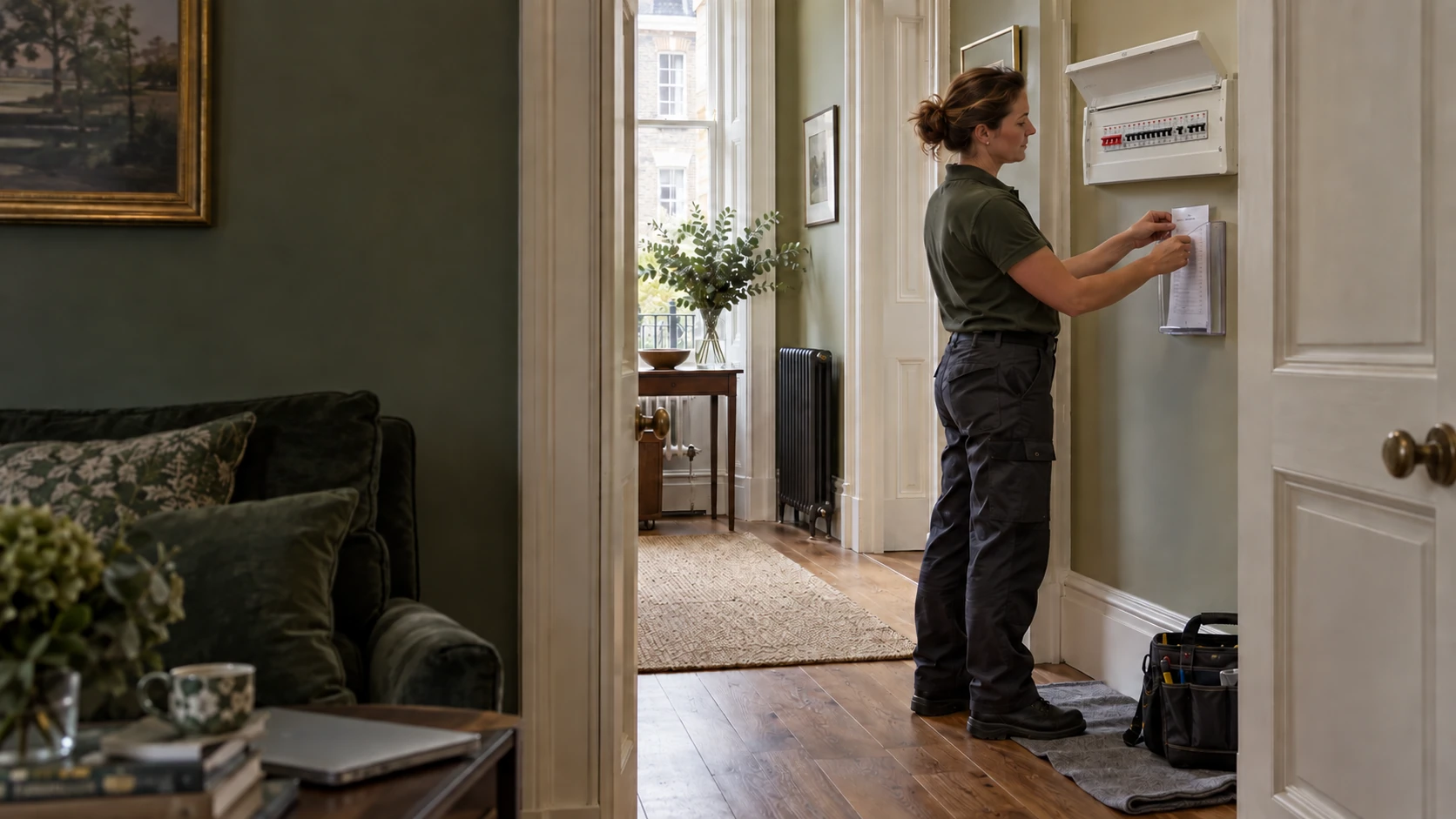
The finished board should be accompanied by useful information: circuit descriptions, an explanation of its controls and records of the completed work.
An Electrical Installation Certificate (EIC), including the relevant inspection and test schedules, documents the replacement and its defined scope. It is different from an EICR, which reports on the condition of an existing installation. Replacing the board does not automatically resolve every observation in an earlier report.
Domestic consumer unit replacement in England also requires Building Regulations notification. This is separate from the electrical certificate, and the arrangements should be clear when the work is agreed.
Let us know who needs the handover and paperwork, particularly if the person arranging the work is not the resident. Keep the records together for future maintenance, alterations or property enquiries.
Agree the access and the interruption
A power interruption the household can prepare for
An occupied home cannot be treated like an empty building site. Video meetings, heating controls, refrigeration and security equipment can all be affected when the electricity is off.
We discuss the expected outage after assessing the job. Tell us early about equipment with essential power requirements, particularly anything supporting a person's health or care. Do not assume a temporary supply will be available; any special arrangements need to be settled before the appointment.
If you work from home, plan for your router, monitors and charging points to be unavailable. Access may also be needed to sockets, lights and other electrical points around the property for testing, not just the cupboard containing the board.
The programme allows for installation and verification. Findings on an existing circuit can change the expected finish, so a fixed restoration time should not be assumed in advance.

Protection that suits the circuits you use
The proposed arrangement should be understandable without needing to decipher a product catalogue.
RCD protection helps reduce electric-shock risk by detecting certain leakage currents. An RCBO combines residual-current protection with protection against overloads and short circuits for an individual circuit. Using individual RCBOs can reduce the spread of disruption when a circuit develops a fault, although it cannot guarantee uninterrupted power elsewhere.
A surge protection device, or SPD, helps protect equipment against transient overvoltages. It has a different role from the devices responding to overloads or earth-leakage faults.
PEP specifies the replacement against the installation's requirements and the applicable provisions of BS 7671. Mention planned appliances or alterations before the specification is settled.
Chelsea · SW3 & SW10 · neighbouring addresses
Consumer unit replacement across Chelsea SW3 and SW10
In SW3, PEP welcomes enquiries around Chelsea Green, Elystan Street and Sydney Street, along King's Road near Duke of York Square, and towards Royal Hospital Road. We also cover Old Chelsea around Old Church Street and Cheyne Walk.
In SW10, coverage includes Redcliffe Square, Redcliffe Gardens and The Boltons, together with World's End, the western stretch of King's Road and the Cremorne and Lots Road area. Send your full postcode so we can confirm arrangements for your address, including nearby properties around Chelsea Harbour.
For work beyond the board, see our electrical services in Chelsea. Our London consumer unit replacement page covers the wider service.
01Can I replace the fuse box without refurbishing the property?
Yes. You can enquire about the consumer unit on its own. We assess what the replacement involves and identify any associated electrical work, without assuming you want new lighting, a kitchen project or a whole-home renovation.
02What should I ask the building manager before booking?
Ask about contractor access, permitted working hours and how access to relevant shared areas is arranged. Send us any building requirements so these can be considered before confirming a date. The exact permissions depend on the work and the property.
03Does replacing my flat's board include the communal electrics?
Not unless that work has been separately assessed and agreed with the responsible party. The flat's consumer unit and the building's shared installation have different scopes. Access to a communal area does not mean its electrics are included in your quotation.
04Can I work from home during the appointment?
Do not plan on normal use of mains-powered equipment or Wi-Fi during the outage. We can discuss the expected programme, but if you need dependable power for meetings or other commitments, make alternative arrangements for that period.
05What happens if you discover another fault?
We explain the finding, its effect on the agreed work and the proposed next steps, including any additional cost. A circuit presenting danger cannot be returned to use merely to complete the original scope; safety takes priority while further work is agreed.
06Can I send an existing electrical report?
Yes. Include the complete report and schedules, where available, rather than only its summary page. This helps us understand the recommendations already made. We will still establish what assessment is needed for the proposed replacement.
07Can somebody else provide access on my behalf?
Please discuss this when booking. Distinguish between the person opening the property, the person authorised to approve work and the person receiving the handover. They may be different people, and having their details agreed helps avoid delays.
08Will the new certificate replace my EICR?
No. The EIC records the replacement work; an EICR has a separate inspection purpose. If a landlord, managing agent or another party has requested an EICR, do not assume the replacement certificate fulfils that request.
Talk to PEP
Discuss your Chelsea consumer unit replacement
Send PEP your full postcode, the reason for the proposed change and any existing inspection report. Photographs of the accessible board and surrounding area can help start the conversation—please do not remove any covers.
We will discuss the next assessment, the likely scope and what needs arranging before installation.