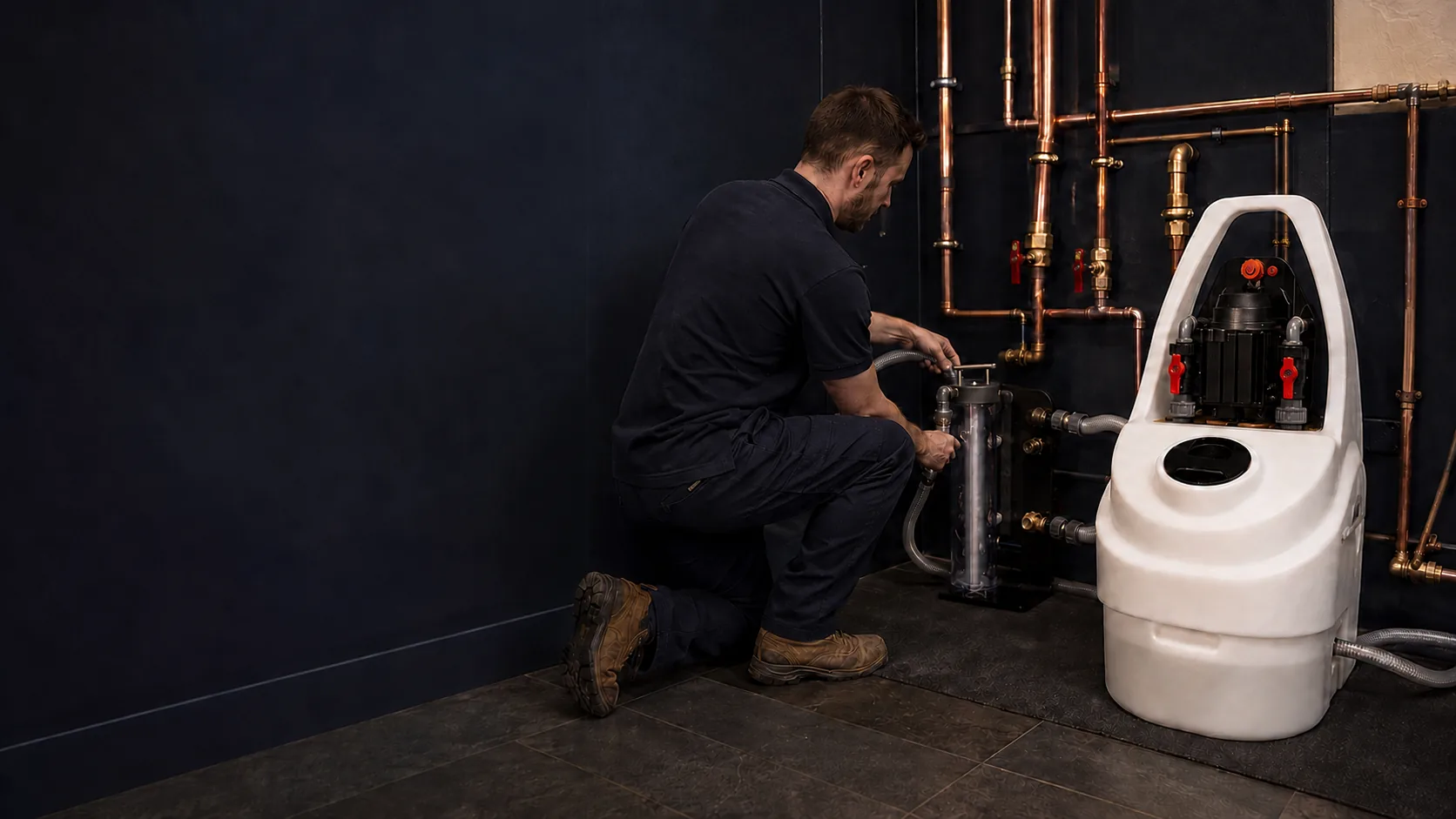
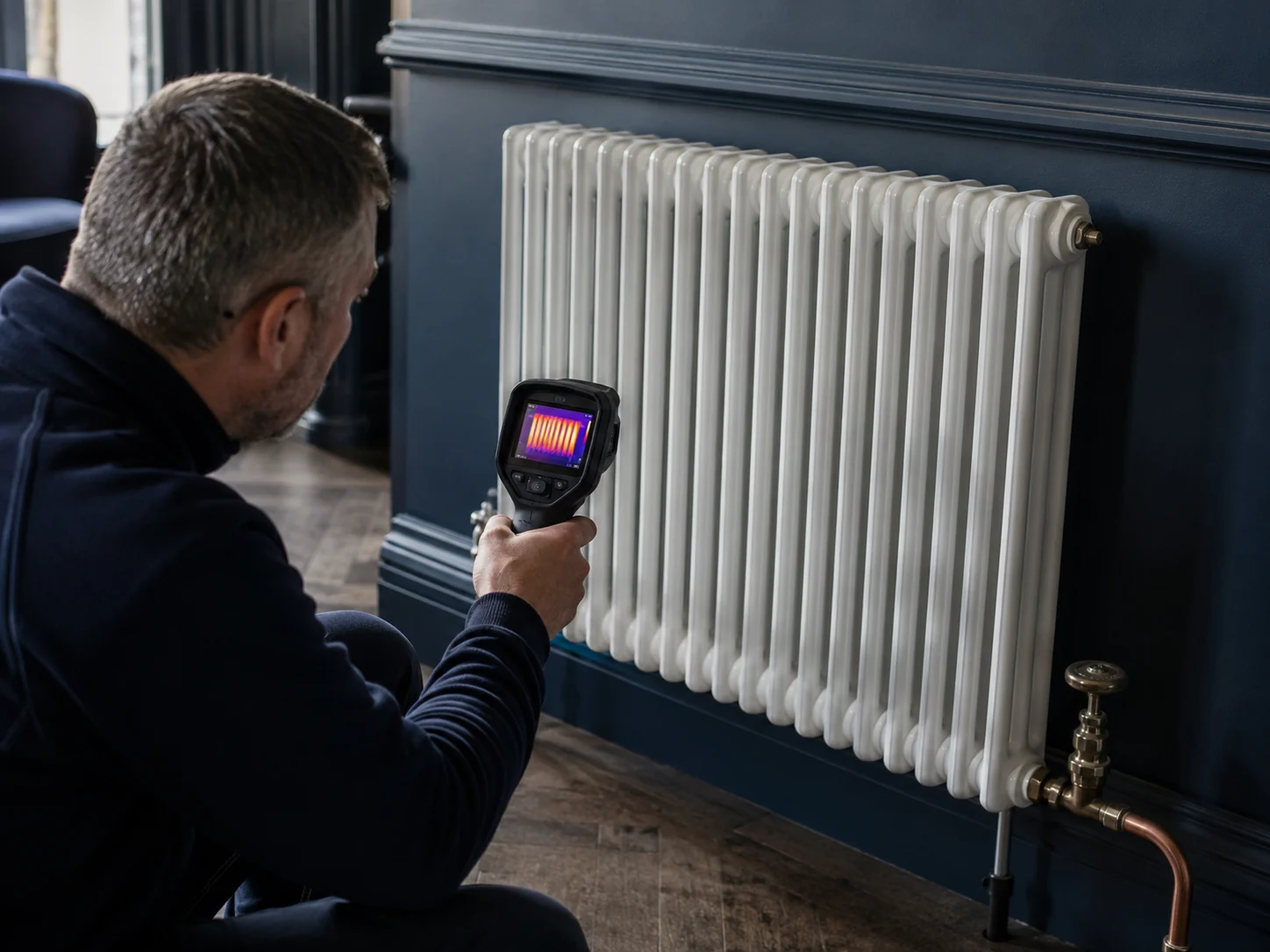
Radiators cold at the bottom
A common sign of magnetite and sludge collecting where circulation is weakest.
 Pure Energy ProjectElectrical · Heating · Plumbing07825 268 434
 Central heating water quality · London
PEP assesses the heating system first. When a Powerflush is the right solution, we use professional high-flow equipment, appropriate treatment chemicals and in-line magnetic filtration to clean each circuit, then rinse, protect and verify before we leave.
Clean is checked, not assumed.
01 · The warning signs
Contamination rarely announces itself with one definitive symptom. These are the patterns worth investigating before booking any work.
One symptom on its own does not mean you need a Powerflush. The first job is establishing the cause.
A common sign of magnetite and sludge collecting where circulation is weakest.
Some rooms warm quickly while others stay cool, even after bleeding and balancing.
Restricted flow and contaminated water can contribute to kettling, gurgling and pump noise.
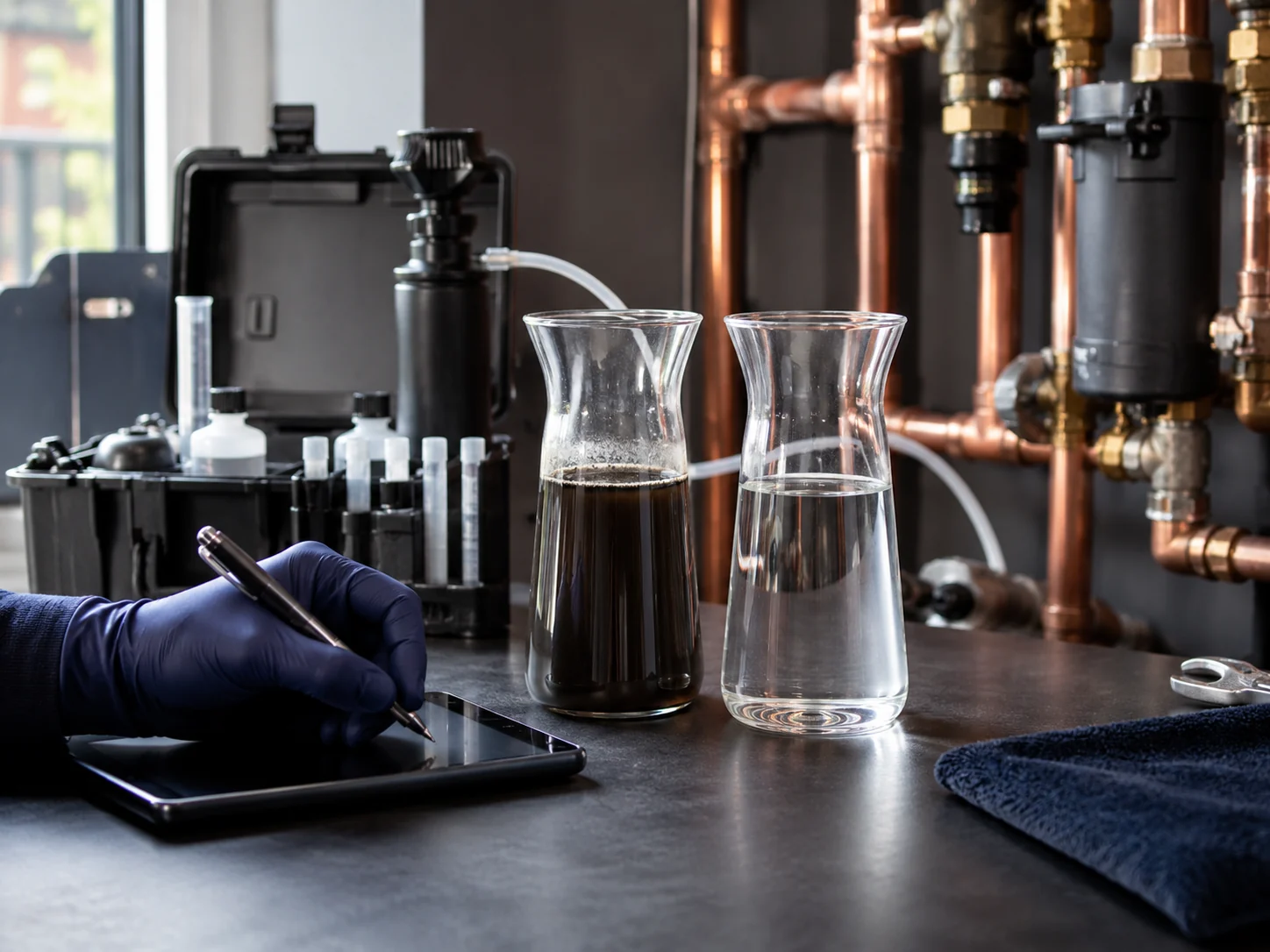
Black or heavily discoloured water can indicate corrosion products circulating in the system.
Repeated valve, pump or heat-exchanger issues may point to a water-quality problem upstream.
Cleaning a contaminated circuit helps prevent old debris entering a new appliance.
02 · Diagnosis before equipment
Cold rooms and noisy systems can also be caused by trapped air, poor balancing, a failed pump, stuck valves, control faults or restricted pipework. Cleaning the water will not repair those problems.
Read our practical guide to when a London heating system may need a Powerflush.
Compare the right treatmentBefore recommending a clean, we check:
A proportionate recommendation: Powerflush, a lighter chemical clean, repair or hydraulic balancing.
03 · The PEP process
The equipment matters, but the method matters more. We work circuit by circuit and verify the system before leaving.
We inspect the system, discuss symptoms and confirm whether circulation, controls or component faults need attention first.
Floors and work areas are covered, and vulnerable parts of the installation are identified before equipment is connected.
Professional high-flow equipment is connected at a suitable point, keeping the process controlled and contained.
Treatment chemicals and directional flow work through each circuit to mobilise sludge, scale and corrosion debris.
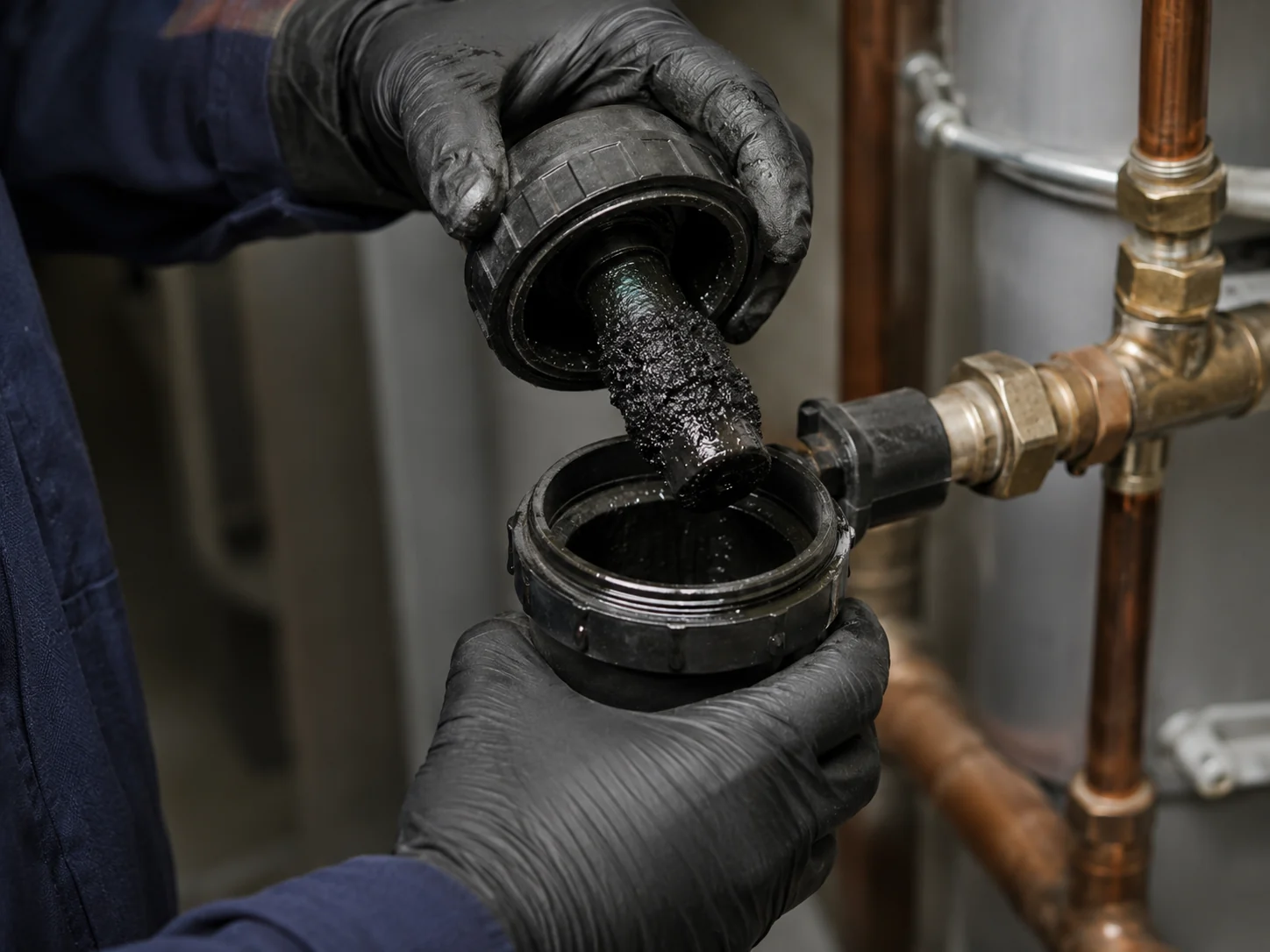
An in-line magnetic filter captures ferrous debris while each circuit is flushed until the discharge runs clear.
Fresh inhibitor is added, the system is recommissioned and final water and heating checks are completed.
04 · Evidence of completion
A Powerflush is not complete because the machine has run for a set number of hours. The system needs to be rinsed, protected and checked in operation.
Contaminated water and mobilised debris are rinsed from each circuit.
The magnetic filter shows what has been removed from circulation.
Fresh inhibitor is dosed into the system after cleaning.
Circulation, radiator heat-up and normal operation are checked.
05 · Choose the intervention
The visible symptom can look similar. The correct treatment depends on the cause and severity.
| Option | Best suited to | What it does | What it does not do |
|---|---|---|---|
| PowerflushDeep clean | Moderate to heavy sludge, restricted circulation and repeatedly contaminated systems. | Uses high flow, treatment chemistry and magnetic capture to clean individual circuits. | Repair failed parts or reverse existing corrosion. |
| Chemical clean | Lighter contamination where normal circulation is still available. | Circulates cleaner using the heating system's existing pump before rinsing and inhibiting. | Reliably shift severe blockages or compensate for weak flow. |
| Repair or balancing | Pump, valve, control, air-lock or hydraulic distribution faults. | Corrects the mechanical or system-setting problem at source. | Remove established sludge from contaminated water. |
Important limitation
In a severely weakened installation, compacted debris may be masking a pinhole or joint leak. Removing it can reveal an existing defect. We explain this risk before work begins.
06 · Suitability & limitations
Older does not automatically mean unsuitable. What matters is the condition, configuration and accessibility of the system.
07 · Duration & quotation
Many domestic systems can be assessed, cleaned, rinsed and recommissioned in one day. Large, zoned or heavily contaminated systems may need longer.
You will receive a realistic time estimate after we understand the system.
08 · London coverage
PEP provides Powerflush assessment and system cleaning for homes, landlords and managed properties across our core London service area.
Check your postcodeCentral London
North West London
Hampstead
St John's Wood
Notting Hill
Kensington
Chelsea
Chiswick
Ealing
West Hampstead
Maida Vale
Holland Park
09 · Before you book
If your question is specific to an older or unusual installation, send us the details and we will assess it directly.
07825 268 434Cold radiator sections, dirty system water, slow circulation and repeated sludge-related faults can all be warning signs. They are not proof on their own. We assess the system first, because poor balancing, a failed valve, pump or control fault can create similar symptoms.
A Powerflush uses professional high-flow equipment, treatment chemicals and controlled flow to move and capture contamination. A chemical clean usually circulates cleaner with the system’s existing pump and can suit lighter contamination. The right method depends on the condition and design of the system.
Many domestic systems take most of a working day. Larger, zoned or heavily contaminated systems can take longer. We confirm the likely programme after checking radiator count, access and system condition.
The quotation depends on the number of radiators and zones, system type, access and level of contamination. We provide a clear scope and price after an initial assessment rather than advertising a one-size-fits-all figure.
The process uses high flow rather than excessive pressure, and is adjusted to the installation. However, cleaning cannot reverse existing corrosion. In a severely weakened system, removing compacted debris can expose a leak that was already being masked, which is why assessment matters.
No. Powerflushing treats circulation problems caused by contamination. It will not repair failed controls, stuck valves, undersized pipework, pump faults or damaged components. Those need to be diagnosed and addressed separately.
Usually not. The equipment is connected to the heating circuit and each radiator is worked through in place. Occasionally a severely blocked radiator may need separate attention, which we would explain before proceeding.
We rinse out the cleaning chemicals, add fresh corrosion inhibitor, restore the system settings and check circulation and heat-up. We also explain any remaining faults or recommendations that sit outside the cleaning work.
PEP’s Powerflush service supports our wider central heating installation → and plumbing installation → work across London.
Every boiler installation and replacement → includes a system clean as standard — see the full areas we cover → or contact PEP → to discuss your system.
Local to W4? See Powerflush in Chiswick → for district-specific coverage.
Local to NW3? See Powerflush in Hampstead → for district-specific coverage.
Local to SW3 or SW10? See Powerflush in Chelsea → for district-specific coverage.
Local to W11? See Powerflush in Notting Hill → for district-specific coverage.
Local to W8 or SW7? See Powerflush in Kensington → for district-specific coverage.
Start with the right question
Tell us what the system is doing. We will help establish whether cleaning is appropriate and what should be checked first.
Find local project guidance and the installation scope for your area.