Heat concentrated at the top
A cool lower panel can be consistent with settled deposits. The pattern needs checking alongside flow and valve operation.
 Pure Energy ProjectElectrical · Heating · Plumbing07825 268 434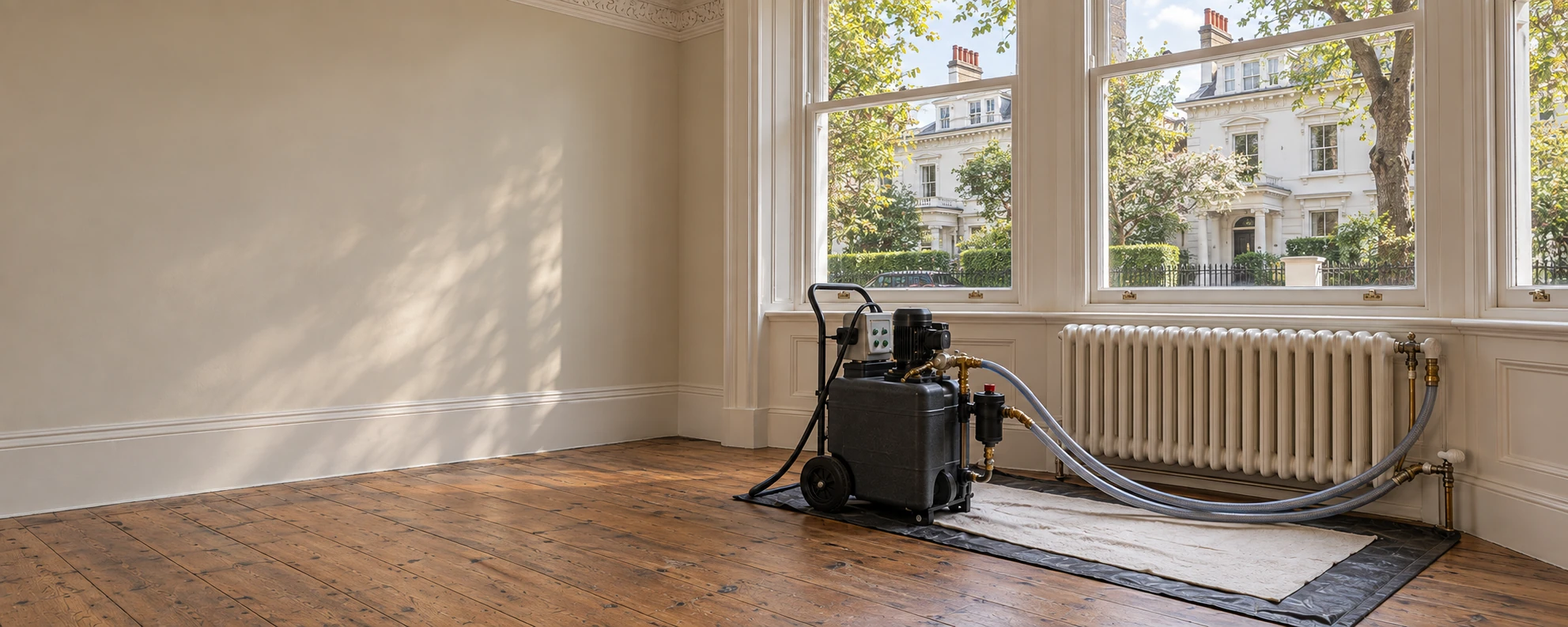
HEATING SYSTEM CLEANING · ST JOHN’S WOOD NW8
A warm kitchen and a chilly upstairs bedroom can tell different stories about the same heating system. PEP investigates uneven heat in St John’s Wood homes and carries out powerflushing where deposits are restricting circulation. We establish what your installation needs and agree the work with you before cleaning begins.
London’s family-run PEP team, established in 2010.
01 · What your heating is telling you
Changes in radiator performance deserve a closer look. These clues help us decide what to investigate; none is enough on its own to prescribe a powerflush.
A cool lower panel can be consistent with settled deposits. The pattern needs checking alongside flow and valve operation.
If upstairs takes far longer to warm, we consider the route through the pipework as well as balancing and circulation.
Suspended material may come from internal corrosion. Water condition helps build the picture of what is happening inside.
Debris caught on a magnetic core is worth investigating, especially when rooms are also losing warmth.
Repeated changes to radiator settings without lasting improvement suggest the wider installation needs attention.
02 · Establish the cause
Air, a restricted valve or a struggling pump can all affect heat delivery. We consider those possibilities alongside sludge, checking accessible equipment and the way heat travels between rooms. A clean is recommended when the findings support it.
Our guide explains the signs that a heating system may need a powerflush and why symptoms need interpreting together.
03 · Following the evidence
Looking at the heating from several angles helps explain the work: how a radiator warms, what a filter collects and what the water shows. The scenes below illustrate those stages.
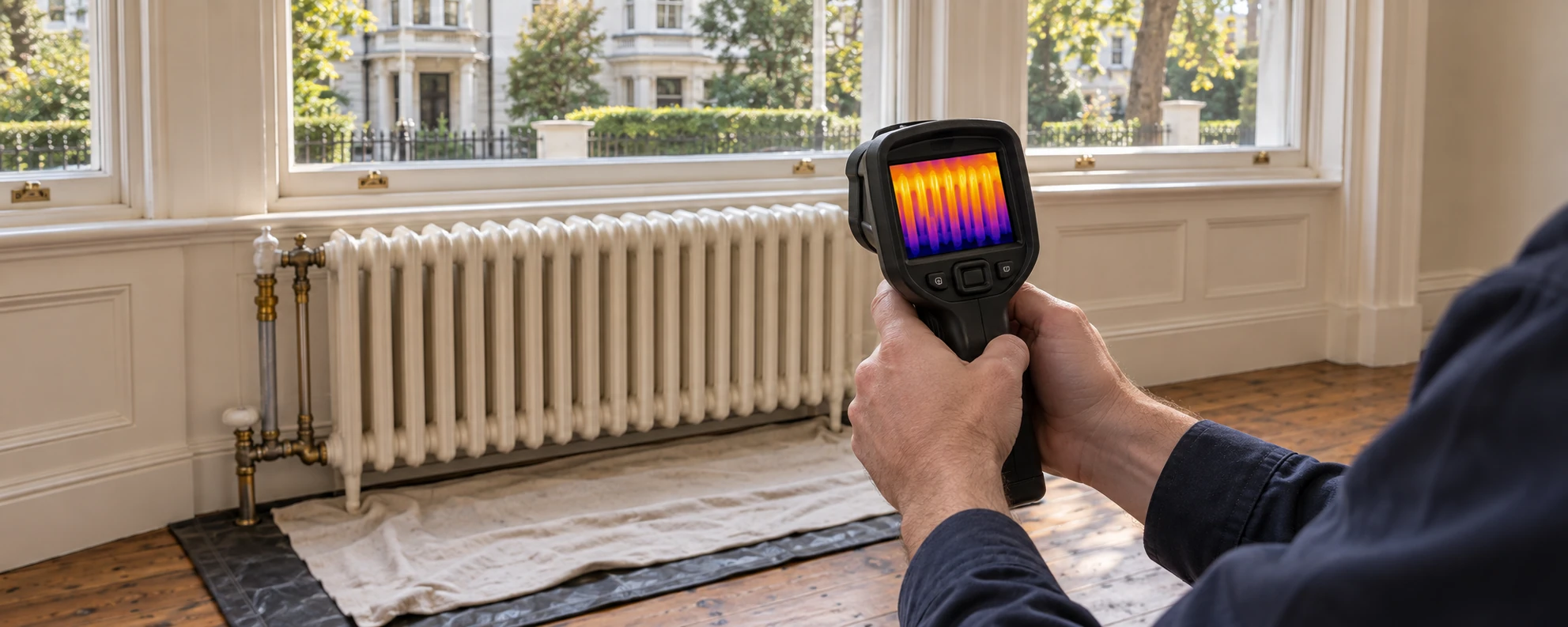
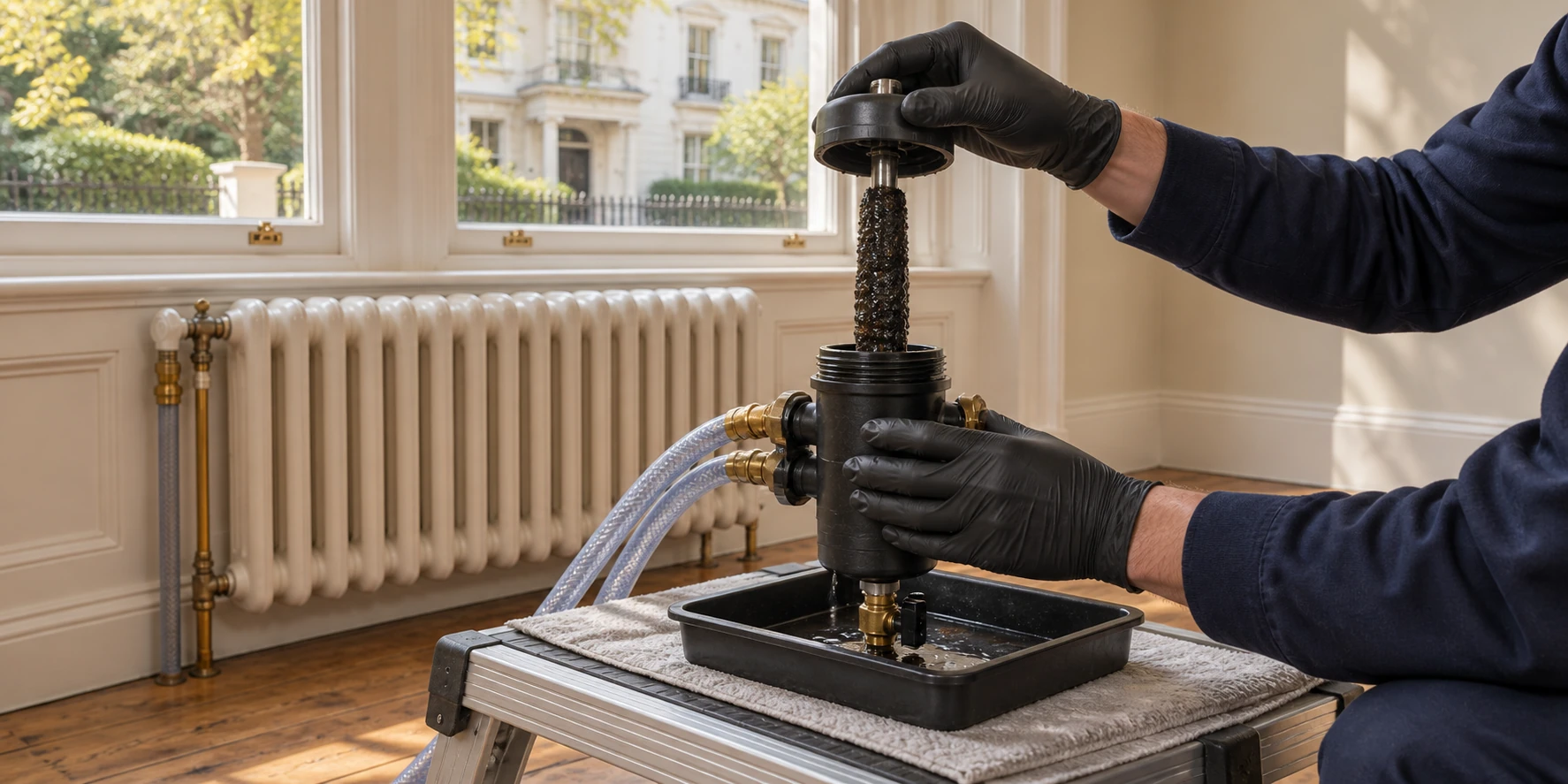
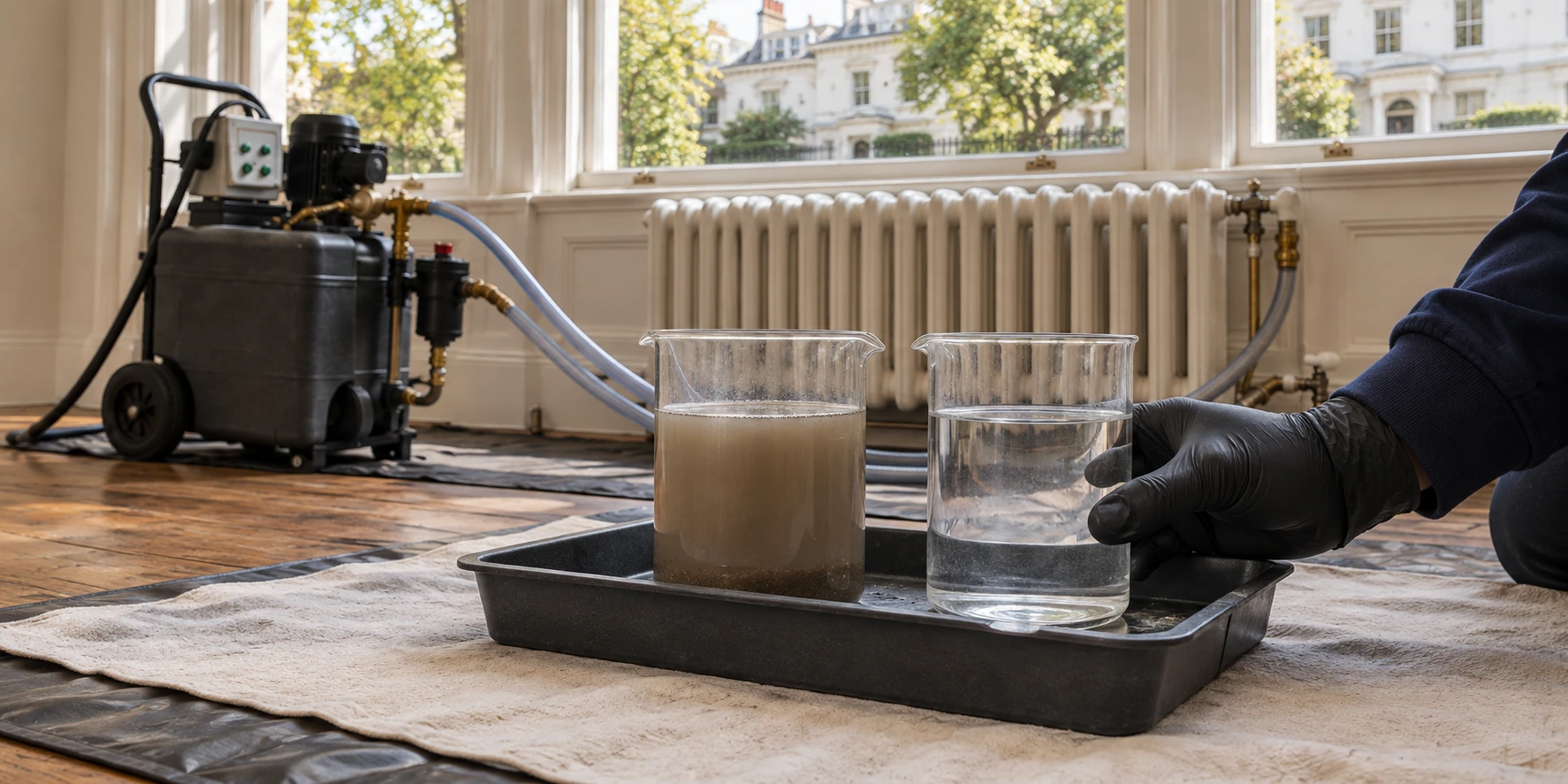
Illustrations inspired by St John’s Wood interiors; these are not records of completed PEP installations.
04 · From preparation to handover
The method follows the condition and arrangement of your heating. Each stage has a purpose, from establishing suitability to reviewing performance when the system is running again.
Review the reported problems, accessible pipework and components. Confirm suitability, the proposed treatment and any separate concerns.
Plan the equipment route and protect the working area, with attention to timber floors, finishes and occupied rooms.
Connect high-flow equipment at an appropriate access point and work through the parts of the circuit included in the agreed scope.
Use a suitable cleaner to loosen deposits and magnetic collection to capture ferrous particles as they circulate through the equipment.
Remove loosened material and cleaning solution, then dose the system with fresh corrosion inhibitor to help protect internal surfaces.
Bring the installation back into use, check water condition and heat distribution, and discuss anything that still requires attention.
05 · Selecting the treatment
More intensive cleaning is not automatically the best choice. The recommendation depends on the contamination found, available circulation and the condition of the equipment.
An option where deposits justify cleaning with dedicated equipment, working through suitable radiators and circuits.
Less extensive contamination may suit a cleaner circulated by the existing pump, provided the installation can move it effectively.
A failed component or unequal flow needs the relevant adjustment or repair. Cleaning does not substitute for that work.
Condition determines suitability
Cast-iron radiators and small-bore pipes are considered individually. Cleaning will not replace metal lost to corrosion or guarantee clearance of a severe blockage. Removing deposits can expose an already weakened joint or component, so concerns are discussed before proceeding.
06 · Houses, conversions and individual flats
Behind the white-stucco villas and period façades of NW8, heating layouts vary. A house may serve several floors, while a conversion can contain independent boilers or a shared supply. We establish the arrangement before setting a cleaning scope.
Previous extensions and alterations can leave different radiator types or pipe sizes on one installation. Knowing which rooms were added, and where warmth is weakest, helps focus the assessment. Access to valves and equipment matters as much as the building’s age.
In a flat, the first question is where your system ends and the building’s begins. Communal equipment requires coordination with whoever operates it; an individual appointment cannot assume authority over the wider network.
07 · Price, access and time
Your quotation reflects the installation we are cleaning. Radiator numbers, separate zones, contamination and access all affect the work; the postcode alone cannot tell us the price.
A domestic clean often occupies much of the day. Additional circuits or stubborn deposits can take longer. We discuss the likely duration and any interruption to heating or hot water once the system arrangement is understood.
The proposed scope sets out the cleaning, protective dosing and completion checks. Identified repairs or extra work are discussed separately, so the appointment starts with a shared understanding of what has been agreed.
For another property outside NW8, our London powerflushing page explains the wider service. You can also find the other local trades on our St John’s Wood area overview.
Describe the pattern: which radiators stay cool, whether it affects one floor and when the change began. Sludge is one possible explanation, but air, valves and flow distribution also need considering. An assessment helps distinguish them.
We quote for the work required rather than publish one figure for every home. A useful starting point is your radiator count, boiler type, number of heating zones and any known faults. We can then establish what further information or inspection is needed.
A home with multiple floors or separate circuits may need longer than a simpler installation. Allow time for setup, treatment and the final heating checks, not just circulation of the cleaner. The expected programme is discussed when the scope is agreed.
They are not ruled in or out by the name alone. We consider their condition, how much flow remains and whether any section is severely restricted. Damaged components or a blockage that cleaning cannot clear may require a different solution.
A flat with its own boiler and a suitable independent circuit can be assessed for powerflushing. Please explain how equipment reaches the property and whether access to any components depends on another resident or the building manager.
Responsibility for the shared installation must be established first. Ask the managing agent or operator to coordinate an assessment of the affected circuit. A problem felt inside one flat may originate in equipment beyond it.
Radiators normally remain connected for system cleaning, although a heavily obstructed unit may need additional attention. Keep the boiler and radiator valves accessible, and flag delicate finishes or restricted access. Any proposed removal is discussed before that work proceeds.
Following rinsing, corrosion inhibitor is added and the heating is brought back into operation. We review the water condition and how the radiators warm. If symptoms remain, we explain what further investigation or remedial work is indicated.
Changing the boiler as well? PEP’s St John’s Wood boiler installation service includes a full powerflush, inhibitor dosing and a water-quality check as standard with boiler replacement. Discuss the retained radiators and pipework as part of that installation plan.
For a broader refurbishment, explore central heating installation in St John’s Wood and our local plumbing installation services.
A clearer picture starts with your home
Tell us your NW8 postcode, which parts of the home are affected and whether the boiler serves only your property. Add an approximate radiator count and any useful photographs. We will explain the next step towards assessing the system and preparing a quotation.