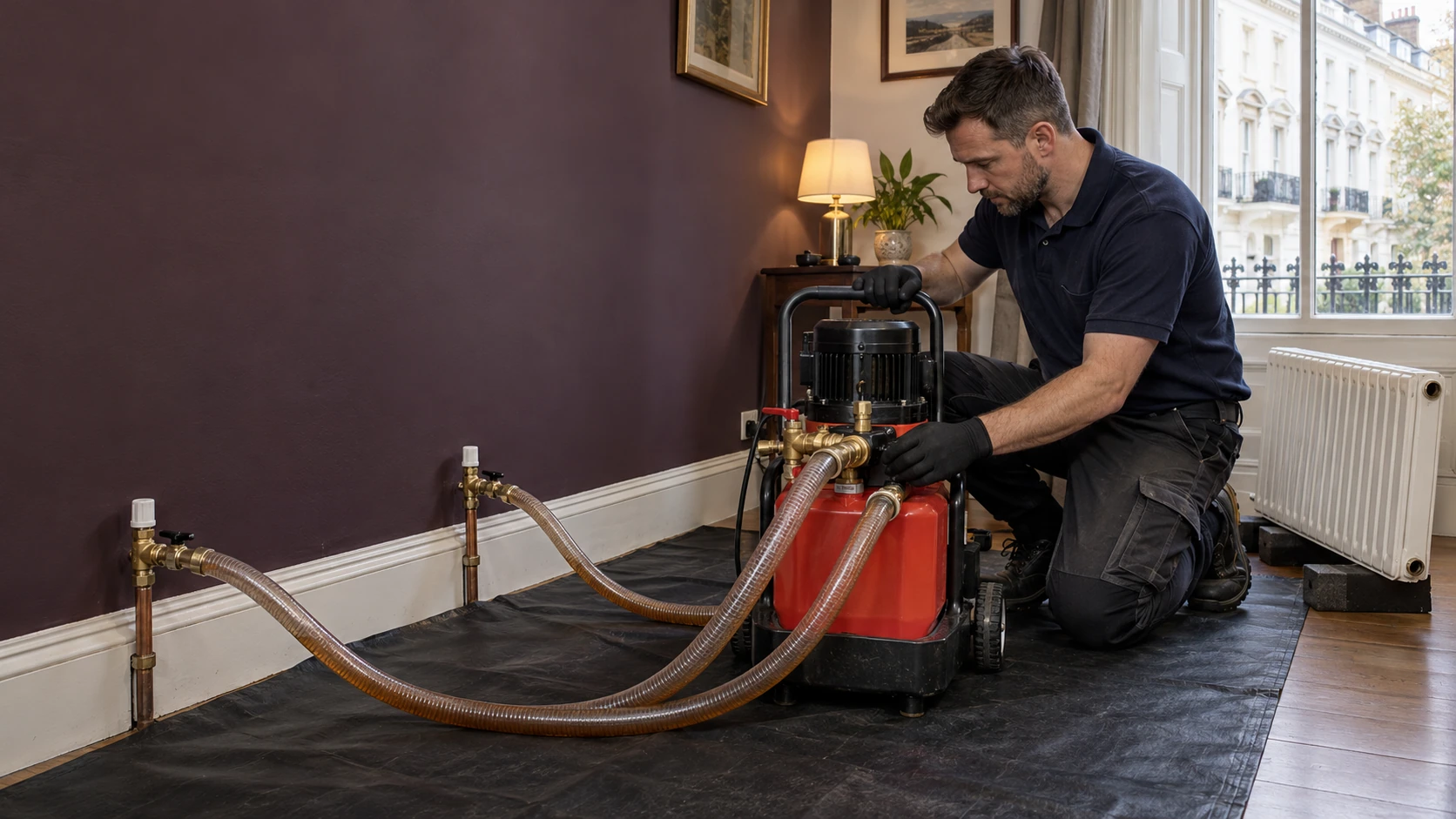

Heating engineer operating a powerflushing machine connected to radiator valves in a period-style room

Heating system cleaning · Paddington W2

Powerflushing in Paddington, W2

Help the heat reach the rooms that need it

ONE COORDINATED TEAMPlumbing · Heating · ElectricalFrom first fix to handover
Gas Safe RegisterNICEIC

A warm hallway and a cold bedroom. Radiators that take much longer to heat than they used to. A heating system that is running, yet leaves parts of your home uncomfortable.

Where sludge and restricted circulation are responsible, professional powerflushing can help restore the movement of heated water through the system.

PEP provides powerflushing in Paddington and Bayswater W2, with an assessment of your installation, an agreed cleaning scope and checks on the result. From converted flats to family houses, the work starts with understanding your heating and the problem you want resolved.

01 · Behind your front door

Different buildings. Different heating arrangements.

Around Sussex Gardens and Westbourne Terrace, a refurbished flat may still rely on sections of older heating pipework. A mansion-block apartment may have its own boiler or receive heat from a shared installation. Around Paddington Basin, the equipment serving a home may be different again.

Those distinctions matter before any cleaning equipment is connected.

We establish what supplies the heating, which radiators and circuits it serves, and whether the problem affects one room or the whole property. We also consider recent changes: a replacement radiator, building work, repeated draining or a boiler installation can all help explain when the symptoms began.

The aim is to recommend work that addresses the actual restriction or fault, with a clear understanding of what cleaning can achieve.

02 · Understand the symptoms

When cold radiators point to sludge — and when they do not

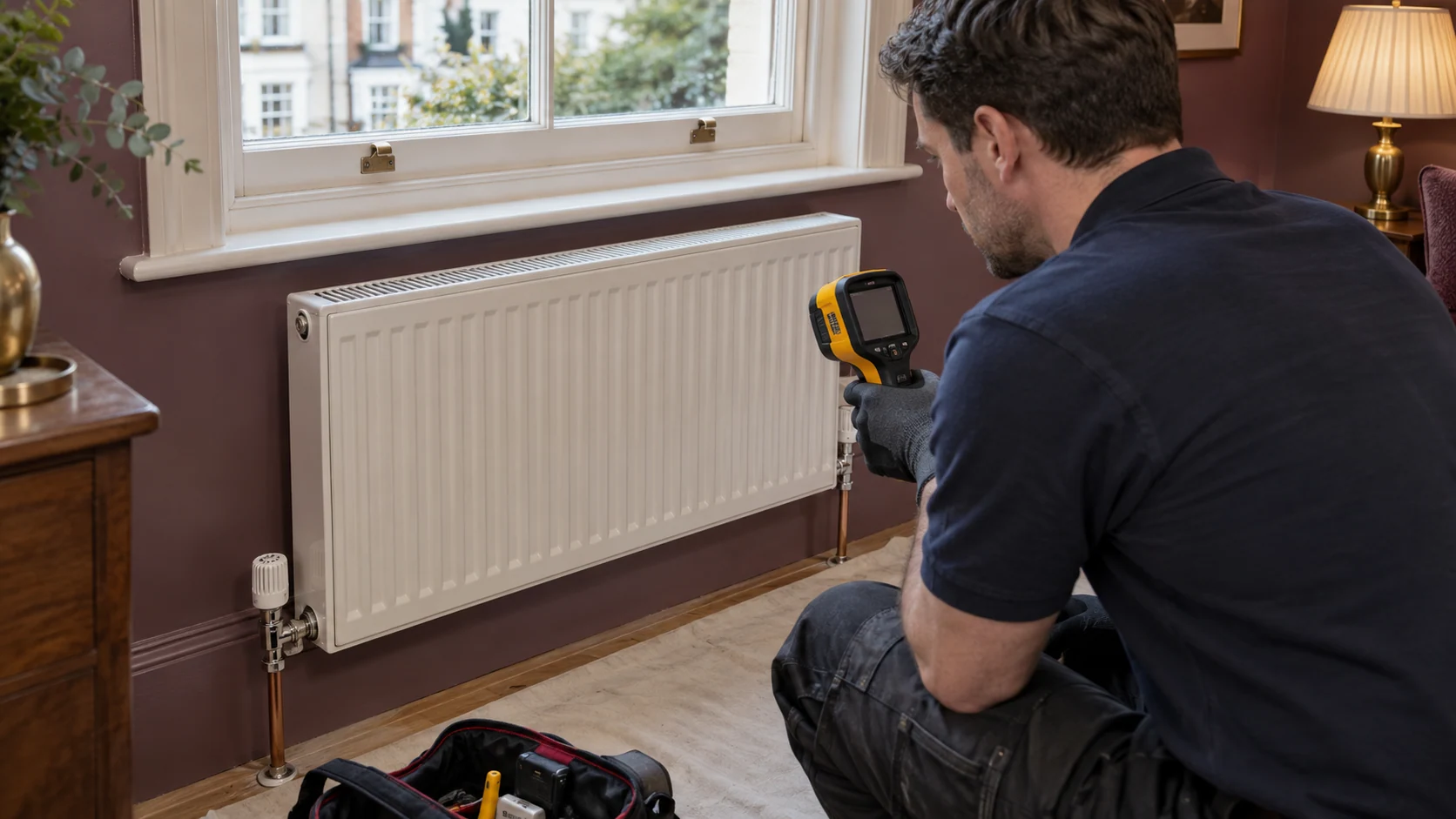
Heating engineer assessing a panel radiator with a handheld thermal camera
Temperature & circulationFind the cause before choosing the treatment.

Corrosion debris can accumulate inside a heating system, restricting circulation and leaving deposits in radiators. Possible signs include persistent cold areas across the lower part of a radiator, uneven heat distribution and debris repeatedly collecting in a system filter.

However, a cold radiator is a symptom, not a diagnosis.

  • Cold at the top: trapped air may be involved, particularly if the problem changes after venting.
  • Cold across the bottom: deposits are one possibility, but flow and valve operation still need checking.
  • Completely cold: a closed or sticking valve, airlock, blockage or control issue may prevent circulation.
  • Some rooms heat much faster than others: the system may need balancing, cleaning or both.

Turning the thermostat higher will not resolve a physical restriction. Equally, cleaning the entire installation will not repair a failed valve or pump.

Our guide explains when a London heating system may need a powerflush in more detail.

03 · Private circuit or shared heating?

Can your Paddington flat be powerflushed independently?

Often, a flat with its own boiler has a private heating circuit that can be assessed for standalone cleaning. In a building with shared heating, the position needs closer examination.

A heat interface unit, or HIU, does not automatically mean that the apartment’s heating water is separate from the building network. Both directly connected and heat-exchanger-separated arrangements exist. The equipment and circuit configuration must be identified before deciding what can be isolated and cleaned. Danfoss explains these different arrangements.

04 · A considered working sequence

A planned clean in an occupied home

Powerflushing needs access, preparation and a suitable method. We plan the work around both the installation and the home it serves.

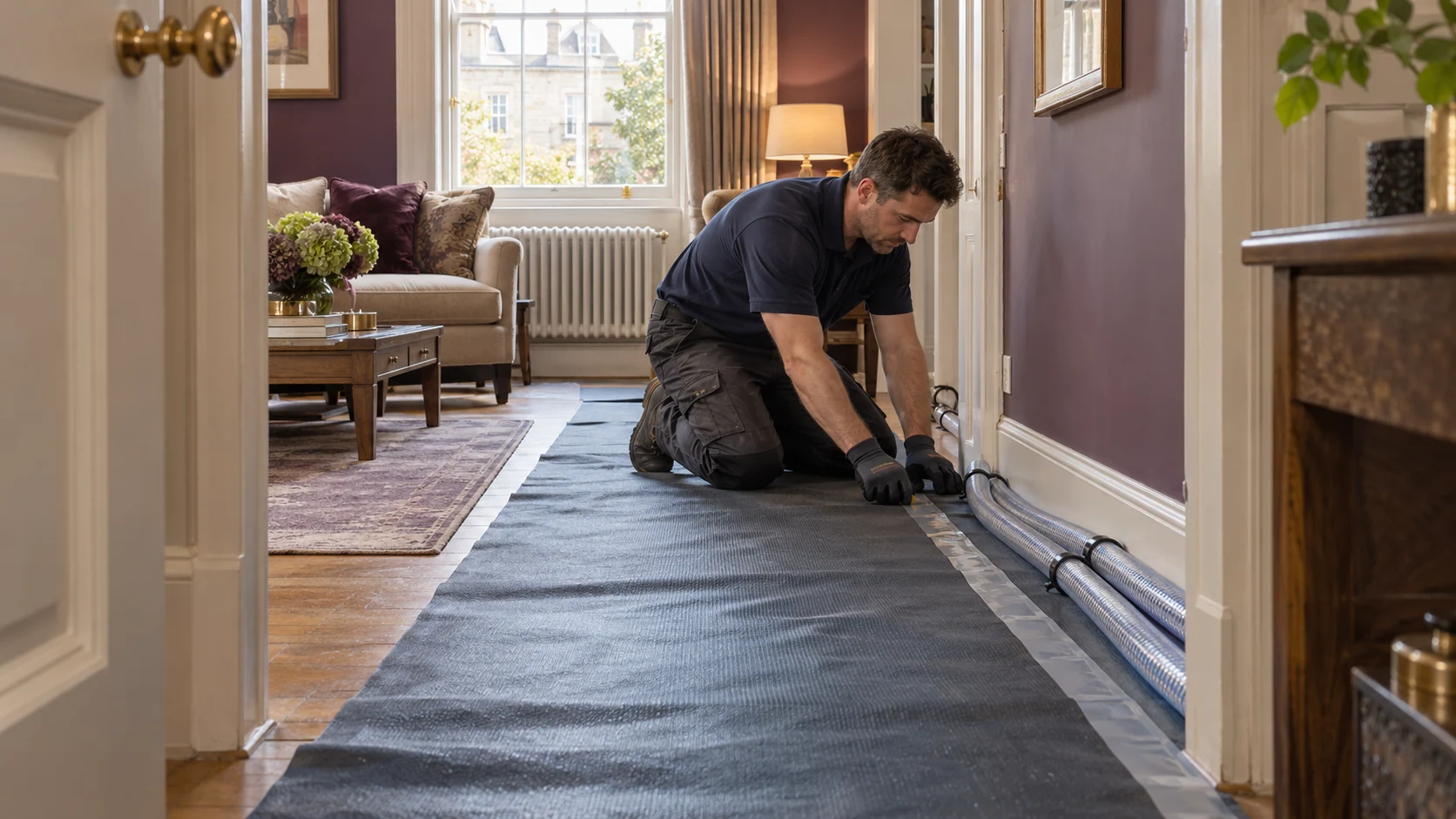
Heating engineer laying floor protection along a powerflush hose route in a period flat
Before the cleanProtect the home. Plan the access.
01

Assess the system

We discuss the symptoms and inspect accessible radiators, valves, pipework and heating equipment. Where appropriate, water condition, filter contents and heating behaviour help determine whether cleaning is justified.

Known leaks, fragile components or other defects are identified before the cleaning scope is agreed.
02

Prepare and protect

We agree equipment positioning, hose routes, water and drainage arrangements, and access to radiators.

In flats, this may also involve lift access, common-area protection and building working hours. You will know which rooms need to remain accessible and what interruption to expect.

03

Select the cleaning method

The equipment connection and treatment are chosen to suit the installation and relevant manufacturer guidance.

Powerflushing uses controlled circulation to mobilise and remove contamination. It is not pressure-washing the inside of your heating pipes.

04

Work through the agreed circuits

The cleaning process directs attention to the radiators and circuits within the agreed scope, including areas showing poor circulation.

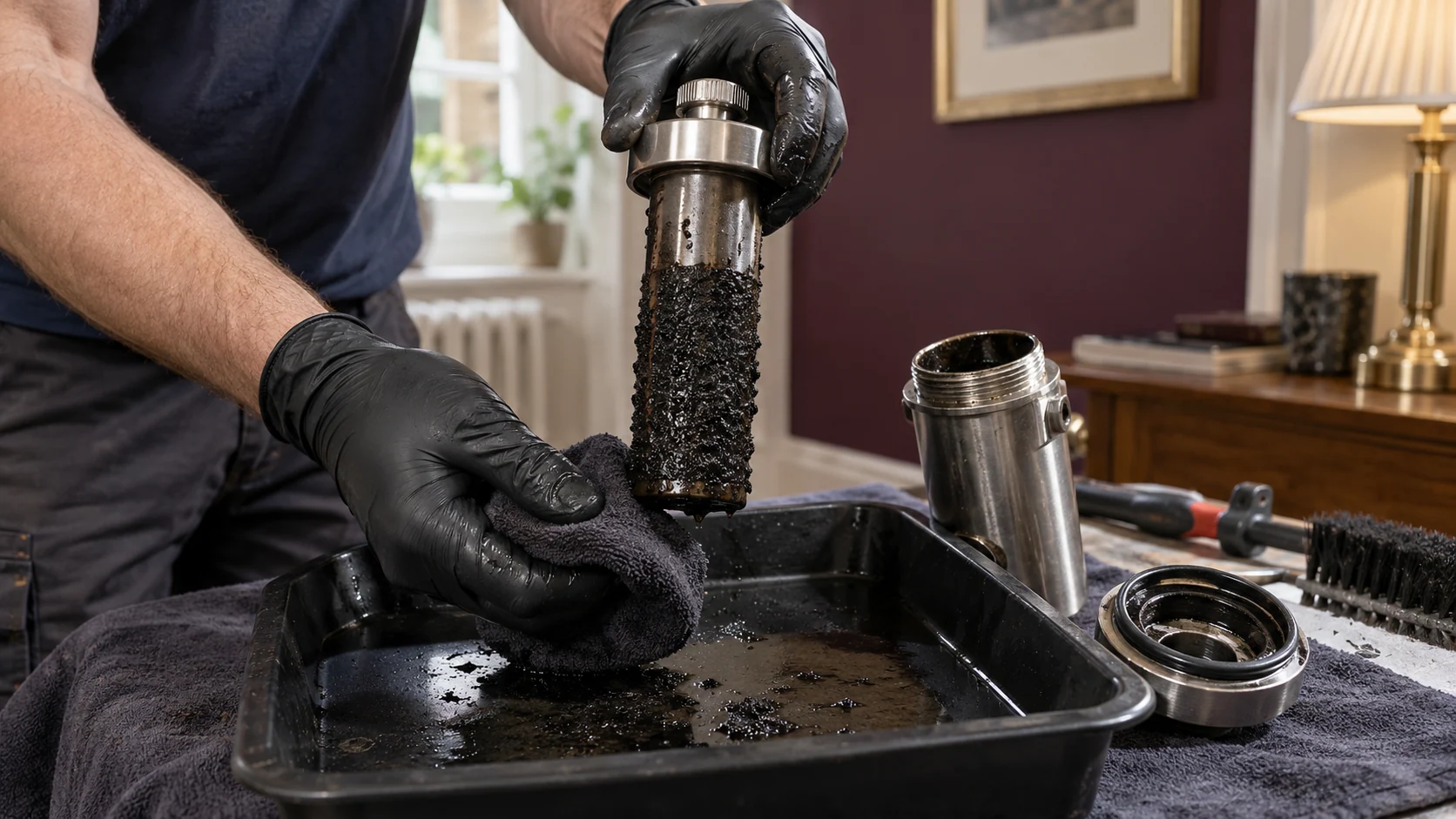
Suitable debris collection and filtration help remove material released during treatment. A magnetic collector captures ferrous particles; it is not a substitute for the rest of the cleaning process.

Magnetic collector with black heating-system deposits held above a service tray
Remove the contaminationCapture deposits released from the circuit.
05

Rinse and protect

The system is rinsed and checked as appropriate for the treatment used, then protected with compatible inhibitor at the correct concentration.

Clear-looking water alone does not establish that cleaning residues have been adequately removed or that corrosion protection is sufficient.

06

Restart and check performance

We restore operation, vent as required and assess heating distribution. Any balancing included in the agreed work is completed, and remaining faults are explained.

05 · The right work for the problem

Powerflush, chemical clean, balancing or repair?

These are different jobs, although an installation may need more than one.

01

Powerflushing

uses external pumping equipment and suitable treatment to remove contamination from an accessible, appropriate heating circuit.

02

Other chemical-cleaning methods

may be suitable where the condition of the installation and manufacturer guidance support a different approach.

03

Balancing

adjusts water distribution so that readily supplied radiators do not take a disproportionate share of the available flow. It does not remove deposits.

04

Repairs

address defective components, leaks and mechanical or control problems that cleaning cannot correct.

We explain the recommended combination before work proceeds. Where separate pipework or radiator alterations are needed, our Paddington plumbing service can be considered alongside the heating work.

06 · Assess the retained installation

Older radiators and microbore pipework

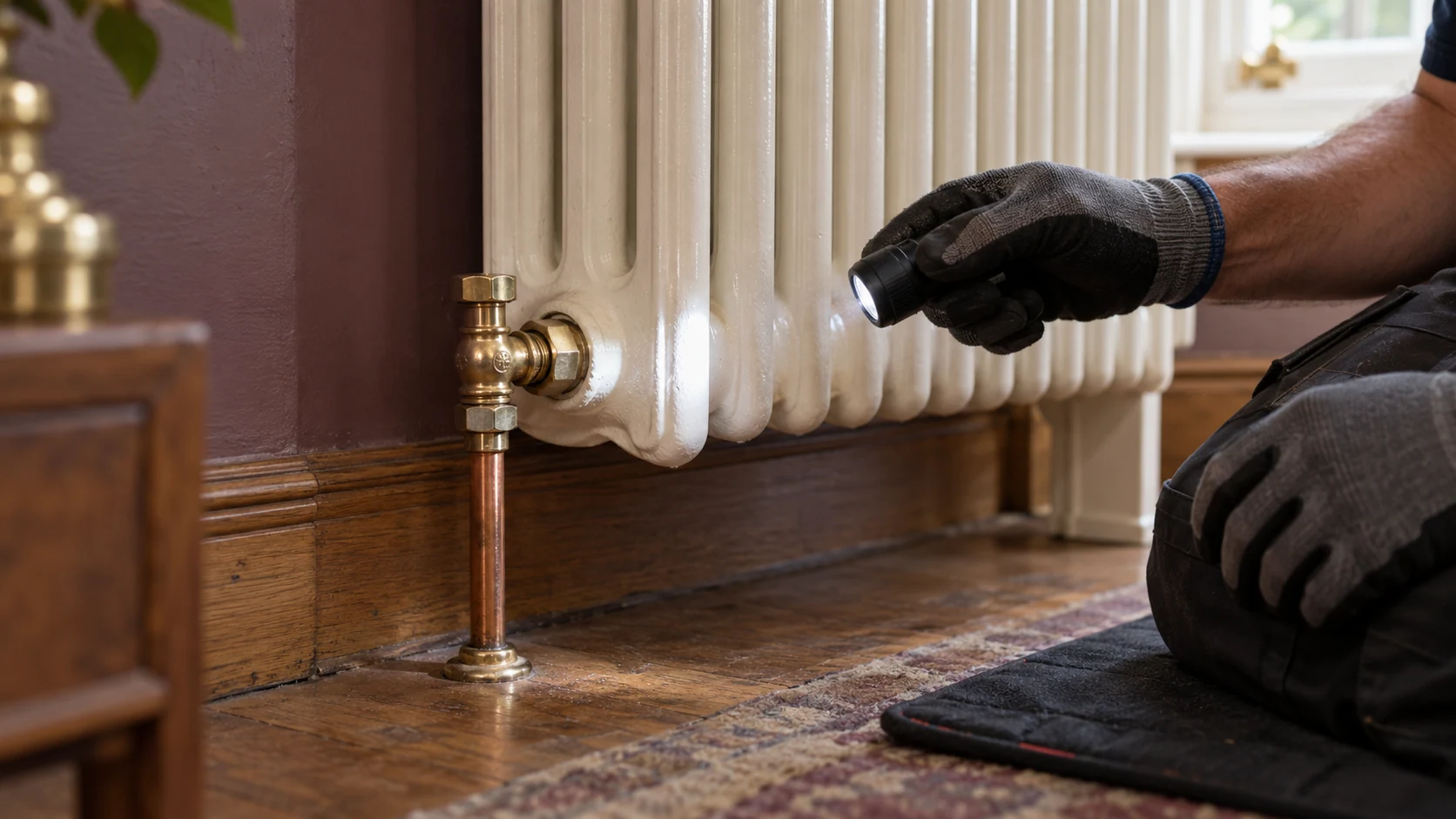
Close inspection of an older column radiator valve and copper pipework
Existing radiators & pipeworkCondition matters more than age alone.

An older installation is not automatically unsuitable for powerflushing. Its condition matters more than its age alone.

Small-bore pipework, restricted branches and heavily contaminated radiators can make effective circulation harder to achieve. A completely obstructed section may need local investigation or replacement rather than further flushing.

Cleaning also cannot restore metal already lost to corrosion. Removing deposits can expose an existing weakness in a deteriorated radiator or fitting.

We discuss identifiable concerns before starting and explain where a targeted repair or component replacement may offer a more dependable outcome.

07 · Coordinate the installation

Replacing a boiler in Paddington?

The condition of the retained heating system deserves attention before a new boiler is connected.

A replacement appliance does not remove contamination already present in older radiators and pipework. Cleaning, water treatment and appropriate filtration should be considered as part of preparing the installation.

PEP’s boiler installation service in Paddington includes a full-system PowerFlush within the installation package, subject to assessment and suitability of the existing private heating circuit.

Where known leaks, fragile components or other limitations affect the proposed method, we explain the preparation required before agreeing the work. The cleaning scope should be coordinated with the boiler installation, not left as an unresolved decision on the day.

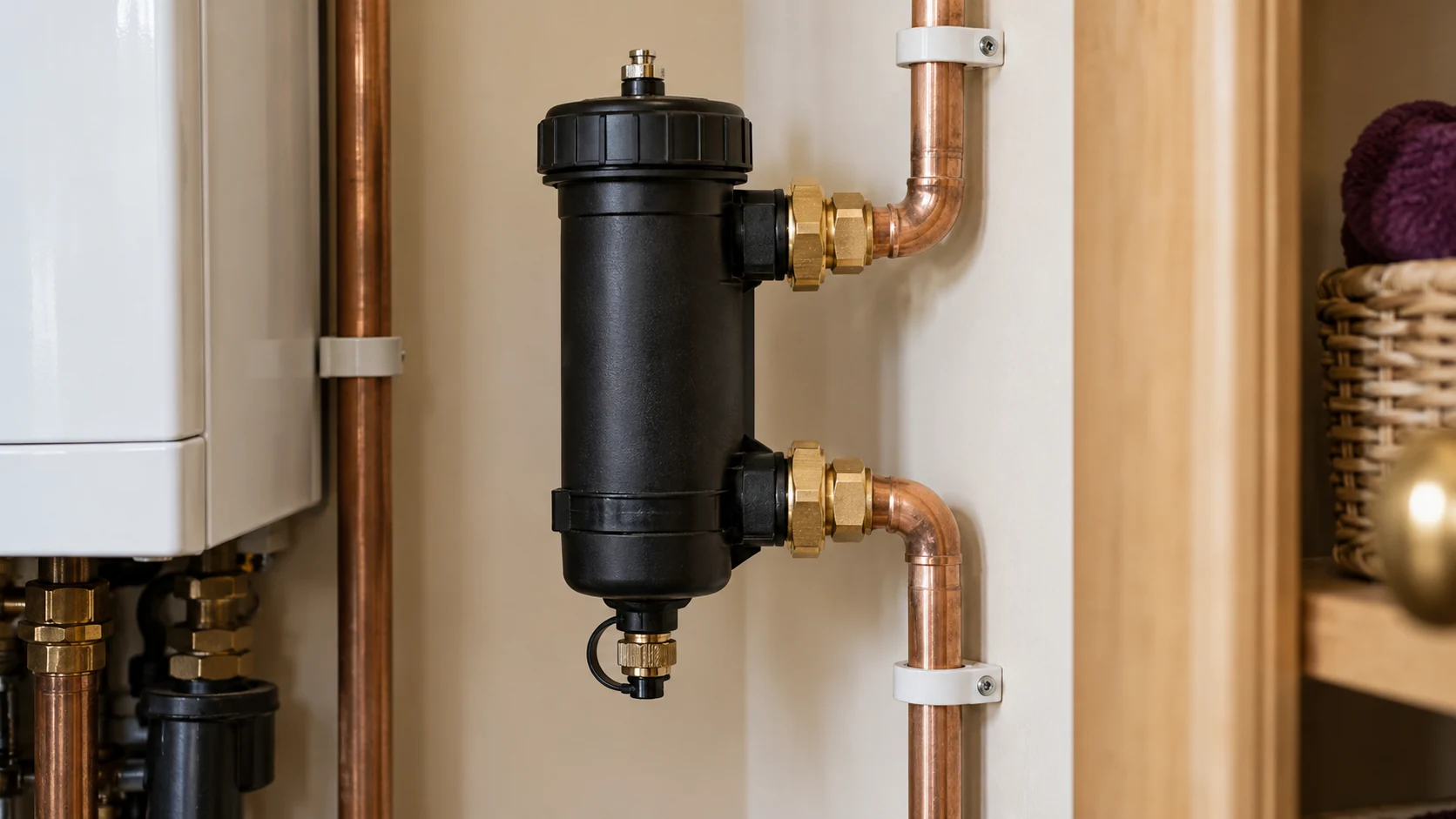
Magnetic heating filter installed in copper return pipework with accessible service connections
Cleaning & ongoing protectionPrepare the circuit for its next chapter.

08 · Define the work. Agree the price.

Powerflush cost and timing in W2

The number of radiators is a useful starting point, but it does not describe the whole job.

A quotation also needs to consider:

  • Towel rails, separate zones and additional heating circuits.
  • Pipework layout, condition and available circulation.
  • The severity and location of contamination.
  • Access to valves, connection points and the property.
  • Existing filtration and any proposed replacement components.
  • Building-management requirements and practical working restrictions.

The quotation should distinguish the agreed cleaning work from repairs, replacement valves, new filters and other additions. Any assessment charge should also be clear before booking.

We explain the expected working time and heating interruption once the arrangement is understood. Heavily restricted or complicated systems should not be promised the same completion time as a straightforward installation.

09 · Return to the original problem

What we check before handing the heating back

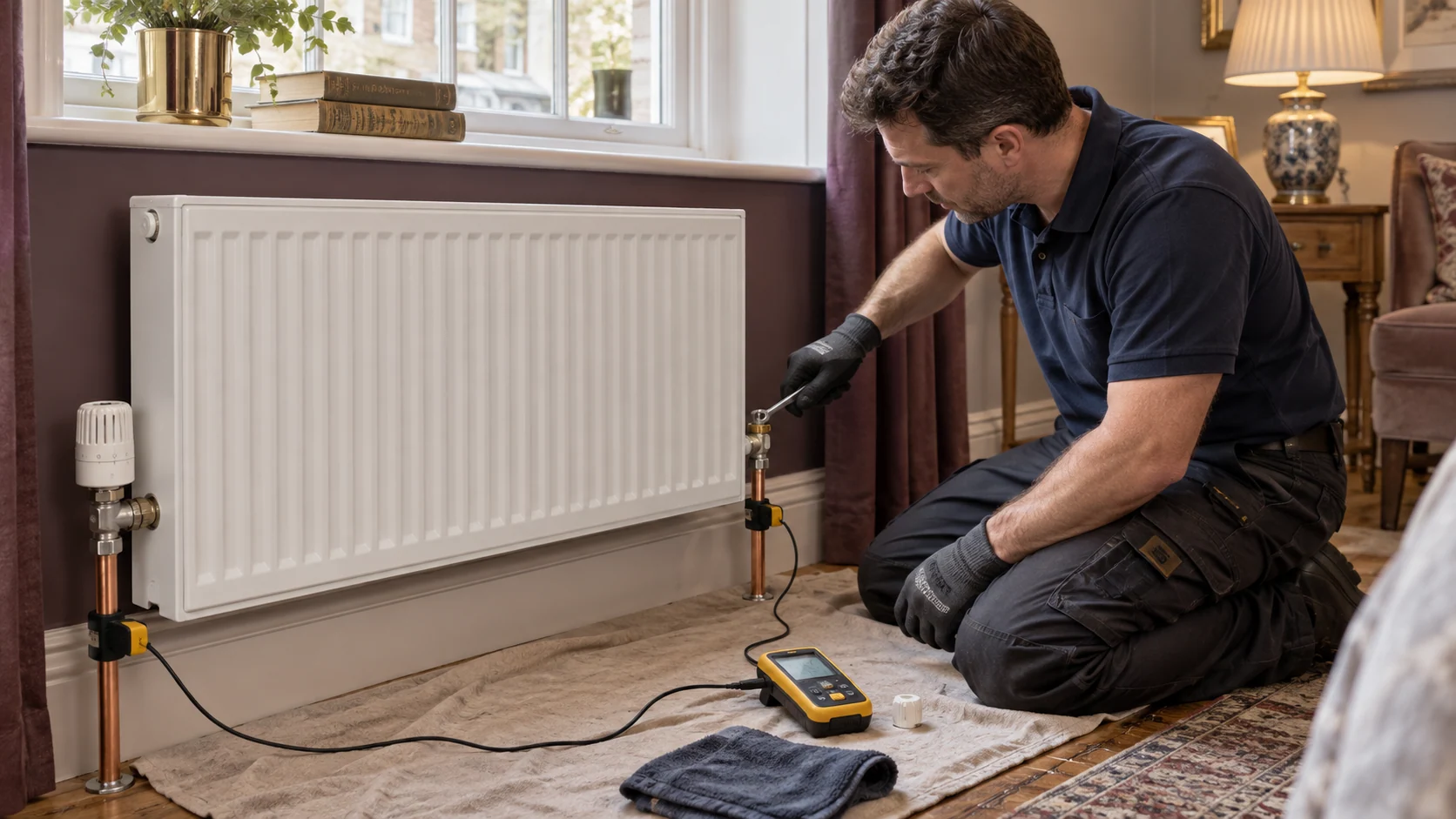
Heating engineer checking radiator pipe temperatures and adjusting a lockshield valve
Final system checksReview heat-up, flow and remaining faults.

The useful question is whether the work has addressed the problem you reported.

We return to the affected rooms and assess radiator heat-up and distribution under operating conditions. Relevant checks also cover the connections disturbed during the work, system operation and water treatment.

If a room remains cold because of a separate valve fault, inadequate radiator output or another restriction, we explain what remains unresolved and the recommended next step.

Aftercare matters too. Water condition and inhibitor protection should be checked during ongoing maintenance; Fernox’s guidance recommends annual system-water testing. Repeated water loss also needs investigation rather than simply topping up indefinitely. Fernox guidance

10 · Paddington, Bayswater & W2

Powerflushing across Paddington and Bayswater W2

We cover Paddington, Bayswater, Lancaster Gate, Queensway, Tyburnia, Connaught Village and the Hyde Park Estate, together with relevant W2 addresses around Royal Oak, Westbourne Green and Paddington Basin.

Enquiries are welcome from homes around Praed Street, Norfolk Square, Sussex Gardens, Westbourne Terrace, Merchant Square and Sheldon Square.

For neighbouring areas, see our services for powerflushing in Maida Vale and powerflushing in Notting Hill. Near the W2/W9 and W2/W11 boundaries, your full postcode helps us identify the right local service.

Our wider London powerflushing service covers additional areas.

Before arranging the work

Questions before booking

Can you powerflush a flat in a mansion block?

Potentially, yes. We first establish whether the heating circuit is private, whether it can be isolated appropriately and whether access or management approval affects the work. The building type alone does not determine suitability.

What if my apartment has communal heating or an HIU?

Tell us before booking. We need to establish the equipment arrangement and responsibility for the affected circuit. Work involving the shared network requires coordination with its operator; it is not treated as an ordinary standalone domestic flush.

Does one cold radiator mean I need a full powerflush?

No. One cold radiator may have a local valve, air or flow problem. We assess the pattern across the system and the evidence of contamination before recommending whole-system cleaning.

Can you clean microbore heating systems?

Some can be cleaned effectively, but restricted small-bore pipework needs careful assessment. We cannot promise that flushing will clear a solid obstruction or avoid every need for local pipework repairs.

How much does powerflushing in Paddington cost?

The price depends on the circuit, radiator count, condition and access requirements. Send your postcode, approximate radiator and towel-rail count, and a description of the problem so we can identify what is needed for an accurate quotation.

Will I lose heating and hot water during the visit?

Heating will be interrupted during the work. Whether domestic hot water is also affected depends on the equipment and connections involved. We explain the expected interruption for your installation before the visit.

Is a new magnetic filter included?

Do not assume a new filter is included unless it is specified in the quotation. We assess any existing filter and explain whether cleaning, replacement or an additional filter is recommended.

What if a radiator is still cold afterwards?

We investigate the remaining symptom and explain the findings. Cleaning cannot correct every circulation, valve or control fault. Any further repair should have a clear reason and an agreed scope.

A clear next step for your heating

Tell us what your heating is doing

If your radiators are slow, uneven or persistently cold, send PEP your full postcode, a brief description of the symptoms and an approximate radiator count.

A photograph of the boiler or heating cupboard is helpful. For flats, please mention shared heating, building-management requirements and any access restrictions.

We will explain the next assessment step and what information is needed to establish a suitable cleaning scope.

Powerflushing in Paddington W2 — assessed for your installation, planned around your home and checked against the problem you started with.