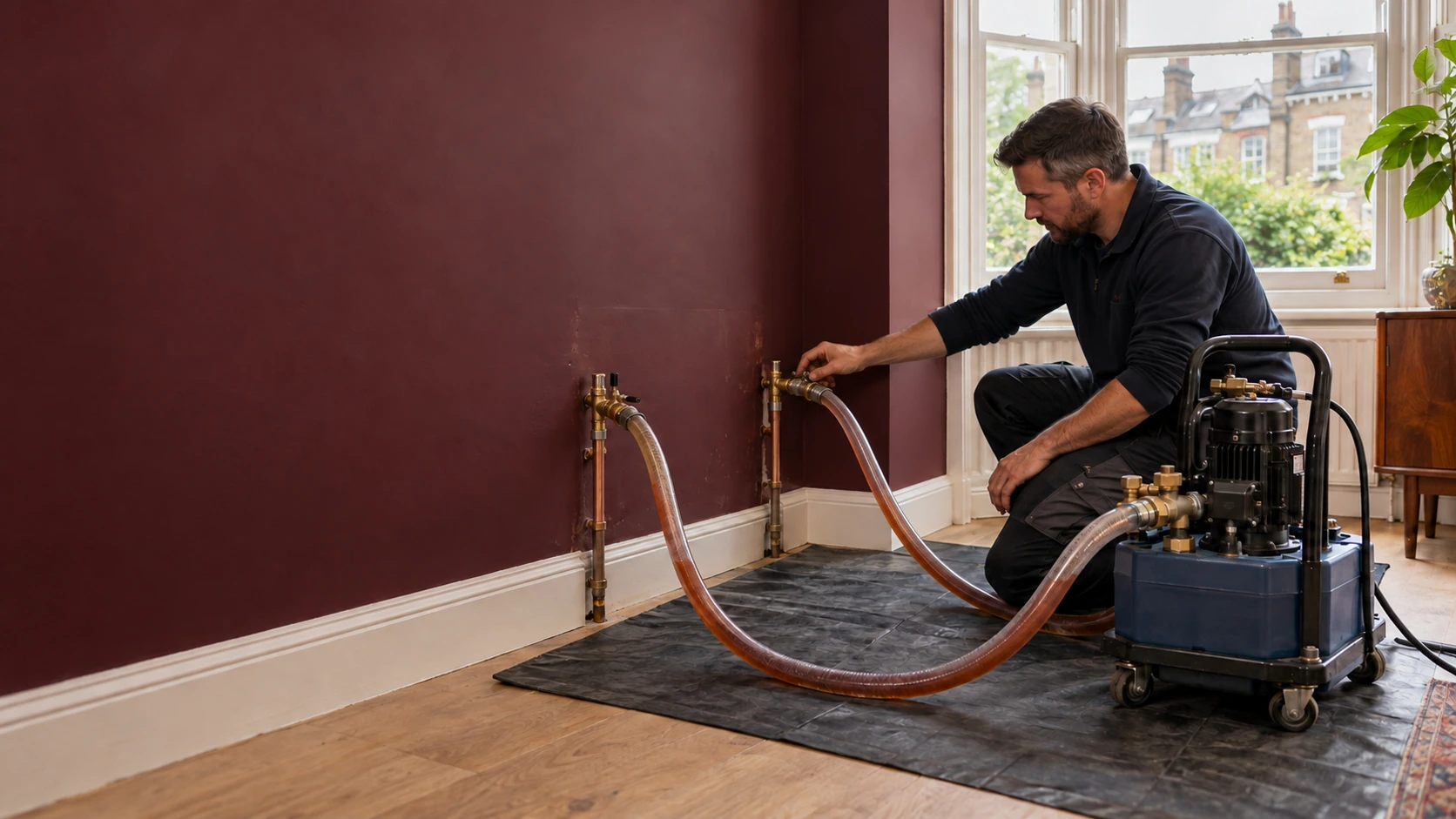
Heating engineer using a powerflushing machine in a burgundy room, with discoloured heating water in connected hoses.

Heating system cleaning · Queen’s Park NW6

Powerflushing in Queen’s Park, NW6

Warmth should reach every room you use.

ONE COORDINATED TEAMPlumbing · Heating · ElectricalFrom first fix to handover
Gas Safe RegisterNICEIC

A living room that heats quickly, a bedroom that stays cool and a boiler working away in the background: uneven heating deserves a closer look.

PEP provides powerflushing in Queen’s Park for suitable domestic heating systems affected by sludge and restricted circulation. We assess the installation, explain the recommended treatment and agree the scope before cleaning begins.

Whether you want to improve your existing heating or retain radiators during a refurbishment, we consider the complete circuit — not just the appliance supplying it.

01 · Find the cause first

Before replacing a cold radiator, find out what is holding it back

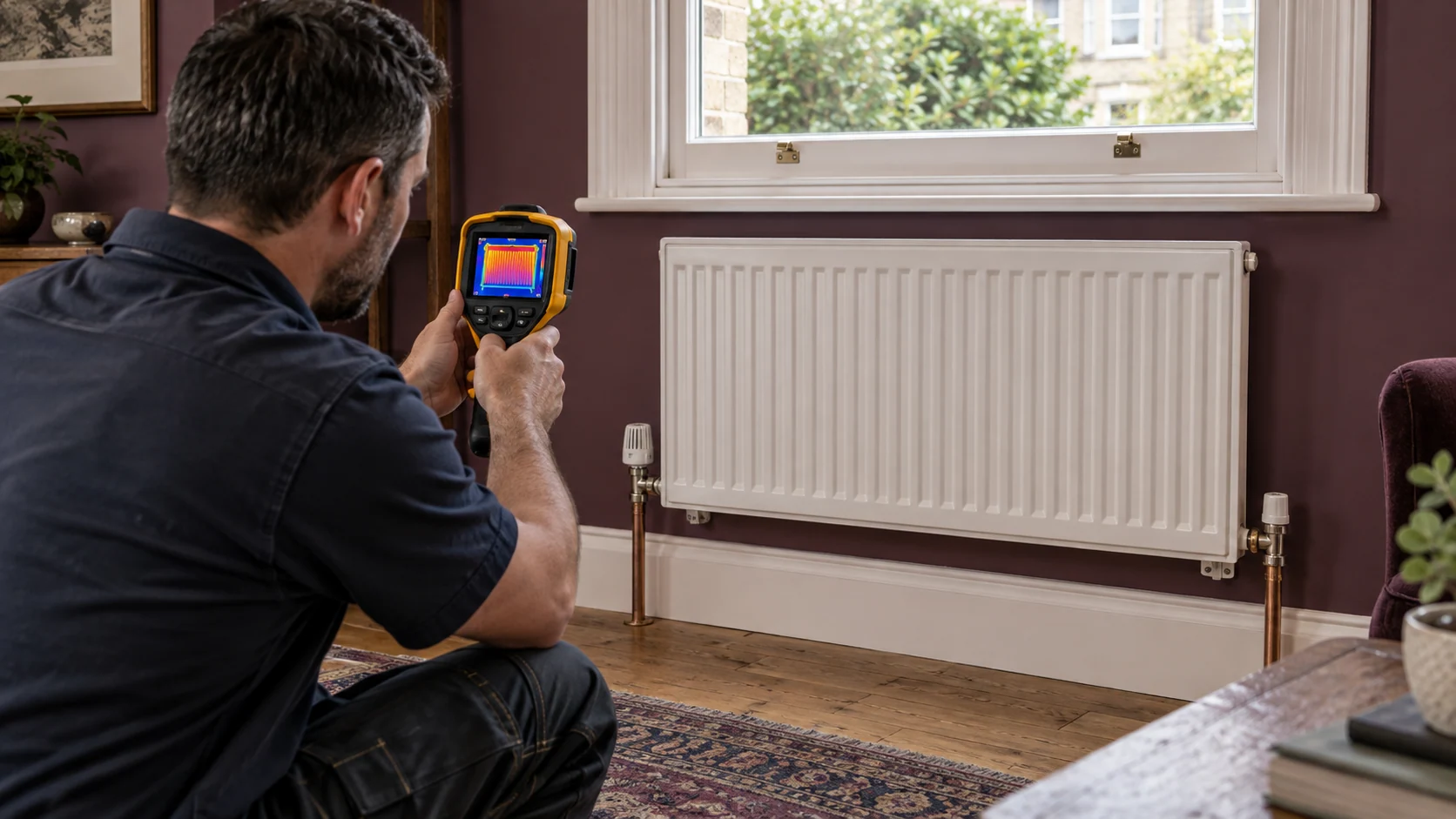
Heating engineer inspecting a panel radiator with a handheld thermal camera.
Before choosing a treatmentA cold radiator is a symptom — not a diagnosis.

A radiator can look tired yet remain serviceable. Equally, a recently fitted radiator can perform poorly if the water reaching it is restricted or incorrectly distributed.

Signs worth investigating include:

  • Lower radiator sections that remain noticeably cool.
  • Several rooms taking much longer to warm than others.
  • Repeated deposits in a magnetic heating filter.
  • Discoloured system water or visible debris.
  • A heating problem that remains after other work has been completed.

These clues help direct the assessment; they do not establish the cause by themselves. Trapped air, sticking valves, pump faults, control settings and poor balancing can produce overlapping symptoms.

We ask which rooms are affected, when the problem started and whether anything changed beforehand. That history helps distinguish a local fault from a wider circulation problem.

For more detail, read our guide to when a heating system needs a powerflush.

02 · Old circuits. New plans.

Keeping existing heating through a Queen’s Park refurbishment

A renovation does not always mean replacing every radiator and pipe. You may want to retain the heating in the front rooms while changing the kitchen, adding a rear living space or improving an upstairs bathroom.

That makes the connections between old and new important.

Where contamination is affecting retained circuits, appropriate cleaning can form part of preparing the installation for continued use. However, flushing will not increase an undersized pipe’s capacity, enlarge a radiator or correct a poorly arranged heating zone.

03 · Match the remedy to the fault

Powerflush, chemical clean, balancing or repair?

The right intervention depends on the fault and the condition of the system.

01

Powerflushing

Professional equipment circulates cleaning solution at a controlled high flow to loosen and remove contamination. Treatment focuses on the agreed radiators and circuits, with suitable chemicals and magnetic capture of ferrous debris. This is heating-system cleaning, not high-pressure drain jetting.

02

A lighter chemical clean

Where circulation remains adequate and contamination is less established, a cleaner circulated using the installation’s own pump may be appropriate. The system still needs proper rinsing and protection afterwards.

03

Balancing or component repair

If water is taking an easier route through some radiators while others receive too little, balancing may be needed. A faulty valve, pump or control requires attention to that fault. Cleaning and repairs can sometimes both be necessary.

We explain which work addresses your symptoms rather than treating every cold room as a reason to book a full powerflush.

04 · Assess. Clean. Protect.

A planned clean, from the first check to the final restart

01

Establish the starting condition

We review the heating arrangement, affected rooms, accessible pipework, valves and any existing filter. Water condition and the way the radiators heat help us assess whether cleaning is suitable and identify concerns to discuss first.

02

Prepare the property

Before connecting equipment, we agree the working area, access to the radiators and suitable water and drainage arrangements. Floors and nearby surfaces are protected, with the hose route planned around the occupied home.

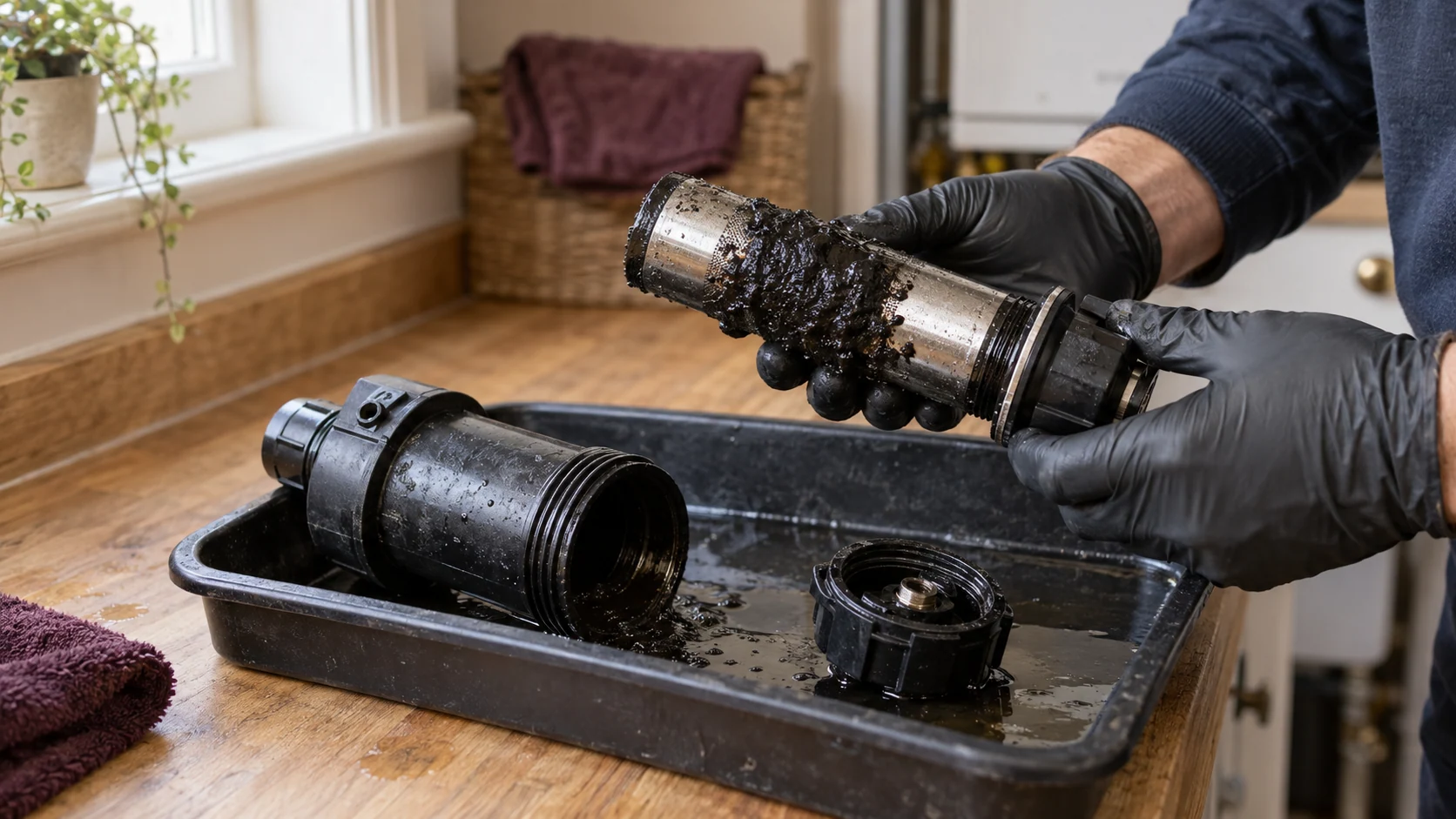
Gloved hands inspecting black sludge on a magnetic heating-filter sleeve above a service tray.
Remove the contaminationTarget the deposits, then restore protection.
03

Treat the agreed circuits

The connection point and treatment are selected for the installation. We work through the agreed radiators or circuits so the cleaning flow reaches the areas being treated, rather than simply circulating through the easiest available route.

04

Remove contamination and restore protection

Loosened deposits and cleaning residues are rinsed out. A compatible corrosion inhibitor is then introduced at the appropriate concentration. Existing filter cleaning and any proposed new filter are identified in the scope.

05

Restart and review performance

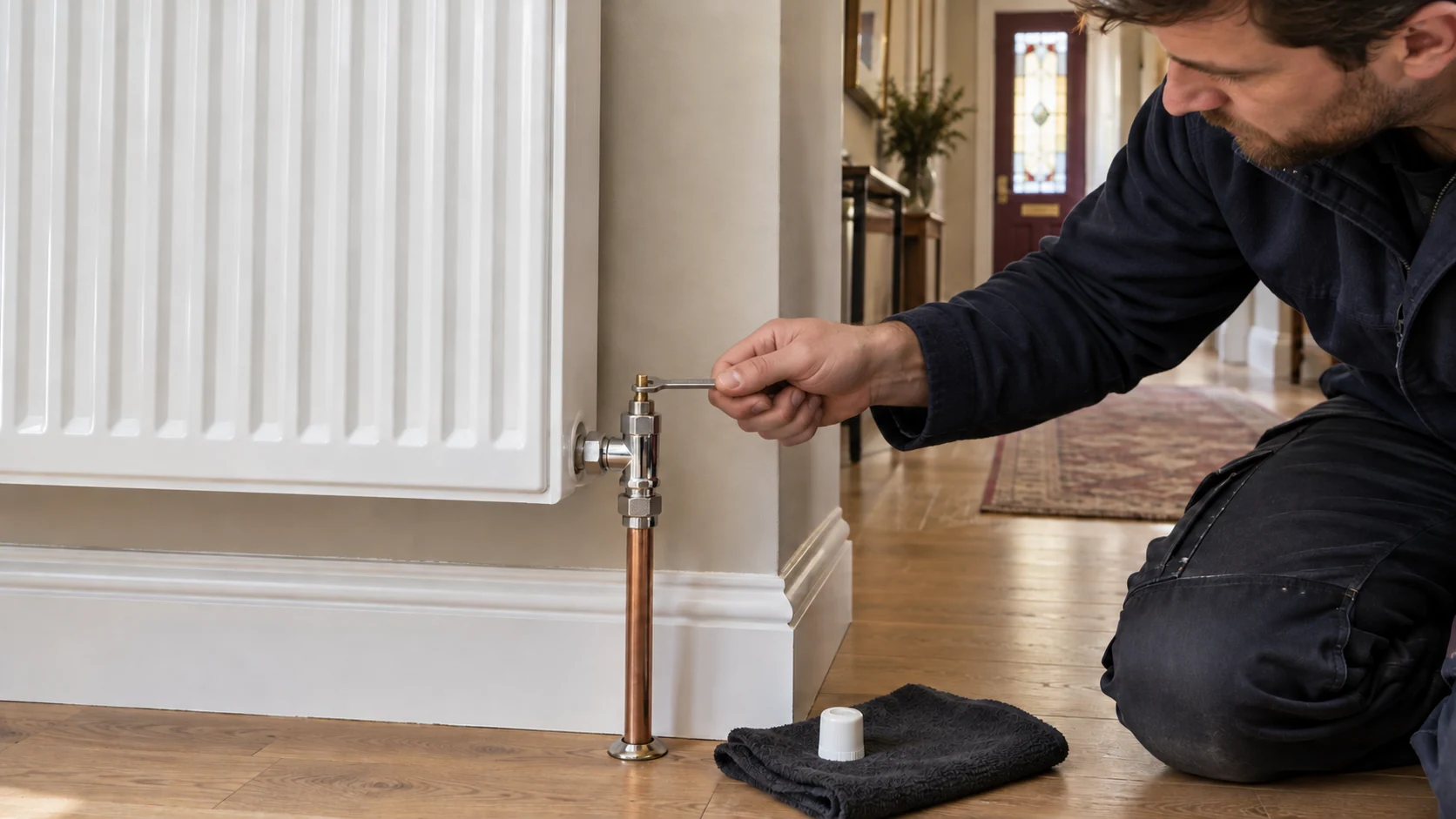
We reinstate the system, vent it as required and check how the heating responds. We explain the result and identify any remaining faults or recommended follow-up work.

Individual radiator treatment and thorough rinsing are also set out in Kamco’s manufacturer guidance.

05 · Suitability before assumptions

Older radiators, microbore pipes and mixed systems

Age alone does not tell us whether an installation can be cleaned. Condition, pipe size, available circulation and the construction of the system matter more.

Traditional radiators and older pipework need assessment before treatment. Cleaning cannot replace metal already lost to corrosion; removing accumulated deposits may expose an existing weakness that was previously masked.

Microbore systems also need an appropriate connection and cleaning strategy. Where a branch is severely obstructed, separate treatment or replacement may be required. We do not promise that every blockage can be cleared by flushing.

If radiators share a heat source with underfloor heating, the circuits must be considered separately. Manifolds, mixing arrangements and system materials affect the method and scope.

06 · Private circuit or shared system?

Powerflushing in flats and managed buildings

An individual flat with its own boiler is different from a property supplied by communal heating.

Before agreeing work, we establish which circuit serves your home, where equipment can connect and who is responsible for the relevant components. Where a heat interface unit or shared network is involved, access and responsibility may need to be agreed with the managing agent or building operator.

07 · Define the work. Agree the price.

How much does a powerflush in Queen’s Park cost?

A useful quotation describes what will be cleaned, how the property will be protected and what will be checked afterwards.

Two homes with the same number of radiators can require different amounts of work. Accessible pipework in a small flat presents a different job from several altered circuits spread across multiple floors.

Our assessment considers:

  • The number of radiators and heated towel rails.
  • Heating zones, pipe sizes and system arrangement.
  • The degree of contamination and available circulation.
  • Boiler, filter and radiator access.
  • The chosen cleaning method and treatment products.
  • Any repairs, additional equipment or separate work required.

Your quotation should make the total payable, VAT treatment, inclusions and exclusions clear. Replacing a failed valve or supplying a new magnetic filter is not the same task as cleaning the existing system.

Many domestic appointments require most of a working day; larger or heavily contaminated systems can take longer. We confirm the expected programme and interruption to heating once the scope is understood.

08 · One coordinated installation package

Replacing the boiler as well? Plan the cleaning once.

A new boiler should be considered alongside the installation it will serve.

PEP’s boiler installation service in Queen’s Park includes full-system PowerFlush within the installation offer, subject to assessment of the existing system and confirmation of the appropriate cleaning approach.

If we are already quoting for your boiler replacement, we coordinate that work within the same specification. You should not need to book a duplicate standalone clean.

As Vaillant and Viessmann Registered Installers, we also consider controls and system protection with the new appliance. Manufacturer guarantee or warranty terms relate to the qualifying boiler installation, not to a separate powerflushing appointment.

09 · Check the water. Check the heating.

The result should be checked against the original problem

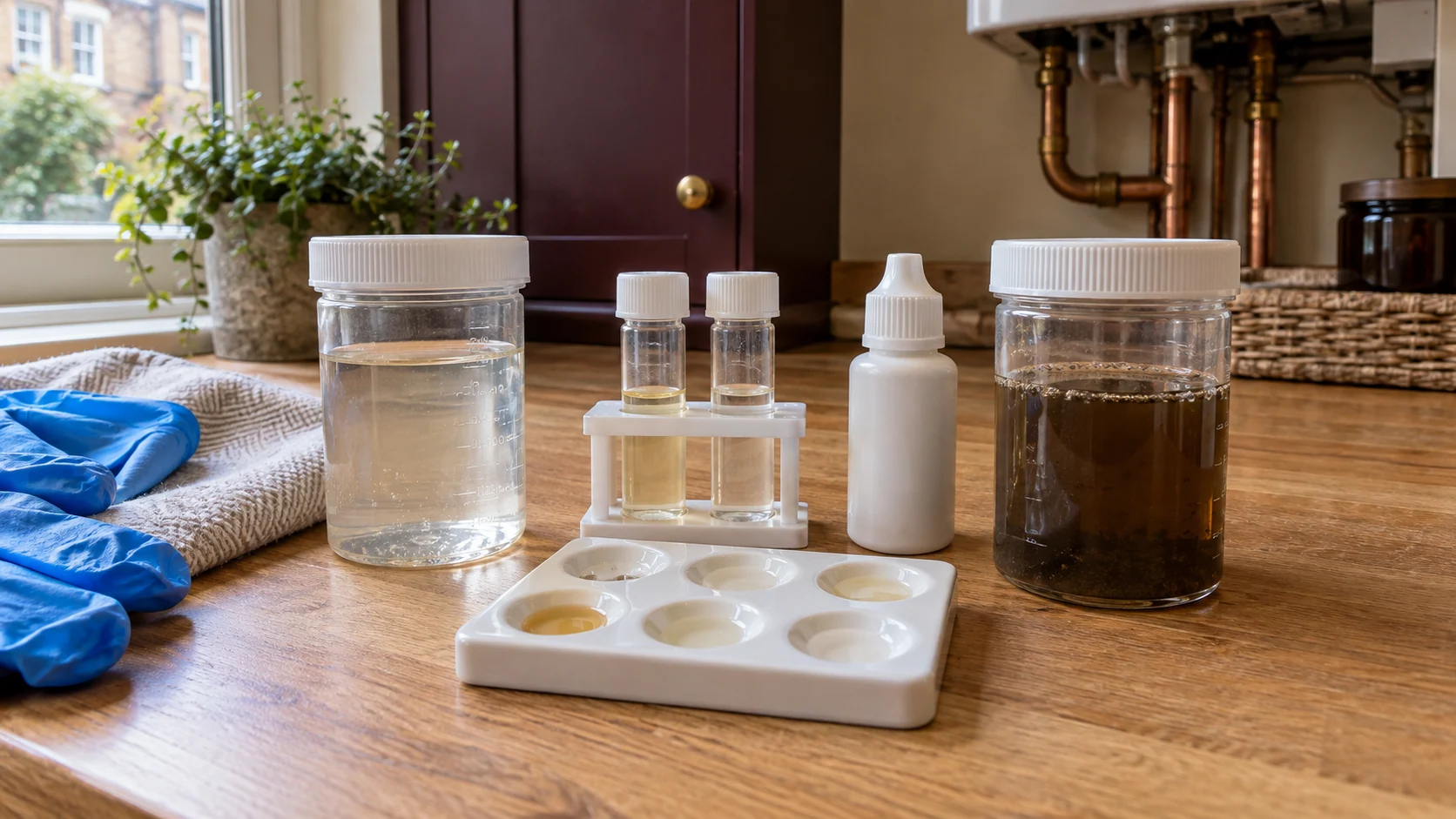
The point of cleaning is to address contamination affecting the heating — not simply to produce a clear-looking sample of water.

At handover, we return to the complaint that prompted the visit. Are the affected radiators responding? Is heat reaching the relevant parts of the circuit? Are there faults that cleaning has not addressed?

Water checks also need to suit the treatment used. Clear appearance alone does not establish correct inhibitor concentration or healthy water chemistry, as Fernox explains.

We explain what has improved, what remains unresolved and any further work recommended. A remaining cold room should have a reason investigated, not an automatic recommendation for another flush.

10 · Queen’s Park & nearby neighbourhoods

Queen’s Park and the surrounding neighbourhoods

We welcome powerflushing enquiries from Queen’s Park NW6, including homes around Salusbury Road, Harvist Road, Kingswood Avenue and Chevening Road.

Nearby coverage includes Brondesbury, Brondesbury Park and the South Kilburn and Kilburn Park edges. We also consider enquiries from Kensal Rise NW10 and Queen’s Park Estate W10. These are neighbouring areas, not interchangeable names for the same postcode.

For properties further towards W9, see powerflushing in Maida Vale. For the Notting Hill and Ladbroke Grove side, visit our Notting Hill powerflushing page.

Our London powerflushing service provides the wider overview. Send your full postcode so we can confirm arrangements for your property.

Before arranging the work

Questions before booking

Will a powerflush fix one radiator that stays cold?

It may help if contamination is restricting that radiator or its pipework. A valve fault, trapped air or balancing issue can require a different solution. We assess the symptom before recommending whole-system cleaning.

Do the radiators need to come off the wall?

They can usually remain in position during system cleaning. A suitable equipment connection or a particularly obstructed radiator may require removal. Any separate treatment is discussed as part of the scope.

Can recently installed radiators still need attention?

Yes. A new radiator may be connected to older pipework containing debris, or it may not receive adequate flow. Its age does not establish the cause; we check the circuit and recent changes.

Will heating and hot water be available during the work?

Heating will be interrupted during the appointment. The effect on domestic hot water depends on the boiler and system arrangement. We explain the anticipated interruption before work begins.

Does the service include inhibitor and a new magnetic filter?

Protection after cleaning forms part of the agreed treatment. Cleaning an existing filter and supplying a new one are separate scope items; a new filter should not be assumed to be included unless specified.

How often should a heating system be powerflushed?

There is no single interval suitable for every installation. Water condition, maintenance history and system performance guide the decision. Recurring contamination should prompt investigation of its cause rather than repeated cleaning alone.

Can I get a quotation without a visit?

Your postcode, radiator count, symptoms and photographs can help us understand the job. We will explain whether that information is sufficient or an on-site assessment is needed, including any assessment charge before booking.

What if cleaning does not resolve every heating problem?

We review any remaining symptoms and explain the next recommended step. A restricted circuit, inadequate radiator output or a failed component may require separate work. Any additional scope is agreed before proceeding.

A clear next step for your heating

Tell us where the warmth is missing

Send your full postcode, approximate radiator count and a short description of what the heating is doing. Include any recent boiler or radiator changes and tell us whether your home has its own boiler or communal heating.

PEP will help establish the appropriate next step, with the recommended work and quotation explained before you commit.