One radiator stays cold
A local valve, trapped air or a restricted branch may be responsible. The other radiators help us judge whether the problem is local or more widespread.
 Pure Energy ProjectElectrical · Heating · Plumbing
07825 268 434
Pure Energy ProjectElectrical · Heating · Plumbing
07825 268 434
Heating system cleaning · Ealing W5 & W13
Restore the flow.
Make more of the heating
you already have.


The boiler is running.
Why are some rooms still cold?
A warm hallway, a cold bedroom and radiators that never seem to heat evenly. Before replacing parts or turning the boiler temperature up again, it is worth finding out what is stopping the heat from getting through.
PEP provides powerflushing in Ealing W5 and West Ealing W13, assessing the existing heating system, agreeing an appropriate cleaning scope and checking how it performs afterwards. Where sludge and restricted circulation are responsible, a properly planned clean can help you make more of the heating you already have.
01 · Start with the cause
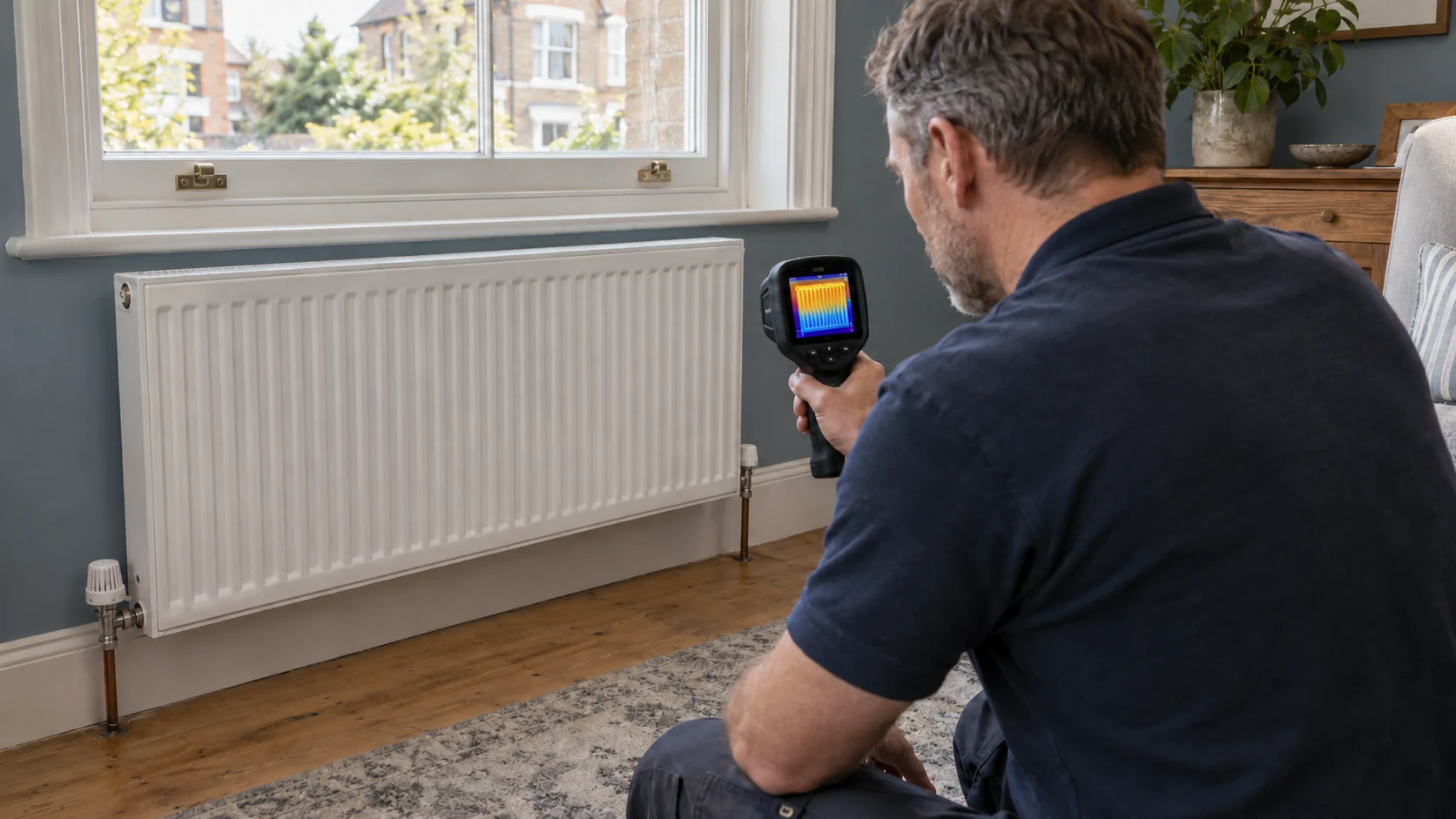
A cold radiator is a symptom, not a diagnosis. Deposits inside the system are one possibility, but air, a sticking valve, poor balancing, a pump problem or an unsuitable pipework arrangement can produce similar complaints.
We look at the pattern across the home: which radiators warm first, which stay cool, when the problem started and what has changed since the heating last worked properly.
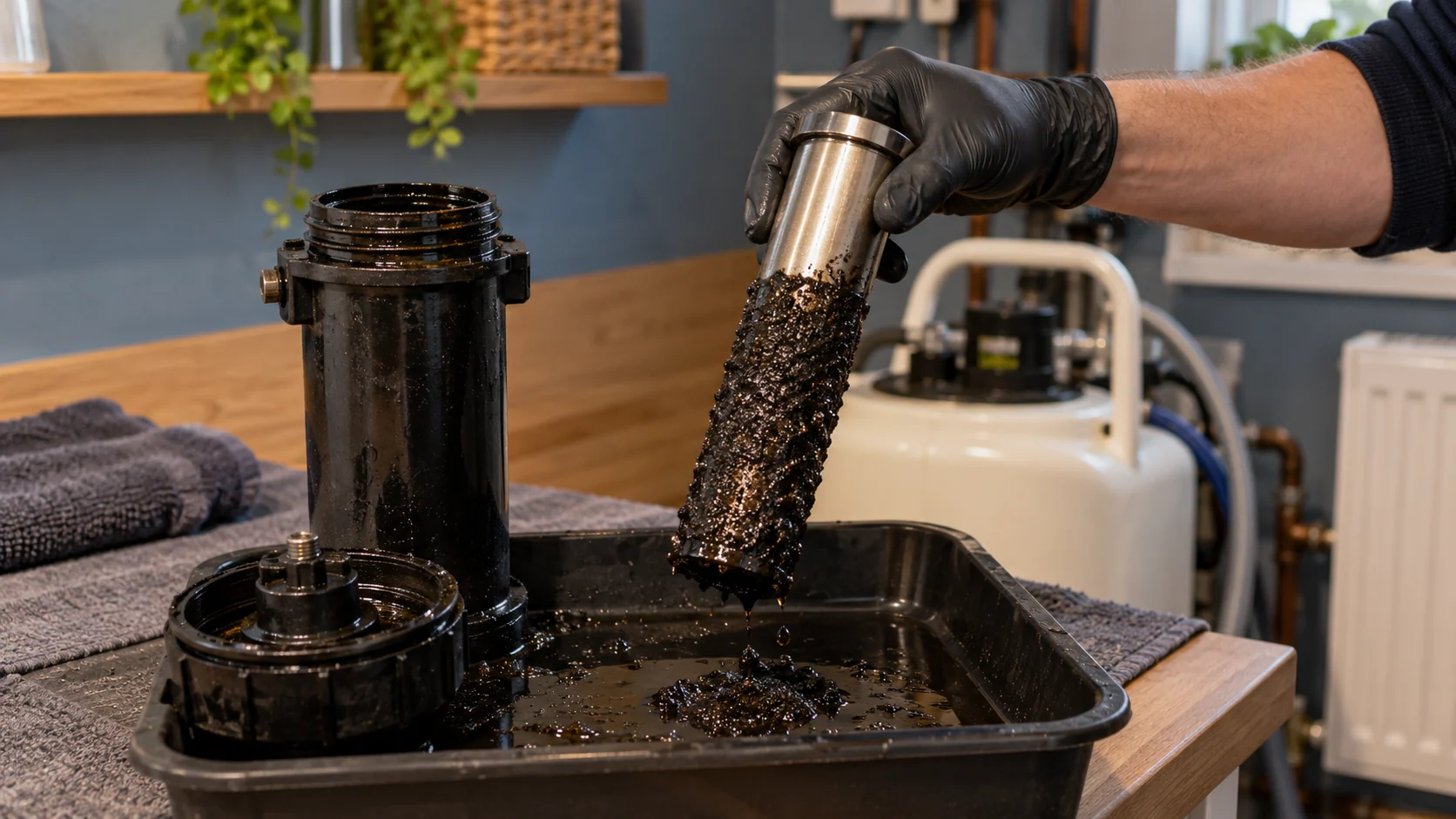
Dark system water or debris in a filter can support an assessment of contamination. Neither tells the whole story on its own. The purpose of the visit is to identify useful work, not automatically sell a whole-system powerflush.
A local valve, trapped air or a restricted branch may be responsible. The other radiators help us judge whether the problem is local or more widespread.
Restricted circulation and sludge become more relevant, but water distribution, pump operation and the system layout still need checking.
A new radiator, extension or repeated draining can change how the system behaves. Cleaning may form part of the answer, alongside adjustments or repairs.
Repeated pressure loss needs a separate investigation; powerflushing does not repair a leak or a failed expansion vessel. See our guide to boilers losing pressure.
02 · The heating you have inherited
A house near Ealing Common may retain older radiators while its boiler has already been replaced. A Northfields home may combine the original heating circuit with a later kitchen extension. In a converted flat around Ealing Broadway or West Ealing, accessible equipment may tell only part of the story.
These are different arrangements, not identical jobs distinguished only by radiator count. We consider retained pipework, later additions, separate zones and access before deciding how to approach the clean.
03 · A planned clean, from connection to handover
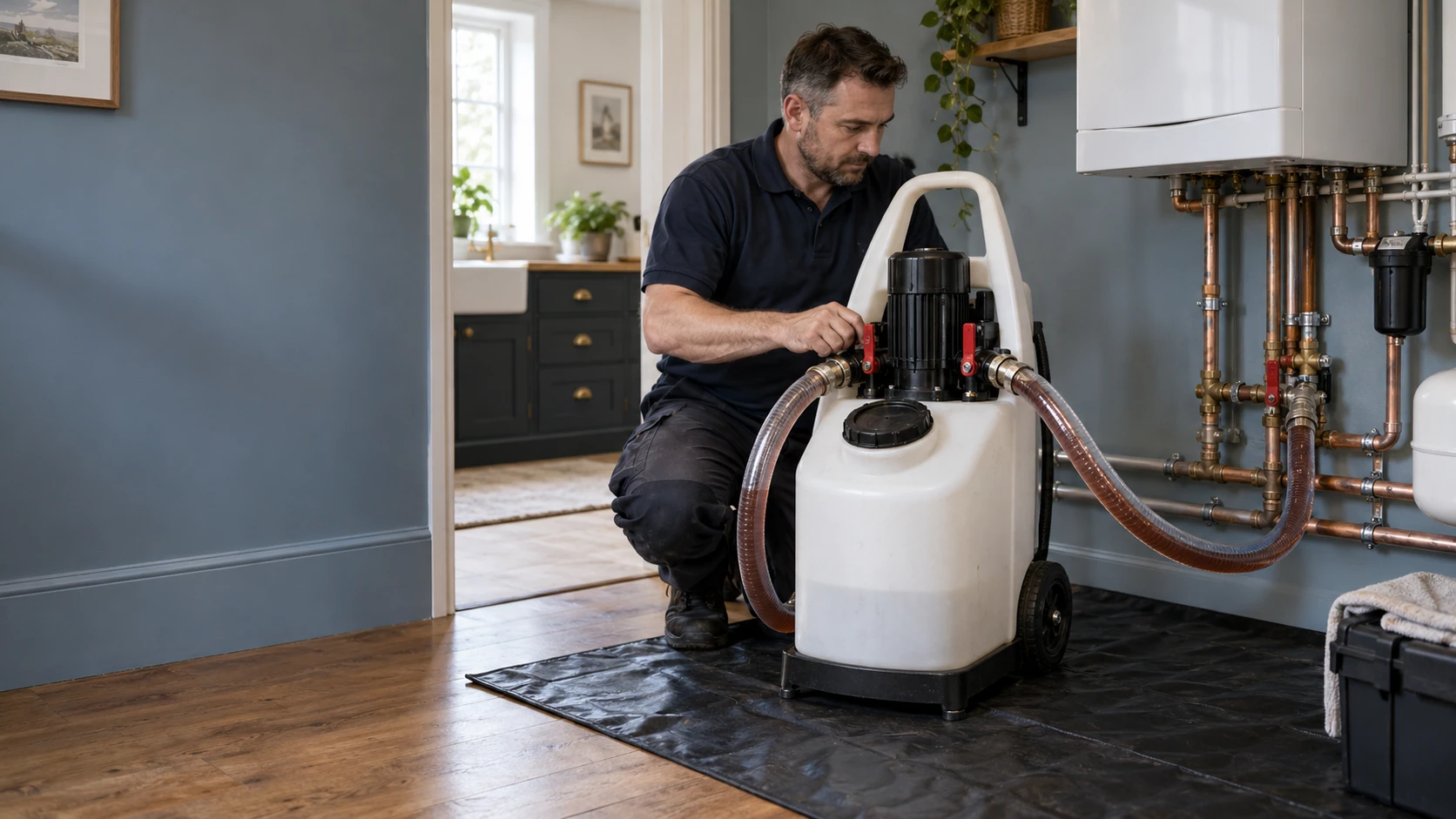
Powerflushing uses external pumping equipment and suitable cleaning treatment to loosen, circulate and remove contamination from an appropriate heating circuit. It is a controlled cleaning process, not an attempt to force every obstruction out with excessive pressure.
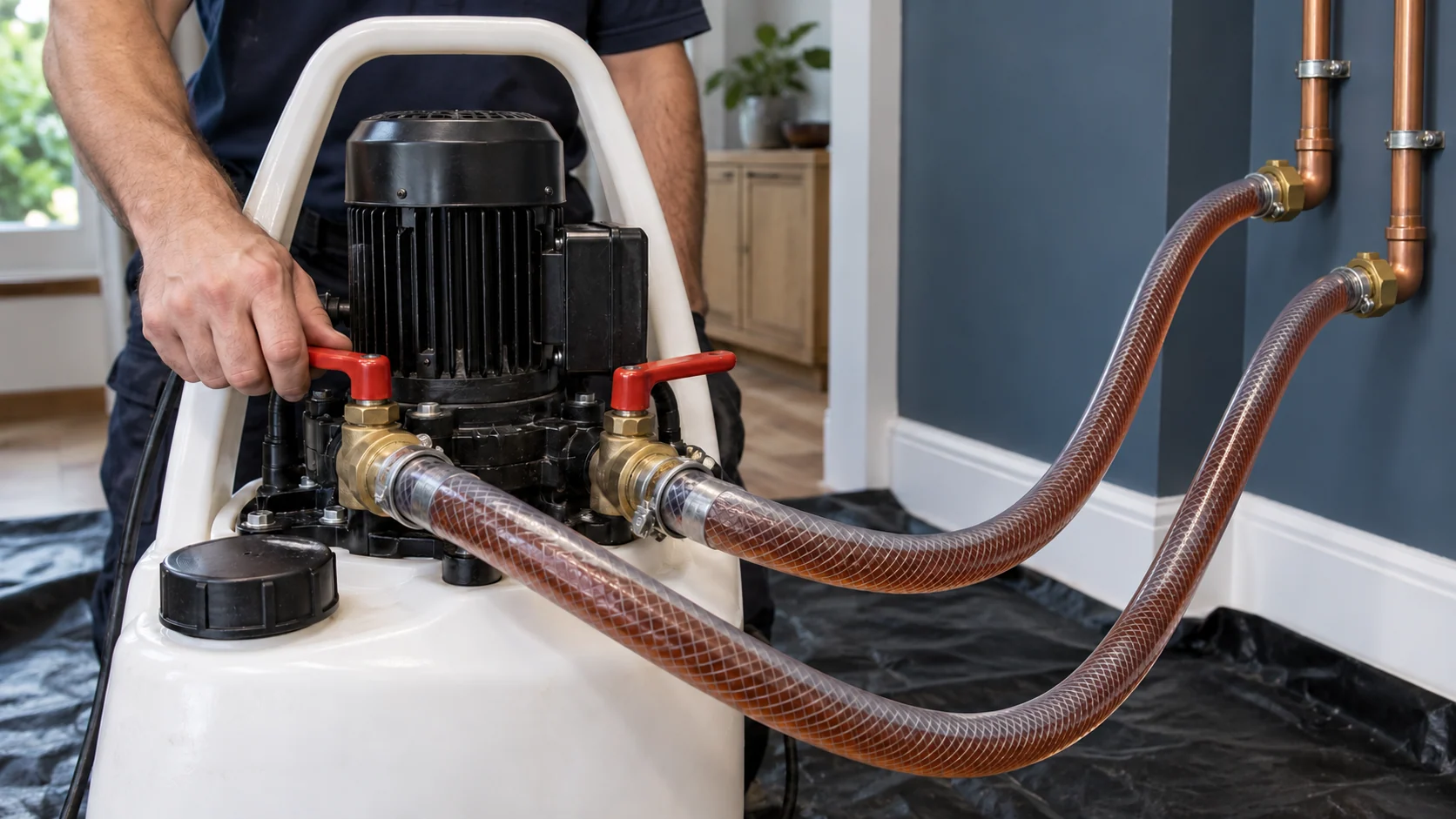
We review symptoms, accessible components, radiator condition and the proposed connection point. Existing leaks, fragile fittings or other concerns are discussed before cleaning begins. The agreed scope identifies which radiators and circuits are included.
Equipment positioning, hose routes, water supply and drainage arrangements are planned around the property. We protect the working area and discuss access to rooms and the expected interruption to heating and, where relevant, hot water.
Appropriate treatment is circulated with professional flushing equipment. Radiators and branches are worked through methodically, with flow direction changed where suitable. Released debris is removed rather than simply moved around the installation.
The system is rinsed appropriately, treated with compatible corrosion inhibitor and returned to operation. We check disturbed connections, circulation and heat delivery, then explain any remaining faults or recommended follow-up work.
04 · What the water leaves behind
Corrosion products can collect in radiators, pipework and filters. Removing that material is useful, but the system also needs protection against continuing deterioration.
We consider existing filtration and the water-treatment requirements of the installation. A permanent magnetic filter can collect circulating magnetic debris; it is not a substitute for addressing deposits already restricting the circuit.
Repeated water loss and topping up deserve attention because they can undermine ongoing protection. Cleaning should sit alongside the necessary repairs and maintenance, rather than becoming a recurring answer to an unresolved fault.
Cleaner-looking water is not, by itself, proof of adequate inhibitor protection. Relevant checks depend on the treatment used and the system requirements.
05 · Choose work that changes the outcome
These are not interchangeable services. Some installations need a combination; others need a targeted intervention rather than a whole-system clean.
Our powerflush decision guide explains the symptoms, alternatives and limitations in more detail. For separate valve or pipework alterations, see plumbing services in Ealing.
06 · Assess the installation, not just its age
An older system is not automatically unsuitable for powerflushing. Its condition, layout and available circulation matter more than age alone.
Microbore pipework and heavily restricted branches need careful assessment. Some can be cleaned effectively; a solid obstruction may require local investigation or replacement. Cleaning cannot restore metal lost to corrosion, and removing deposits may expose an existing weakness.
A home with both radiators and underfloor heating needs a defined scope. Manifolds, mixing arrangements, controls and individual loops should not be treated as if they were simply additional radiators.
We establish what can be isolated and cleaned appropriately, and whether the original symptom points to contamination or a different problem. Underfloor loops are not assumed to be included in a radiator powerflush quotation.
For a cold floor zone, our underfloor heating fault guide explains other causes worth considering.
07 · Clear scope before a price
Radiator count is a useful starting point, but it is not a complete specification. A straightforward circuit and a heavily restricted installation with several zones can require very different amounts of work.
The quotation should account for:
We distinguish the agreed cleaning work from separately priced additions. Any assessment charge, VAT treatment and exclusions should be clear before you book.
Expected working time and service interruption are discussed for your installation. A complicated system should not be promised the same completion time as a simple one merely to make the quotation sound easier.
08 · One coordinated installation
A new boiler does not remove contamination already present in retained radiators and pipework. System preparation needs to be considered before the appliance is installed.
PEP’s boiler installation service in Ealing includes a full-system PowerFlush within the installation package, subject to assessment and suitability of the existing heating circuit.
If you are already discussing a boiler replacement with us, we coordinate the cleaning within that scope. You should not need to book the same work twice. Known defects or limitations are explained before the preparation method is agreed.
Manufacturer boiler guarantees are separate from the cleaning service and remain subject to their own conditions.
09 · Return to the original problem
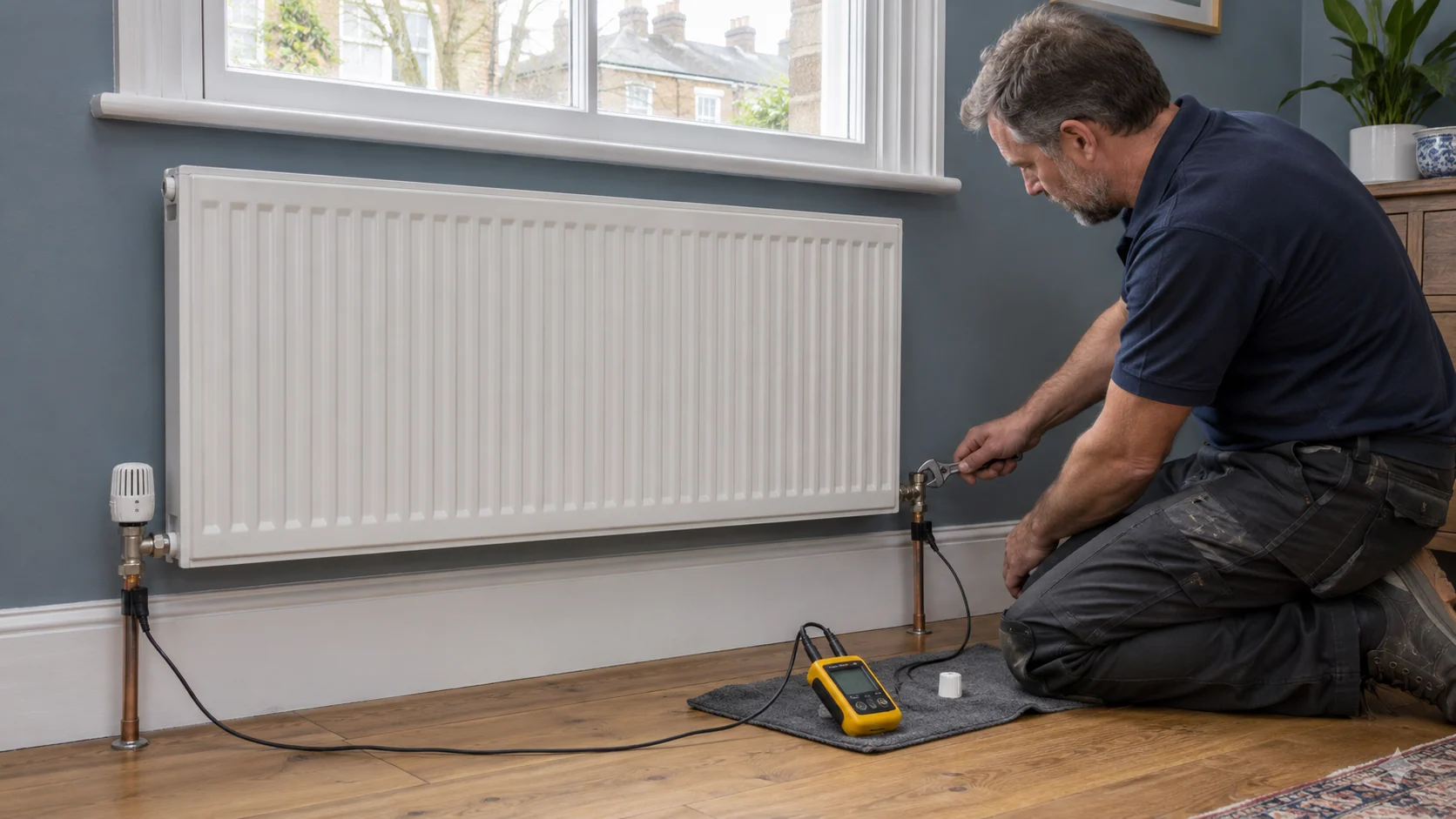
The useful question is whether the rooms that struggled before now receive heat properly. We review radiator heat-up, circulation and the behaviour of the system under operating conditions.
Relevant checks include the connections disturbed during the work, system operation and water treatment. Balancing and adjustments are considered where they form part of restoring effective distribution.
If a room still fails to heat because of a valve fault, an unsuitable radiator or another restriction, we explain what remains unresolved. Cleaning should not conceal the need for a separate repair.
We explain the work carried out, relevant findings and recommended aftercare. Ongoing maintenance should include appropriate water-condition and inhibitor checks, particularly after leaks, draining or other changes to the system.
10 · Ealing W5 & West Ealing W13
We cover Ealing Broadway, Haven Green, Ealing Common, South Ealing and North Ealing, together with relevant addresses around Montpelier, Hanger Hill, Pitshanger and Brentham.
Our W13 coverage includes West Ealing, Drayton Green, St Stephen’s and Castlebar. We also welcome enquiries from Northfields and the Lammas Park area, where the full postcode helps identify W5 and W13 addresses correctly.
This page focuses on Ealing and West Ealing, not every address in the wider borough. Please include your full postcode, especially near area boundaries.
For W3 addresses, see powerflushing in neighbouring Acton.
For neighbouring W4 addresses, see powerflushing in Chiswick. Our London powerflushing service explains the wider offering.
Before arranging the work
No. A local valve, air or flow problem can affect one radiator. We assess the symptoms across the system before recommending whole-system cleaning.
It can help where contamination restricts circulation, but bleeding and cleaning address different issues. A radiator that remains cold still needs its valves, flow and wider circuit assessed.
The price depends on the agreed radiator and circuit count, condition, access and any additional work. Send your postcode and symptoms so we can establish what is needed for a clear quotation.
Heating is interrupted during the work. The effect on domestic hot water depends on the equipment and connection method. We discuss the expected interruption for your system before the visit.
Some can be cleaned effectively, but condition and available circulation determine suitability. We cannot promise to clear every solid blockage or avoid repairs to deteriorated components.
Only where specified in the quotation. We assess the existing filtration and explain whether cleaning, replacement or an additional filter is appropriate.
The circuit arrangement, isolation and responsibilities must be established first. Work affecting a communal installation needs coordination with the building manager or relevant operator; it is not assumed to be a standard private-system powerflush.
Not automatically. Underfloor heating has its own pipework, manifold and control arrangements. The quotation needs to identify which circuits are included and how they can be treated appropriately.
Our Ealing boiler installation package includes a full-system PowerFlush, subject to assessment and suitability. We coordinate the agreed preparation with the replacement, rather than asking you to book overlapping work.
We review the remaining symptom and explain the findings. Cleaning cannot correct every valve, control, sizing or pipework problem. Any further work should have a clear reason and an agreed scope.
A clear next step for your heating
Send PEP your full postcode, an approximate radiator count and a short description of what is happening. Photographs of the boiler or heating cupboard can help; you do not need to remove covers or diagnose the system yourself.
We will explain the next assessment step and the information needed to agree suitable work.
Powerflushing in Ealing — assessed for your installation,
planned around your home and checked against the original problem.