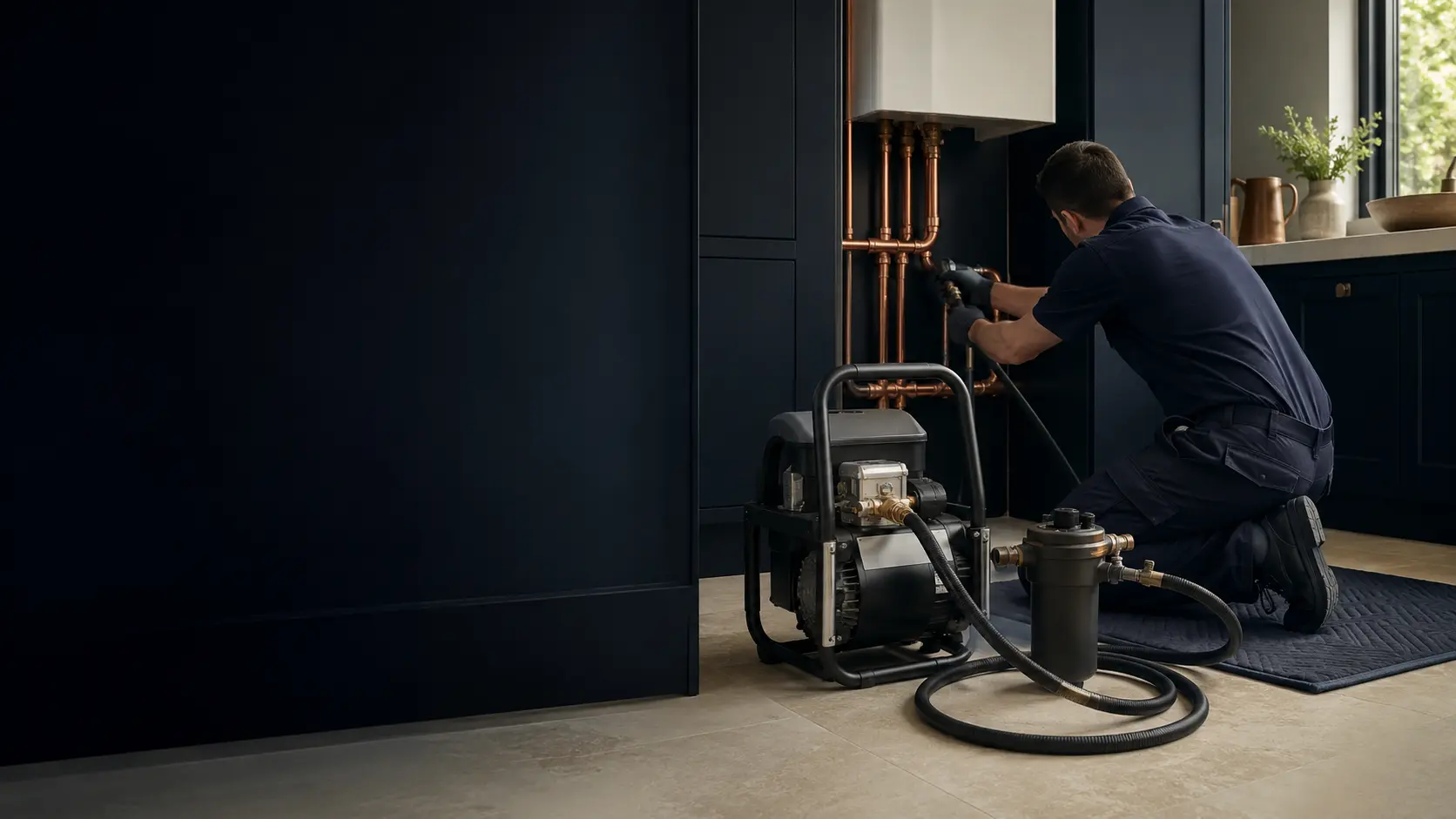
Cold areas at the bottom
A classic pattern when magnetite settles where circulation through a radiator is weakest.
 Pure Energy ProjectElectrical · Heating · Plumbing07825 268 434
 Central heating water quality · Chiswick W4
PEP diagnoses cold radiators and poor circulation before connecting equipment. Where contamination is confirmed, we clean each circuit with controlled high flow, magnetic filtration and appropriate treatment chemistry — then protect and recommission the system.
01 · The warning signs
Chiswick homes can combine period radiators, later extensions, newer boilers and several heating zones. That mix makes diagnosis more important: the symptom may be sludge, but it may also be a valve, pump, control or balancing problem.
One warning sign alone does not prove that a Powerflush is needed.
A classic pattern when magnetite settles where circulation through a radiator is weakest.
One part of the house becomes comfortable while another remains cool long after the system starts.
Kettling, gurgling and strained pump noise can accompany restricted flow or contaminated water.
Black or heavily discoloured water can indicate corrosion products moving around the circuit.
Recurring valve, pump or heat-exchanger problems can point to a water-quality issue upstream.
Existing debris should not be allowed to circulate through a newly installed appliance.
02 · Diagnosis before equipment
Cleaning heating water will not repair a failed pump, free a seized valve or correct poor hydraulic distribution. We inspect the system first so the work addresses the cause rather than the most visible symptom.
Our guide explains the warning signs that can indicate a heating system needs a Powerflush.
Compare the right interventionsBefore recommending a clean, we check
03 · The PEP process
Equipment creates flow; the method creates the result. We work through the installation systematically, capture released debris and verify normal operation before handover.
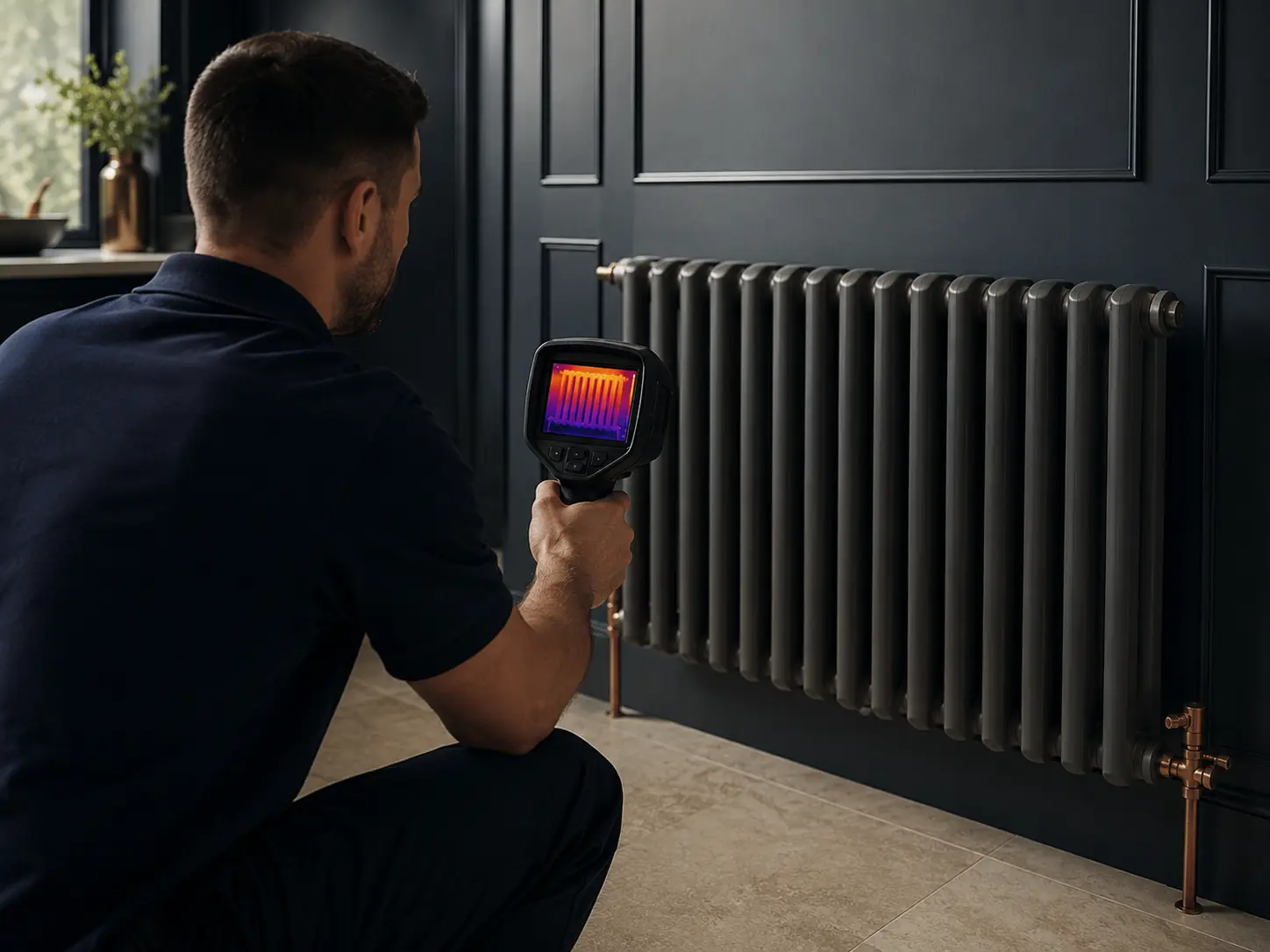
We map the symptoms, check circulation and separate contamination from balancing, control or component faults.
Floors and work areas are covered. Fragile or unsuitable parts are identified before equipment is connected.
Professional high-flow equipment and in-line magnetic filtration are connected at a suitable point.
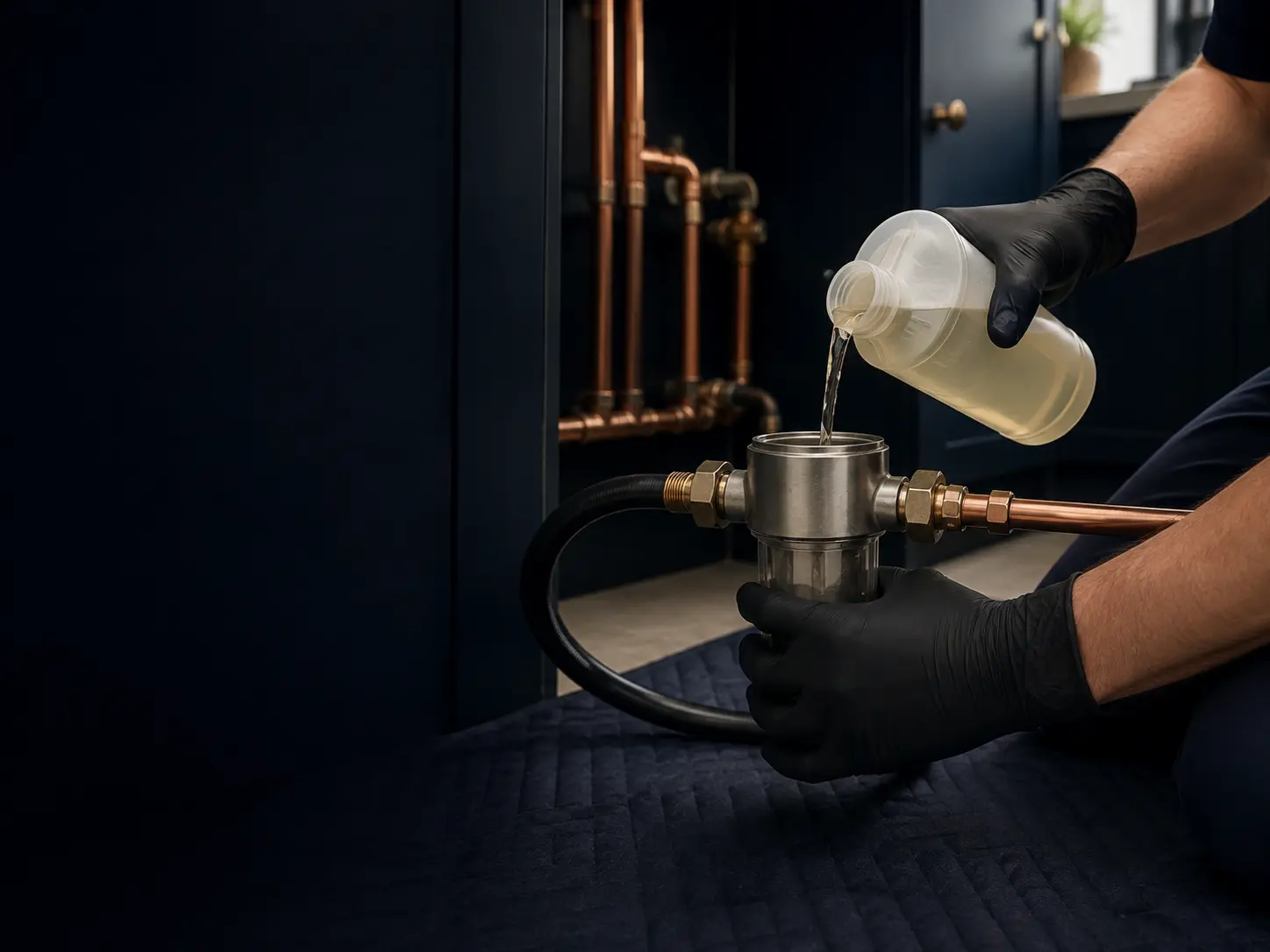
Appropriate treatment chemistry and directional flow work through each circuit to loosen contamination.
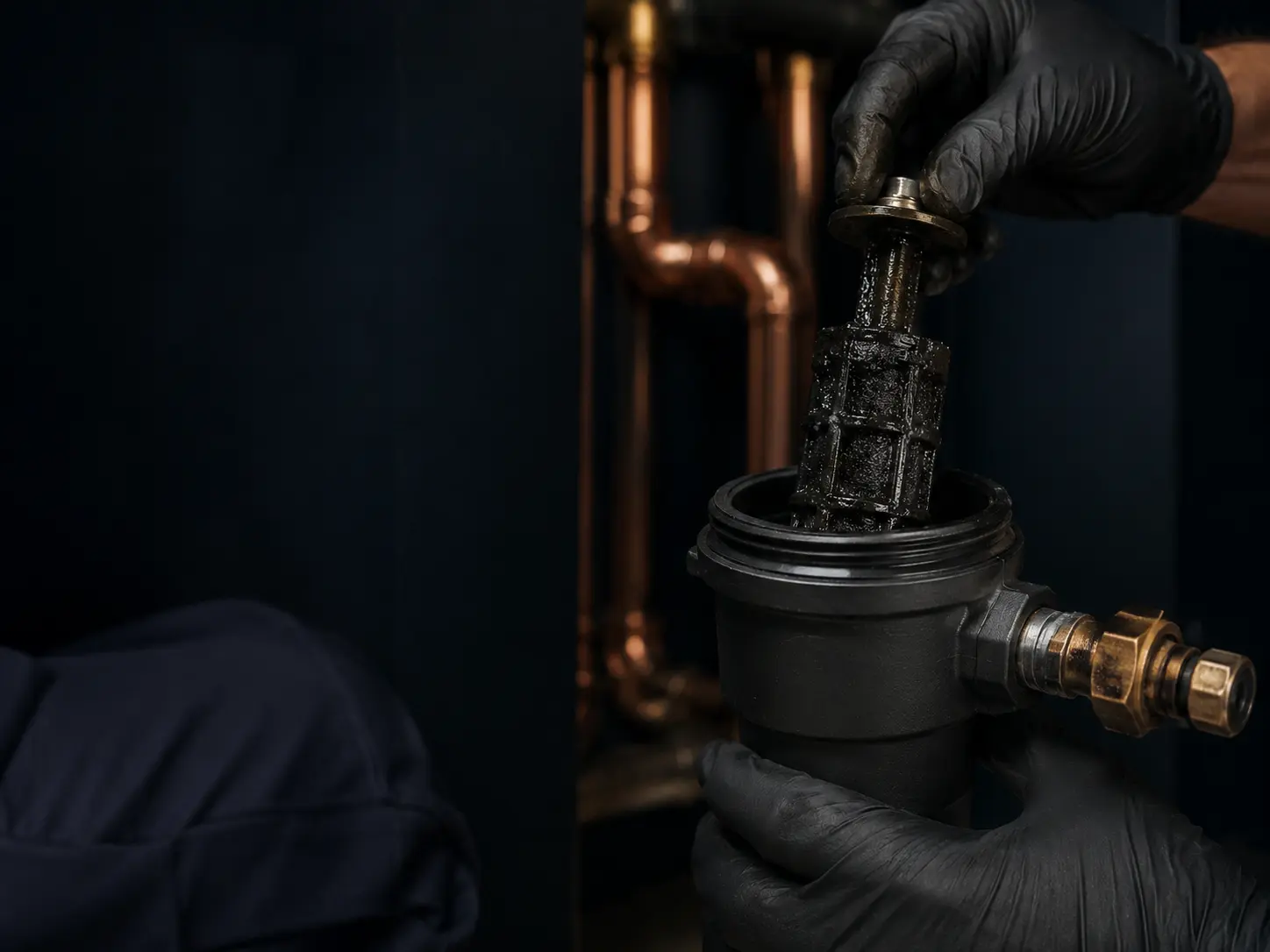
Magnetite is captured while individual radiators are worked through and the system is rinsed clean.
Fresh inhibitor is added before balancing, heat-up and normal operation are checked.
04 · Evidence of completion
A machine running for a set number of hours is not proof of a completed job. The system must be rinsed, protected, restored to operation and checked under normal heating demand.
Radiators are checked in operation rather than judged by the time the machine has been running.
The magnetic filter provides practical evidence of ferrous contamination removed from circulation.
The final fill includes fresh corrosion inhibitor appropriate to the heating system.
Controls, circulation and heat-up are restored and any remaining mechanical fault is reported clearly.
05 · Choose the intervention
Similar symptoms can have different causes. Choosing the least disruptive effective treatment protects the system and avoids paying for work that cannot solve the fault.
Compacted debris can sometimes mask an existing pinhole or weak joint. We explain the condition and risk before starting, adapt around vulnerable components where practical and stop if the system reveals a defect that changes the safe scope.
06 · Duration
Many domestic systems can be assessed, cleaned, rinsed and recommissioned in one day. Large properties, several zones or heavy contamination may require longer. The likely programme is confirmed before work begins.
07 · Quotation
Radiator count, heating zones, system type, access, contamination and known faults all affect the scope. Your quotation sets out what will be cleaned, how long it should take and any limitation identified at assessment.
08 · Chiswick coverage
PEP supports homeowners, landlords and managed properties throughout Chiswick. Tell us the property type, radiator count and symptoms and we will advise what should be checked first.
Check your address09 · Before you book
If the heating system is older, unusually configured or already leaking, send us the details. We will explain what can be checked safely before equipment is connected.
07825 268 434Cold radiator sections, slow heat-up, dirty system water and repeated sludge-related faults are warning signs, not proof on their own. We first check the heat pattern, circulation, valves, pump and controls so the recommendation is based on the cause.
No. A Powerflush treats circulation problems caused by contamination. A stuck thermostatic valve, air lock, weak pump, undersized pipework or poor balancing needs a different remedy. We identify those possibilities before recommending a deep clean.
Many domestic systems require most of a working day for assessment, cleaning, rinsing and recommissioning. Larger Chiswick properties, multiple heating zones and heavily contaminated circuits can take longer. We confirm the likely programme after understanding the system.
The quotation depends on radiator count, heating zones, system type, access, water condition and any known faults. We provide a clear scope after an assessment rather than using a headline price that may not fit the installation.
The process uses controlled high flow rather than excessive pressure and is adjusted to the installation. Cleaning cannot reverse existing corrosion. In a severely weakened system, removing compacted debris can reveal a pinhole or joint defect that was already being masked, so condition checks matter.
A Powerflush uses dedicated high-flow equipment, directional cleaning and magnetic capture. A chemical clean normally relies on the heating system's own pump and can suit lighter contamination. The correct option depends on water condition and available circulation.
Usually not. The equipment is connected to the heating circuit and each radiator is worked through in place. A severely blocked or physically compromised radiator may need separate attention, which we would discuss before changing the scope.
An older contaminated circuit should be cleaned so legacy debris is not introduced into the new appliance. The cleaning method should match the condition of the system; every PEP boiler installation includes an appropriate system clean as part of commissioning.
PEP's Chiswick Powerflush service sits alongside our wider Powerflush London → coverage and every boiler installation in Chiswick →, which includes a full system clean as standard.
See our broader central heating installation → work, our whole-system heating installation in Chiswick → for a full redesign rather than a clean, our Chiswick plumbing → service, or contact PEP → to discuss a Chiswick heating system.
Start with the right question
Tell us what the radiators and boiler are doing. We will help establish whether contamination is likely and what should be checked before a clean is booked.