
Heating pressure · Diagnosis first
Why Does My Boiler Keep Losing Pressure
A practical guide for London homes
Start with the pressure patternYou top up the boiler, the heating starts working again, and everything seems normal. Then the pressure drops. Perhaps it happens overnight, perhaps every few days, or only after the heating has been running.
If your boiler keeps losing pressure, repeated refilling is not a lasting solution. The underlying cause may be a leak, water escaping through a safety valve, a problem with expansion control, or an unreliable pressure reading. Finding the cause means looking at the heating system as a whole, not automatically blaming the boiler.
This guide explains what the different patterns can mean, what you can safely observe, and what a proper investigation should establish before you pay for repairs or replacement.
/ 01
First make sure you are looking at heating pressure
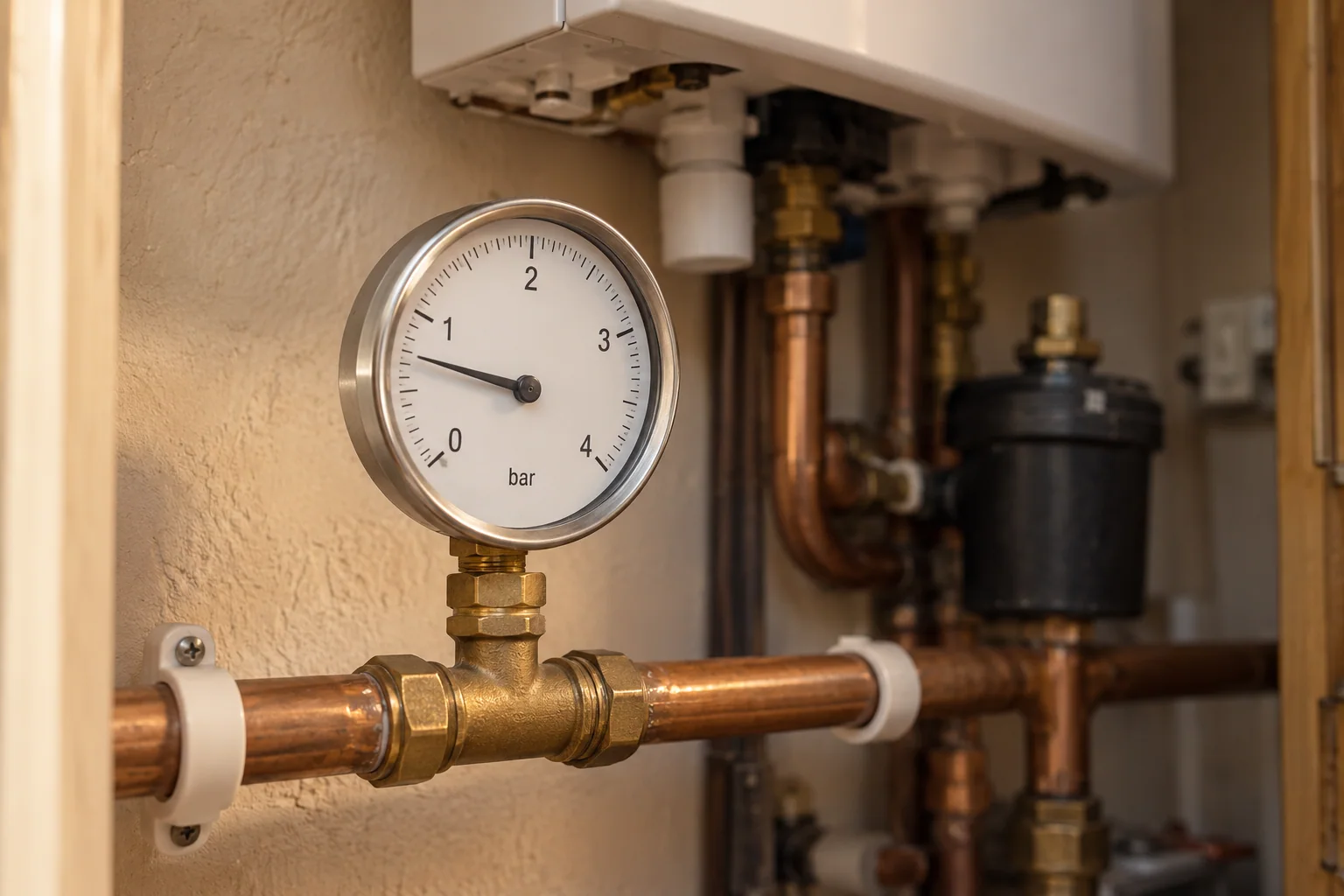
The pressure gauge on a typical sealed heating system measures pressure in the circuit serving the radiators and, where connected, water-based underfloor heating. It does not measure the pressure at your kitchen tap, the strength of your shower, or the gas supply.
A combi boiler can therefore show low heating pressure even when cold water flows strongly from the taps.
Likewise, a home with a hot water cylinder can have separate heating and domestic hot water circuits. A pressure issue on one side does not automatically explain a problem on the other.
If your concern is weak taps or showers, start with our guide to low water pressure in London homes. A mains water booster is not a repair for a sealed heating circuit that is losing pressure.
This article concerns sealed heating systems. An older open-vented installation, or a flat served by communal heating, may require a different assessment.
/ 02
What pressure should your boiler be
Check the user instructions for your exact boiler and installation. Many domestic systems operate around 1–1.5 bar when cold, but this is not a universal setting.
Worcester Bosch, for example, gives that range for a cool system in its guidance. Your manufacturer's instructions and the installation requirements take priority over a generic online number. See Worcester Bosch's advice on heating pressure.
Pressure normally rises as heating water warms and expands, then falls as it cools. The important question is whether it returns to its usual cold reading or keeps falling below it.
Compare cold readings with cold readings
A reading taken during an evening heating cycle cannot be fairly compared with one taken the following morning after the system has cooled.
Record the pressure under similar conditions over several days, provided the system remains within its permitted operating range. Include the time, whether the heating was running, and any top-up or fault message.
This helps distinguish normal temperature-related movement from a continuing loss. Do not keep running or refilling a system that is rapidly losing water simply to complete a log.
/ 03
What the pattern can tell you
These observations help direct an investigation. They do not identify a failed component on their own.
| What you notice | What needs checking |
|---|---|
| The cold reading becomes lower over successive days | Water loss, discharge and the reliability of the pressure indication |
| Pressure rises markedly when hot, then becomes very low when cold | Expansion control and whether the safety valve has discharged |
| The reading falls overnight after an evening heating cycle | Normal cooling first, then whether comparable cold readings continue to fall |
| Pressure drops after radiator bleeding or recent work | Whether the system was correctly refilled and whether the loss continues |
| The boiler needs topping up every day | A recurring fault requiring investigation, not routine maintenance |
| Water appears at an outside pipe | Which pipe it is, what it serves and whether the discharge is normal |
Try to describe the sequence rather than just the lowest number. “It rises sharply when heating, then falls below its usual cold level” is more useful than “the boiler pressure is wrong”.
/ 04
Why a boiler can lose pressure with no visible leak
No puddle does not necessarily mean no water loss. Some leaks leave only a small stain or crusty deposit; others occur in concealed places or discharge outside.
Start with accessible areas, without removing covers or disturbing fittings.
Radiators and visible pipework
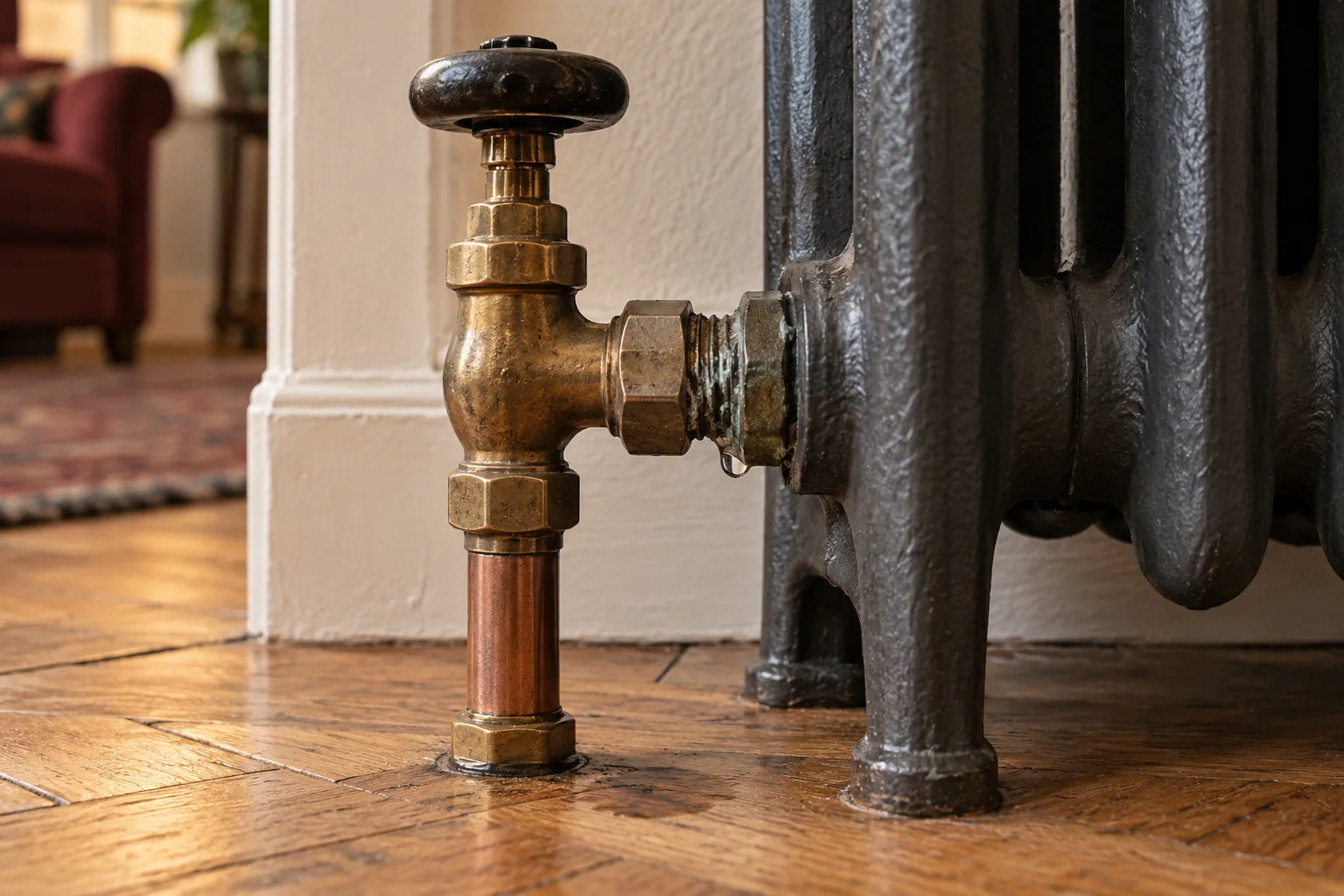
Look around radiator valves, exposed joints and towel rails. Check for dampness, staining, corrosion or marks on the flooring below. Small leaks can be intermittent or less obvious once nearby surfaces have dried.
Photograph anything unusual. Do not tighten random fittings or repeatedly bleed radiators as a way of investigating pressure loss.
Concealed heating pipes
Pipework may run beneath floors, behind kitchen units or through service ducts. This matters in London properties where several refurbishments may have left a mixture of old and new heating routes.
Nevertheless, low pressure alone does not justify lifting a finished floor. Accessible components and discharge routes should be assessed before concealed pipework is blamed.
Components inside the boiler
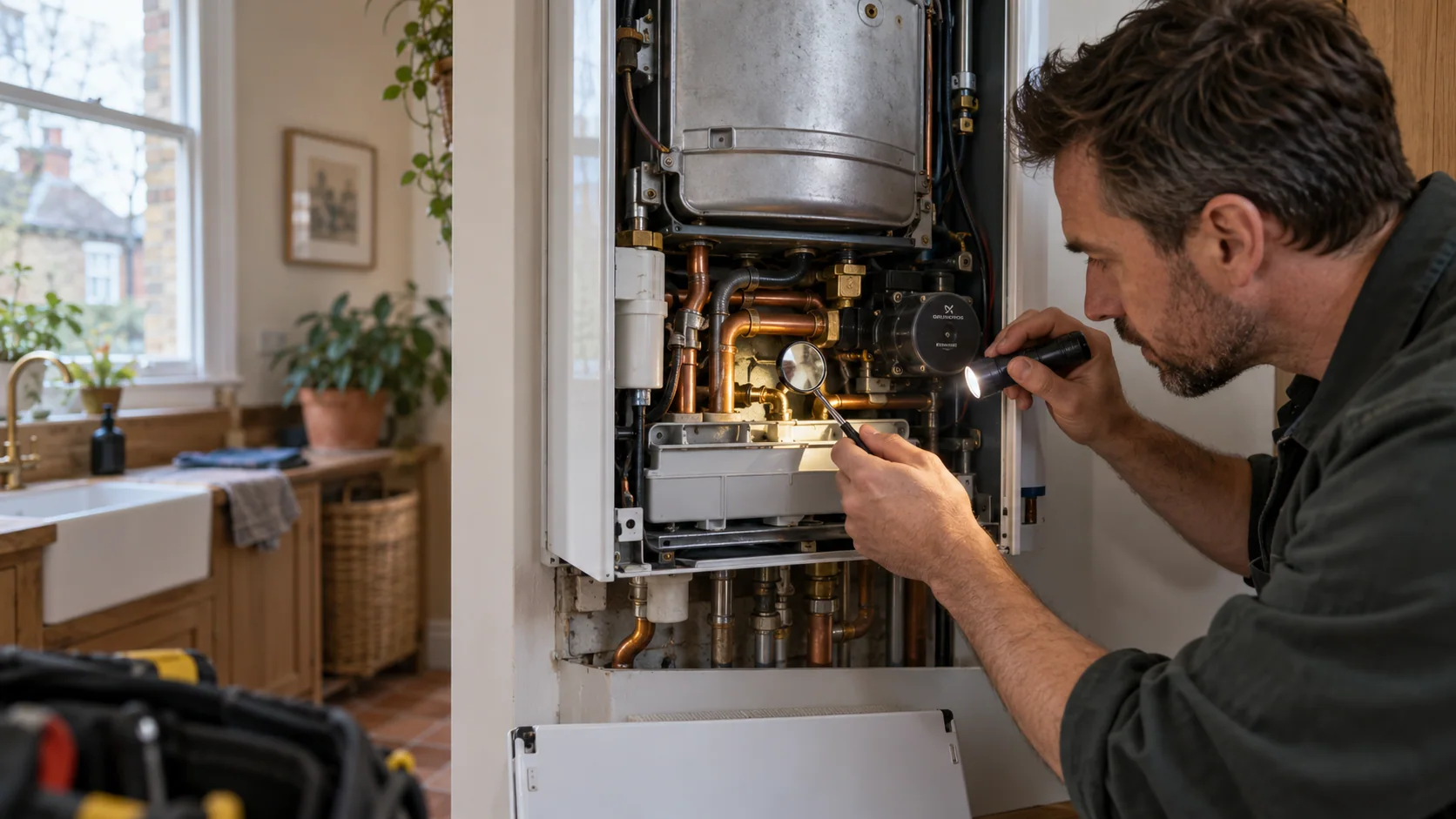
Water loss can also occur within the appliance, where it is not visible during an ordinary household check. Do not remove the boiler casing to investigate.
Vaillant's pressure-loss guidance identifies both system leaks and appliance problems as possible causes. The useful distinction is not simply “leak or no leak”, but where water might be leaving and how that can be established safely.
/ 05
Expansion vessels and pressure relief valves
These components have different jobs, but a fault involving one can produce symptoms at the other.
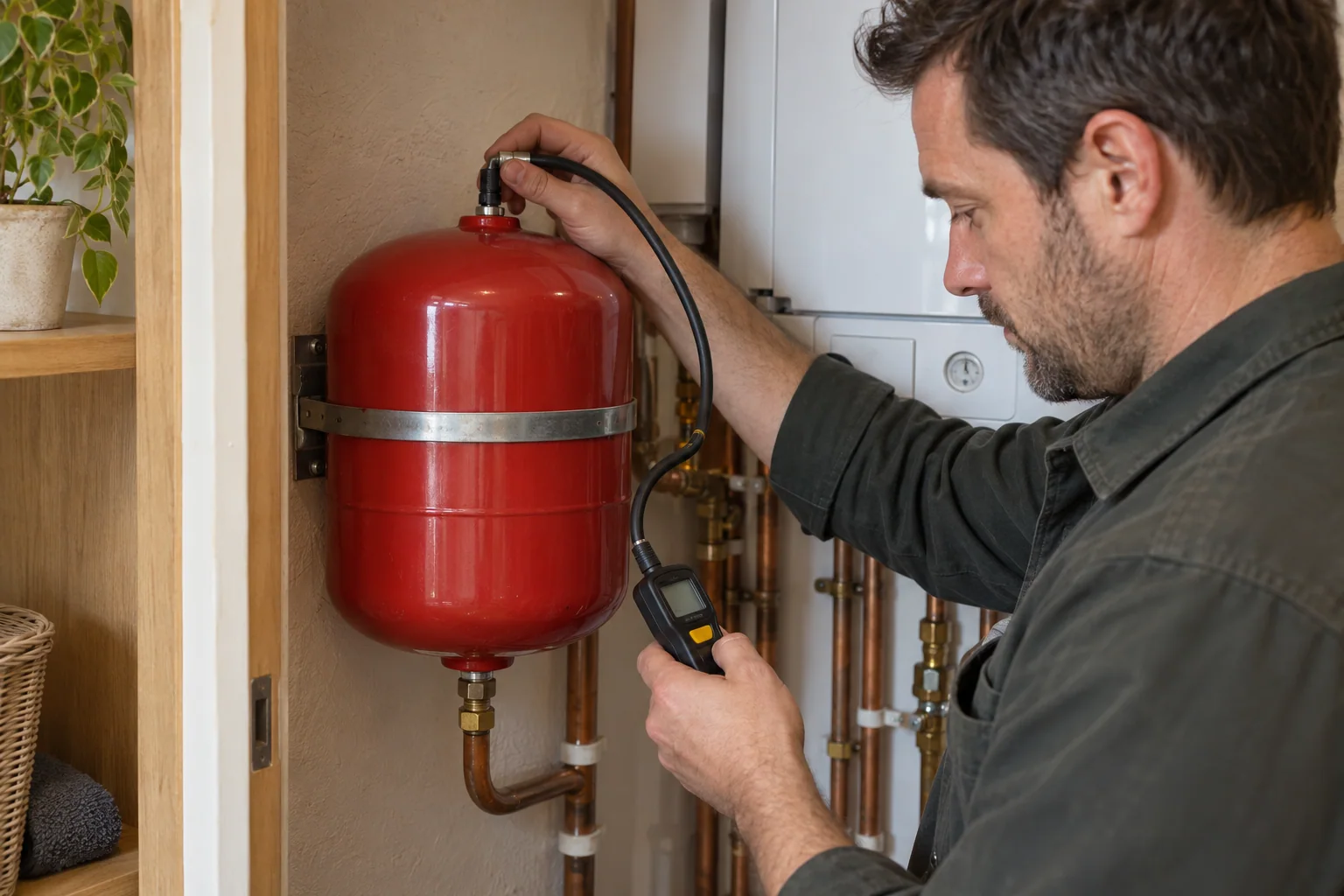
An expansion vessel accommodates the increase in water volume as the system heats up. Typically, a diaphragm separates the heating water from a compressible gas charge. If the vessel loses its charge, develops a fault or provides insufficient capacity for the installation, pressure may rise excessively during heating. Viessmann explains the vessel's function here.
The pressure relief valve, often called the PRV, protects against excessive pressure by releasing water. Once the system cools, the remaining water may be insufficient to maintain its normal cold pressure.
That can create a frustrating cycle:
Refill → heat up → excessive pressure rise → discharge → low pressure again.
This pattern is a reason to investigate expansion control and discharge together. It is not proof that either component needs replacing.
A discharging PRV may be doing its job correctly. Alternatively, contamination or damage can prevent it from sealing properly. Replacing a valve without establishing why it opened can leave the original problem unresolved. Vaillant's PRV guide explains its protective role.
Do not cap, obstruct or interfere with a safety discharge. Vessel testing, recharging and valve repairs are not homeowner checks.
/ 06
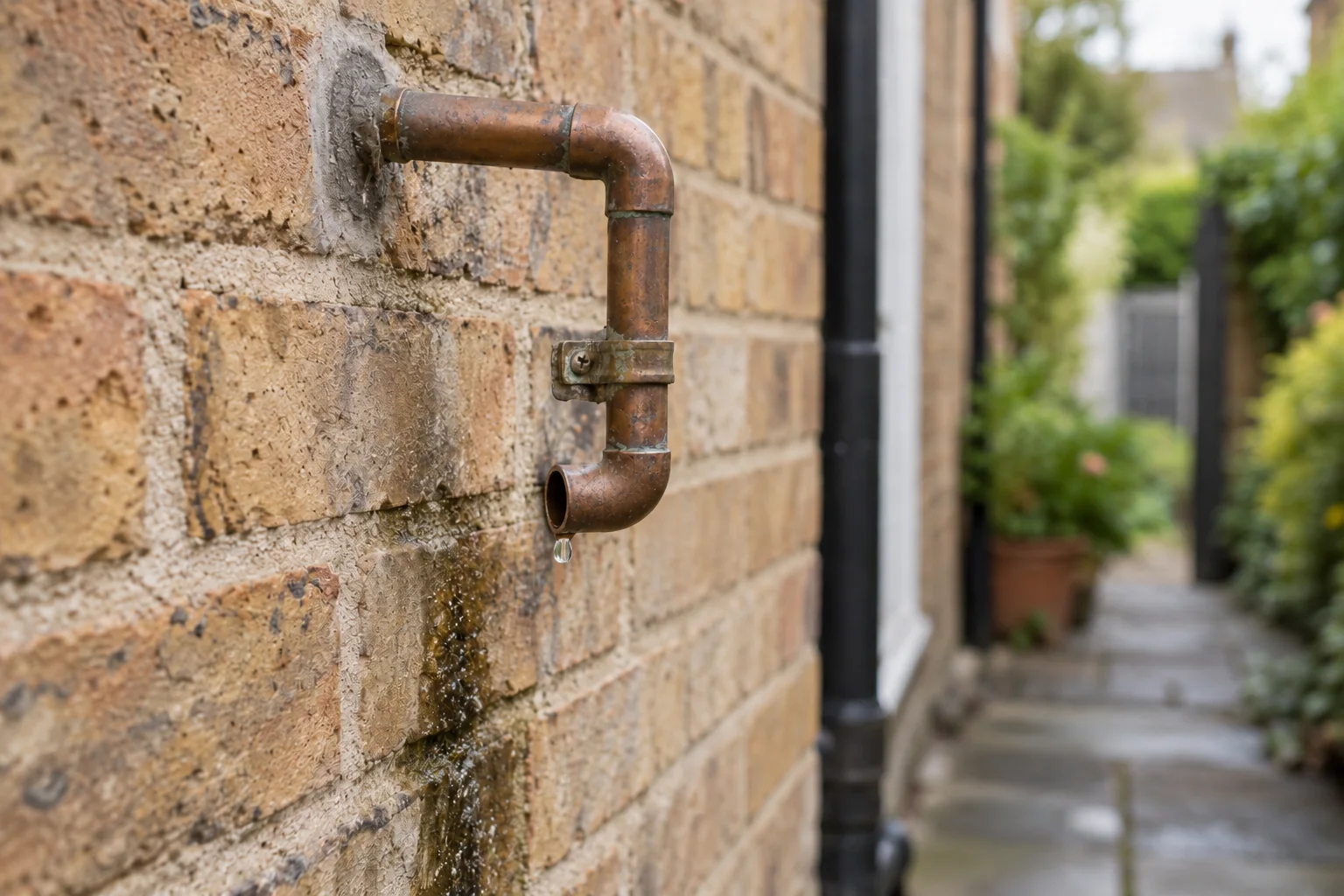
Is the outside pipe dripping
First establish which pipe you are looking at.
A condensing boiler normally produces condensate, which drains away through its condensate pipe. Water passing through that route during operation is not, by itself, evidence that heating water is leaking. See Vaillant's explanation of a condensate pipe.
A safety-valve discharge has a different purpose. Unexplained dripping or discharge from that route is relevant to a pressure-loss investigation.
Do not identify a pipe solely by its colour or position. Photograph the visible outlet and note when water appears, without touching potentially hot discharge or disconnecting anything.
Also report any recent filling. A filling valve that is not properly closed, or is passing internally, can allow mains water into the heating circuit and raise pressure. That is not a direct explanation for low pressure, but it can lead to overpressure and subsequent discharge. British Gas describes filling-valve and pressure issues.
/ 07
Pressure loss after bleeding radiators or recent work
Bleeding a radiator can reduce system pressure. Work involving draining and refilling can also leave a need for final venting and a pressure adjustment.
One correction following known work is different from needing to add water repeatedly afterwards. If the cold reading keeps falling, the cause still needs investigating.
Tell the engineer whether the problem began after:
- Radiator or towel rail replacement.
- Boiler servicing or installation.
- Underfloor heating work.
- A system extension or new heating zone.
- Conversion from open-vented to sealed heating.
A new boiler does not mean all the connected pipework, valves and emitters are new. Equally, a problem after installation should not automatically be dismissed as old pipework: the new installation and commissioning need checking too.
Our conventional-to-combi conversion guide explains why conversion planning involves more than exchanging the appliance.
/ 08
What if your home has radiators and underfloor heating
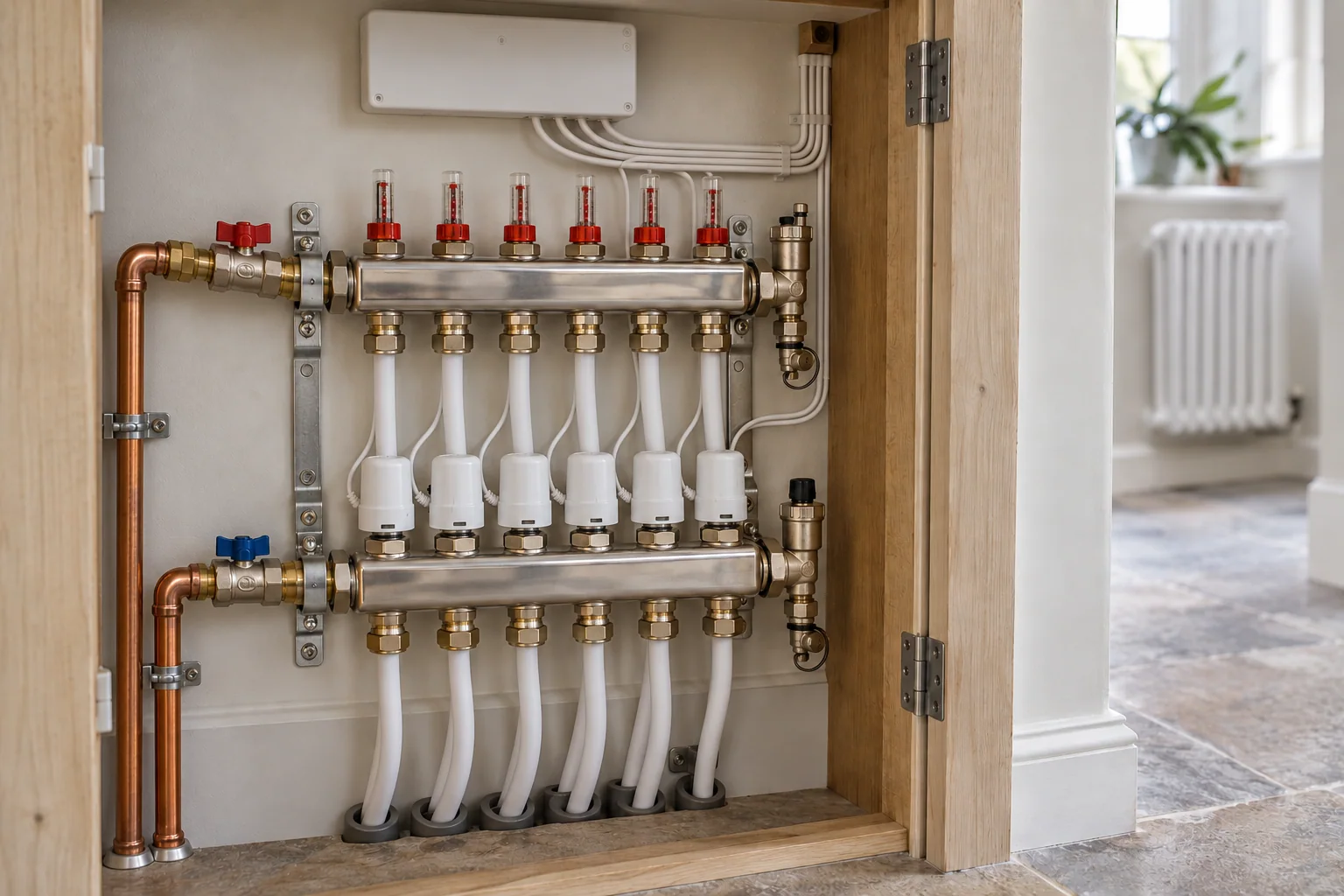
Where radiators and water-based UFH share the same sealed heating water, a pressure problem can involve either part of the installation.
The investigation may need to include manifold connections, accessible valves, pumps and distribution pipework alongside the boiler and radiators. A manifold mixing valve does not, by itself, create a separate sealed pressure circuit.
Some installations do have physically separated circuits using a heat exchanger. Certain heat interface units also separate a flat's heating water from the building's primary network. Their layout must be identified before deciding what a particular gauge represents. Caleffi describes heat-exchanger applications, including apartment heating separation.
Do not close unfamiliar manifold or boiler isolation valves to conduct your own pressure test. Incorrect isolation can affect circulation and safety arrangements.
If the main symptom is a cold room or an unresponsive UFH zone, our guide to underfloor heating that is not working helps separate pressure concerns from controls and circulation problems.
/ 09
What you can safely check
The most useful homeowner contribution is a clear record of what happens.
- Identify the boiler. Note its make, model and any displayed fault code.
- Record comparable readings. Photograph the gauge when the system is cool, with the date and time.
- Describe the timing. Does the problem follow heating, bleeding or recent work?
- Look for visible evidence. Check accessible, dry areas for staining or leaks without opening equipment.
- Check the user manual. Establish whether it permits you to restore pressure and which filling arrangement applies.
Worcester Bosch, Vaillant and Viessmann boilers do not all use the same filling method. Even within one brand, arrangements differ.
If the manual allows a homeowner top-up, follow that exact procedure and target pressure. Do not improvise with unidentified valves, force a filling control or leave a filling connection open. Worcester Bosch's filling guidance illustrates why identifying the arrangement matters.
If you cannot identify the correct procedure, pressure does not respond as expected, or the system quickly loses pressure again, stop and seek qualified assistance. Do not keep resetting a lockout or try to defeat a safety control.
When it needs urgent attention
Rapid water loss, significant discharge or water near electrical equipment needs prompt professional attention. Keep away from wet electrical equipment and do not attempt an internal repair.
If you smell gas or suspect carbon monoxide, leave the property and call the National Gas Emergency Service on 0800 111 999 from a safe place outside. Do not operate electrical switches or create flames. Follow the emergency service's instructions. See Cadent's gas emergency advice and carbon monoxide guidance.
An ordinary low-pressure reading, without those signs, is not itself a gas emergency.
/ 10
Why repeated topping up is not a repair
Refilling may restore operation temporarily, but it does not explain where the previous water went.
Repeated water replacement can also dilute the corrosion inhibitor protecting the installation. Sentinel identifies top-ups and leaks among the reasons inhibitor concentration can fall. After repairs or substantial refilling, the system's water treatment should be checked rather than assumed to remain correct. Sentinel's inhibitor guidance.
Neither a powerflush nor a smart heating control is a universal cure for pressure loss. Cleaning may be appropriate where contamination is established, but it will not repair a leaking joint or restore a defective vessel.
Our guide to when a heating system needs a powerflush explains why cleaning should follow assessment.
Leak monitoring also has limits. Shutting off incoming mains water does not remove water already held in a sealed heating circuit. Our water leak protection guide explains why protection must be matched to the system.
/ 11
What a proper investigation should establish
A useful diagnosis should answer more than “can we get the pressure back up?”
The exact sequence depends on the installation, but the scope should normally consider:
- Whether the pressure indication is credible and appropriate for the system.
- How pressure changes between cold and operating conditions.
- Visible leaks and relevant discharge routes.
- Expansion provision and the condition of associated components.
- Filling controls and recent alterations.
- Whether further investigation should focus on the appliance or connected distribution pipework.
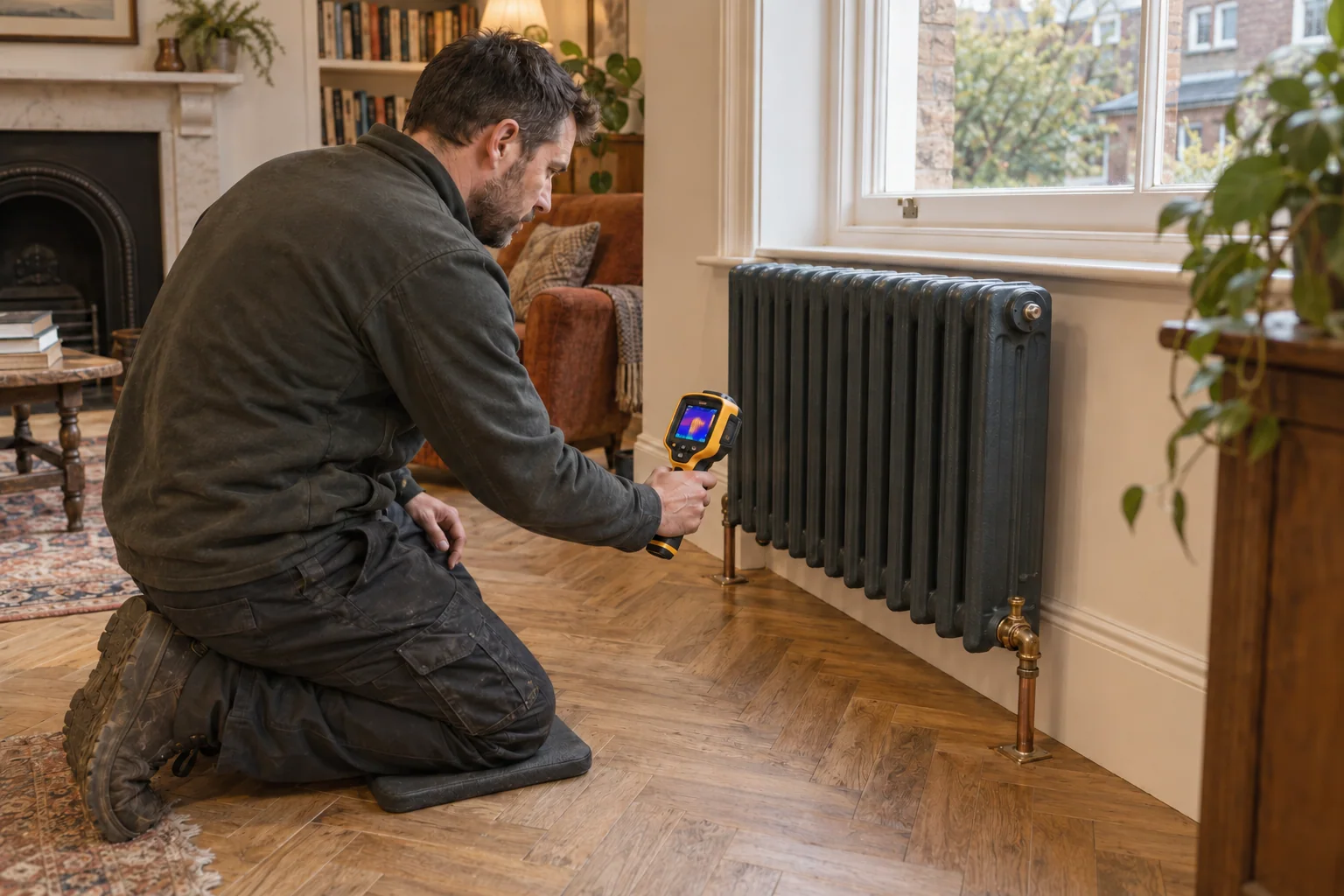
Any sectional isolation, testing or internal appliance work should be undertaken by appropriately qualified professionals, with the system safely restored afterwards. Work on the gas boiler should be handled by a Gas Safe registered engineer competent for the appliance.
Before more invasive investigation, ask what the initial checks established, what the next test is intended to prove and whether access or reinstatement is included.
The repair should address the cause, not merely restore the gauge reading. Afterwards, agree how pressure stability will be checked and what to report if the problem returns.
/ 12
Repair costs and whether you need a new boiler
There is no reliable single price for “a boiler losing pressure”. An accessible leaking connection, a component fault and concealed pipework investigation involve very different work.
Ask for clarity on diagnostic charges, what is included, the approval point for further work and any additional access or making-good costs.
Pressure loss alone is not a reason to replace a boiler. Replacement becomes a separate decision based on the confirmed fault, appliance condition, parts availability, repair economics and future heating requirements.
A new appliance will not necessarily resolve a leak elsewhere in the heating system. Where replacement genuinely makes sense, our boiler replacement information provides a starting point for that discussion.
/ 13
Frequently asked questions
Can I keep using a boiler with low pressure
Follow the manufacturer's operating limits. Do not override a low-pressure lockout. If pressure is outside the permitted range, keeps falling rapidly or is accompanied by a leak, arrange assistance rather than repeatedly restoring operation.
Why does it seem to lose pressure only overnight
Cooling naturally reduces pressure, so compare cold readings taken under similar conditions. If those readings continue to fall, or the system regularly requires refilling, cooling alone does not explain the pattern.
Could the gauge or sensor be faulty
Yes. The indication itself may need checking. However, do not assume a low reading is harmless because the heating still works. Fault codes also require model-specific interpretation; they do not always identify a single failed part.
Does no visible leak mean the floor must come up
No. Accessible joints, appliance components, discharge routes and expansion control should be considered first. Concealed pipework investigation should follow evidence, with the likely access and reinstatement explained.
Will a water pressure booster help
No. Boosting the domestic supply does not repair a sealed heating circuit that is losing water or failing to manage expansion. Weak taps and falling heating pressure are different problems.
Who should I contact in a rented flat or communal building
Notify the landlord or managing agent and describe the symptoms. Confirm whether the appliance and heating circuit are individual to the flat or part of a managed communal installation before authorising work or touching shared equipment.
/ 14
Discuss a recurring heating pressure problem with PEP
Send PEP your postcode, boiler make and model, a photograph of the pressure reading and a short description of how quickly it changes. Mention recent work and whether the property has radiators, underfloor heating or both.
These details help us confirm the appropriate next step and the scope of work before arrangements are made.
PEP's London coverage includes Notting Hill, Chiswick, Kensington, Chelsea, Hampstead, Maida Vale and St John's Wood. Whether the answer involves targeted work or a wider heating upgrade, the starting point should be an understanding of the existing installation.
Contact PEP about your heating pressure problem.
Restore the pressure when appropriate. Find the reason when it keeps falling.
Discuss your heating pressure