

The London homeowner’s guide
Low Water Pressure in London Homes: Causes, Checks and the Right Fix
Find the cause before choosing the fix. Clear checks for taps, showers and the whole home.
Start with your symptomsA shower that loses strength when someone opens the kitchen tap. A bath that takes too long to fill. Hot water that barely reaches the upstairs bathroom, even though the cold tap seems fine.
These problems are often described as “low water pressure”, but they do not necessarily share the same cause. A restricted showerhead, an ageing supply pipe, a hot-water system limitation and a communal building supply need different investigations — and different solutions.
Before replacing a boiler or buying a pump, the useful questions are simpler: where is the water weak, when does it happen, and what changes when another outlet is used?
This guide explains how to recognise the main patterns, what you can safely check yourself, and when the next conversation should be with a plumber, your building manager or your water supplier.
Start here: which description matches your home?
The pattern of the problem is usually more useful than the phrase “low pressure”.
| What you notice | What needs checking first |
|---|---|
| Only one tap has a weak stream | The outlet, aerator, local valve and connecting pipework |
| The shower is weak, but nearby taps work normally | The showerhead, hose, filters, mixer and compatibility with the supply |
| Hot water is weak throughout the home, but cold water is reasonable | The hot-water system and its associated controls and pipework |
| Both hot and cold water are weak across several rooms | The incoming supply and anything shared by the affected outlets |
| Performance drops when another tap or appliance runs | Available flow under demand, restrictions and system capacity |
| Several flats or neighbouring properties are affected | A shared supply, communal equipment or a wider supply issue |
These are starting points, not diagnoses. Two faults can exist together, and apparently similar outlets may be supplied differently.
Water pressure, flow rate and boiler pressure are different
Water pressure is the force available
Pressure describes the force acting on the water. In domestic plumbing, it is commonly measured in bar.
The pressure recorded while no water is being used is not necessarily the pressure available at your shower while other outlets are running.
Flow rate is the amount delivered
Flow rate is the volume of water delivered over time, normally expressed in litres per minute.
A tap can have reasonable pressure behind it but still deliver poor flow because water must pass through a restriction. Conversely, a deliberately flow-limited tap may deliver a modest volume without indicating a fault elsewhere.
Pressure and flow must therefore be considered together. Worcester Bosch makes this distinction in its guidance on mains supply performance and combi boilers.
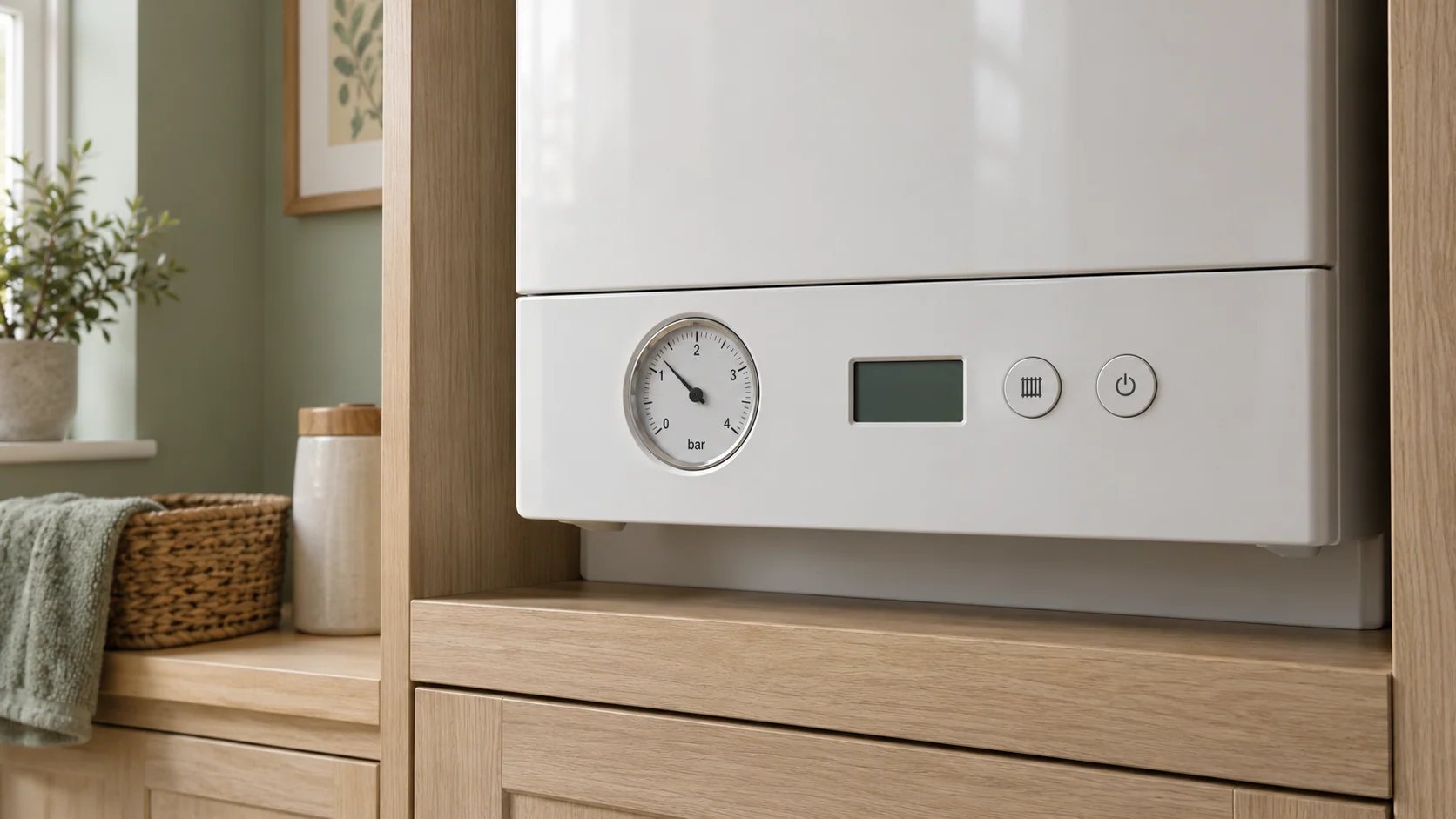
Your boiler’s pressure gauge measures something else
The gauge on a typical sealed central-heating system shows the pressure in the heating circuit serving the boiler and radiators. It does not measure the domestic water supply to your taps.
If that heating gauge repeatedly falls, read our guide to recurring boiler pressure loss for the separate checks involved. Improving the incoming water supply does not repair a sealed heating circuit.
Low heating-circuit pressure can cause a boiler to stop operating, potentially affecting heating and hot-water production. However, increasing that gauge reading is not a general solution for a weak shower. See Vaillant’s explanation of boiler pressure.
Simple checks before you book a plumber
You do not need to dismantle plumbing to collect useful information.
Compare several outlets
Check whether the problem affects one fitting, one bathroom or the whole property. Note whether hot water, cold water or both are affected.
The kitchen cold tap is often a useful reference, but do not assume it is directly mains-fed in every flat. Some buildings have communal storage or boosted supplies.
Separate a sudden change from a longstanding limitation
A shower that has always struggled deserves a different investigation from one that became weak yesterday.
Think about recent events:
- Plumbing work or a water shutdown.
- A new tap, shower or bathroom.
- Boiler or cylinder servicing.
- Work elsewhere in the building.
- A change in how many outlets are used together.
If the problem appeared immediately after work, tell the contractor what changed before arranging unrelated alterations.
Check for reported supply problems
Look at your water supplier’s service updates and, where practical, ask whether neighbours are experiencing the same issue.
For Thames Water customers, its no-water and low-pressure guidance explains the initial checks and reporting route.
A neighbour’s similar experience is useful evidence, but does not establish whether the cause is the public network or shared private pipework.
Be careful with valves and equipment
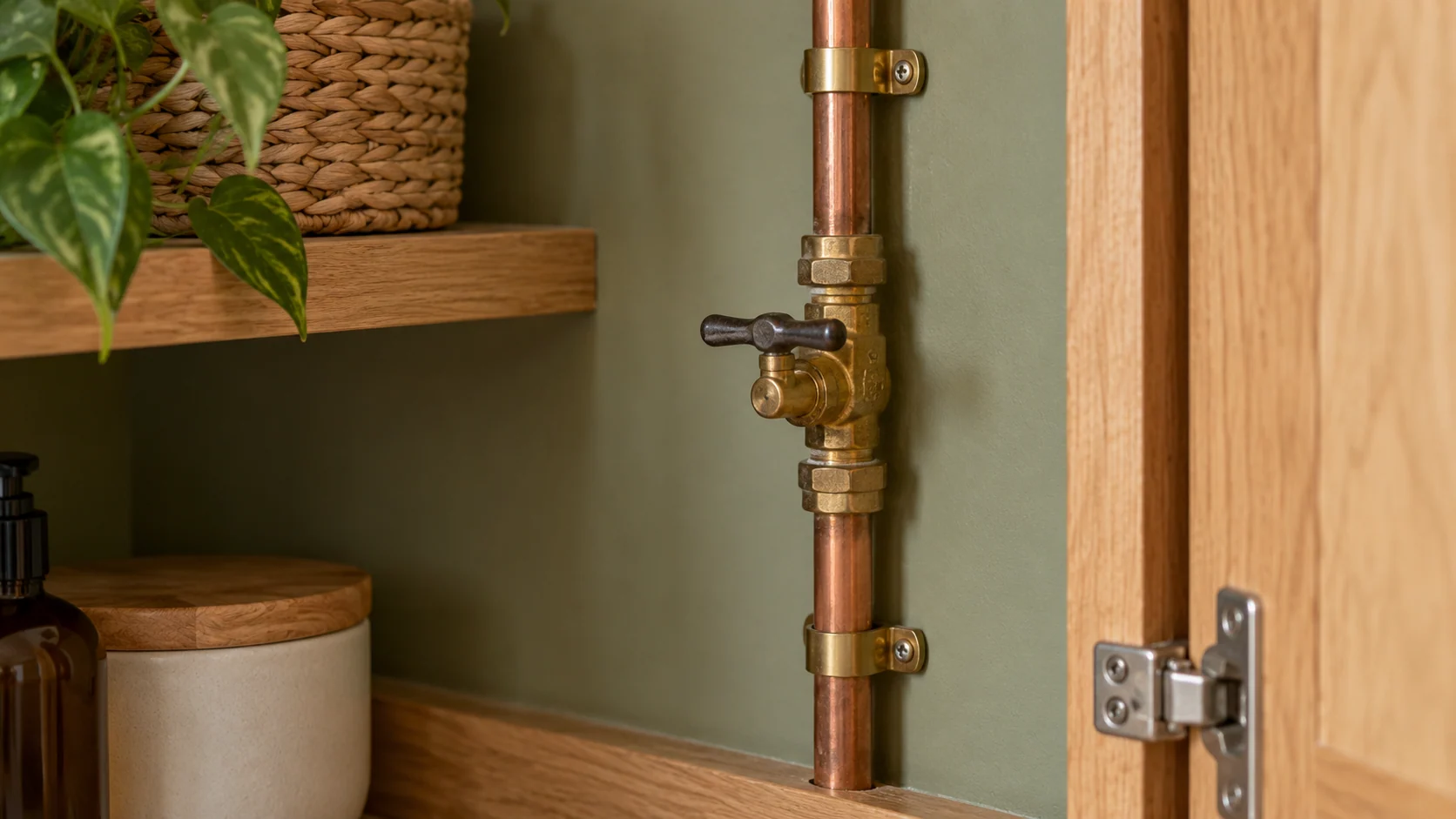
A known internal stop valve left partly closed after work is worth mentioning. Do not force a stiff, corroded or leaking valve, and do not adjust unidentified communal controls.
Avoid opening boilers, electric showers, pressure-reducing valves or cylinder safety assemblies. These are not homeowner diagnostic tasks.
For homes with unvented hot-water storage, our unvented cylinder maintenance guide explains professional checks on inlet restrictions, expansion provision and safety discharge components.
When a cylinder upgrade forms part of the project, see how PEP approaches unvented hot water installation after checking the available supply.
If there is active leakage near electrical equipment, stop testing, avoid touching affected equipment and seek urgent assistance. Only isolate supplies where it is safe to do so.
Keep a short observation record
Record the affected outlet, hot or cold supply, time of day, other water use and any recent changes. A brief video showing the difference between one outlet running and two can also help explain the symptom.
How to check water flow with a jug
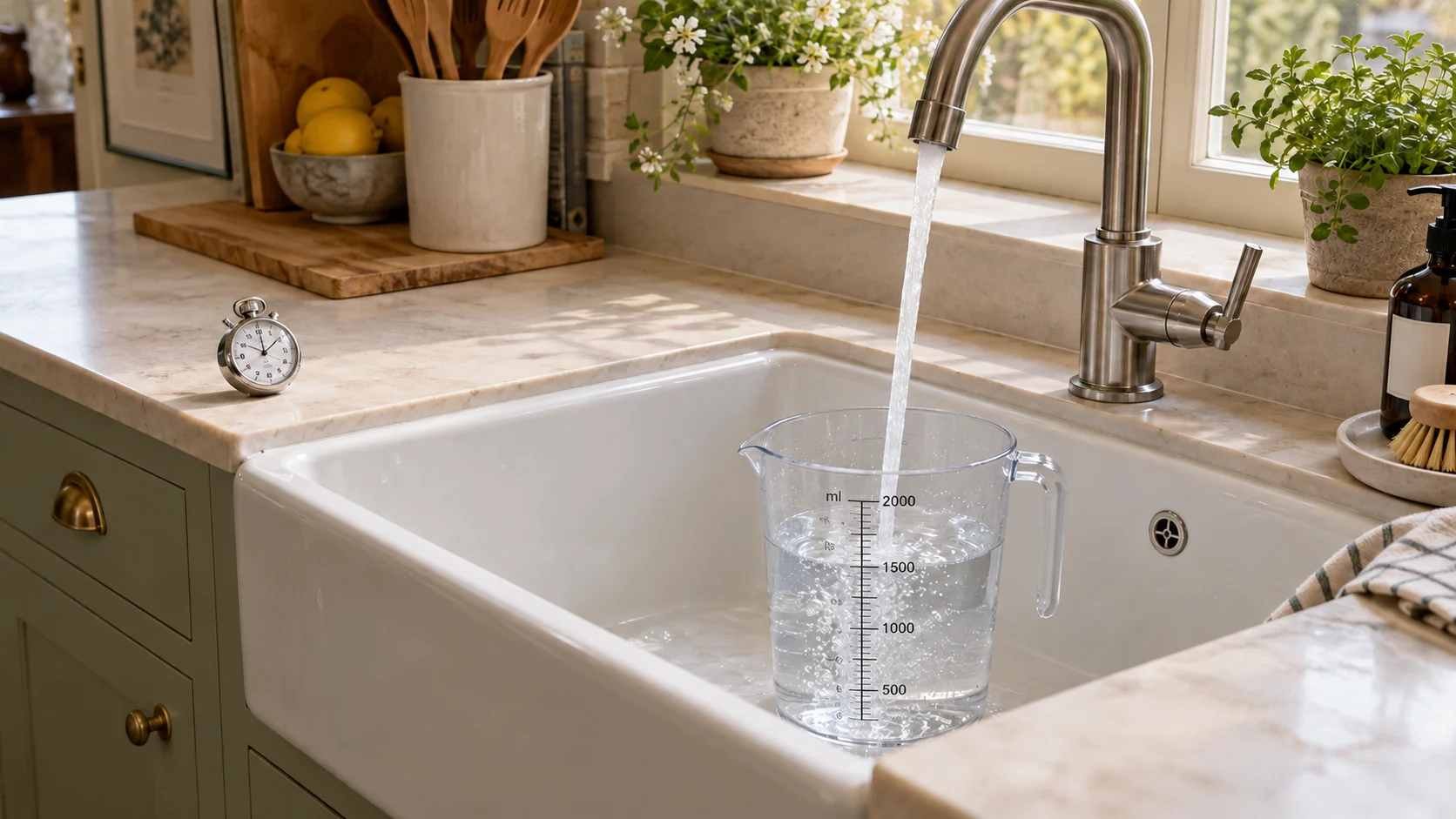
A timed collection test can provide a useful comparison, provided it can be done safely.
Use a cold outlet, a container of known volume and a timer. Keep the container over a suitable sink or bath and avoid splashing electrical equipment.
The calculation is:
Litres collected ÷ seconds taken × 60 = litres per minute
For example, collecting two litres in 15 seconds gives a flow rate of eight litres per minute.
That result is not a pressure reading, and eight litres per minute is not a universal pass or fail. The fitting may intentionally restrict flow, and the result does not establish the capacity of the entire incoming supply.
Record which tap you tested and whether anything else was using water. Comparing different conditions is more useful than collecting one unexplained number.
There is no need to test very hot water or dismantle fittings to complete this basic observation.
Only one tap or shower has poor flow
When the rest of the home performs normally, begin with the affected fitting and its immediate supply.
At a tap, possible causes include a restricted aerator, a partially closed local valve, a cartridge problem or a kinked flexible connector. After plumbing work, debris reaching a small outlet restriction is another possibility.
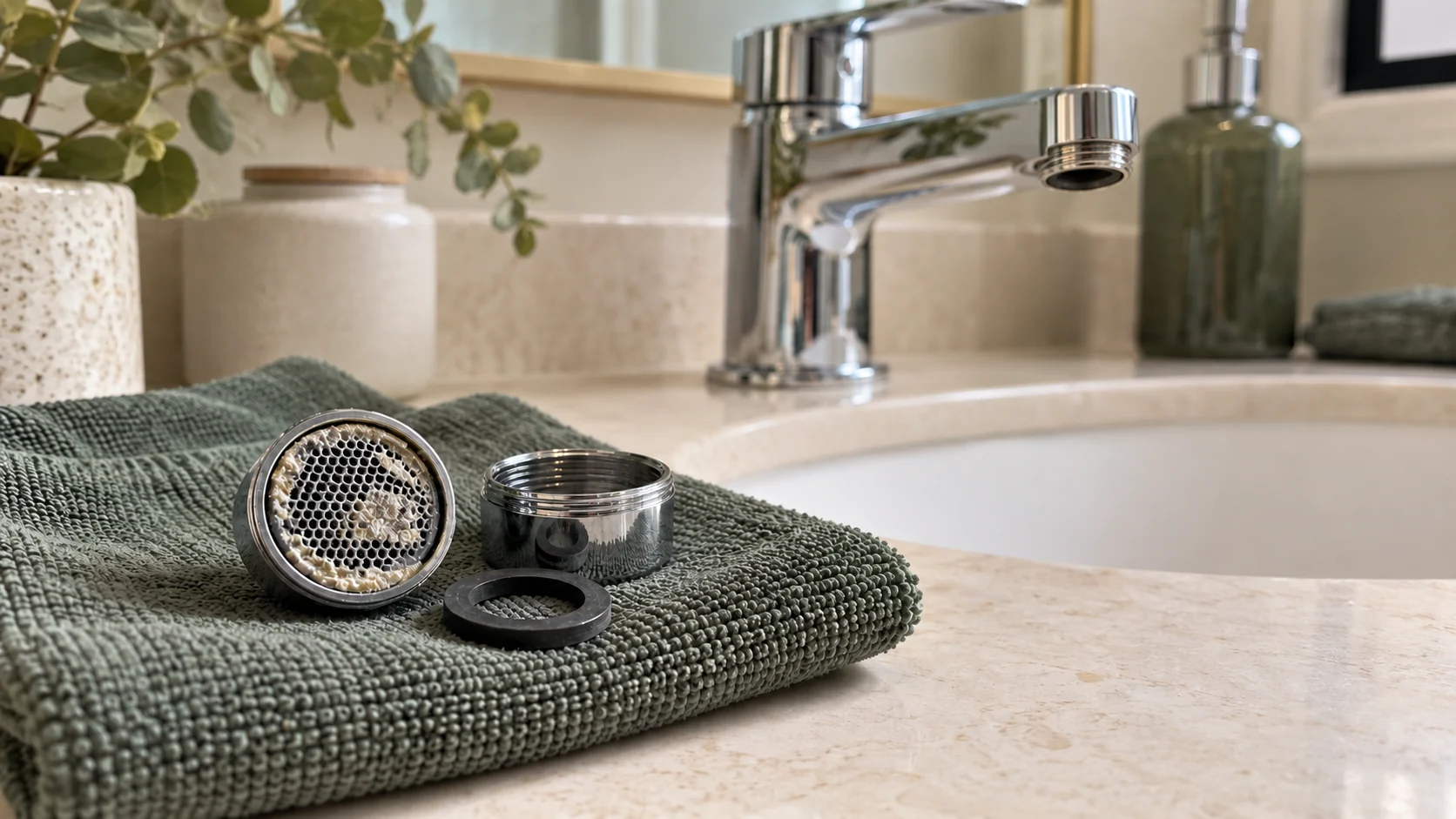
A weak shower needs its own checks. The showerhead may be scaled, the hose damaged internally, or the mixer and inlet filters restricted. The shower must also be suitable for the water system supplying it.
Follow the manufacturer’s cleaning instructions; unsuitable chemicals can damage finishes and components. Mira’s troubleshooting guidance distinguishes showerhead and hose restrictions from faults requiring a tradesperson.
If neighbouring outlets work well, a whole-house booster should not be the first response. Establish why this particular fitting behaves differently.
Hot water is weak, but cold water is fine
This is an important distinction because the hot and cold supplies may follow different routes.
The first question is whether every hot outlet is affected. If only one basin struggles, its local fittings remain suspects. If every hot tap is weak, investigate the shared hot-water path.
In a home with a combi boiler
A combi heats incoming water as it passes through the appliance. Hot-water performance depends on the supply reaching it, the appliance’s operation and the route to the outlets.
An engineer may need to investigate valves, filters, internal restrictions and distribution pipework.
Heating capacity also matters: the amount of water a combi can deliver at a chosen temperature depends partly on how much it must raise the incoming water temperature. Reduced hot-water delivery should not automatically be labelled a mains-pressure fault.
If a conversion is being considered, our conventional-to-combi conversion guide explains why supply checks belong before boiler selection.
In a home with a vented hot-water cylinder
Hot water may be supplied by gravity from a cold-water storage cistern, while a kitchen cold tap has a different supply.
Strong cold water and gentler hot-water delivery can therefore reflect the system arrangement rather than a newly developed fault. Available head, pipework and outlet suitability need assessment.
In a home with an unvented cylinder
An unvented system depends on its incoming supply and control arrangement. Restrictions or faults affecting its inlet controls or distribution can reduce performance.
Heatrae Sadia identifies the inlet strainer as an item requiring attention during appropriate cylinder servicing. This is work for a suitably competent person, not a reason to adjust safety controls yourself.
Our vented-to-unvented hot-water conversion guide covers the alternative in detail. A new cylinder is not, by itself, a remedy for an inadequate water supply.
The whole home has weak water delivery
If several hot and cold outlets are affected, attention moves towards components or pipework they share.
Possible areas for investigation include the incoming supply, internal stop valve, pressure controls, filters, treatment equipment and distribution pipework. A leak can also affect performance, but weak flow alone does not prove one exists.
The distinction between an existing limitation and a new fault remains important.
A home that performs poorly only during busy mornings may have a demand-related issue. A sudden reduction following a shutdown may suggest a different line of investigation. Neither pattern is enough to diagnose the cause without measurements.
For London terraces, shared private supplies can complicate matters. Thames Water notes that shared connections can contribute to pressure and flow difficulties, particularly during busy periods, in its guidance on new water connections.
Replacing accessible pipework inside one property may not resolve a limitation further upstream.
Thinking of adding treatment equipment? Read our water softener guide before choosing a model: a softener treats hardness, but does not create extra supply pressure or resolve an unidentified restriction.
For cartridge filters and drinking-water systems, see our guide to home water filtration. Filter selection and maintenance belong in the assessment of the water supply; filtration does not create additional pressure.
Why upstairs rooms and London flats need a different approach
“Low water pressure upstairs” describes the location of a symptom, not its cause.

Upstairs bathrooms
Height affects available pressure, while longer or more restrictive pipe runs can reduce performance under flow. Gravity-fed systems also depend on the relationship between the storage cistern and the outlet.
If the ground-floor kitchen works well but an upstairs shower does not, compare the systems feeding them before drawing conclusions.
A good result downstairs does not prove that the upstairs pipework, shower or hot-water arrangement is suitable.
Converted houses and mansion flats
A converted property may have shared sections of supply pipe, alterations from several refurbishment periods, or services passing through another flat.
Establishing the supply route and maintenance responsibility can be as important as taking measurements.
Buildings with communal equipment
Some blocks use shared tanks, pumps or pressure zones. A problem affecting several flats may involve communal equipment, its controls or distribution.
Contact the managing agent before arranging changes to shared services. Installing an individual pump without understanding the building arrangement can be inappropriate.
Ask a useful comparative question: are other homes on the same floor or supply route affected, and does the problem occur at the same time?
Why does the shower weaken when another tap opens?
When outlets share a supply, they also share its available capacity.
A shower may seem satisfactory on its own, then weaken when a toilet refills, a washing machine starts or someone opens another tap. The additional demand can reveal a restriction or a limit that is less obvious during single-outlet use.

The cause might be the incoming supply, a shared pipe section, undersized distribution, pressure controls or the hot-water system.
It is also important to distinguish reduced flow from unstable temperature. A shower that alternates between hot and cold requires assessment of its mixing and supply behaviour, not simply a request for “more pressure”.
The useful test reproduces normal household demand. If two bathrooms are intended to operate together, the assessment should consider that combination rather than testing one convenient tap in isolation.
What static and running-water measurements reveal
A useful professional assessment records both the conditions and the result.
Static pressure is measured with no water flowing through the relevant system. Dynamic pressure is measured while water is being drawn. The flow rate, test location and other outlets operating must be recorded alongside it.
A pressure reading without that context has limited value. Salamander’s measurement guidance explains the distinction between static and dynamic testing.
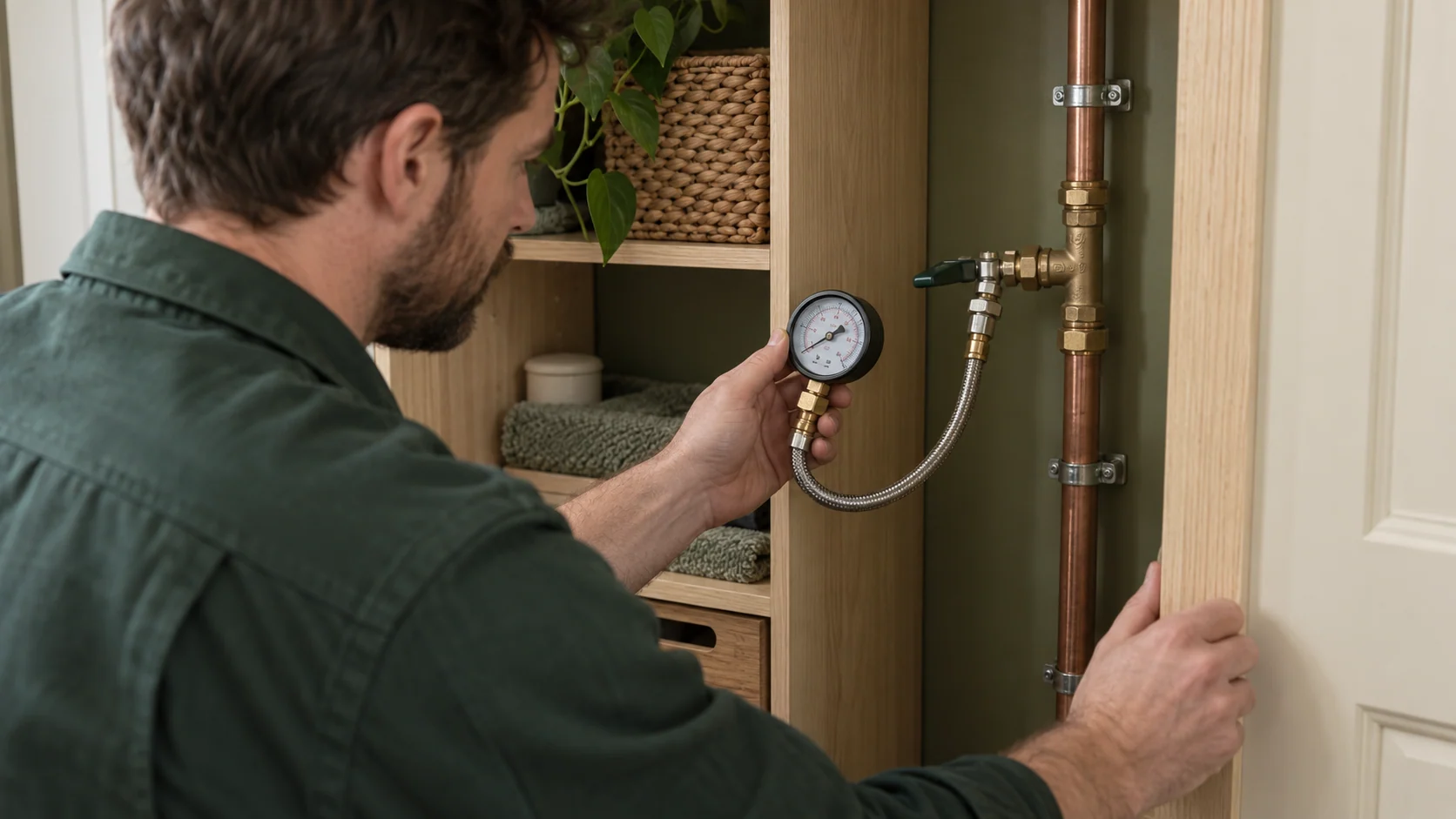
Consider three illustrative situations:
Reasonable static pressure, poor performance under demand.
The resting reading looks reassuring, but performance falls when outlets run. This calls for investigation of available delivery and pressure losses, not an assumption that the supply is satisfactory.
Reasonable incoming performance, weak flow at one bathroom.
Comparative measurements can help narrow the investigation towards the route and fittings serving that bathroom.
Cold water performs well, but hot water does not.
The hot-water system needs investigation. A whole-house supply alteration may not address the actual restriction.
Measurements should help locate the problem. They should not simply produce a number used to justify a preselected product.
Water supplier, building manager or plumber?
The right first contact depends on the evidence.
| Situation | Appropriate starting point |
|---|---|
| A reported local interruption or several nearby properties affected | Your water supplier |
| Several flats affected within a building with shared services | Building manager or managing agent |
| One fitting, one bathroom or only the hot-water system affected | A suitable plumbing or heating professional |
| Unclear supply ownership or a shared private pipe | Supplier and property management, with plumbing investigation as needed |
Responsibilities may need clarification before work begins, particularly in leasehold properties.
What does the minimum pressure standard mean?
Ofwat describes the Guaranteed Standards Scheme pressure requirement as seven metres of static head in the communication pipe. It is not a guarantee of a particular pressure at every upstairs tap, nor a promise that several showers will operate comfortably together. See Ofwat’s water-pressure guidance.
Meeting a supplier’s minimum standard and meeting a household’s intended demand are different questions.
Repair a restriction, improve the supply or consider a booster?
The correct sequence is diagnosis first, then a proportionate solution.
Repair an identified fault
Where the problem is a restricted fitting, defective valve or serviceable component, address that issue and retest.
Additional equipment should not conceal an unresolved fault.
Improve unsuitable pipework or supply arrangements
Some homes need changes to a limiting section of pipework or a more substantial supply improvement.
The investigation should identify what the proposed change is expected to achieve. Replacing pipework simply because it is accessible is not the same as locating the bottleneck.
Consider boosting where measurements support it
Boosting can be appropriate when the existing arrangement cannot provide the required performance and a suitable system can be designed.
However, pumps cannot be selected sensibly from the number of bathrooms alone. Incoming performance, simultaneous demand, storage requirements, space, noise and maintenance all influence the decision.
Our guide to home water pressure boosters explains the available approaches.
Installation requirements must also be checked. In England, a pump or booster drawing more than 12 litres per minute, connected directly or indirectly to a supply pipe, falls within the notification and consent requirements described by Water Regs UK. Indirect connection should not be treated as an automatic exemption.
Where the measurements support a boosting solution, PEP's water booster installation service covers the selection and integration of a suitable system.
What a professional assessment should cover
A useful investigation should connect your experience of the problem with measurable findings.
Depending on the property, this may involve:
- Establishing the incoming supply and hot-water arrangement.
- Comparing affected and unaffected outlets.
- Recording pressure and flow under clearly stated conditions.
- Reproducing relevant simultaneous demand.
- Checking accessible valves, controls and possible restrictions.
- Identifying shared services and responsibility boundaries.
- Explaining any further investigation needed before specifying work.
The outcome should distinguish confirmed findings, possible causes and unresolved questions.
Ask what has been measured, where it was measured and why the proposed repair follows from those results.
A quotation should also clarify what is included and what remains conditional. If the supply route is concealed or communal records are unavailable, further investigation may be necessary. A clear explanation of that limitation is more useful than an unsupported promise that one device will solve everything.
Frequently asked questions
Why is my hot-water flow weak when the cold water is fine?
Hot and cold water may follow different routes or operate from different supply arrangements. The cause could involve the hot-water system, its controls, pipework or an individual fitting. First establish whether every hot outlet is affected or only one.
Why does my shower lose pressure when another tap is opened?
The outlets may be competing for limited available flow through a shared supply or pipe section. Restrictions and hot-water system capacity can also contribute. Testing the combination that causes the problem is more informative than checking the shower alone.
Why is water delivery worse upstairs?
Height, pipe routing, restrictions and the supply arrangement can all affect upstairs performance. With gravity-fed systems, the available head also matters. The problem is not automatically evidence that the home needs a booster.
Can I have good water pressure but poor flow?
Yes. A reasonable static pressure reading can coexist with poor delivery through a restriction. It can also fall significantly once water is being used. Pressure and flow should be assessed together under relevant operating conditions.
Does a jug test measure water pressure?
No. It measures the volume delivered over time. It can help compare outlets or operating conditions, but it does not produce a reading in bar or establish the capacity of the whole supply.
Will increasing my boiler pressure improve the taps?
Not generally. The boiler gauge normally relates to the sealed heating circuit, not the domestic water supply. A heating-pressure fault may stop boiler operation, but topping up that circuit is not a general treatment for weak tap flow.
Should I contact the water supplier or the building manager?
Contact the supplier for reported network issues or problems affecting neighbouring properties. In a block with communal services, involve the building manager where several flats are affected. A problem isolated to your fittings or hot-water system usually requires a suitable tradesperson.
Will a water booster solve every low-pressure problem?
No. It will not automatically correct blocked fittings, defective controls, unsuitable pipework or a hot-water appliance fault. Boosting should follow diagnosis and be designed around the measured supply, intended demand and installation requirements.
Tell PEP what happens when you turn on the water
You do not need to diagnose the problem before contacting us. A clear description is enough to begin the conversation.
Tell us:
- Your postcode and property type.
- Which taps, showers or rooms are affected.
- Whether the problem involves hot water, cold water or both.
- Whether it started suddenly or has always been present.
- What happens when another outlet runs.
- Whether plumbing work or a building shutdown preceded the change.
PEP provides London plumbing services across areas including Notting Hill, Chiswick, Kensington, Chelsea, Hampstead, Maida Vale and St John’s Wood.
The aim is to identify what is limiting performance and recommend an appropriate next step — whether that is a fitting repair, further investigation, supply improvements or a properly designed boosting system.