
The London homeowner’s guide
14 min readConventional to Combi
Boiler ConversionA guide for London flats and small homes
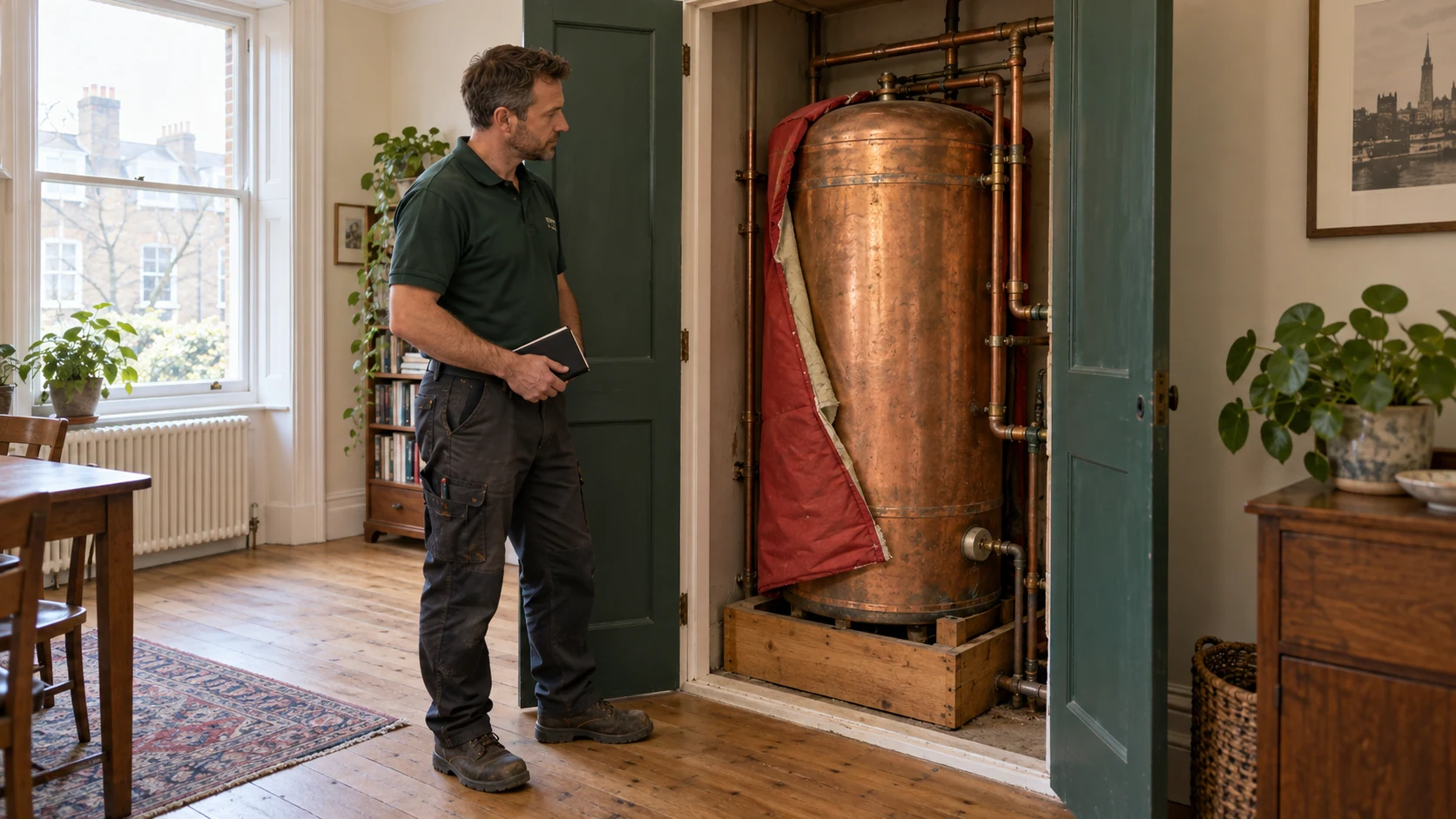
A cylinder cupboard that could become useful storage. Two water tanks above the ceiling. An ageing boiler that is approaching replacement.
For many owners of London flats and small houses, these are the reasons to ask a straightforward question: could one combi boiler replace the whole arrangement?
Often, it can. A properly planned conversion can remove the separate hot-water cylinder and redundant loft tanks, reclaim space and provide hot water without a cylinder heating schedule.
The important part is making sure your shower, bath and heating still work as you expect afterwards.
This guide explains when changing from a conventional boiler to a combi makes sense, what should be checked before ordering the appliance, and what a complete conversion should include.
Can you change a conventional boiler to a combi?
Yes, many individual conventional heating systems can be converted to a combi. The home needs an adequate incoming water supply, suitable gas provision, a compliant flue arrangement and heating components compatible with the proposed installation.
A one-bathroom flat or small house can be a good candidate, particularly where recovering the cylinder cupboard would make a noticeable difference. However, bathroom count alone is not a specification.
A large rain shower, a deep bath or several outlets running together can change the answer. So can plans to add another bathroom.
The right question is not simply whether a combi will fit. It is whether the complete installation will deliver the comfort your household needs.
What happens to the cylinder and the two loft tanks?
A typical open-vented installation has more than one water circuit. The two tanks in the loft are not both storing hot water.
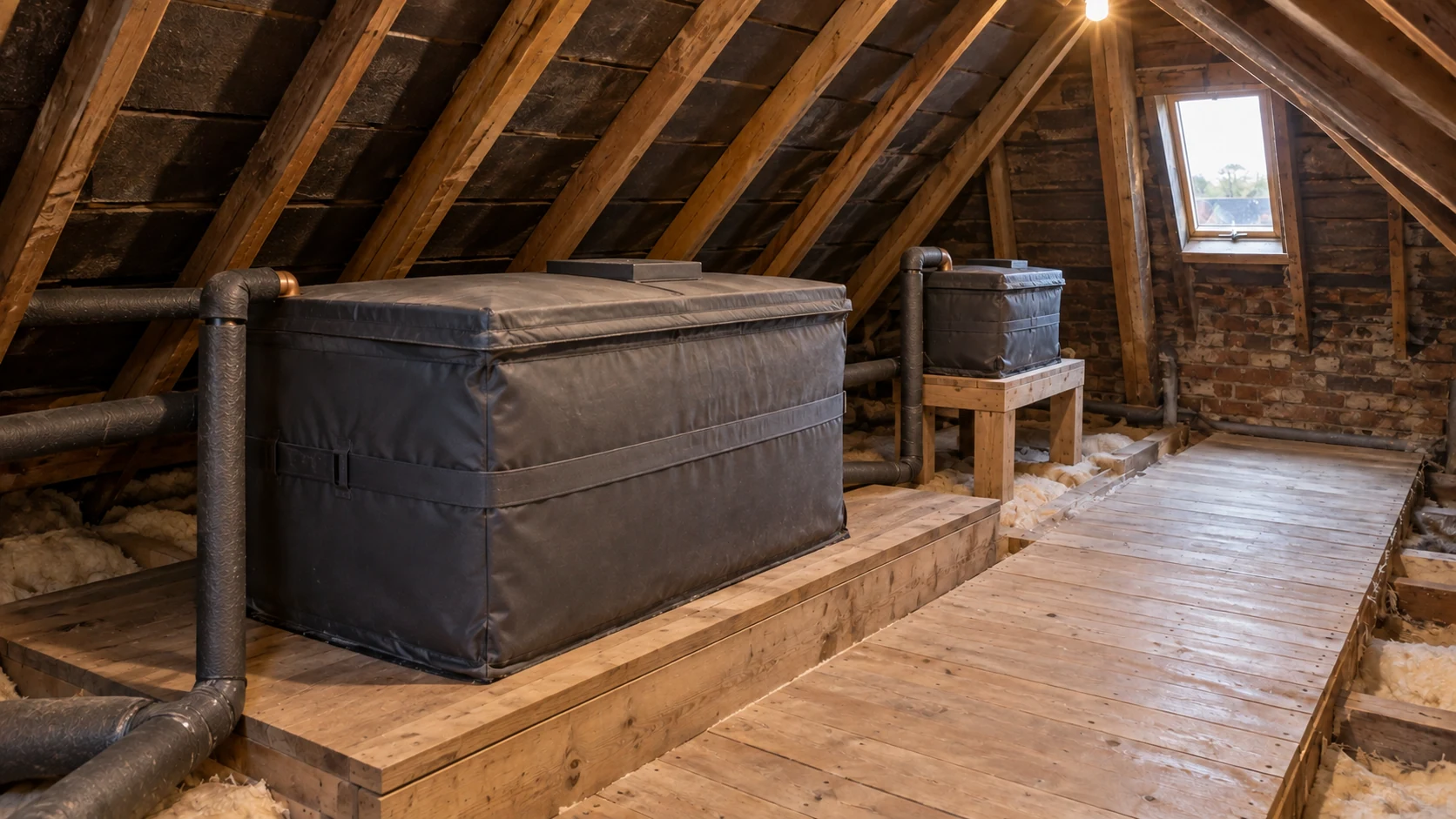
| Existing component | Its role | What normally changes with a full combi conversion |
|---|---|---|
| Larger cold-water storage cistern | Supplies the vented cylinder and sometimes other cold outlets | Becomes redundant once the outlets it serves have been correctly transferred |
| Smaller feed-and-expansion cistern | Supplies and accommodates expansion in the heating circuit | Is replaced by the provisions of the sealed heating arrangement |
| Hot-water cylinder | Stores water for taps and showers | Is removed because a conventional instantaneous combi heats domestic water on demand |
| Regular or heat-only boiler | Heats the radiators and, indirectly, the cylinder | Is replaced by the combi |
This is the familiar two-cistern arrangement described in Baxi's heat-only boiler guidance.
Before anything is disconnected, its connections and ownership need confirming. A tank above your flat is not automatically yours alone, and previous alterations can make the layout less obvious.
Is this the same as a system-to-combi conversion?
Homeowners often use “system to combi” to describe replacing any boiler-and-cylinder arrangement.
Technically, a system boiler is a particular appliance type, normally serving a sealed heating circuit with a separate cylinder. It is not the same as the regular boiler commonly found with two loft cisterns. Both can be candidates for conversion, but the pipework and removal scope differ. Worcester Bosch explains the boiler types.
Why consider a combi in a London flat or small house?
Recovering space is usually the most visible benefit. A cupboard occupied by a cylinder and associated equipment may become storage or form part of a wider refurbishment.
There is also a change in routine. Instead of scheduling the heating of stored domestic hot water, a combi heats water when a hot outlet is opened. You are no longer waiting for an exhausted cylinder to reheat.
That can suit a household using one bathroom at a time.
It is worth separating these benefits from promises about bills. Replacing an inefficient old boiler may reduce energy use, but changing the system type does not guarantee a particular saving. The existing equipment, controls and household habits all matter. Energy Saving Trust's boiler guide sets out the main suitability considerations.
If the boiler already needs replacing, ask for the additional cost of conversion to be identified. That makes it easier to judge the value of the recovered space.
The checks that matter before choosing the boiler
1. Water flow and working pressure
Pressure and flow are different measurements. Pressure describes the force available to move water; flow describes how much water is delivered over time.
A pressure reading with every tap closed does not establish shower performance. The supply also needs assessing while water is being drawn, including relevant simultaneous demand.
Opening a cold tap, flushing a toilet or filling a washing machine can affect the water available to a combi. The incoming main must support the household, not just the boiler in isolation. Worcester Bosch explains dynamic pressure and flow.
In older London buildings, a shared or restricted supply deserves particular attention. Thames Water notes that some shared supplies struggle with modern demand and may need upgrading or separating. Thames Water's connection guidance.
There is no single pressure figure that guarantees a satisfying result in every home.

2. The hot water you actually want to use
Describe a normal busy morning: who showers, whether another tap is used, and whether bath filling speed matters.
A combi has a finite hot-water output. Its advertised flow rate is normally stated at a particular temperature rise. Colder incoming water requires more heat to reach the same delivery temperature, so headline figures need comparing on the same basis. Vaillant's published performance tables illustrate this distinction.
A higher-rated boiler cannot manufacture incoming water that the supply cannot deliver. Equally, adequate cold flow does not give the boiler unlimited heating capacity.
3. The heating load and existing installation
The output needed to heat the rooms is not necessarily the output needed for domestic hot water. Boiler selection should consider the home's heat loss and the appliance's ability to operate at a suitably low heating output, rather than choosing by bedroom count alone.
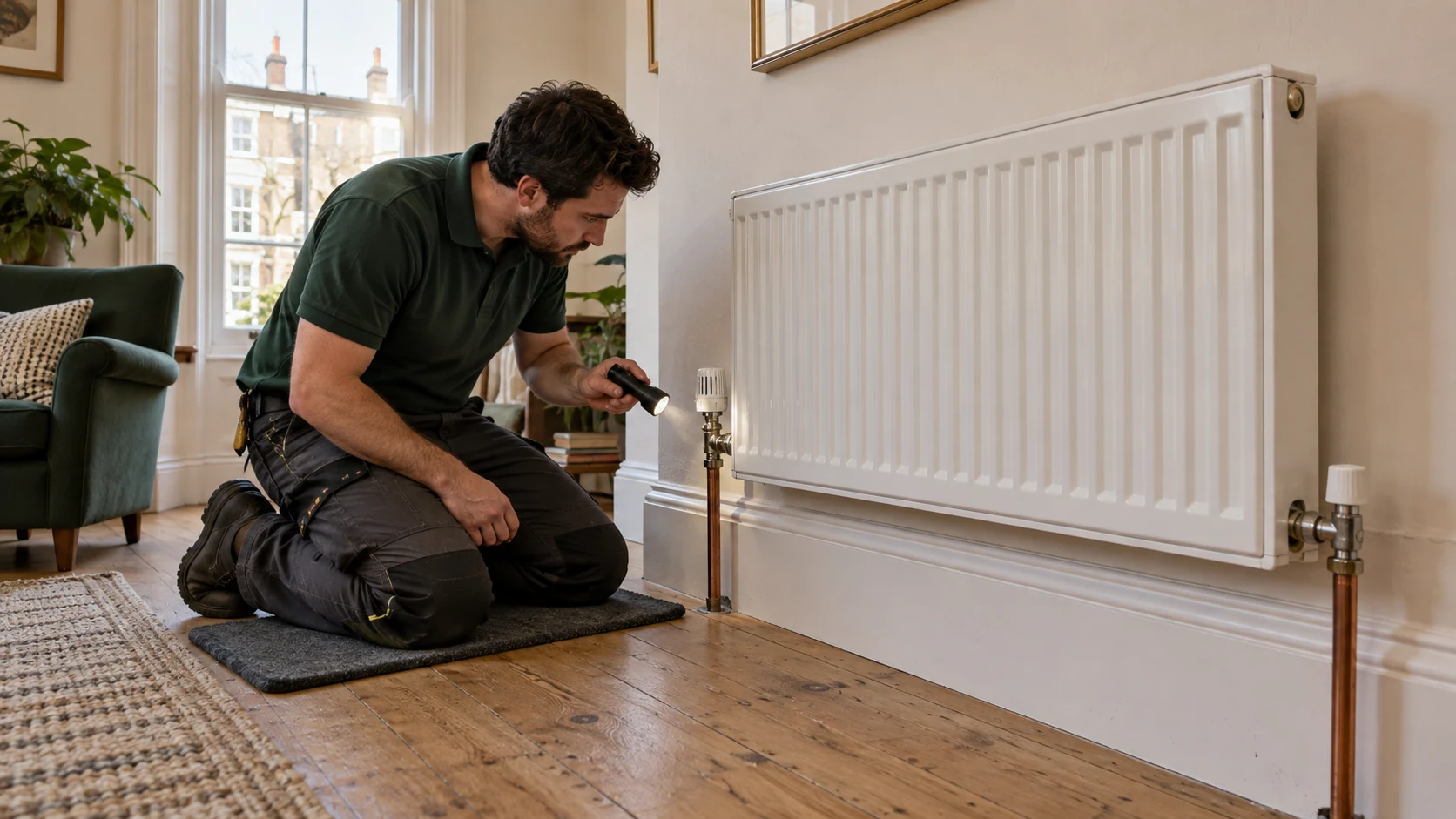
Existing radiators and pipes can often remain, but their condition must be assessed. A typical combi conversion changes the heating circuit to sealed operation, which can reveal weaknesses in older components. Manufacturer guidance specifically flags this consideration for older radiator systems. Worcester Bosch's system guidance.
If the converted sealed circuit later needs repeated topping up, our boiler pressure loss guide explains the observations that help distinguish a pipework issue from an expansion-control or discharge problem.
Agree what can be inspected, what remains concealed and how an unexpected defect would be dealt with. Keeping serviceable components is sensible; promising that concealed pipework is perfect is not.
4. Your shower and any existing pump
The shower deserves its own check before the cylinder disappears.
A pump or digital processor designed for gravity-fed supplies cannot automatically be retained on a mains-fed combi arrangement. Depending on the model, equipment may need reconfiguration or replacement. The hot and cold connections also need to suit the new arrangement. Aqualisa's conversion guidance demonstrates why the exact product matters.
An electric shower that heats its own incoming cold water is a different case, but its demand still counts towards the available supply.
Include any necessary shower work in the original quotation, not as a surprise after installation.
5. Gas supply, flue, drainage and access
The survey must cover the route and capacity of the gas supply, the new flue, condensate drainage, electrical connections and future service access.
Relocating a boiler may improve the layout, but it can also change all of these requirements. The most convenient empty wall is not necessarily a suitable installation position.
Ask for proposed routes to be explained before agreeing to new kitchen joinery or decorating. Access panels, pipe boxing and making good should be planned with the installation, not improvised around it afterwards.
If the existing taps or shower already perform poorly, our low water pressure diagnostic guide explains how to distinguish an outlet restriction, a hot-water problem and an incoming-supply limitation before choosing a new boiler.
If limescale is another concern, include water treatment in the early planning. Our guide to water softeners and boiler compatibility distinguishes the domestic hot-water supply from the separate central-heating filling requirements.
What will change when you use hot water?
With an instantaneous combi, there is no separate cylinder of hot water to run out. There is still a limit to the amount the appliance can heat at one time.
That means a good conversion should establish realistic expectations for showering, bath filling and simultaneous use.
“On demand” also does not mean hot water appears instantly at a distant tap. Water already standing in the connecting pipe still has to pass through.
A typical combi gives domestic hot water priority, temporarily pausing its central-heating output during a draw-off. This does not make the radiators immediately cold, but lengthy hot-water use is worth discussing.
Removing the cylinder also removes its immersion heater, if fitted, as a separate hot-water backup. These are practical changes to understand before work starts, not reasons to reject an otherwise suitable conversion.
What happens during a conventional-to-combi conversion?
A conversion is more than exchanging one appliance for another. A complete project should cover six stages.
Survey the whole installation
The installer identifies the boiler, cylinder, cisterns, controls, pumps and the outlets they serve. The assessment includes water performance, accessible pipework and your current and planned use of the home.
Photographs are useful for an initial enquiry, but they cannot replace measurements or establish the condition of concealed services.
The survey should leave you with a clear explanation of whether a combi is suitable and which alterations are necessary.
Agree the specification and written scope
The proposal should identify the boiler and controls, its intended position, the main service alterations and the equipment being retained.
It should also state what will be removed, what will be disposed of, and what making good is included.
This is the point to resolve permissions, access restrictions and any shower changes. A clearly defined scope gives you something meaningful to compare between quotations.
Protect the home and plan interruptions
Agree the working areas, access to the loft and cupboards, floor protection and arrangements for moving equipment through the property.
You should know when heating and hot water will be unavailable, and whether cold-water interruptions will affect other occupants.
If you are staying in the property, discuss the practical arrangements before the installation date. The total project duration and the period without usable bathroom facilities are not necessarily the same.
Remove redundant equipment and reconfigure services
Following safe isolation by the appropriate trades, redundant equipment is disconnected and dealt with within the agreed scope.
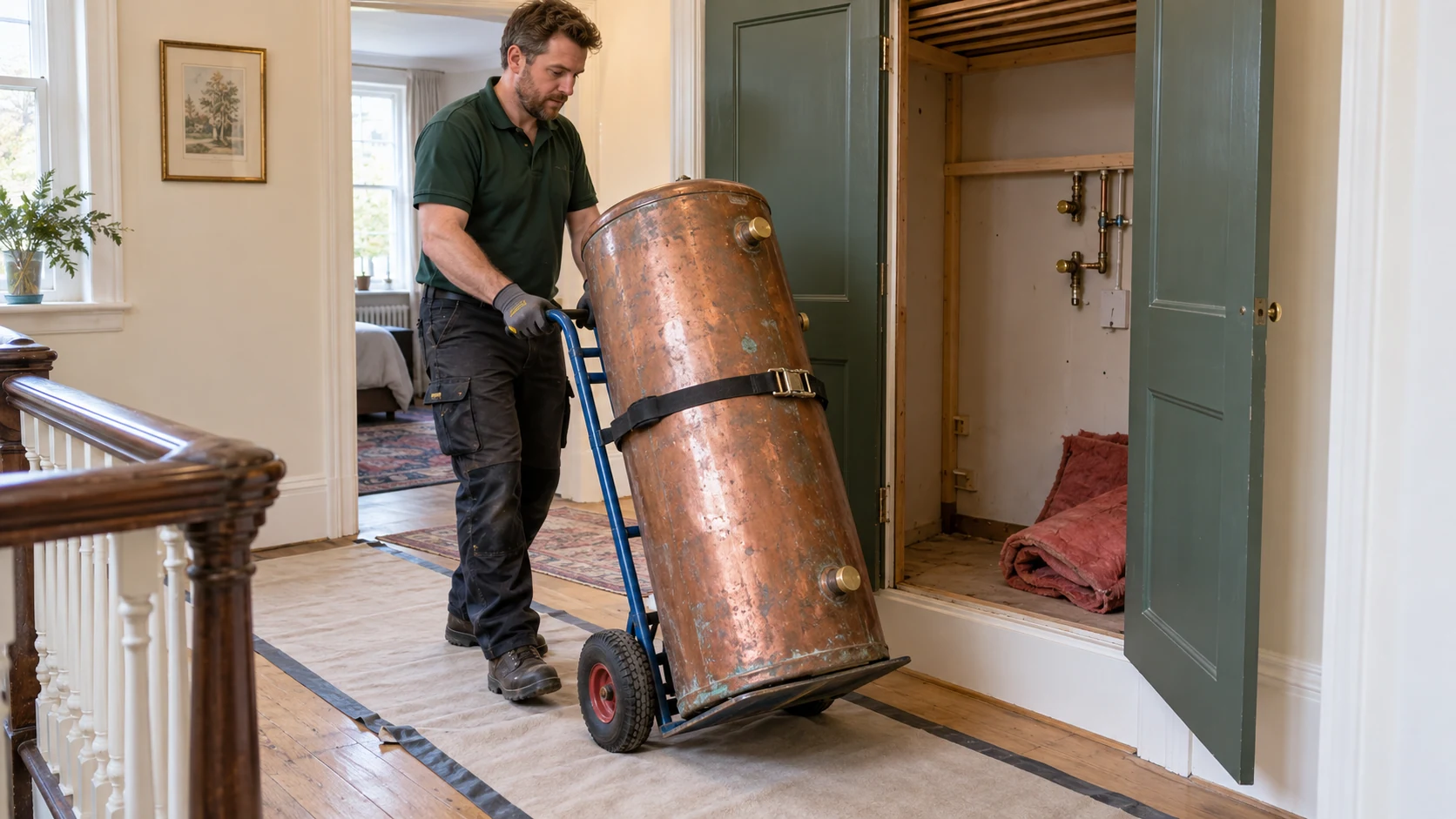
Cylinder and tank removal needs planning. A large cistern may not fit through the loft hatch, and its material and condition can affect the removal method.
Cold outlets previously fed from a tank must be addressed as part of the new supply arrangement. Redundant pipes and controls should be properly decommissioned, rather than leaving a confusing collection of disconnected services.
Install the combi and prepare the heating circuit
The boiler, controls and associated services are installed to the agreed design and the manufacturer's requirements.
The retained heating circuit needs an appropriate cleaning and protection strategy. A powerflush may be suitable, but it should not be treated as the automatic method for every installation. System condition and the appliance requirements determine the approach.
The installer should also explain any water-treatment or filtration provision and the maintenance it requires.
Commission, demonstrate and hand over
The completed installation needs safety checks, leak checks, control setup and the required commissioning records.
Heating operation and hot-water delivery should be checked, including the relevant usage conditions agreed during the survey.
You should be shown how to operate the controls, understand the boiler's normal indications and recognise when to contact the installer. Commissioning and explanation of operation are central to the Benchmark scheme, not optional finishing touches.
Particular considerations for London flats
The equipment may be inside your flat while the affected services belong partly to the building.
Check your lease and managing agent's requirements before committing to alterations. A change of boiler system or a new flue opening may require written consent. Building Regulations approval does not replace permission required by your lease. LEASE explains alterations and consent.
Also establish who controls access to the loft, external walls, service risers and any shared supply.
Where listed-building status, conservation restrictions or significant external alterations are involved, confirm the applicable requirements before finalising the design.
Communal heating is a separate situation. Disconnecting from a shared system should not be assumed to be a routine version of converting an individual boiler installation.
How much does a conventional-to-combi conversion cost?
The meaningful figure is the price of the complete conversion, not the advertised price of the boiler.
The main cost drivers include:
- the appliance and compatible controls;
- gas and water-supply alterations;
- cylinder and loft-tank removal and disposal;
- boiler relocation, flue work and condensate drainage;
- changes to the shower or its pump;
- repairs to retained components;
- cleaning, protection, testing and commissioning;
- access equipment and making good.
Ask whether the quotation includes VAT and how unexpected work is approved.
Check the wording around removal. “Disconnect the tanks” does not necessarily mean “remove them from the building”. Similarly, making an old boiler opening weatherproof is not the same as redecorating the entire wall.
A useful quotation allows you to understand what you will have when the job is finished. Our boiler installation and replacement service in London is the starting point for discussing a property-specific scope.
How long will the conversion take?
A full conversion involves more work than replacing an existing combi in the same position. The programme depends on access, tank removal, service alterations, the condition of retained components and testing.
Request a realistic installation programme after the survey, with the expected heating and water interruptions stated separately.
If there are vulnerable occupants, working-from-home requirements or no alternative bathroom, explain this early. Do not assume that hot water can be restored every evening unless that has been specifically agreed.
Safety, controls and the documents to keep
Gas work must be carried out by a Gas Safe registered engineer competent in the relevant work. Check the engineer's registration and scope, not just a logo on a quotation. HSE's homeowner guidance.
The installation must meet the requirements applicable to the project, including the relevant provisions for combustion safety, efficiency, controls and notification. Controls need to be compatible with the appliance; an app alone does not establish compliance. Approved Document L provides the relevant energy-efficiency guidance.
At handover, confirm the arrangements for:
- the completed commissioning or Benchmark record;
- the Building Regulations notification and resulting certificate;
- boiler and control instructions;
- warranty registration and its conditions;
- servicing and maintenance information.
These are different records. Warranty registration is not a substitute for Building Regulations documentation, and an installation certificate does not replace a landlord's continuing gas-safety obligations.
Keep any freeholder approvals with the installation paperwork.
A conversion is also the right time to review the retained controls. Our smart heating controls guide explains boiler modulation, compatibility limits and what a coordinated upgrade should include.
What if a combi is not the right fit?
If the household needs substantial simultaneous hot water, retaining stored hot water may be more appropriate. Options such as unvented hot-water cylinders deserve a separate assessment; they do not automatically solve a weak incoming supply.
Where water delivery is the limiting factor, investigate the cause first. Supply improvements or correctly specified water-pressure boosters and accumulators may help, but cannot increase the boiler's own hot-water heating capacity.
If a heat pump is a near-term plan, discuss future cylinder space before permanently repurposing the cupboard. Most heat-pump installations use stored domestic hot water. Energy Saving Trust.
These are reasons to check suitability properly, not to turn every straightforward conversion into a more complicated project.
Frequently asked questions
Can I keep my existing radiators?
Often, yes. They and the associated pipework must be suitable for the proposed operating conditions. A conversion does not automatically mean replacing the entire heating installation.
Can I remove both loft tanks?
Usually, in a suitable individual installation where both become redundant. First confirm that neither serves another property or retained equipment, and that physical removal is included in the scope.
Will a combi give me a more powerful shower?
Not necessarily. Performance depends on the incoming supply, boiler output, distribution pipework and shower itself. Measure and assess these before making a promise.
Will I still need to programme hot water?
With a conventional instantaneous combi, you do not programme the heating of a separate cylinder. Space-heating schedules remain, and some boilers have optional hot-water comfort or preheat settings.
Can the new boiler go in the old cylinder cupboard?
Possibly, but the cupboard must be suitable for the appliance, flue, service connections and maintenance access. Its availability alone does not establish that it is the best position.
Is conversion worthwhile if the old boiler still works?
It may be worthwhile during a refurbishment or where recovering space has particular value. Compare the full conversion cost with retaining the current arrangement. A functioning installation does not become unsuitable simply because a combi is more compact.
Planning a combi conversion in London?
Start with the result you want: useful cupboard space, dependable hot water and heating that suits the way you live.
PEP can help assess the existing installation and define the work needed for a conventional-to-combi conversion.
For an initial enquiry, send your postcode, the number of bathrooms and photographs of the boiler, cylinder and any safely accessible tanks. Mention any shower pump, pressure concerns or planned alterations. There is no need to enter an unsafe loft or remove covers to obtain photographs.
Contact PEP to discuss your combi boiler conversion.
The best result is not simply a cupboard without a cylinder. It is a properly planned installation that gives you back the space without leaving you guessing about the performance.