
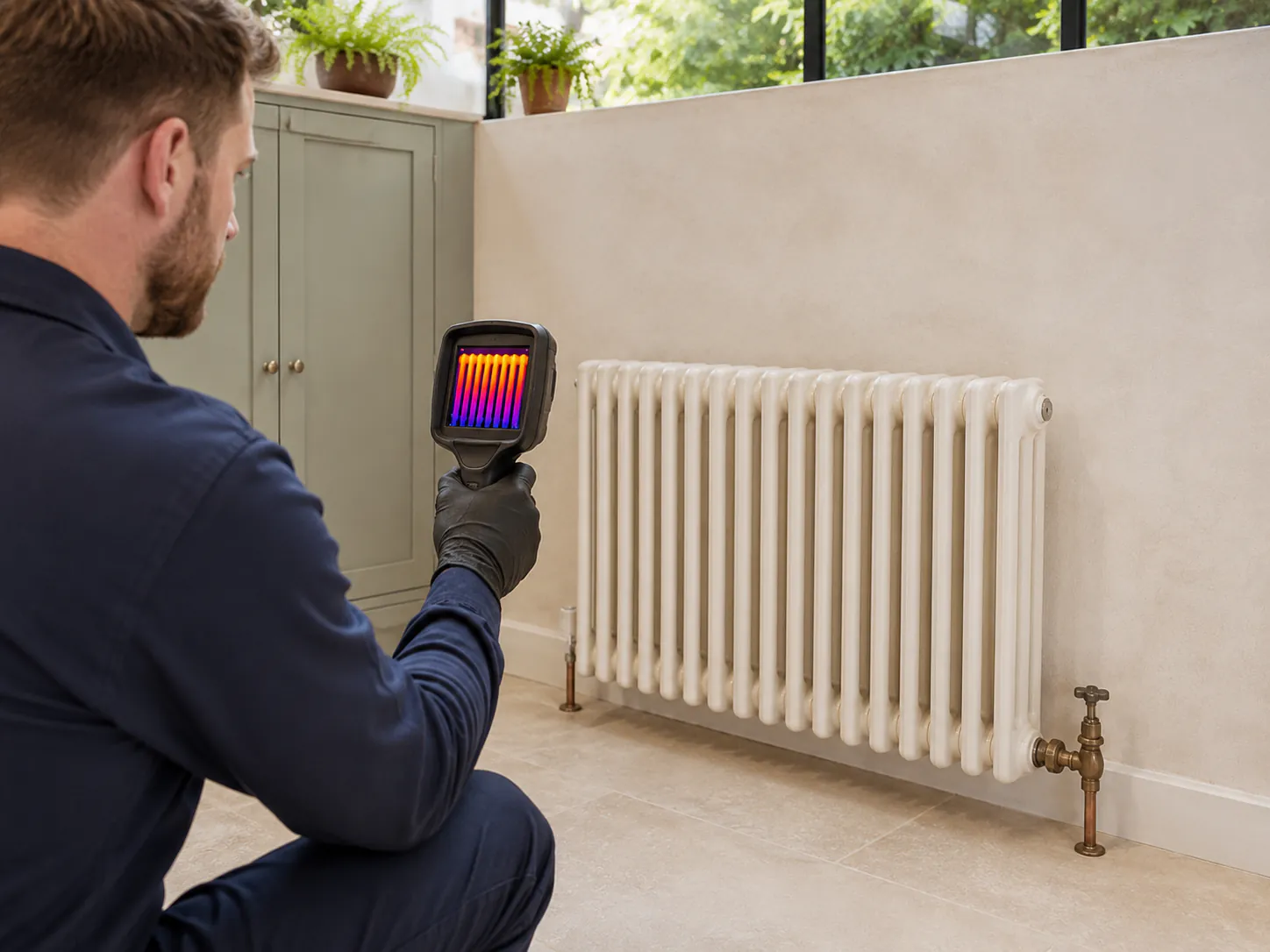
Cold lower sections
Magnetite often settles where circulation is weakest, leaving the lower channels slow to warm.
 Pure Energy ProjectElectrical · Heating · Plumbing07825 268 434
 Central heating water quality · Hampstead NW3
PEP checks the heating system before connecting equipment. If contamination is the cause, we work radiator by radiator with controlled high flow, magnetic capture, thorough rinsing and fresh inhibitor.
The machine is not the diagnosis.
01 · The warning signs
Hampstead homes can combine original radiators, later extensions, several zones and replacement controls. Sludge is one possible cause — not the only one.
Magnetite often settles where circulation is weakest, leaving the lower channels slow to warm.
One part of the property heats normally while upper rooms or later additions lag behind.
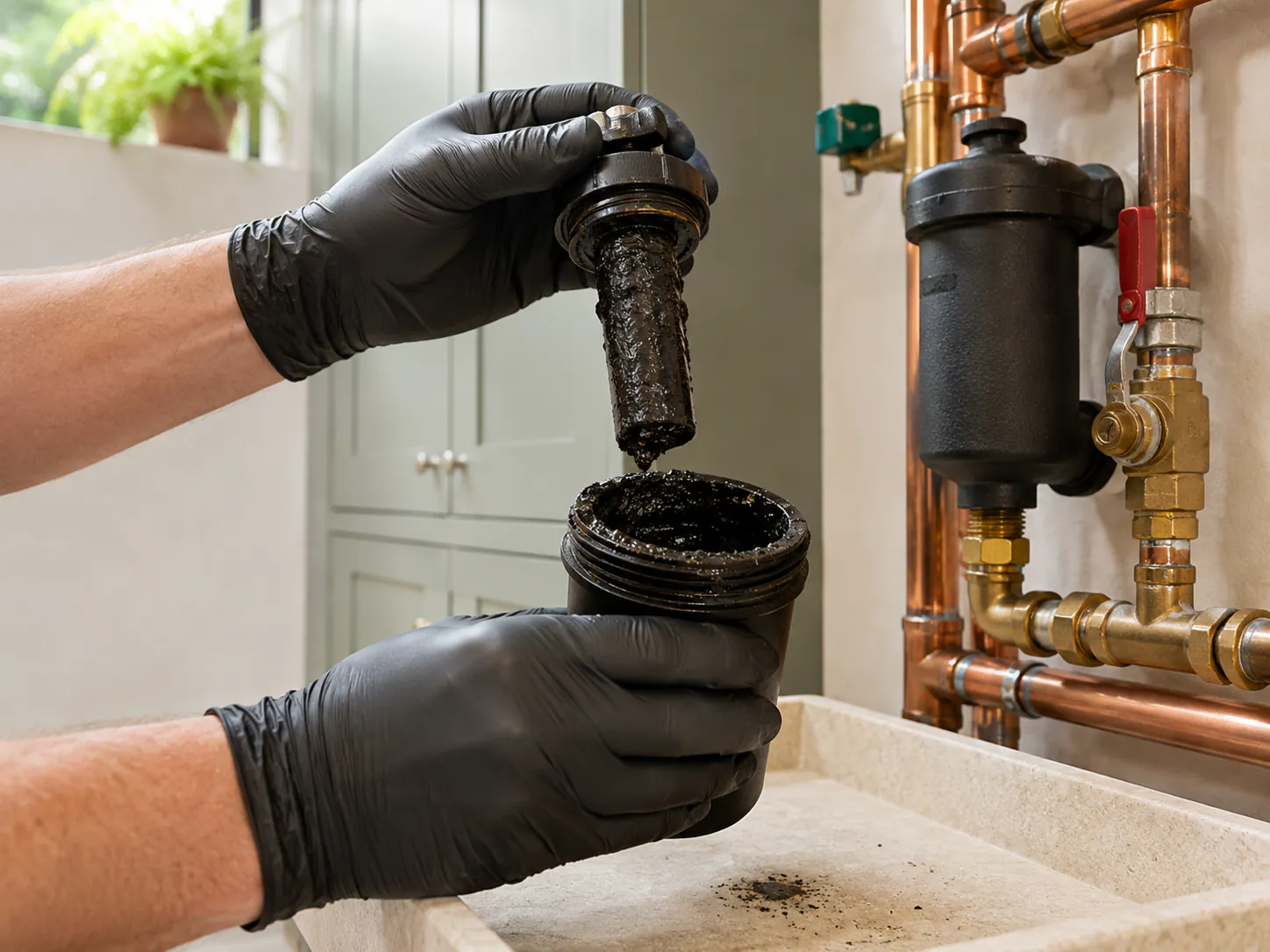
Discoloured water and recurring filter debris can point to active corrosion products in circulation.
Pumps, valves or heat exchangers repeatedly affected by debris need the upstream cause investigated.
02 · Diagnosis before equipment
Air, failed valves, poor balancing, pump faults and restricted pipework can mimic sludge-related symptoms. Cleaning the circuit will not repair those problems.
For a broader checklist, read our guide to when a London heating system may need a Powerflush.
03 · Visible evidence
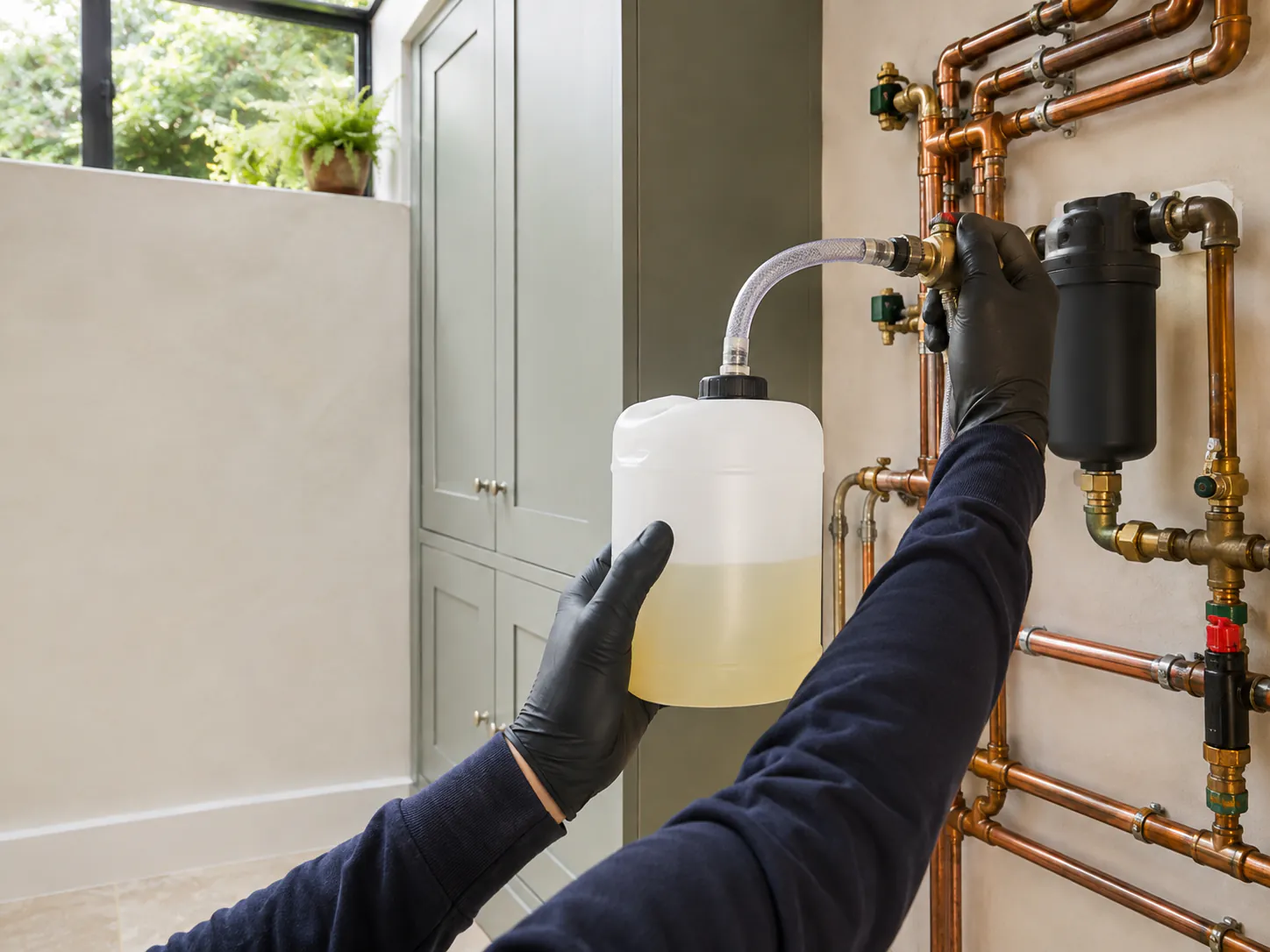
Three visual checkpoints connect the initial symptom to the work completed before handover.
04 · The controlled process
The equipment creates flow. The result depends on how each circuit is worked, rinsed and verified.
Confirm symptoms, system arrangement, vulnerable parts and whether cleaning is appropriate.
Cover work areas and connect professional high-flow equipment at a suitable point.
Use suitable treatment chemistry and controlled directional flow to loosen contamination.
Isolate and clean radiators or zones methodically rather than relying on one general circulation.
Remove ferrous debris magnetically and continue rinsing until the discharge is acceptably clear.
Add fresh protection, recommission the heating and check circulation and heat-up before leaving.
05 · Choose the intervention
Similar symptoms can come from different causes. The correct intervention is the one that addresses the confirmed restriction.
For moderate to heavy sludge, restricted circulation and repeatedly contaminated systems.
For systems where normal circulation remains available and contamination is less established.
For failed pumps, valves, controls, air locks or distribution faults that cleaning cannot resolve.
Cleaning cannot restore metal already lost to corrosion. Removing compacted debris can reveal an existing weakness or leak that was previously masked; we explain that risk before work starts.
06 · Programme and quotation
A realistic programme and price follow the system in front of us — not a headline package.
Many domestic systems can be assessed, cleaned, rinsed and recommissioned in one day. Large, zoned or heavily contaminated systems may require longer.
Cold radiator sections, slow circulation, dark water and repeated debris-related faults are warning signs, not proof. We first check whether contamination, balancing, controls, valves, pumps or pipe restrictions are causing the symptom.
Often, yes. Suitability depends on the radiator condition, valves, pipework and system arrangement. Older equipment is assessed carefully before the cleaning method and flow are agreed.
A Powerflush uses professional high-flow equipment and magnetic capture to work individual circuits. A lighter chemical clean relies mainly on the system's existing circulation and may suit less established contamination.
Only if contamination is the cause. A stuck valve, trapped air, balancing problem or local pipe restriction may require repair or adjustment instead.
Many domestic systems take most of a working day. Larger properties, multiple zones, access limitations or heavier contamination can extend the programme.
Price depends on radiator count, zones, system type, access, contamination level and known faults. PEP provides a defined scope and quotation after understanding the installation.
The process uses controlled high flow rather than excessive pressure. However, no cleaning method can reverse existing corrosion, and removing debris may reveal a pre-existing weakness that had been masked.
The cleaning solution is rinsed out, fresh inhibitor is introduced, the system is recommissioned and circulation and radiator heat-up are checked before handover.
PEP's Hampstead Powerflush service sits alongside our wider Powerflush London → coverage and every boiler installation in Hampstead →, which includes a full system clean as standard.
See our broader central heating installation → work, our whole-system heating installation in Hampstead → for a full redesign rather than a clean, our Hampstead plumbing → service, or contact PEP → to discuss a Hampstead heating system.
Start with the right question
Tell us what the system is doing, where heat is being lost and whether any recent boiler, radiator or control work has been completed.