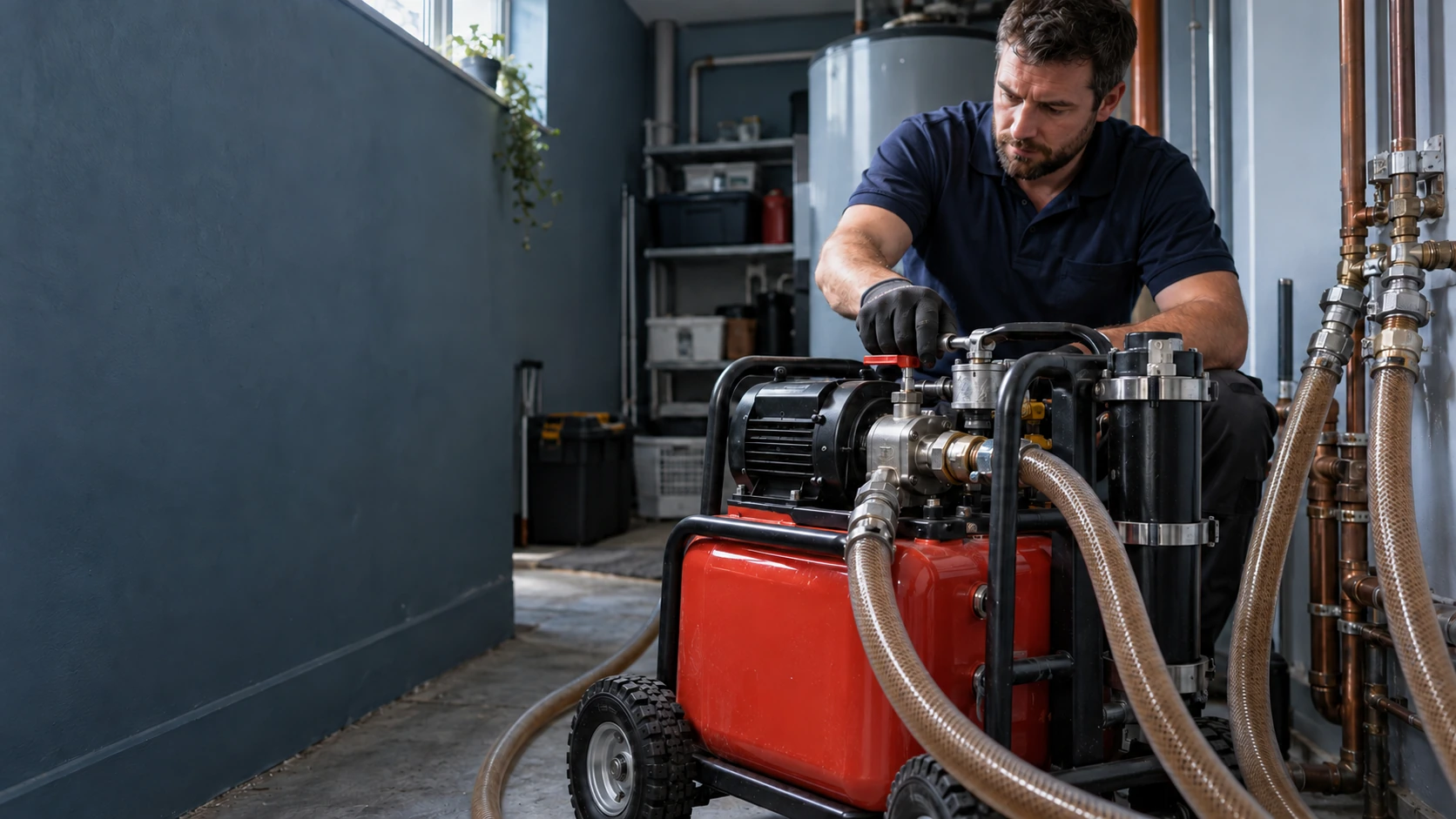
Heating engineer operating a powerflushing machine with discoloured heating water visible in reinforced hoses

Heating system cleaning · Fulham SW6

Powerflushing in Fulham, SW6

Better circulation starts with understanding what is stopping it.

ONE COORDINATED TEAMPlumbing · Heating · ElectricalFrom first fix to handover
Gas Safe RegisterNICEIC

A boiler can be working while parts of the house remain uncomfortable. Radiators take too long to warm up, certain rooms never reach temperature, or familiar cold patches return despite adjustments.

PEP provides professional powerflushing in Fulham SW6, removing accumulated heating-system contamination where cleaning is the appropriate solution. We assess the installation, explain the recommended work and check its operation afterwards.

From a flat near Fulham Broadway to a family home in Parsons Green, the aim is the same: restore circulation where deposits are restricting it, protect the cleaned system and identify any remaining problems.

01 · Find the cause before choosing the treatment

Does your heating system need a powerflush?

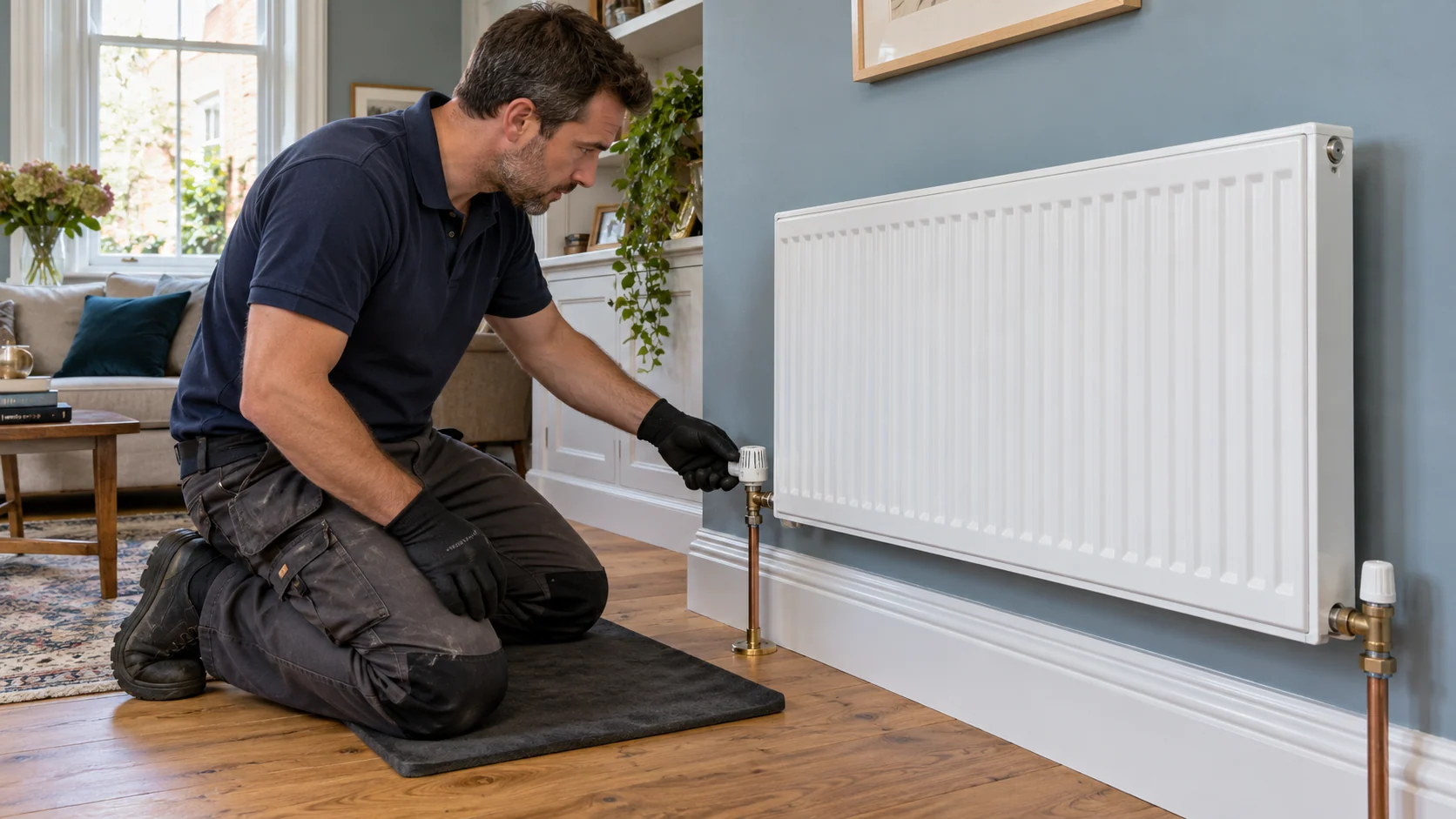
Heating engineer inspecting a radiator valve and pipework before recommending system cleaning
A cold radiator is a symptomStart with the radiator. Consider the whole system.

Sludge and corrosion debris can restrict the movement of water through radiators and pipework. However, uneven heating does not automatically mean the whole installation needs flushing.

A sticking valve, trapped air, poor balancing or a control fault may produce similar symptoms. We consider the pattern of the problem before recommending treatment.

What you notice What needs checking
One radiator remains cold while others heat normally Its valves, local flow and possible restrictions
Several radiators have persistent cold areas Circulation, contamination and the condition of affected branches
Upstairs heats quickly but downstairs struggles Flow distribution, balancing, pump operation and system layout
Heating has deteriorated after alterations Changes to pipework, valves, controls and commissioning
Radiators repeatedly collect air or require attention The underlying cause, rather than assuming cleaning alone will resolve it

This distinction matters: radiator and boiler faults can require different interventions, as explained in Vaillant’s radiator troubleshooting guidance.

Our recommendation may be a powerflush, a less intensive clean, balancing or a targeted repair. Where another fault needs attention first, we explain why.

02 · Assess. Clean. Protect.

What our powerflushing service involves

Powerflushing uses a specialist external pump to circulate water and suitable cleaning chemicals through the heating circuit. The cleaning action relies on high flow rather than excessive pressure — a distinction explained in Kamco’s technical guidance.

The equipment matters, but so does how the system is prepared, worked through and checked.

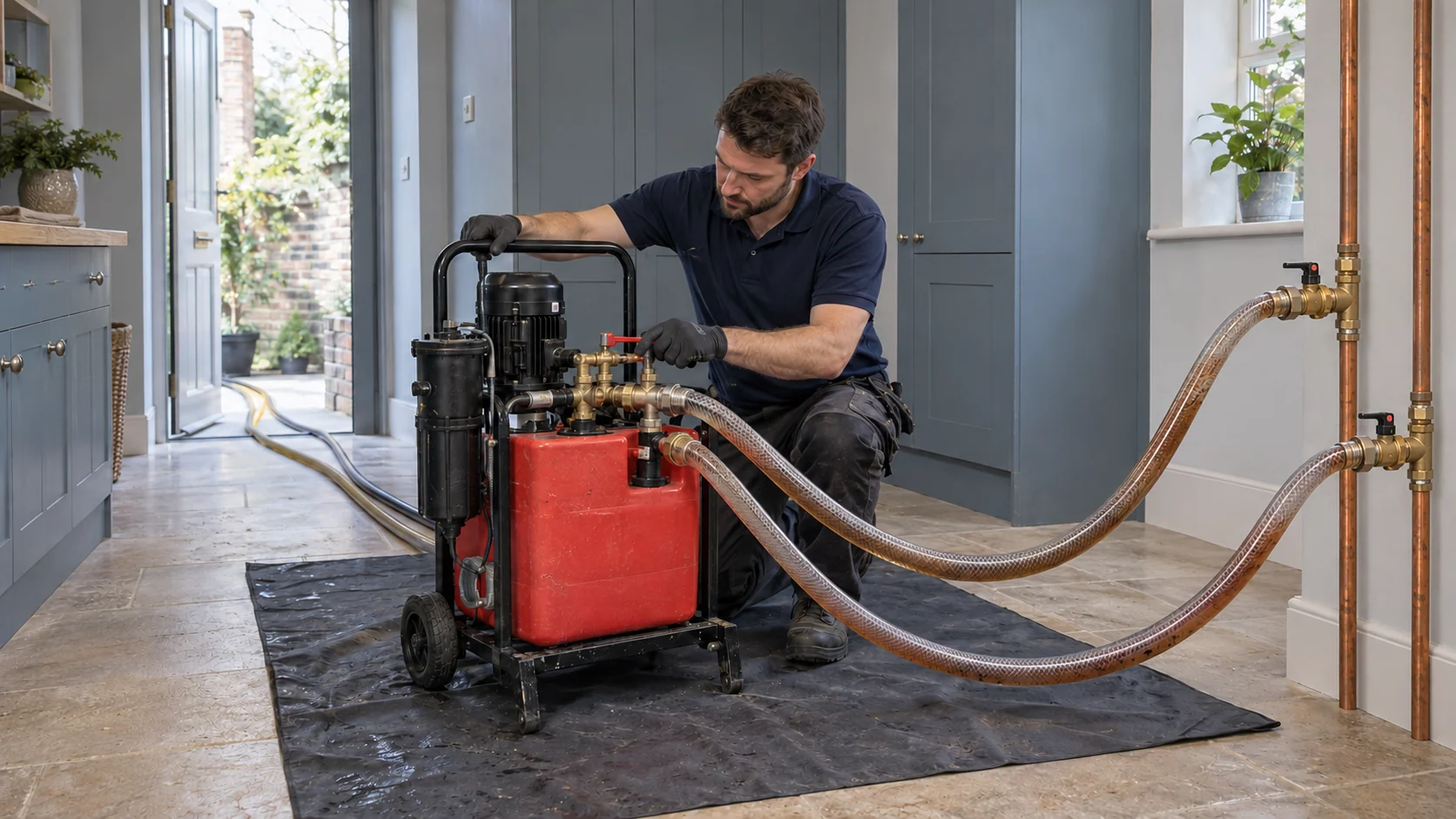
Powerflushing equipment connected to heating service points with discoloured water visible in reinforced hoses
Controlled cleaning circulationWork through the circuit, not just the easiest route.
01

Assess the installation

We review the symptoms, radiator count, heating zones, accessible pipework and existing treatment arrangements. We also consider visible deterioration, previous alterations and practical access.

This establishes whether cleaning is appropriate and identifies limitations that should be discussed before work begins.

02

Prepare and protect the working area

We agree the connection point, equipment position and hose routes, with protection for nearby surfaces. Access to a suitable water supply and wastewater disposal point forms part of the planning.

For occupied homes, this also means explaining which areas need to remain accessible and when heating will be unavailable.

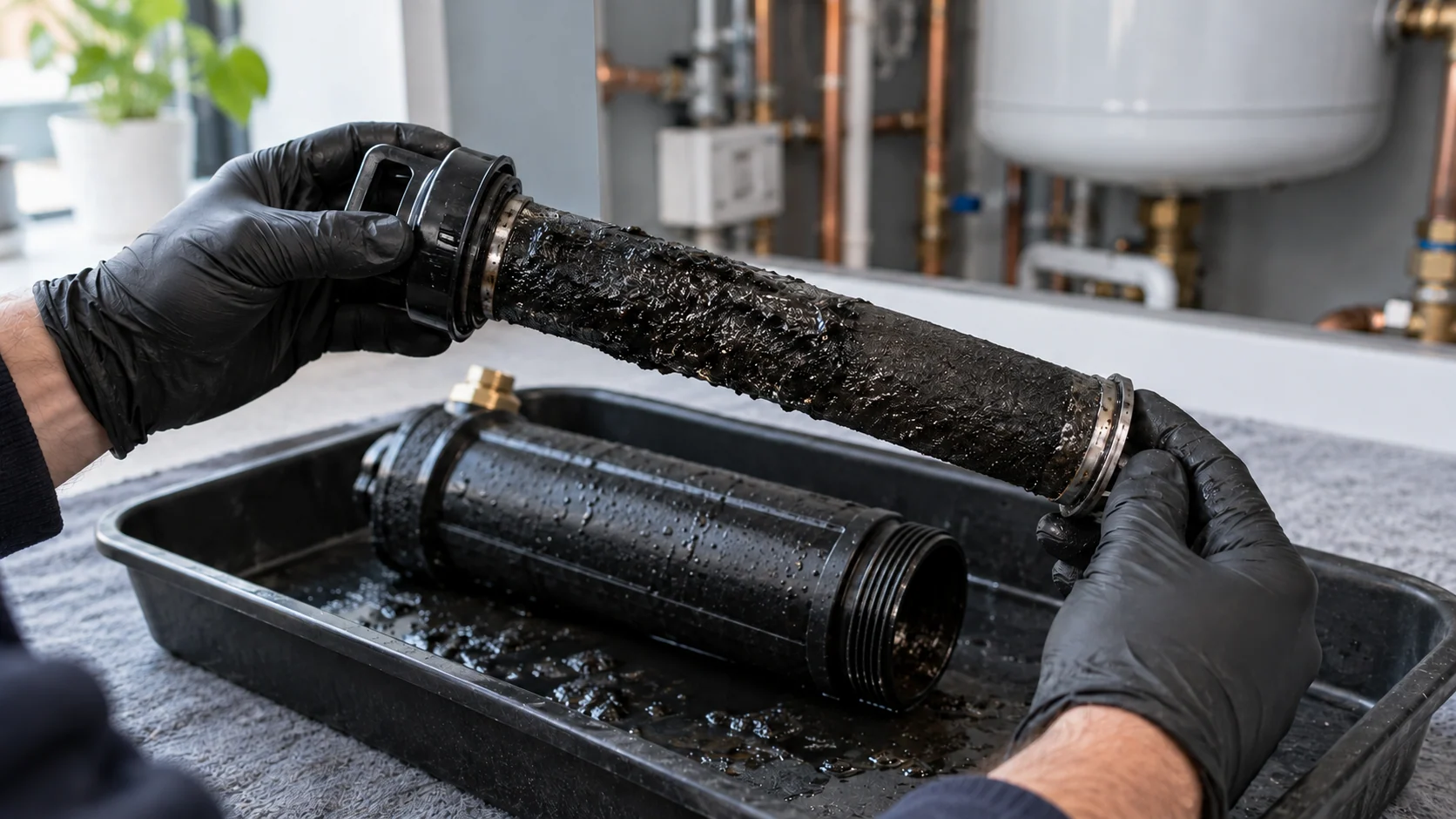
Close-up of dark heating-system sludge on a removed magnetic filter sleeve above a protective tray
03

Work through the heating circuit

Appropriate cleaning chemistry and controlled circulation help mobilise deposits. Radiators and branches are worked through individually where the arrangement allows, rather than relying on circulation through the easiest route.

In-line magnetic capture helps remove circulating magnetic debris during the process.

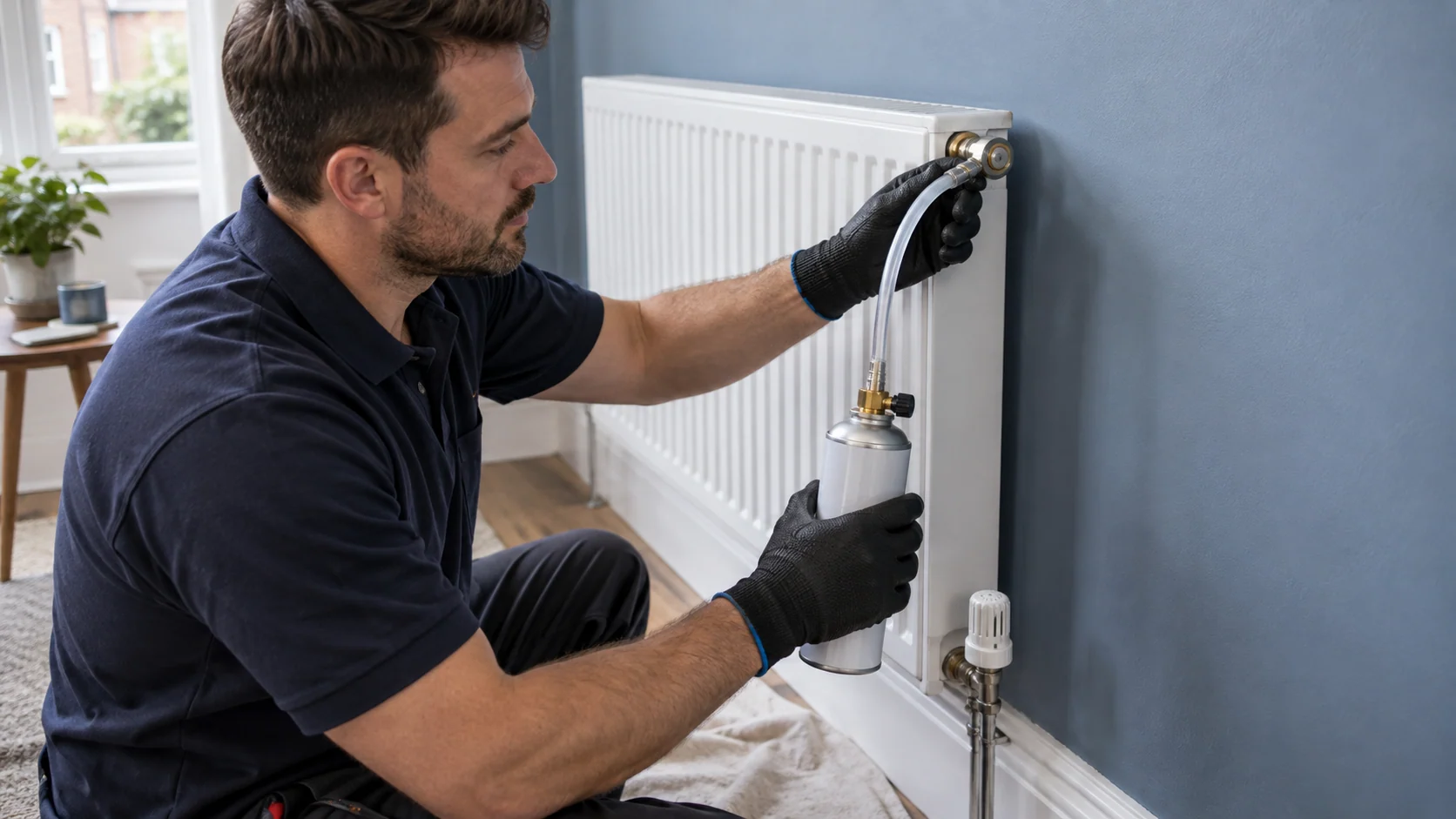
Heating engineer dosing corrosion inhibitor through a securely connected radiator treatment adaptor
04

Rinse and protect

The system is rinsed to remove loosened contamination and cleaning residues. Suitable corrosion inhibitor is then added at the appropriate concentration.

Cleaning and protection are separate stages: removing deposits does not provide lasting protection against further corrosion.

05

Restore operation and check the result

We restore the normal arrangement and check circulation, radiator warm-up and system operation. Any remaining restrictions or unrelated faults are explained, together with recommendations for further attention.

03 · Plan around the property

Powerflushing for Fulham houses and flats

A heating installation needs to be understood as it exists today, including alterations made over the years.

In a multi-storey house, uneven temperatures may involve both contamination and the distribution of flow between floors. Cleaning can address deposits; balancing and other hydraulic issues require their own assessment.

In a converted flat, access can be just as important as radiator count. A boiler inside fitted cabinetry, concealed branches or limited space for equipment may affect how the work is organised. We discuss these details before agreeing the scope.

For managed apartments, the first question is whether the heating circuit is entirely private. Where a property uses communal heating or a heat interface unit, the boundary between the apartment system and the building’s equipment must be established. Any necessary arrangements with the managing agent or system operator should be resolved beforehand.

Where the problem extends beyond cleaning, our plumbing and installation services in Fulham provide a route to discussing the wider work.

04 · Understand the limitations

Older radiators, microbore and mixed heating systems

Older pipework deserves assessment, not an automatic refusal or an unconditional promise.

Microbore systems can sometimes be cleaned successfully, but narrow or heavily restricted branches may limit circulation. A completely blocked section may require targeted repair or replacement rather than more time with the flushing machine.

We also consider the condition of older radiators and connections. Removing deposits can expose pre-existing corrosion damage; cleaning cannot restore metal that has already deteriorated. These limitations should be discussed before treatment.

Where radiators operate alongside water-based underfloor heating, the circuits, manifolds and controls need to be considered separately. A cold floor could involve an actuator, pump, mixing arrangement or control issue rather than contamination.

Our guide to underfloor heating that is not working explains these distinctions. Electric underfloor heating has no water circuit to flush.

05 · Different faults. Different solutions.

Powerflush, chemical clean or balancing?

These are not interchangeable solutions.

A powerflush uses a dedicated external machine to achieve cleaning circulation. A less intensive chemical clean may use the installation’s own pump before the system is drained and rinsed. Both approaches can involve cleaning chemicals; the difference is not simply “chemicals versus no chemicals”.

Balancing addresses how heating water is distributed between radiators. It does not remove accumulated deposits. Equally, cleaning does not automatically correct an unsuitable pipework arrangement or faulty control.

The appropriate recommendation depends on the installation and what is causing the poor performance.

For a fuller comparison, read our guide to when a London heating system needs a powerflush.

06 · One coordinated installation package

Powerflushing before a boiler replacement

Replacing a boiler is an important opportunity to assess the condition of the heating circuit it will serve. Existing contamination and unresolved circulation problems should not simply be passed on to the new appliance.

PEP’s boiler replacement package includes a full-system PowerFlush, together with suitable magnetic protection, inhibitor and water-condition checks. We assess the existing circuit and explain any condition or access limitations in the installation scope.

If you are already arranging a boiler installation in Fulham, discuss the cleaning as part of that package. You should not need to book it again as a separate standalone service.

For homeowners retaining their existing boiler, powerflushing can instead be assessed and quoted independently.

07 · Know what the quotation covers

How much does a powerflush in Fulham cost?

A useful quotation describes the work, not just the number of radiators.

Cost depends on the size and condition of the installation, the number of heating zones, access to suitable connection points and whether associated repairs are necessary. A straightforward flat and a multi-floor house with several circuits may involve very different programmes.

Your quotation should make clear:

  • Which circuits and radiators are included.
  • The cleaning and inhibitor treatment.
  • Whether an existing magnetic filter will be cleaned or a new one supplied.
  • The checks included after the system is restored.
  • Any separately identified valve, radiator or pipework repairs.
  • Access requirements, applicable charges and the VAT position.

A new filter, replacement valves and remedial pipework should not be confused with the cleaning itself. We explain the proposed scope so you can make a meaningful decision.

Many domestic powerflushes occupy most of a working day. Larger or heavily contaminated systems can take longer, and some installations need preparatory treatment or repairs. We confirm the likely programme after assessment rather than promising the same completion time for every property.

08 · Check the water. Check the heating.

How do we check that the work has helped?

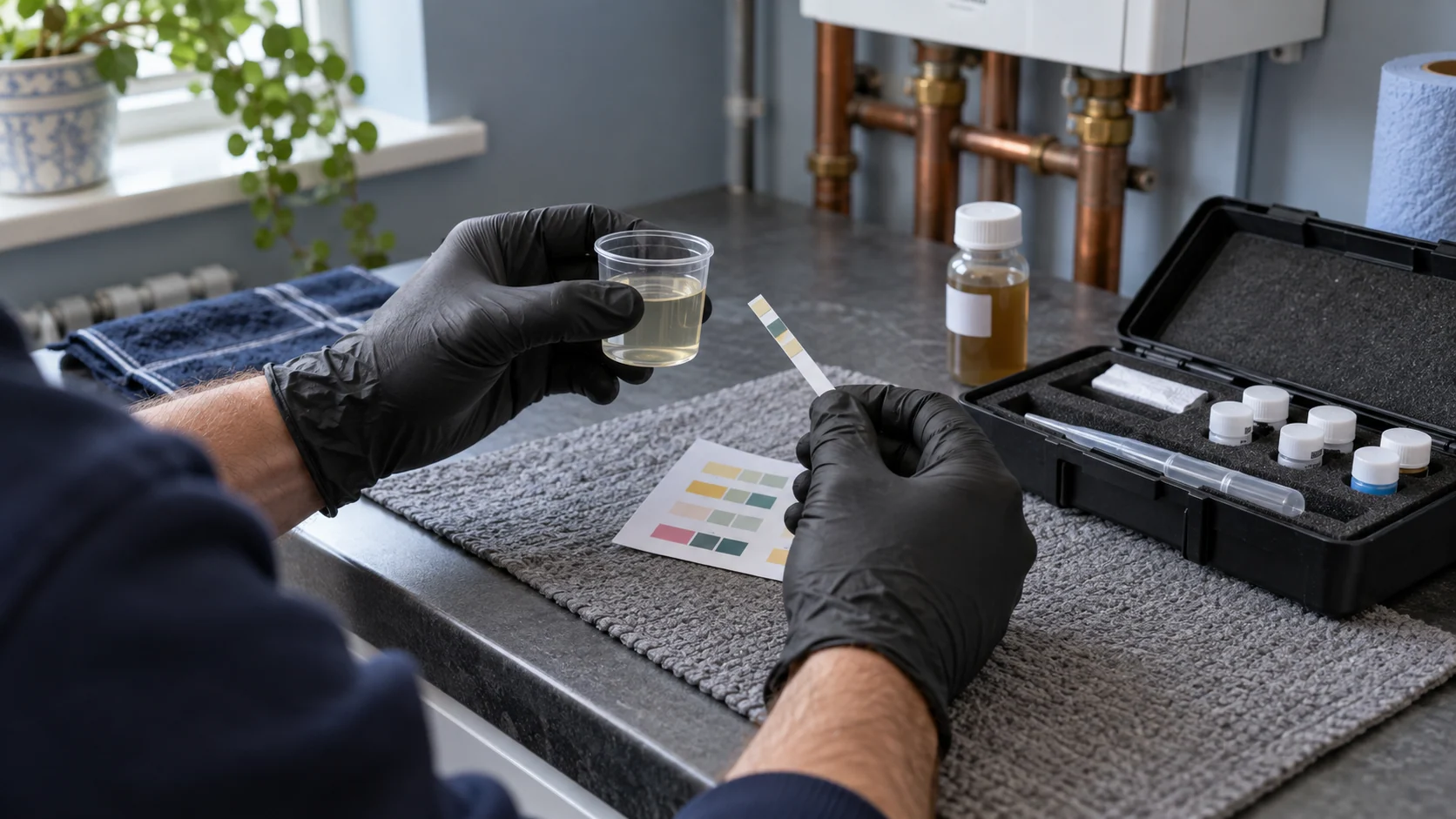
A photograph of dirty water shows what has been removed. It does not, by itself, establish the condition of the whole installation.

Likewise, clear-looking water is not proof that inhibitor concentration or other water-quality parameters are correct. Fernox’s guidance on water appearance explains why visual inspection should not be treated as a complete test.

Our final checks consider the cleaning and protection requirements of the products used, alongside the way the heating operates after recommissioning.

That includes reviewing radiator warm-up and any symptoms that remain. If a room still struggles because of a separate valve fault, inadequate radiator output or another limitation, we explain it rather than attributing every problem to sludge.

The objective is an installation that has been cleaned appropriately, protected and checked — with a clear understanding of anything still requiring attention.

09 · Fulham & its neighbourhoods

Powerflushing across Fulham SW6

We cover Fulham Broadway, Parsons Green, Peterborough Estate, Walham Green, Munster Village, Fulham Cross, Bishops Park, Hurlingham, Sands End and Imperial Wharf.

Send your postcode when enquiring, particularly if your property sits close to a district boundary. For properties outside SW6, see our wider London powerflushing service.

Before arranging the work

Frequently asked questions

Will a powerflush fix one radiator that does not heat up?

Not necessarily. A single cold radiator may have a valve or local circulation problem. We check the affected radiator and its relationship to the rest of the system before recommending whole-system cleaning. The right solution may be a smaller repair.

Is powerflushing suitable for an old heating system?

Age alone does not determine suitability. Accessible pipework, radiator condition, existing leaks, materials and the extent of restrictions all matter. Where deterioration makes cleaning inappropriate or creates a significant risk, we explain the alternatives.

Will the radiators need to be removed?

Not routinely. A powerflush normally works through the connected heating circuit. However, an individual radiator or blocked branch may need separate attention if circulation cannot be established. Any additional work should be identified and agreed.

Does a magnetic filter mean the system cannot become dirty?

No. A magnetic filter captures magnetic material passing through it, but does not guarantee that every radiator and branch is clean. Its condition and maintenance matter. We assess the existing filter alongside the wider installation rather than assuming a fitted filter removes the need for investigation.

Will powerflushing lower my heating bills?

It may improve performance where contamination is restricting circulation or heat transfer. The financial effect depends on the original problem, controls, insulation and how the heating is used. We do not promise a fixed percentage saving or present cleaning as a substitute for necessary repairs.

How often should a heating system be powerflushed?

There is no single interval appropriate for every home. The decision should follow the condition of the system, its water treatment, operating symptoms and any planned work. Routine maintenance and suitable water-condition checks are different from automatically repeating a full powerflush.

Can I remain at home during the work?

This can usually be arranged, provided safe access and working space are available. There will be equipment, hoses and some noise, and the affected heating will be unavailable during the work. We explain the expected disruption, including any effect on hot water, before starting.

Is powerflushing a boiler service?

No. Cleaning the heating circuit and servicing the boiler are different tasks. A powerflush does not replace the appliance’s servicing requirements or automatically resolve a mechanical, electrical or combustion-related fault.

A clear next step for your heating

Get a clear recommendation for your Fulham heating system

Tell us which rooms are struggling, how many radiators you have and whether the problem affects one part of the property or the whole home. Your postcode, boiler model and details of recent heating work will help us understand the installation.

Photographs of accessible equipment can also be useful — there is no need to remove covers or dismantle anything.

PEP will help establish whether powerflushing is appropriate and explain the proposed work, likely disruption and next steps.

A properly assessed system. A clearly defined service. Heating performance checked before handover.