RCD protection
responds to current leaking away from its intended path. It helps reduce the risk of electric shock from certain faults.

Consumer units & fuse boards · W11
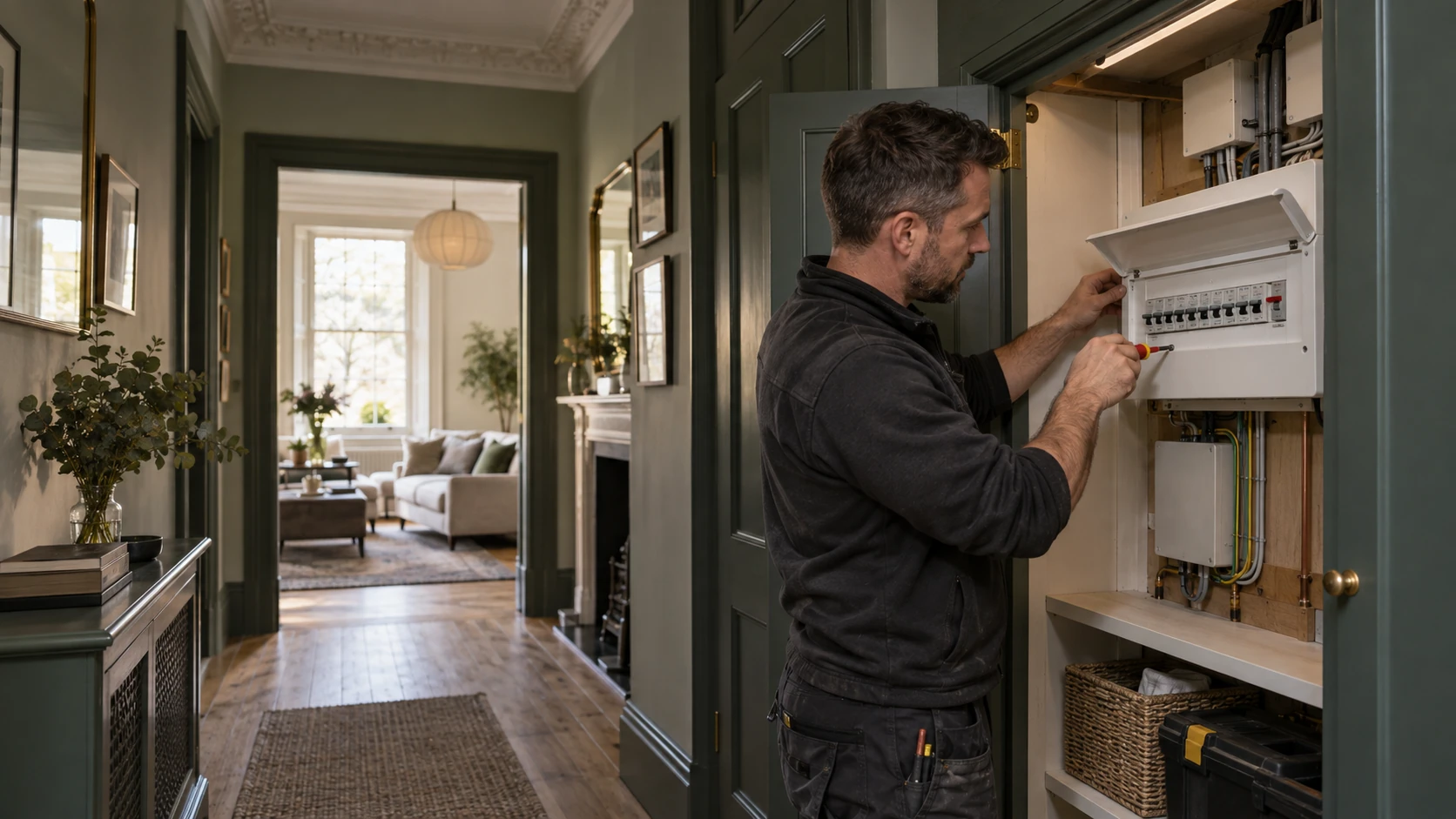
PEP replaces consumer units and fuse boards for homes and flats in Notting Hill W11. We assess the existing installation, agree the proposed protection and any associated repairs, and plan the changeover around your property.
A replacement should leave you with more than a new enclosure on the wall. You should understand which circuits are connected, what work has been completed and what the accompanying documents cover.
Whether you have an older fuse box or are considering an upgrade during refurbishment, we explain the scope before installation begins.
Assessment · Replacement · Testing & certification
Existing installation
assessed before replacement
Installation, testing
and documentation

A replacement may be appropriate if the board is damaged, the protective arrangement needs improvement or planned electrical work cannot be accommodated suitably by the existing equipment.
It may also form part of remedial work identified in an Electrical Installation Condition Report, or EICR. In that situation, the report helps define the starting point: which observations concern the board, which concern individual circuits and which require separate attention.
Age or appearance alone does not provide the complete answer. We explain the reason for the proposed change and whether a repair, a limited alteration or a replacement is the appropriate scope.

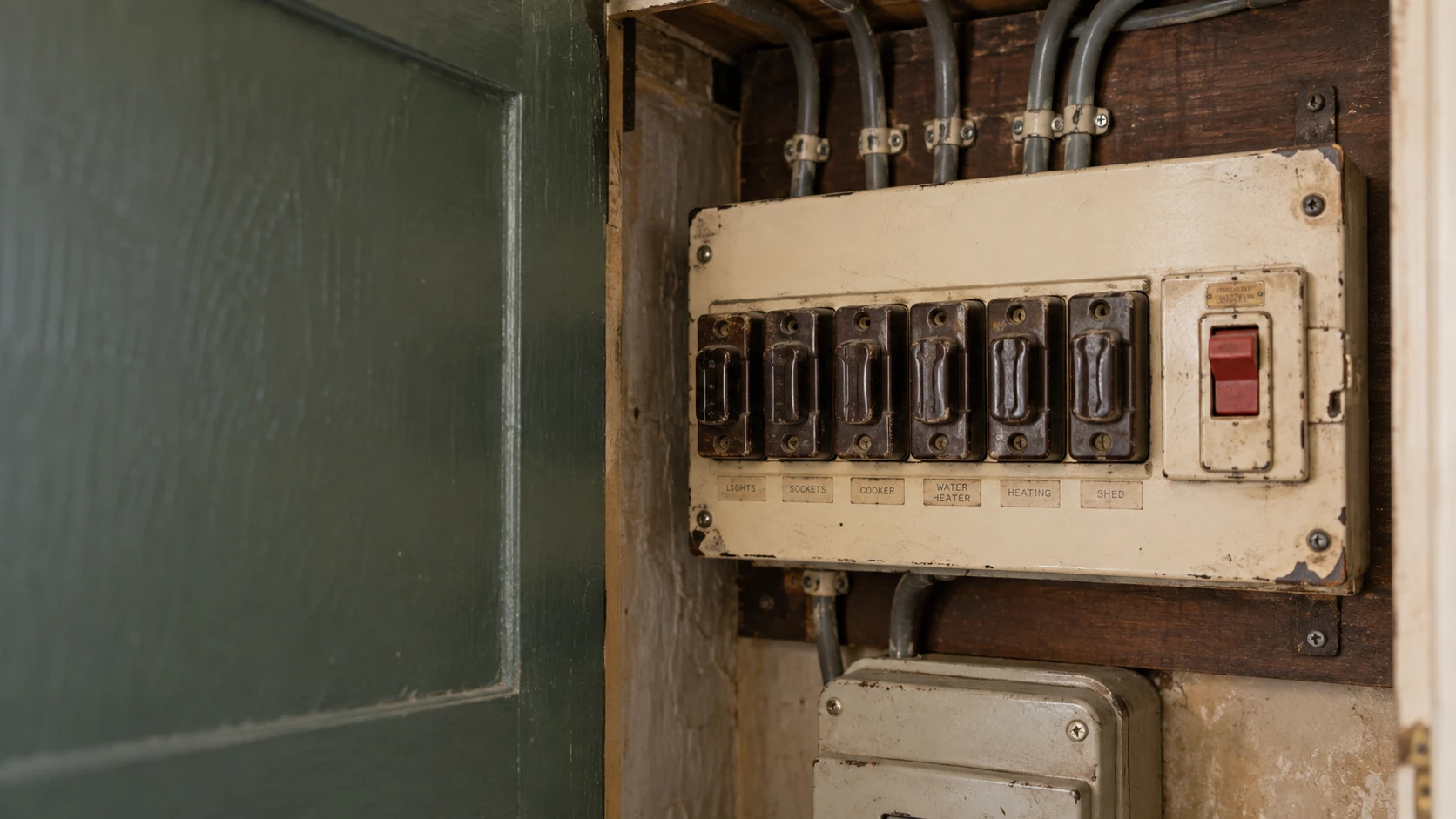
A circuit labelled “kitchen” may have been extended into a utility room. A former bedroom may now contain bathroom equipment. Additional wiring may have been introduced during a loft conversion or when a house was divided into flats.
Those changes matter when replacing the consumer unit. The descriptions on an old board are useful clues, but they cannot establish the condition or arrangement of the circuits behind them.
PEP reviews the available records, identifies the circuits involved and assesses the installation before specifying the replacement. Where earlier alterations or test findings raise questions, these become part of the discussion about the work.
The aim is to agree a replacement based on the installation you have today, rather than the one an old label appears to describe.
Converted flats · shared access
In a converted Notting Hill property, the board inside a flat may be some distance from its meter or the equipment needed to isolate its supply. Access could involve a communal cupboard, a basement or an area controlled by the freeholder or managing agent.
These arrangements should be understood before an installation date is agreed.
We establish the access needed for the work and whether coordination with another party is required. The scope should also distinguish your flat’s circuits from communal lighting or equipment serving other parts of the building.
Where the board sits inside fitted joinery or close to retained finishes, we discuss working space, access and any associated opening-up or making good. This helps prevent a seemingly straightforward replacement becoming an unplanned alteration to the room.
A defined scope · an individual quotation
The cost of a fuse board replacement depends on what is being connected to it, not simply the size of the new enclosure.
A quotation needs to account for:
PEP prepares the proposal around the assessed requirements. Identified remedial work should be clear, along with any limitations or matters that still require investigation.
If an additional issue becomes apparent during the work, we explain what has been found and agree the necessary next steps. Unsafe circuits cannot simply be reconnected to keep the job within its original description.
When comparing quotations, look at the equipment, testing and associated work included—not just the headline price.
The board and the cables are different decisions
It may be possible to replace the consumer unit while retaining the existing cables. That decision depends on the condition of the installation and the findings from assessment and testing.
A new board changes the distribution and protective arrangement. It does not renew damaged cable, correct every earlier alteration or make an unsuitable circuit suitable for a new load.
Some properties need a board replacement with a defined amount of remedial work. Others may need a broader approach. We explain the distinction so that you can consider the appropriate work rather than treating every older installation as an automatic full rewire.
For projects involving substantial cable replacement, see our full house rewiring service in Notting Hill.
Specify the protection
You may see several different protective devices in a consumer unit quotation. They perform different jobs.
responds to current leaking away from its intended path. It helps reduce the risk of electric shock from certain faults.
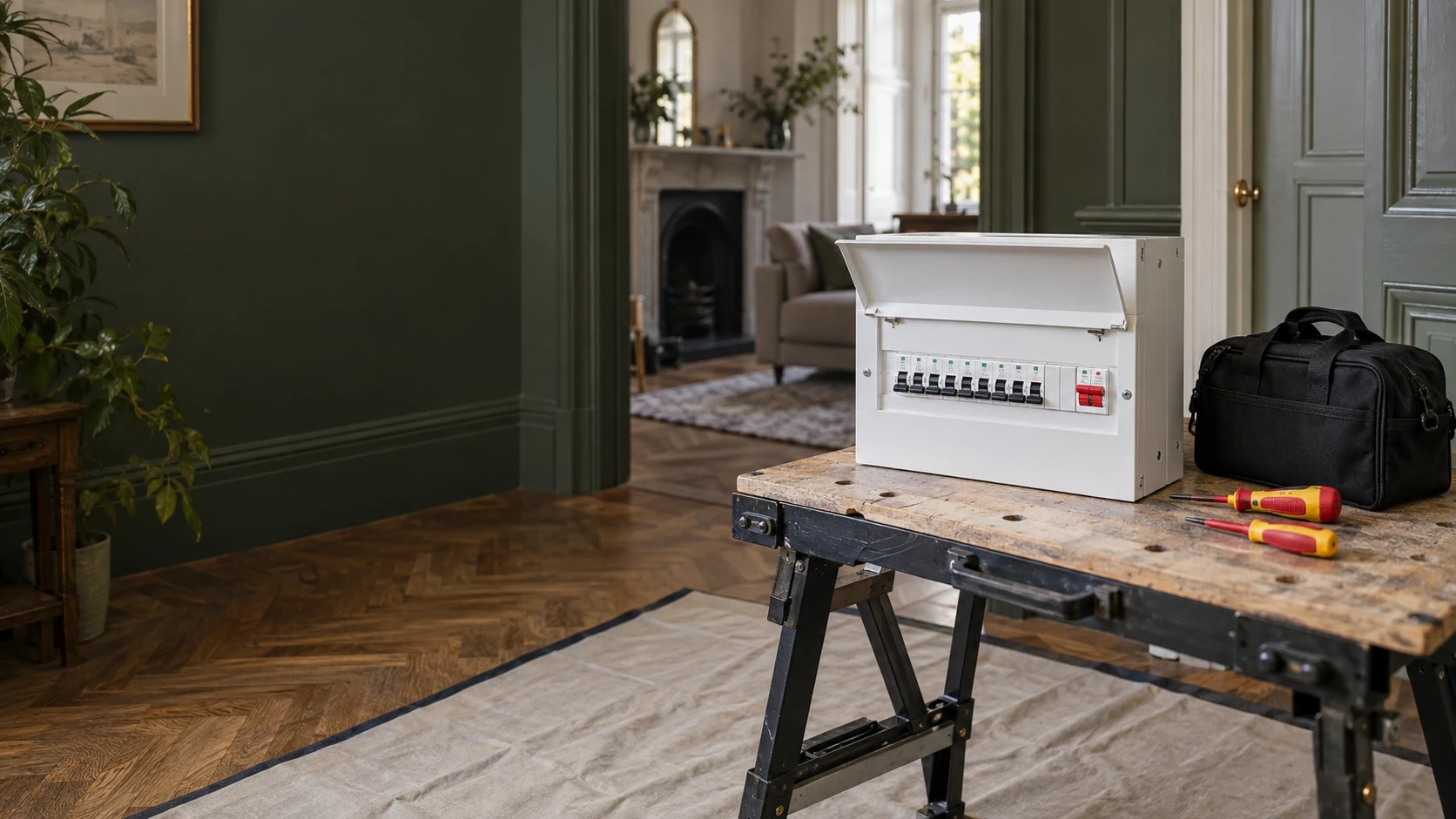
combine residual current protection with protection against overloads and short circuits. Individual RCBOs can help limit the interruption caused by a fault to the affected circuit, rather than a group of circuits sharing an RCD.
limits brief overvoltages that could damage electrical equipment. It performs a different role from RCDs and RCBOs, so these measures should not be treated as alternatives to one another.
PEP explains the proposed arrangement in relation to your circuits, the intended use of the property and the applicable requirements of BS 7671. If a refurbishment will introduce additional equipment, that information should be considered before the board is selected.

The electricity supply to the installation being worked on must be isolated during replacement. The appointment therefore needs a little more planning than simply providing access to the fuse box.
Tell us about working-from-home arrangements, refrigeration, heating controls, security systems or equipment with particular power requirements. We can then discuss how the anticipated interruption affects the household and whether additional arrangements are needed.
Testing may require access to rooms and electrical points elsewhere in the property. Furniture, locked rooms or occupied areas can affect the work even when the board itself is easy to reach.
We discuss the expected duration after assessing the installation. Circuit count, access and any remedial work influence the programme; a fixed completion time should not be assumed before those details are known.
A clear sequence
We discuss the reason for replacement, the property layout, previous alterations and any inspection reports.
The proposal identifies the board, protection, associated work and arrangements for access and interruption.
The electrician completes the agreed installation work, with any new findings addressed before affected circuits are returned to service.
The work is verified and the circuit information checked, so the labels correspond to the installation being handed back.
We explain the new board’s controls and provide the applicable completion records.
For a replacement carried out alongside new lighting, circuits or room alterations, we can coordinate the scope with our electrical services in Notting Hill.

An Electrical Installation Certificate (EIC) records the replacement work and the relevant inspection and test results. It is not a statement that every cable in the property has been replaced.
An Electrical Installation Condition Report (EICR) serves a different purpose: reporting on the condition of an existing installation within its stated scope and limitations.
In England, replacing a domestic consumer unit is work that must be notified under Building Regulations. PEP arranges the notification for its replacements and provides the associated compliance documentation as part of the completion process.
Keep these records with the property’s electrical information. If other defects or recommendations remain outside the completed work, those should be clearly distinguished from the replacement itself.
Notting Hill · nearby W2 & W10
PEP covers consumer unit replacement in Notting Hill W11, including homes around Ladbroke Square, Kensington Park Road, Ledbury Road and the W11 sections of Portobello Road and Westbourne Grove.
We also welcome enquiries from nearby W2 addresses around Pembridge Square and Bayswater, and W10 addresses around northern Ladbroke Grove and Golborne. Westbourne Grove and Ladbroke Grove cross postcode boundaries, so please include your full postcode when contacting us.
For wider coverage, see consumer unit replacement in London.
Electrical Safety First recommends an EICR before a planned replacement. A separate full EICR is not a universal legal prerequisite, but the existing installation still needs appropriate assessment before work starts. Send any report you already have so we can discuss the checks required.
Not automatically. The enclosure material is only one consideration. The condition, location, protective measures and proposed work need to be assessed before deciding whether replacement or another improvement is appropriate.
Only if it addresses the cause. A faulty appliance or a defect in an existing circuit may still cause tripping after replacement. Investigation should establish the problem before a new board is presented as the solution.
It can address findings relating to the consumer unit, but other observations may need separate repairs or further investigation. The proposed work should be linked to the relevant findings rather than assuming a board change resolves the entire report.
Potentially. Moving it changes the scope and may involve alterations to circuit wiring, the incoming supply arrangement or the surrounding finishes. Tell us about the preferred position before the quotation is prepared.
That depends on the building’s supply and isolation arrangements. These need to be checked before the appointment; we do not assume that access to a board inside your flat means every part of the work is independent of the wider building.
Yes. Share the proposed appliance list and any changes to circuits while the work is being planned. The replacement board and installation sequence can then be considered alongside the kitchen electrical requirements.
A clear photograph can help us understand the existing equipment and plan the next step. It cannot show the condition of concealed wiring or establish test results, so further assessment may be needed before the scope and price can be confirmed.
Talk to PEP
An old fuse box, an inspection finding and a planned refurbishment can each lead to a different scope of work.
Send your full postcode, whether the property is a house or flat, and a short description of what you would like to change. Include any existing EICR, relevant plans and a clear photograph of the board without removing covers.
PEP will help establish the assessment needed and prepare a proposal for your property.