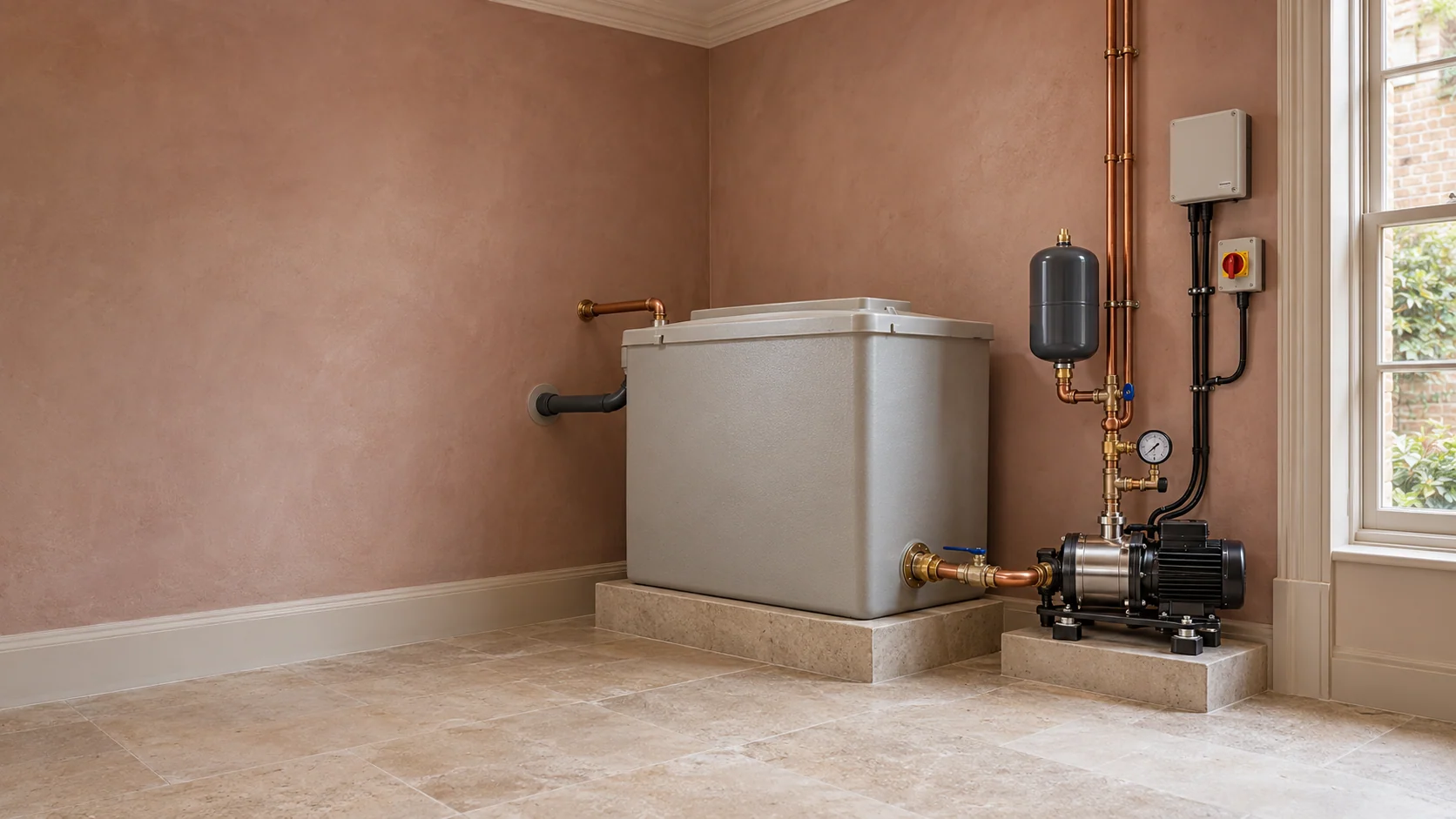
Cold-water storage tank and booster pump in a warm blush-painted domestic utility room

Domestic water supply · Chelsea SW3 & SW10

Water Pressure Booster & Accumulator Installation in Chelsea

Several bathrooms. One carefully planned water supply.

Speak to our plumbing team: 07843 676 480

Mains water boosters · Accumulator installation · Cold-water storage and booster sets

NICEIC

PEP installs water pressure boosters, accumulators and tank-fed pumping systems for Chelsea homes and apartments. We establish what the property can supply, what the household needs and which installation will connect the two.

From an upstairs shower that weakens when another outlet opens to a refurbishment with several new bathrooms, we plan the water supply, storage, pipework and electrical connections together. The proposal starts with your building and the performance you want at the taps.

Chelsea SW3 & SW10 · Plan for the whole home

Water delivery for Chelsea townhouses, flats and refurbishments

A beautifully finished bathroom still relies on the services behind it. A generous shower head, a deep bath and a second en-suite may each work individually, yet place quite different demands on the supply when used together.

In a townhouse, the route from lower-ground plant to an upper-floor bathroom can be as important as the equipment itself. In a mansion-block apartment, the first question may be whether the restriction is inside the flat or within shared building services. A compact mews home brings a different challenge: finding a suitable installation that leaves useful living space and maintenance access.

We assess those conditions before recommending additional equipment. Where a refurbishment also needs new distribution pipework, the work can form part of our plumbing installations in Chelsea.

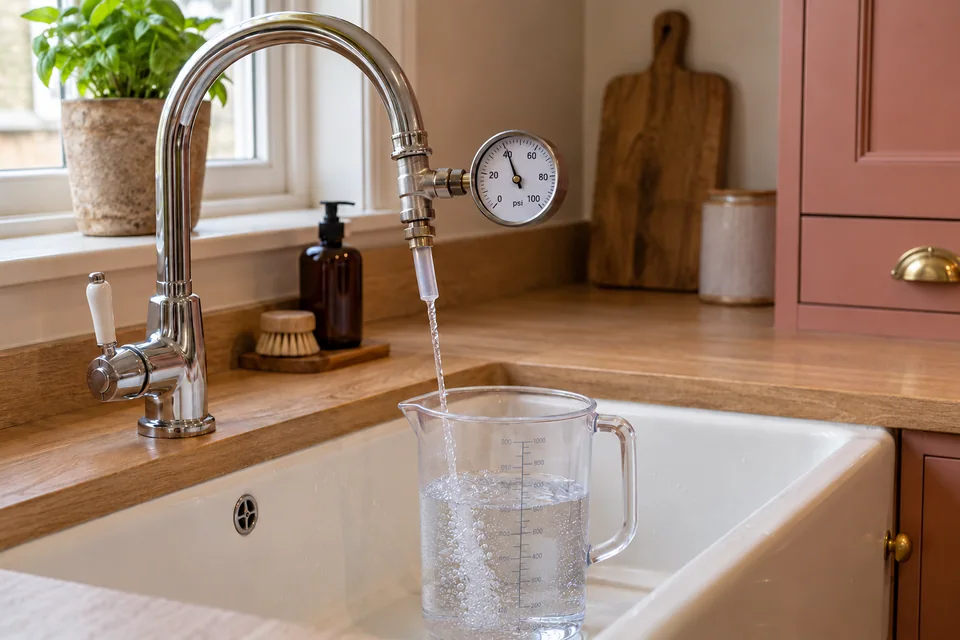
Pressure gauge connected to a kitchen tap test fitting while water flows into a measuring jug in the sink.
Measure the available supply under demand before choosing equipment.

01 · Understand the supply

Identify the restriction before investing in a booster

Low pressure and limited flow are related, but they are not the same measurement. A good pressure reading with no water running can hide a supply that falls short as soon as several outlets open.

We review the incoming supply under relevant demand, the pipework feeding the rooms and the requirements of the selected fittings. The assessment can include:

  • Static pressure, pressure during use and available flow.
  • Differences between lower and upper floors, and between individual outlets.
  • Pipe sizes, restrictive valves, filters and retained sections of older plumbing.
  • The existing hot-water arrangement and any proposed bathroom changes.
  • Shared connections or variations that need checking at different times.

A faulty valve, restricted pipe or supply problem should not be disguised by adding a pump. Sometimes the useful improvement is a repair or a change to the distribution. If the limitation sits with the water supplier or communal equipment, that boundary needs resolving first.

Our guide to understanding low water pressure and flow explains the investigation in more detail.

Private supply · Shared responsibilities

A private home and a shared riser need different decisions

Installing equipment inside a flat does not necessarily mean it serves an independent water connection. Before specifying a booster for a Chelsea apartment, we establish how water reaches the property and which parts of the system are private, shared or managed by others.

The building may already have stored water or central boosting. Adding another pump without understanding that arrangement can leave the actual problem unresolved and may affect other users.

We identify the information needed from the managing agent, freeholder or existing maintenance contractor. This may include supply arrangements, isolation procedures, permitted working hours and restrictions on equipment or pipe routes.

Necessary permissions are confirmed by the owner or appointed project team before affected work proceeds. If the solution requires changes to communal services, those works need their own agreement and scope; they are not assumed to be part of a private-flat installation.

02 · Select the right arrangement

Choose the water system that suits the job

There is no single booster arrangement that suits every Chelsea property. We compare the practical options against the measured supply, the intended use and the available installation space.

01 · Compact boosting
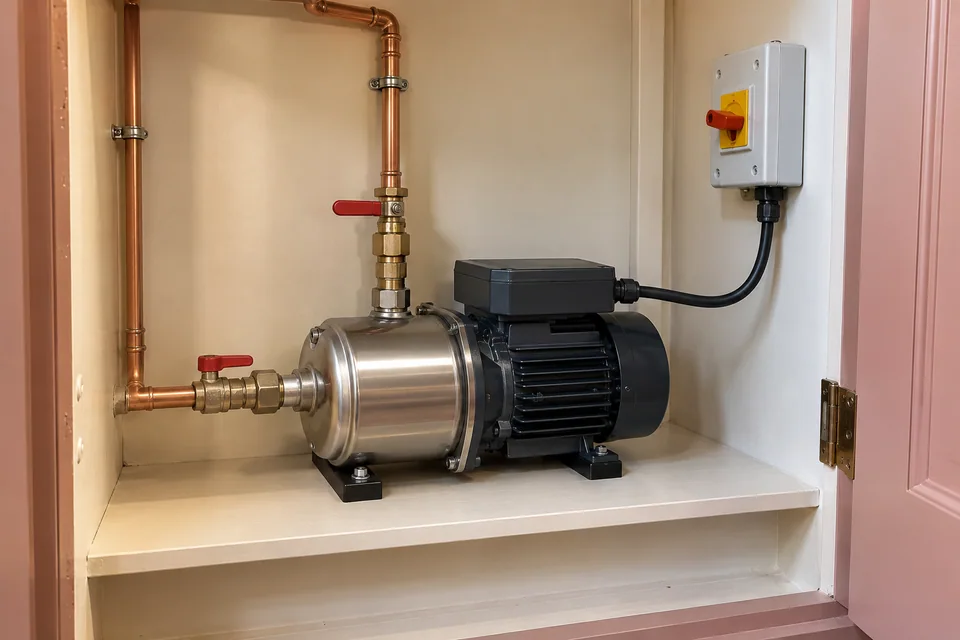
Compact domestic booster pump with separate inlet and outlet pipes, vibration-isolating feet and a connected electrical isolator.
A compact pump must suit the measured supply and intended demand.

Compact mains booster pumps

A compact booster may suit a smaller requirement where the existing supply and the selected product's operating conditions allow it. The pump's flow capacity and connection requirements must match the installation.

It offers a different level of support from a system with a substantial water reserve. Small dimensions alone do not make it the right choice for several high-flow showers.

02 · Pressurised reserve
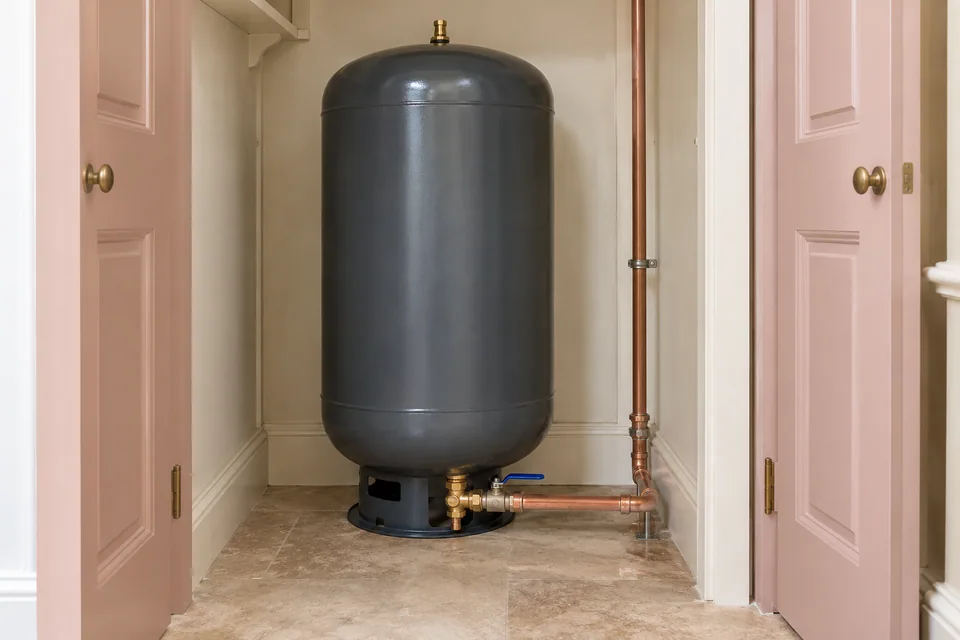
Upright cold-water accumulator with a single lower water connection and accessible isolation valve in a domestic service cupboard.
A pressurised cold-water reserve is different from a hot-water store.

Unpumped accumulators

An accumulator provides a reserve of water held under pressure. It can help meet short periods of demand when the incoming connection cannot deliver the required flow on its own.

Without a charging pump, the vessel depends on adequate supply pressure. It does not generate extra pressure independently. The useful reserve, charging conditions and time between busy periods all matter.

Pump-assisted accumulators

Where appropriate, an accumulator can be paired with a compatible charging pump. The vessel, pump and controls are selected together so that charging and delivery suit the expected demand. Combining separately chosen components is not a substitute for checking the complete arrangement.

Break tanks and dedicated booster sets

A break tank holds cold water for a booster set to supply to the home. The tank and pump may be integrated or arranged separately to suit the space and access route.

Stored water can support a busy period when demand exceeds the incoming refill rate. The reserve remains finite: tank sizing, replenishment and the duration of use must be considered together.

For a fuller explanation of the differences, read our guide to water boosters and accumulators. Equipment from manufacturers such as Stuart Turner, Salamander, DAB or Dutypoint is considered against the requirements of the project, not selected by brand name alone.

Demand · Reserve · Refill

Agree what needs to work at the same time

Two bathrooms do not describe one fixed water demand. A pair of modest showers, two large rain showers and a bath filling alongside either arrangement require different assessments.

We discuss the outlets you expect to use together and their likely duration of use. Height differences, pressure losses through the pipework and the performance of the hot-water system form part of that assessment.

For storage-based installations, we also consider what happens after the initial reserve has been drawn down. Nominal tank or vessel volume is not the same as usable water capacity. A successful proposal needs to account for the household's routine, including how the reserve recovers before the next period of demand.

03 · Coordinate cold and hot water

Better cold-water delivery must work with the hot-water system

An unvented cylinder takes its water from the cold supply. If that supply is the restriction, installing a larger cylinder will not automatically improve the result at two showers. Equally, a booster cannot compensate for insufficient hot-water storage or slow reheating.

We consider supply, useful hot-water capacity and recovery together, including the hot and cold conditions required by mixers. Where the cylinder also needs replacing or the system is being converted, our unvented cylinder installation service in Chelsea can be coordinated with the water-supply work.

With a combi boiler, the available hot-water output remains a separate limit. Improving the incoming supply does not increase the boiler's ability to heat water. We assess that relationship before recommending a booster for a property with more than one bathroom.

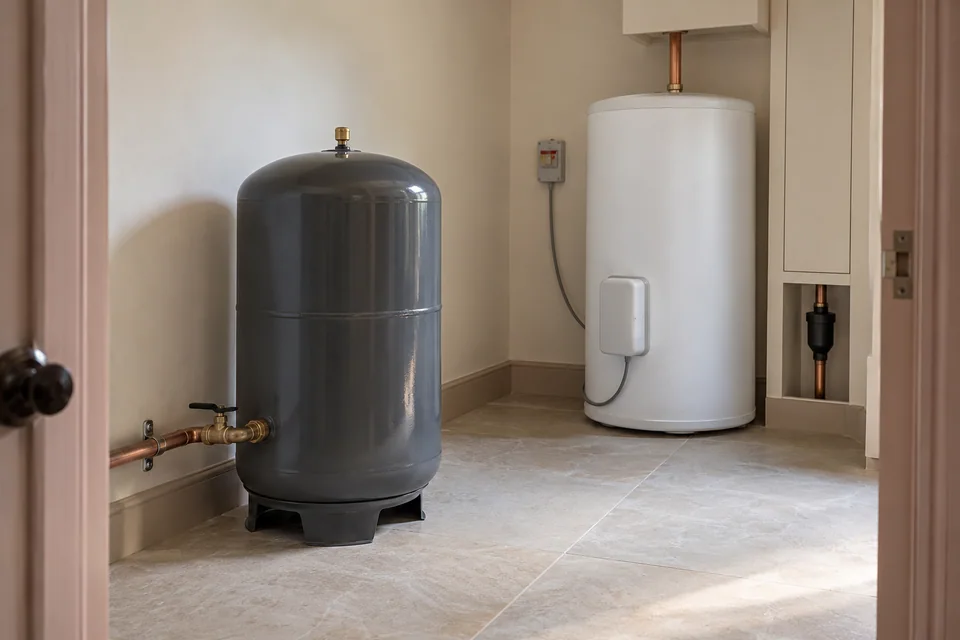
Dark cold-water pressure vessel and a separate white hot-water cylinder in a domestic utility room.
Water delivery and hot-water capacity are separate design considerations.

Space now · Access later

Leave space to live with the installation — and maintain it

The right position is not simply the first cupboard large enough to contain the equipment. A pump beside a bedroom, a vessel behind fixed joinery or a tank with no practical inspection access can create problems long after installation.

We consider the delivery route, stairs and doorways, the full operating weight and any support that needs confirming. The layout must allow for pipe connections, isolation and the manufacturer's access requirements, including eventual component replacement.

Noise and vibration depend on the equipment, mounting, pipe supports and surrounding construction. In flats, the position relative to adjoining rooms and neighbouring properties deserves particular attention.

Stored-water installations also need suitable conditions for hygiene, inspection and maintenance, with the required overflow arrangements. Isolation and the consequences of a leak belong in the plan before the space is enclosed.

Plumbing · Heating · Electrical

Plumbing, power and plant-room connections in one scope

PEP coordinates the hydraulic and electrical sides of the installation. The agreed work may include the equipment, supply and distribution alterations, isolation valves, appropriate backflow protection, electrical connections and controls.

Our electrical services in Chelsea support the power and isolation requirements. For a wider refurbishment, the booster and water storage can be planned alongside our heating and plant-room installations in Chelsea.

Each quotation identifies the responsibilities and interfaces. Structural work, joinery, decoration and alterations to shared services are included only where expressly agreed. We can coordinate with the owner, architect, main contractor and appointed specialists while routes and equipment positions are still being settled.

Plan your Chelsea installation with PEP

04 · A clear installation process

From the first assessment to a working system

  1. Review the property. We discuss the symptoms or planned renovation, then establish the site checks and building information needed.
  2. Define the installation. The proposal explains the suitable arrangement, intended operating conditions, equipment location and associated work. Access, permissions and exclusions are clarified before installation is scheduled.
  3. Coordinate the work. We agree water-supply interruptions, protect the working area and carry out the specified plumbing and electrical connections. Shared shutdowns follow the building's confirmed arrangements.
  4. Commission and hand over. We check the relevant outlets under the agreed demand, alongside controls and protective functions. Handover covers operation, isolation, manufacturer information and the maintenance requirements of the selected system.

A quotation for the complete scope

What affects water booster installation cost in Chelsea?

The equipment price is only part of an installed system. A compact pump connected to suitable existing services is a different project from cold-water storage, a larger booster set and new distribution across several floors.

The quotation reflects the required performance, equipment and storage selection, pipework, electrical work, access and integration with the existing hot-water system. Tank location, delivery constraints, overflow routes and necessary preparatory work can also affect the cost.

We set out the included work, any optional items and associated work by others, with VAT treatment clear. The assessment helps avoid both an undersized installation that leaves the problem in place and unnecessary equipment where a simpler alteration would be sufficient.

Requirements · Permissions · Handover

Resolve installation requirements before work starts

The proposed system must meet the relevant water-supply requirements and the equipment manufacturer's instructions. We identify the applicable notification, consent and backflow-protection requirements as part of planning the work.

WaterRegsUK guidance requires notification to the local water undertaker for a pump inducing demand above 12 litres per minute, whether connected directly or indirectly to the supply pipe. A break tank does not automatically remove that requirement; smaller pumps must still comply with the applicable installation rules.

For managed or listed properties, relevant building permissions and restrictions also need confirming. The final arrangement should remain accessible for the inspection and maintenance it requires, rather than being permanently concealed behind finished interiors.

Chelsea · SW3 · SW10

Water pressure booster installation across Chelsea SW3 and SW10

We undertake planned residential projects across Chelsea, including homes around King's Road, Chelsea Green, Royal Hospital Road, Cheyne Walk, World's End, Lots Road and Chelsea Harbour.

Send the full postcode for properties near the boundaries with Fulham, West Brompton or South Kensington. The address, building arrangements and scope allow us to confirm the appropriate next step.

For projects elsewhere, explore our water pressure booster installation service across London and London service areas.

Before you book

Questions about water boosters in Chelsea

Can you install a booster in a Chelsea flat?

Potentially, subject to the supply arrangement, available space and building requirements. We establish whether the restriction is within the flat or shared services before proposing private equipment. Access, noise and necessary permissions are considered at the same time.

Do I need an accumulator rather than a pump?

That depends on the measurements and the pattern of use. An unpumped accumulator needs sufficient charging pressure; a pumped or tank-fed system has different requirements. The choice follows the available supply and the result needed, rather than the number of bathrooms alone.

Will the installation let us use two showers together?

That can be an agreed design objective. We need to assess the showers, supply, distribution and hot-water capacity before confirming a suitable arrangement. We do not promise that result from a particular pump or vessel size without checking the whole system.

Can a booster work with an unvented cylinder or combi boiler?

Suitable arrangements can, but each has different limits. A cylinder needs adequate storage and recovery; a combi has a maximum hot-water output. Improving the cold supply does not remove those constraints.

Is this the same as installing a shower pump?

No. A conventional shower pump designed for a suitable gravity-fed system is different from a mains booster. The existing hot and cold supplies determine which equipment can be used.

Can the equipment fit inside existing joinery?

Possibly, provided the complete installed arrangement fits, not just the unit. Connections, operating weight, noise, access and replacement clearances must be checked before cabinetry is agreed.

Will the pump be silent?

No pump installation should be promised as silent. Appropriate equipment, location, mounting and pipe support help manage noise and vibration, but the surrounding building also affects what can be heard.

Do we need the managing agent's approval?

It depends on the building and proposed work. Shared supplies, communal access, service alterations and lease conditions may require permission. We identify the technical information needed so the owner or project team can resolve approvals before work proceeds.

How long will the water need to be switched off?

We agree the expected interruption once the connections and scope are established. A straightforward private connection and an installation involving shared isolation or extensive pipework cannot be given the same timetable.

What happens during a power cut?

Normal pumped performance requires electricity. Any remaining supply depends on the system, stored pressure and provision of a suitable bypass or mains-fed outlet. We explain the selected arrangement at handover rather than assuming every system provides the same fallback.

Chelsea SW3 & SW10 · Plan the next step

Tell us what happens when the second outlet opens

Start with your Chelsea postcode, the type of property and a brief description of the problem or renovation. Let us know how many bathrooms you have, which outlets you want to use together and whether the home has a combi boiler, cylinder or communal hot-water supply.

Photographs of the existing equipment and available space are useful, along with plans if the project is still being designed. You do not need to carry out your own pressure tests before contacting us.

PEP will help establish the assessment needed and the scope for a practical, coordinated installation.

Discuss your Chelsea water pressure project

Plumbing enquiries: 07843 676 480