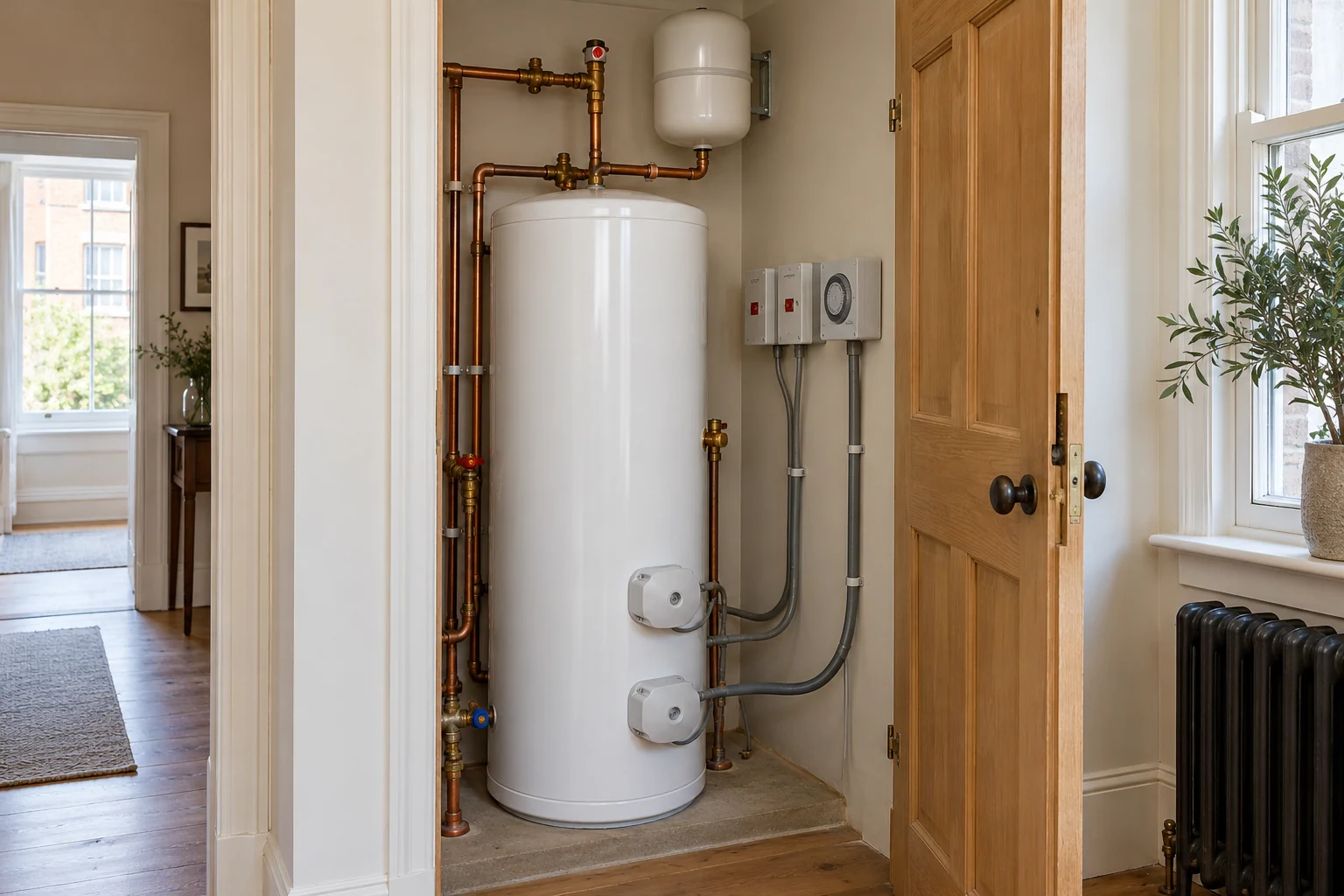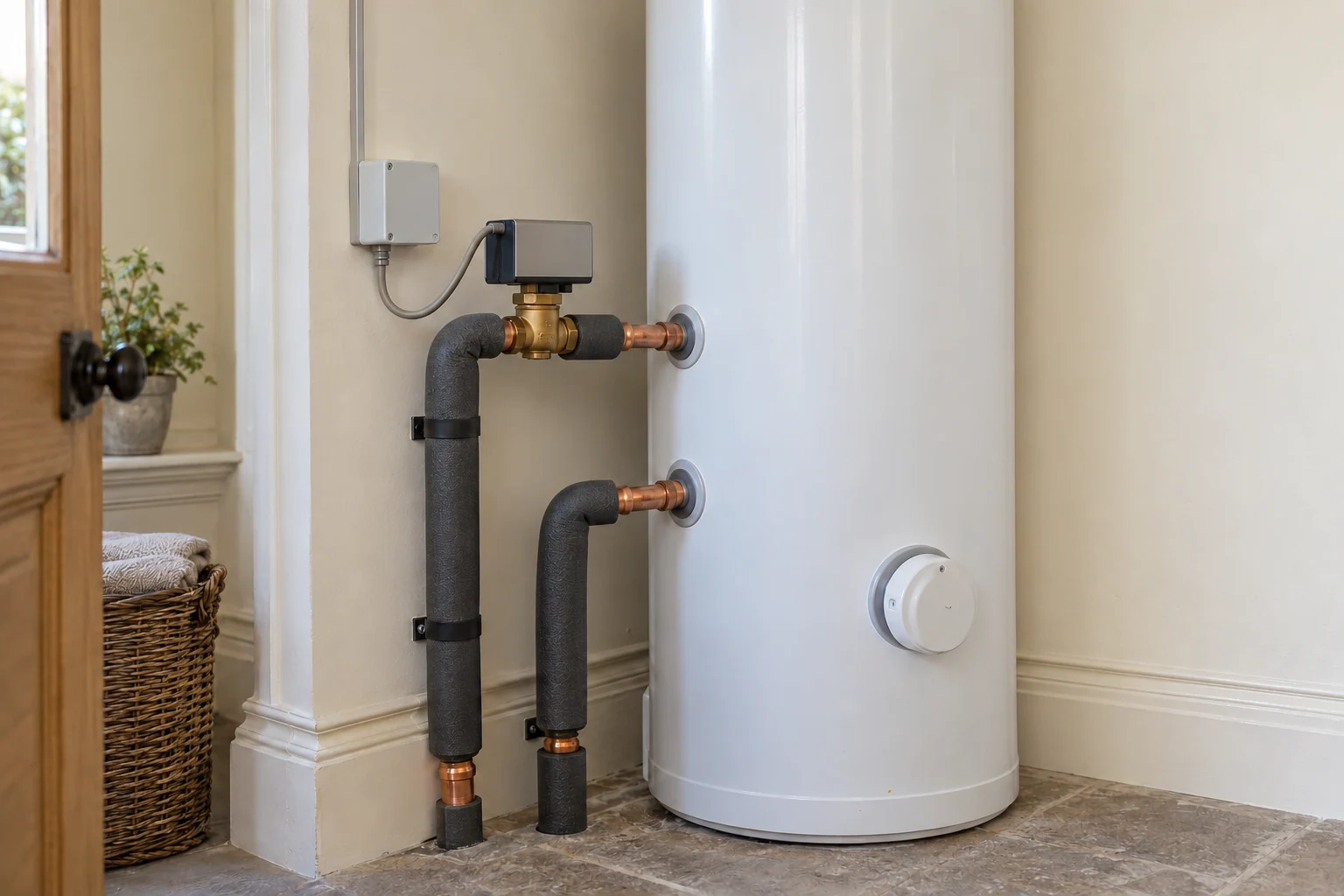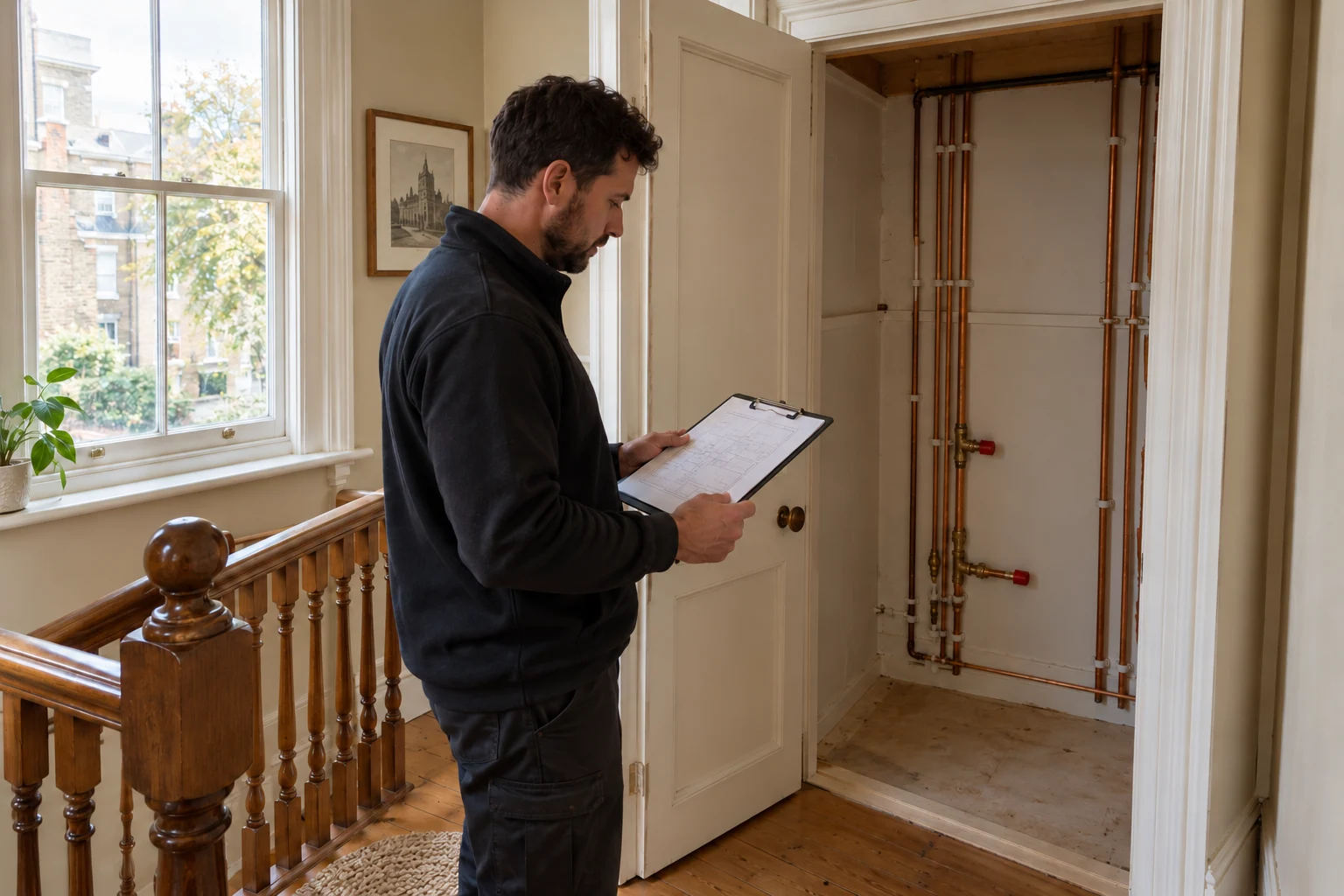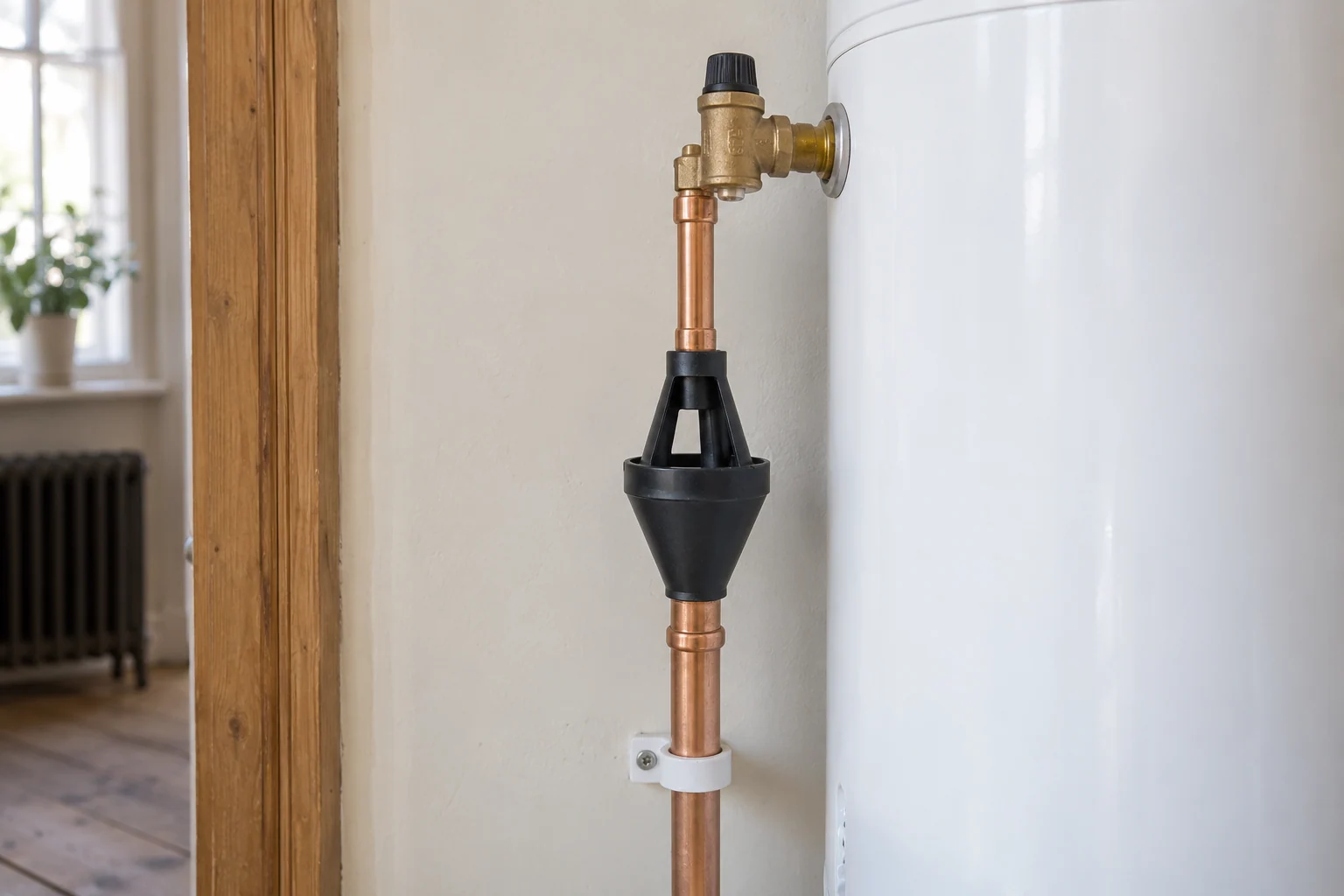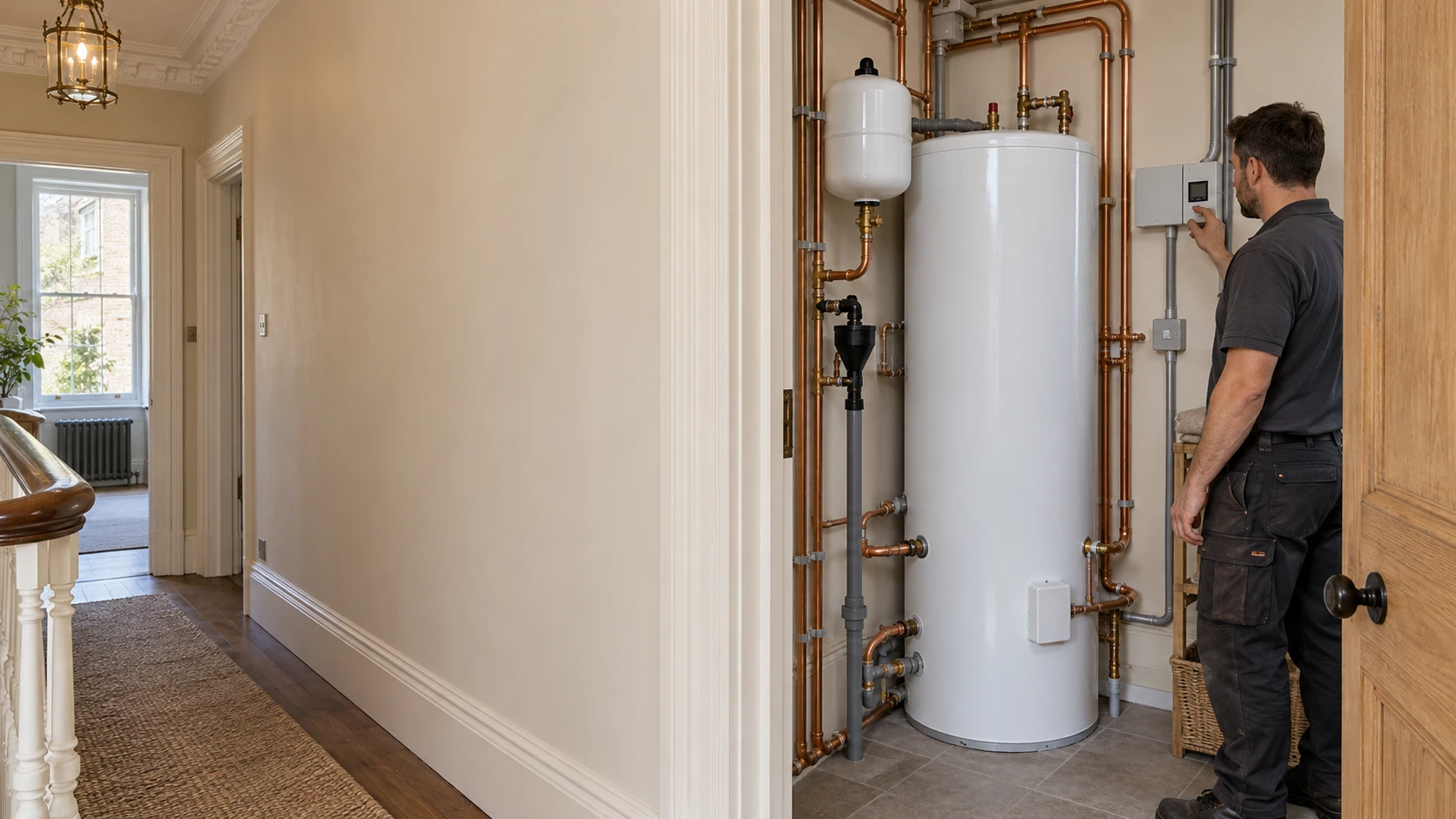


Heating engineer reviewing an unvented hot-water cylinder installation in a Victorian Chelsea home

Chelsea · SW3 & SW10 · Installation · Replacement

Unvented Hot Water Cylinder Installation & Replacement in Chelsea, SW3 & SW10

More than a new cylinder. A hot-water system that belongs in your home.

A generous bath, an extra shower or a busy morning can expose the limitations of an existing hot-water system. The answer is not always a bigger tank.

PEP designs, supplies and installs unvented hot-water cylinders in Chelsea. We bring qualified unvented work, plumbing and electrical expertise together, planning the cylinder around the water supply, household demand and building.

Qualified unvented hot-water work
Heating · Plumbing · Electrical controls

Gas Safe RegisterNICEIC

01 · Installation · Replacement · Conversion

What is changing: the cylinder, the system or the home?

01

Replacing an existing cylinder

An unvented cylinder replacement in Chelsea starts with establishing why the existing arrangement needs changing. We assess condition, capacity, heating method and surrounding equipment. Slow recovery or poor delivery can also result from controls, valves or supply restrictions; replacing the vessel alone may not address the cause.
02

Converting from vented hot water

A suitable conversion can replace gravity-fed hot-water storage with an unvented arrangement. We check the incoming supply and affected pipework first. The hot-water cold-storage cistern and the heating feed-and-expansion tank serve different purposes; neither is removed simply because another part changes. Our vented-to-unvented conversion guide explains the distinction.

03

Planning storage into a refurbishment

New bathrooms, altered layouts and higher-demand fittings should inform the hot-water specification before equipment or joinery is ordered.

02 · The property shapes the specification

Designed for Chelsea townhouses, mews and apartments

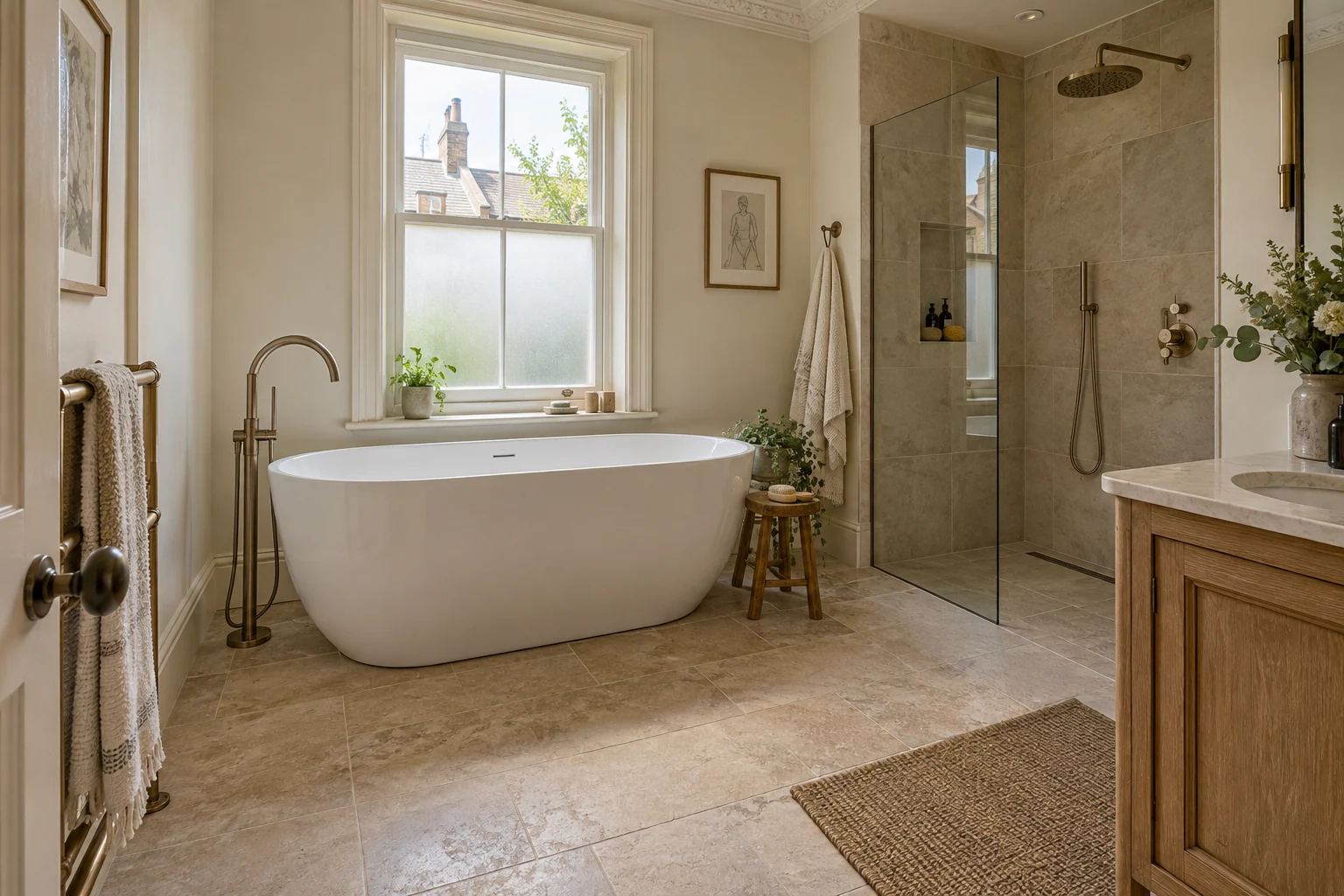
Bath and separate shower in a renovated Victorian Chelsea bathroom
Baths, showers and the layout of the home inform the hot-water specification.

A tall townhouse may have plant several floors away from the most-used bathroom. A mews property may have a difficult delivery route. In a mansion flat, the private installation may depend on communal supplies and agreed shutdowns.

We consider those differences at the outset. The survey identifies available plant space, routes to outlets, retained services and the access needed to carry out the work. Decorative finishes and fitted furniture are considered alongside the equipment, not after pipework has been installed.

Where the cylinder forms part of a larger project, our central heating and plant-room service in Chelsea covers the wider system. A hot-water replacement can also be assessed as its own clearly defined scope.

03 · Assessment before specification

Supply, storage and recovery: three decisions, one result

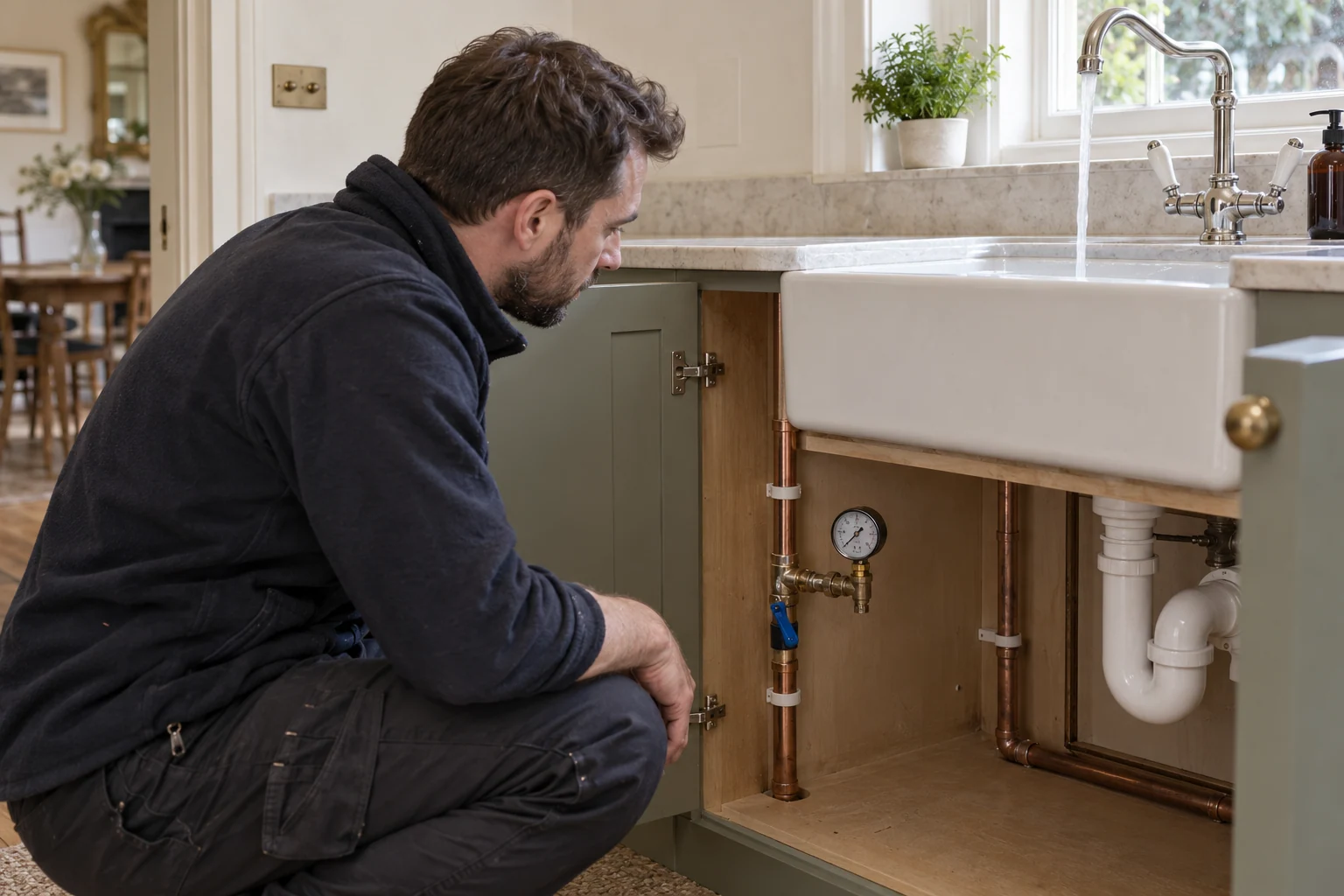
Engineer assessing the incoming cold-water supply beneath a kitchen sink
Assess the incoming supply under relevant demand before selecting storage.

Two homes with the same number of bathrooms can need very different hot-water arrangements. A large bath, long showers and overlapping morning routines change the demand.

We assess three connected questions:

  • Supply: what pressure and flow are available while water is being used, and where retained pipework or shared services may restrict delivery.
  • Storage: how much usable hot water is needed for the expected pattern of baths, showers and other outlets.
  • Recovery: how the selected cylinder and heat source replenish that stored water between periods of use.

An unvented cylinder does not create a stronger incoming supply. If that is the limiting factor, buying more storage will not make two demanding showers work as intended.

Our water pressure and flow guide explains the measurements. Where additional measures are appropriate, the guide to domestic water boosters and storage explains the different approaches.

04 · Choose the heating method and suitable cylinder

Direct, indirect and Megaflo installations in Chelsea

01

Direct electric cylinders

A direct cylinder uses electric immersion heating. For apartments, its selection needs to account for usable storage, heating schedules, recovery, electrical provision and the way boost heating will be used. We review the existing controls rather than assuming they remain suitable.

02

Indirect cylinders connected to a boiler

An indirect cylinder is heated through a coil connected to the primary heating system. Coil performance, boiler output, pipework and controls need to be compatible. A suitable existing boiler may remain; changing the cylinder does not automatically require replacing the heat source. If both are changing, our boiler installation service in Chelsea covers the coordinated upgrade.

03

Megaflo and alternative specifications

For Megaflo installation or replacement in Chelsea, we assess the particular product against the project. Megaflo is a product range, not another name for every unvented cylinder.

Standard or slimline dimensions, heating method, expansion arrangements and manufacturer requirements all influence selection. A smaller footprint is useful only if the complete installation remains accessible and appropriate for the demand.

Direct electric unvented cylinder with enclosed immersion connections and wired controls in a Chelsea apartment
Direct electric: covered immersion connections and connected controls.
Indirect unvented hot-water cylinder with insulated primary pipework and a connected motorised valve
Indirect: separate coil flow and return with a connected motorised valve.

05 · Space · Delivery route · Service access

The cupboard must accommodate the whole installation

Heating engineer planning cylinder access and service clearances in a Victorian Chelsea home
Plan the cupboard, delivery route and maintenance access before ordering.

Fitting a cylinder into an empty cupboard is not the same as creating a usable installation. Valves, controls, expansion provision, insulation and service access also need space.

We check how the old unit can be removed and the new one brought in, including doorways, stairs and restricted landings. Support for the filled installation and access to components require consideration, particularly where equipment is positioned on an upper floor.

Relocation also depends on a viable safety discharge arrangement. That route is assessed before recommending a different cupboard, loft or lower-ground position.

The quotation identifies required opening-up and responsibility for making good. Where work affects shared areas or protected building features, the relevant approvals need resolving before the installation programme is confirmed.

06 · Private installation · Shared building

Replacing a cylinder in a managed Chelsea flat

In a managed building, the appointment must fit the arrangements outside your front door as well as those inside the cupboard.

We establish whether isolation is private or shared, what access and working-hour conditions apply, and whether the managing agent or freeholder requires information before work proceeds. Materials delivery, old-cylinder removal and protection of communal areas can affect the programme.

A home connected to a communal heat network, HIU or thermal store requires its own assessment. Those systems are not interchangeable with an ordinary boiler-fed cylinder.

We identify the technical information needed and define the agreed installation scope. The owner or appointed project team confirms the necessary building-management permissions.

07 · Plumbing · Power · Controls

Connections and controls that work together

Correct storage is only useful if the system heats it when required and delivers water sensibly around the home.

PEP coordinates the plumbing with immersion supplies, isolation, operating controls and the appropriate safety controls. On an indirect system, the cylinder demand, valves, pump and heat source must respond in the intended sequence. Operating schedules do not replace independent overheat protection.

Our electrical services in Chelsea support the power and control interfaces. For larger systems, our heating controls and zoning guide explains the distinctions between demand, circuits and boiler control.

Long distribution routes may justify secondary hot-water circulation. We assess the benefit alongside insulation, heat loss and control of operating times. Adding a pump without considering those factors is not a complete comfort strategy.

08 · Assessment to commissioning

From the first assessment to commissioned hot water

  1. Establish the requirements. We review the existing arrangement, your reason for changing it, household use, supply and practical conditions. Drawings and proposed bathroom fittings help define a refurbishment.
  2. Agree the installation. The specification and written quotation identify equipment, connections, safety arrangements, access, responsibilities and exclusions. Any outstanding permissions or information are made clear.
  3. Plan the interruption. We agree access, working areas and the intended period without hot water. A straightforward replacement and a relocation or conversion can require different programmes.
  4. Install and commission. The agreed equipment is connected with the required controls and protection. Checks address water connections, operation, safety devices and the intended heating sequence.
  5. Hand over the system. We explain schedules and boost functions, identify accessible isolation and service points, and provide the relevant installation records and maintenance information.

For projects involving more than the cylinder, our Chelsea plumbing installation service covers distribution and room connections. Integration with underfloor heating in Chelsea is considered through the wider plant and controls, with domestic hot water and heating circuits remaining distinct.

09 · Compare the complete scope

What affects cylinder installation cost in Chelsea?

A like-for-like replacement, a change of position and a vented-to-unvented conversion are different projects. The equipment price is only part of the comparison.

Our quotation sets out the selected cylinder and associated fittings, pipework alterations, discharge provision, electrical or control work, access and removal arrangements, and the agreed commissioning and documentation scope.

We also clarify making good, any work by other contractors and VAT treatment. Where further survey information or permissions are needed, those dependencies are identified rather than hidden behind a headline fitted price.

Send photographs, dimensions and a brief description of the planned use. We can then establish the useful next step towards a properly scoped quotation, rather than suggesting a price for equipment that may not suit the building.

10 · Safety · Documentation · Product terms

Safety, records and the right warranty information

Close-up of a connected tundish and supported discharge pipe beside an unvented hot-water cylinder
Tundish visibility and the discharge route form part of installation planning.

Unvented installation requires appropriate competence and compliance with the relevant Building Regulations, including G3. We establish the applicable notification or self-certification route and the completion records required for the agreed work. Cylinder commissioning, electrical documentation and any separate gas work are distinct parts of the handover.

Manufacturer warranty, component cover and workmanship terms are also different. The selected product’s conditions are confirmed for the quotation; a long vessel warranty is not a promise that every valve, control or associated installation has identical cover.

For the current Megaflo Eco range, the manufacturer advertises a 30-year warranty on the inner stainless-steel tank. The precise product, eligibility and maintenance terms still need checking. That period does not become a blanket guarantee for the whole system.

We explain the ongoing care applicable to the installed product. Our unvented cylinder servicing guide covers the importance of safety checks and maintenance after installation.

Before you book

Your Chelsea cylinder installation questions

Can I keep my existing boiler?

Often, if its condition, output and control arrangements suit the proposed indirect cylinder. We assess compatibility before recommending changes. Keeping a suitable boiler can be appropriate; replacing it is not an automatic condition of a cylinder upgrade.

Will a new cylinder fix weak showers?

Not necessarily. The cause may be the supply, retained pipework, fittings or controls. An unvented system needs adequate available pressure and flow; extra stored litres do not remove an incoming restriction.

Can you replace a direct cylinder in a Chelsea apartment?

Yes, subject to assessing the existing equipment, water and electrical supplies, access and building arrangements. Shared isolation or communal heating can change the scope, so photographs and management information are useful before booking.

How do you size a cylinder for several bathrooms?

We consider the likely overlap of showers, baths and other outlets, together with usable storage, recovery and the supply. Bedroom count or cupboard size alone cannot establish the right specification.

Can the cylinder move to another cupboard or floor?

Potentially. We assess delivery access, support, connections, service clearances and a compliant discharge route. The move is treated as an installation change, not simply repositioning a tank.

How long will we be without hot water?

The expected interruption is agreed for the particular scope. Shared shutdowns, altered routes and conversion work can affect it. We do not promise the same timetable for every Chelsea property.

What paperwork should I receive?

The relevant commissioning and installation records, applicable Building Regulations documentation and electrical records for work carried out, together with product and maintenance information. The precise route and responsibilities are agreed before installation.

Does the cylinder warranty cover everything?

No. Vessel, components, controls and workmanship may have different terms. We explain the cover for the chosen specification, including registration and maintenance conditions, rather than applying one headline period to the complete system.

Chelsea SW3 & SW10 · Plan the work early

Plan your Chelsea hot-water installation with PEP

We undertake cylinder installation and replacement for Chelsea homes in SW3 and appropriate SW10 locations, including projects around King’s Road, Cheyne Walk, Royal Hospital, World’s End and Lots Road. The full address confirms the location and practical scope.

Send your postcode, property type, existing arrangement, bathroom requirements and intended timing. Label, cupboard and control photographs help; take them without removing covers or disturbing components.

For the wider service, see unvented cylinder installation across London. For your Chelsea home, involve PEP while the system and layout can still be considered together.

Discuss your Chelsea cylinder installation and quotation