1. Understand the property and the reason for the upgrade
We start with the address, property type, existing concerns and any planned building work. Access to the board and supply equipment forms part of the discussion.
 Pure Energy ProjectElectrical · Heating · Plumbing07825 268 434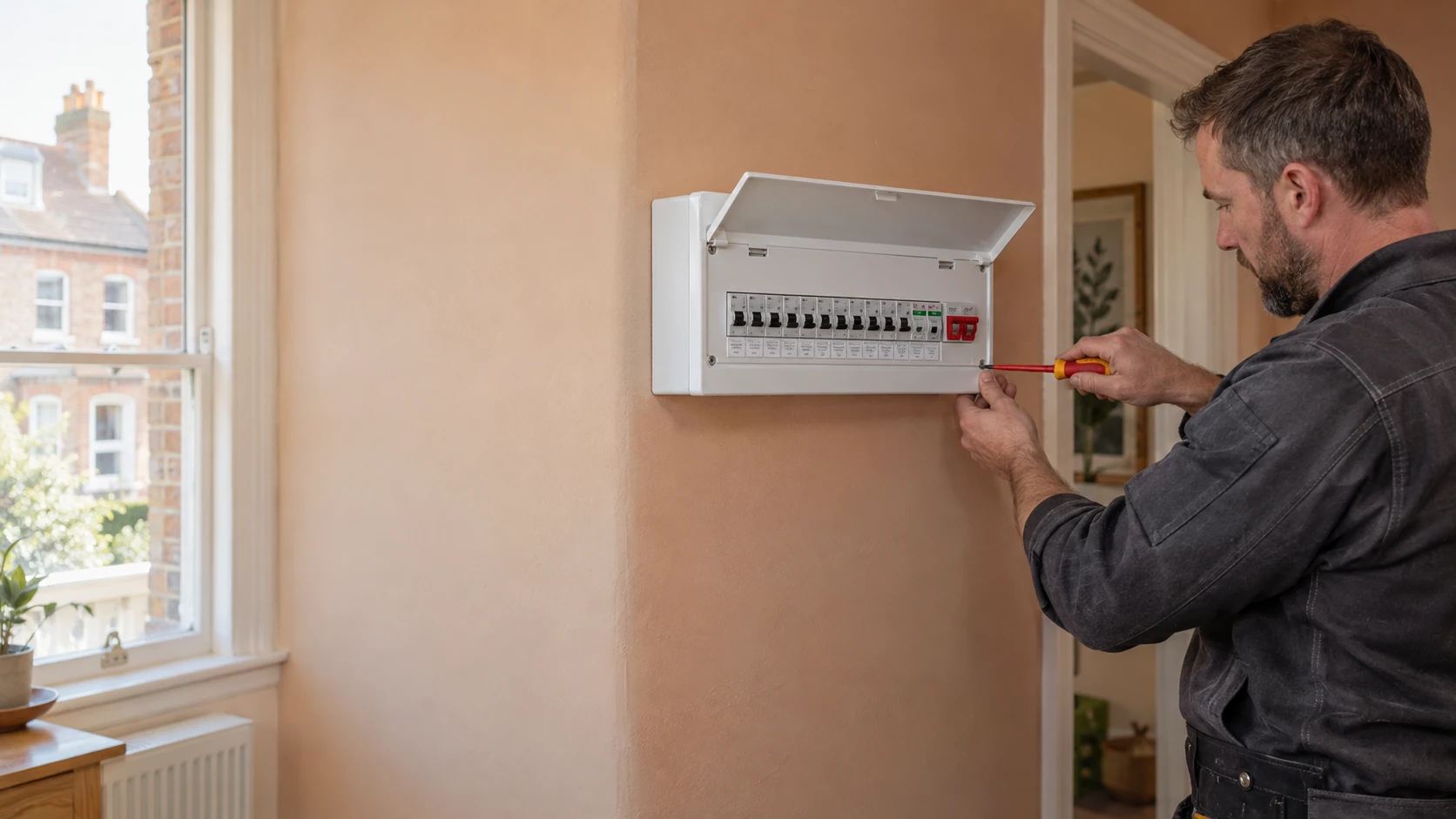
Consumer units & fuse boards · Acton, London W3
The right protection. A clear scope. A properly planned changeover.
A fuse board upgrade should leave you with more than a new box on the wall. You should know which circuits it protects, what has been tested and whether anything else needs attention.
PEP provides consumer unit replacement in Acton for houses, converted flats and managed apartments. We assess the existing installation, specify suitable protection and plan the work around access, power-off time and the way your home is used.
NICEIC-registered Domestic Installer · Circuit assessment · Installation, testing & certification
 Domestic Installer
01 · The reason comes first
You may be replacing an older fuse box, preparing for a kitchen renovation or following up a problem identified during electrical work. The starting point is the same: establish what needs changing and why.
A consumer unit distributes and protects the circuits connected to it. Replacing it can provide an appropriate modern arrangement where the existing equipment is damaged, unsuitable or unable to accommodate the proposed installation. It does not replace the cables throughout the property or repair every fault connected to them.
Where existing wiring is suitable, it may remain. Where a circuit needs repair or replacement, that work must be identified separately. For more extensive changes, our house and flat rewiring service in Acton covers the wider scope.
Repeated tripping also needs investigation before deciding on a new board. Our guide explains why an RCD keeps tripping and why the cause may be elsewhere in the installation.
02 · Know what is included
Two quotations can both say “new fuse board” while allowing for very different work. The number of circuits matters, but so do their condition, the protective devices specified and the arrangements needed to disconnect the supply safely.
We establish the scope before confirming the price. Your quotation should make clear:
Plaster repairs, decoration, joinery alterations and unforeseen remedial work are not automatically part of a board replacement. We distinguish the agreed installation from additional work that findings may require, so you can compare the complete job rather than the headline price alone.
03 · Private home. Shared access.
In an Acton conversion or apartment building, the consumer unit may be inside your home while the meter or the equipment needed for isolation is elsewhere. A cupboard in a communal hallway, a locked service area or an unclear division of responsibilities can affect how the replacement is organised.
We review those arrangements before agreeing the work. Where necessary, access and permissions need coordination with the freeholder, managing agent or the party responsible for the relevant supply equipment. Replacing your private consumer unit does not automatically include alterations to communal distribution or equipment belonging to the electricity supplier or network operator.
The location of the new board also deserves attention. It needs suitable access for operation and maintenance, with cable routes and surrounding cupboards considered together. If relocation is proposed, we assess the additional work rather than treating it as a simple change of position.
04 · Protection with a purpose
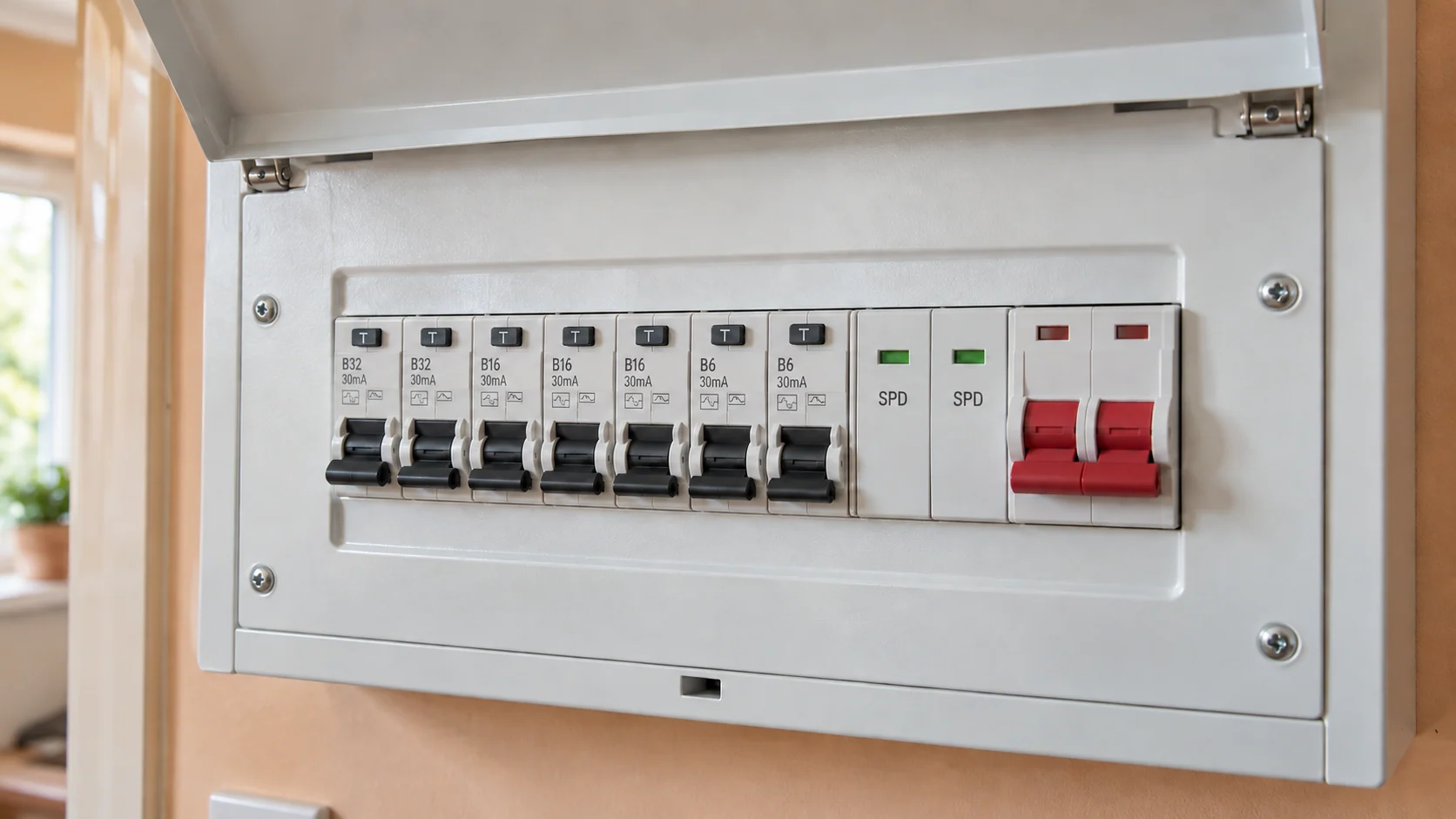
We specify the enclosure and protective devices around the installation and applicable requirements. A compliant non-combustible enclosure is part of the design; the equipment inside it must also be suitable for the circuits and connected loads.
RCDs respond to earth-leakage faults. An RCBO combines residual-current and overcurrent protection for an individual circuit. An appropriately designed RCBO arrangement can limit the disruption caused by many circuit faults, although it cannot prevent every interruption to the electricity supply.
Surge protective devices address transient overvoltages; arc-fault detection devices address particular types of electrical arcing. Their selection follows the applicable requirements and installation assessment—not a generic list of optional extras or a claim that every home needs identical equipment.
NICEIC’s consumer unit guidance explains the different protective devices. We explain what the proposed specification means for your property.
05 · Understand what is already there
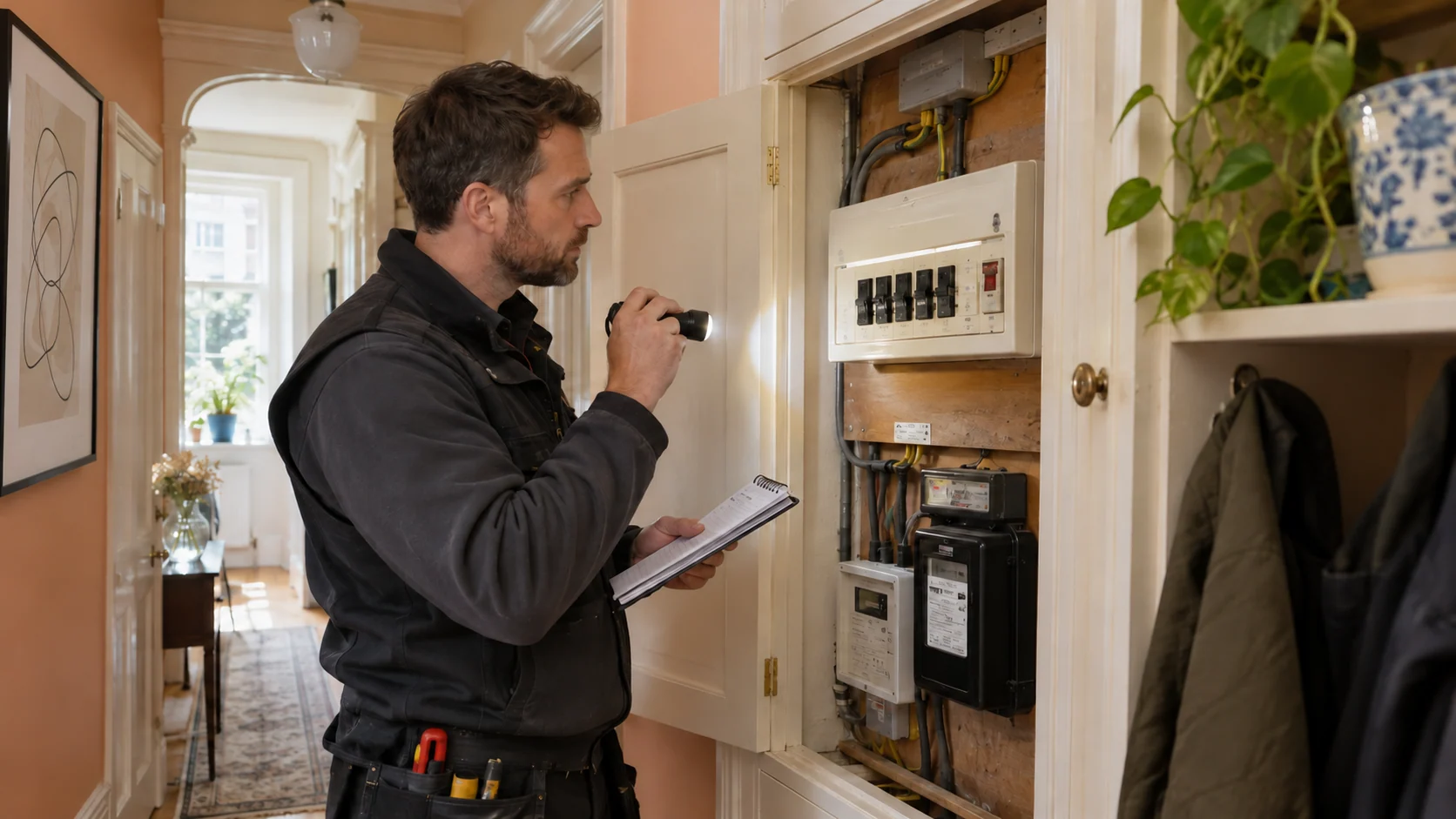
Connecting existing circuits to a new consumer unit requires an understanding of their condition. Looking at the front of the old board is not enough.
Electrical Safety First’s replacement guidance recommends an Electrical Installation Condition Report before a planned replacement. If the customer declines an EICR, a pre-work survey must still be undertaken; if that survey is also refused, the replacement should not proceed.
We explain the assessment required for the proposed work and discuss findings that affect the scope. A dangerous or unsuitable circuit cannot simply be reconnected because a new board has been fitted. Necessary repairs, limitations and any circuit left isolated must be made clear.
06 · Assess. Install. Verify.
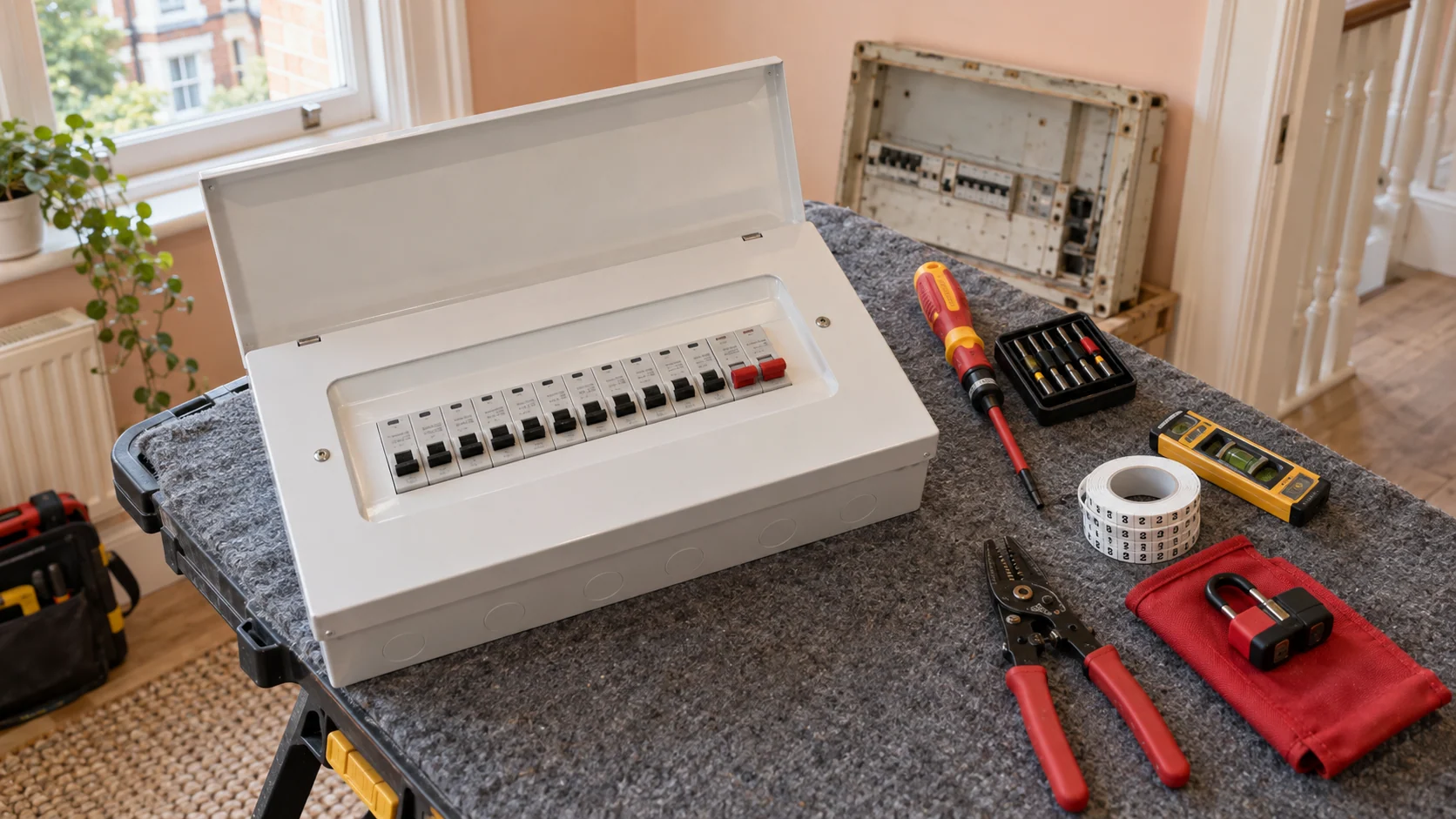

We start with the address, property type, existing concerns and any planned building work. Access to the board and supply equipment forms part of the discussion.
The assessment informs the proposed board, circuit protection and associated work. Identified repairs and responsibilities are separated from the replacement itself.
We agree access and expected interruptions before installation. The work includes safe isolation, fitting the specified equipment and connecting the circuits that are suitable for reconnection.
Inspection, testing and circuit identification complete the installation. We explain the relevant controls, provide the applicable records and identify any outstanding recommendations.
07 · Plan the interruption
A consumer unit replacement involves a planned interruption to the circuits it supplies. The duration depends on the installation, access, testing and any additional work; a photograph alone cannot establish a reliable completion time.
Tell us about working from home, refrigeration, alarms, heating controls or equipment that cannot tolerate an interruption. Any essential continuity requirements need discussing in advance. Temporary supplies are not assumed to be included or suitable for every situation.
Before the agreed date, we explain the expected sequence and access requirements. If testing identifies a problem, resolving it safely takes priority over promising that every circuit will be available by a fixed hour.
08 · A documented handover
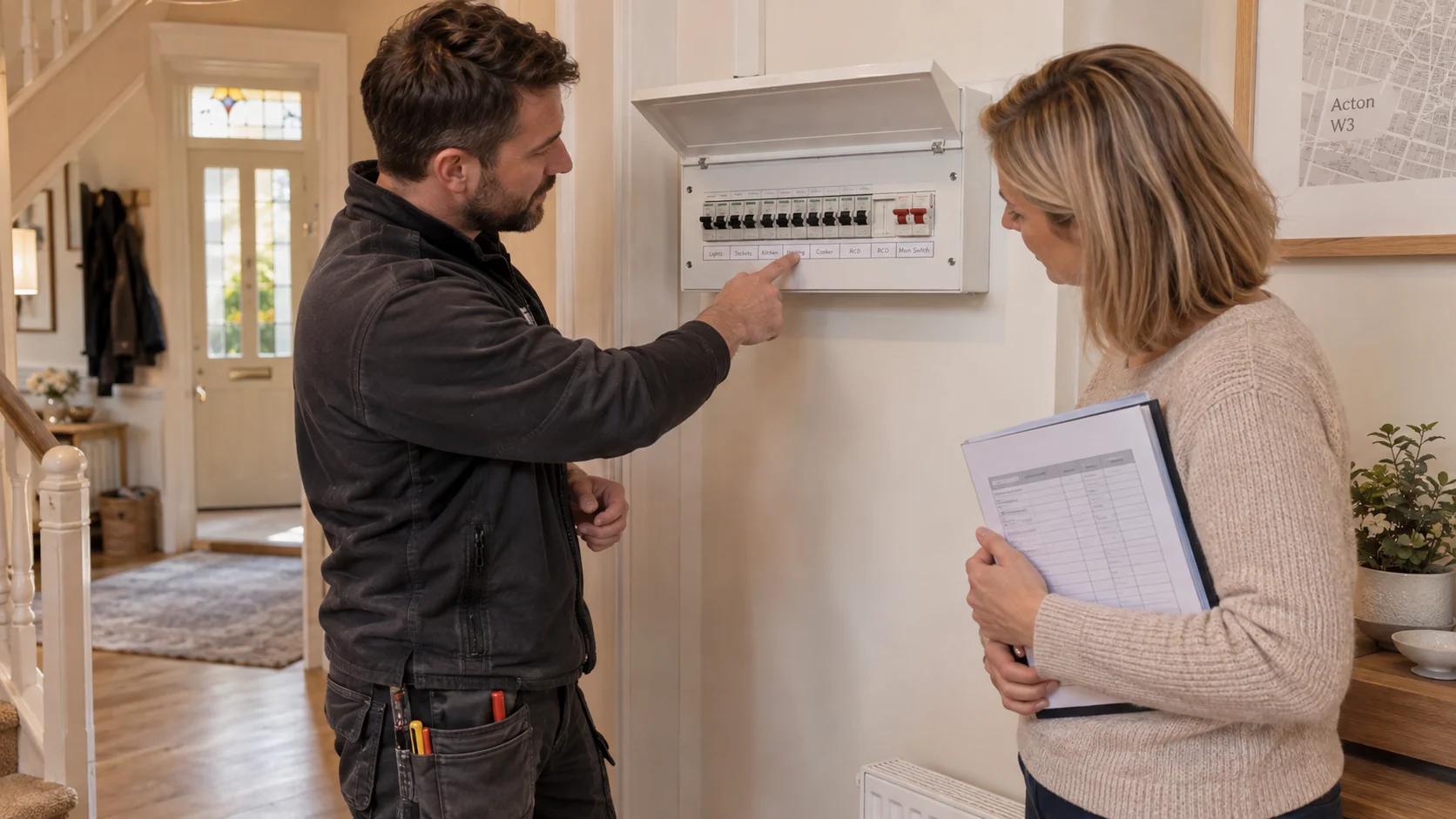
On completion, the replacement should be supported by an Electrical Installation Certificate, including the relevant inspection and test schedules. Circuit identification should also make the board understandable for everyday use and future maintenance.
Replacing a consumer unit in a dwelling in England is notifiable work. Building Regulations compliance documentation is separate from the electrical installation certificate. We arrange notification through the appropriate route for our work and explain the documents you should receive. Approved Document P sets out the framework.
The installation is designed and carried out to the applicable BS 7671 requirements and amendments. Certification records the work completed; it does not mean every untouched part of the property has been rewired.
09 · Think beyond the enclosure
If a kitchen extension, loft conversion or heating upgrade is approaching, mention it before the consumer unit is specified. New equipment may change circuit requirements, demand and the way the installation needs to be arranged.
Spare spaces in a board are useful, but they do not prove that the incoming supply or existing cables can support every future addition. Proposed loads need consideration as part of the design.
PEP can coordinate the replacement with electrical installation work in Acton and, where relevant, heating and plant-room installations. Our guide to planning kitchen electrics explains why appliance decisions should be made before the installation is finalised.
10 · Electrical work in context
PEP is an NICEIC-registered Domestic Installer, with experience spanning electrical, heating and plumbing installations. That combination matters when a board upgrade forms part of a larger refurbishment rather than an isolated job.
Our published Notting Hill residential project shows our work on the electrical, heating and plumbing infrastructure of a five-storey home, coordinated with the architectural and specialist teams.
For your Acton project, that means considering more than the equipment being replaced: the services it supplies, the other work taking place and the access needed after everything is finished. We bring those decisions into the agreed scope before installation begins.
Acton Central · West Acton · North Acton
We welcome enquiries across Acton W3, including Acton Central, Acton Town, Churchfield Road and Poets’ Corner, West Acton, North Acton, East Acton and South Acton. This includes homes around Mill Hill Park and Acton Gardens, subject to the requirements of the individual property.
Neighbourhood names do not follow postcode boundaries exactly. Parts of the East Acton area reach W12, West Acton connects towards W5, and Acton Green sits on the W4 side. Send the full postcode so we can confirm the location and access arrangements.
For our wider coverage, see consumer unit replacement in London.
Before you book
Often, provided the existing circuits are suitable for connection to the new board. Assessment may identify repairs or a wider scope. Our consumer unit replacement or full rewire guide explains the distinction.
A photograph can help start the discussion, but it does not reveal circuit condition or all access requirements. We confirm the assessment needed before agreeing a price and its scope.
No. Material and age alone do not establish that conclusion. Condition, protective measures, location and proposed changes need assessment. Visible damage or signs of overheating require prompt professional attention.
Not necessarily. An appliance, wiring fault or moisture may be responsible. The cause needs investigation; replacing the consumer unit is appropriate only where the findings support it.
Possibly, particularly where access to shared areas or supply equipment is required. We identify the coordination needed before agreeing the installation arrangements.
That depends on safe access and whether the planned power interruption is manageable. Tell us about occupancy and essential equipment before the programme is agreed.
We explain the finding and the required response. Additional repairs need an agreed scope; an unsafe circuit may have to remain isolated until it can be made suitable for use.
Only where expressly stated. Relocation or changes to surrounding joinery can create additional work, so the quotation should identify who is responsible for making good.
Yes. Inspection, testing and the Electrical Installation Certificate form part of completion. Required Building Regulations notification is also arranged, with separate compliance documentation.
Not simply because it is being redecorated or changing owner. A suitable existing installation may remain. Replacement should answer an identified need, not be assumed from the property type.
Talk to PEP
Send your postcode, whether the property is a house or flat, the reason for the proposed upgrade and details of any planned renovation. A photograph of the closed consumer unit may help—do not remove covers or expose wiring to take it.
We can then discuss the assessment and next steps towards a clearly specified, properly documented replacement.
Discuss your Acton consumer unit replacement · 07825 268 434