
Electrical · Fault-finding guide
RCD Keeps Tripping? A London Homeowner’s Guide to Causes and Safe Checks
Understand the warning. Find the cause before deciding what to replace.
Start with safetyAn RCD that keeps tripping is telling you that something needs investigating. The cause may be an appliance, moisture, damaged wiring or the combined leakage current of several connected devices. A problem with the protective device itself is another possibility, but it should not be the starting assumption.
The important distinction is between restoring the power and resolving the problem. A switch that stays on after another reset has not necessarily proved that the fault has disappeared.
This guide explains how to recognise the device that has operated, what different patterns can suggest and what useful electrical fault finding should establish before anyone recommends replacement work.
/ 01
Stop if there are signs of danger
If you notice smoke, burning, crackling, electric shocks or water affecting electrical equipment, keep clear and seek urgent professional help. Do not touch wet or damaged equipment or approach an unsafe consumer unit to operate switches. If there is a fire, leave the property and call 999.
For a suspected electricity network fault or dangerous incoming supply equipment, contact the network operator on 105. This is different from arranging repairs to your private installation. UK Power Networks explains when to contact its emergency team.
Do not repeatedly reset a device that immediately trips again.
/ 02
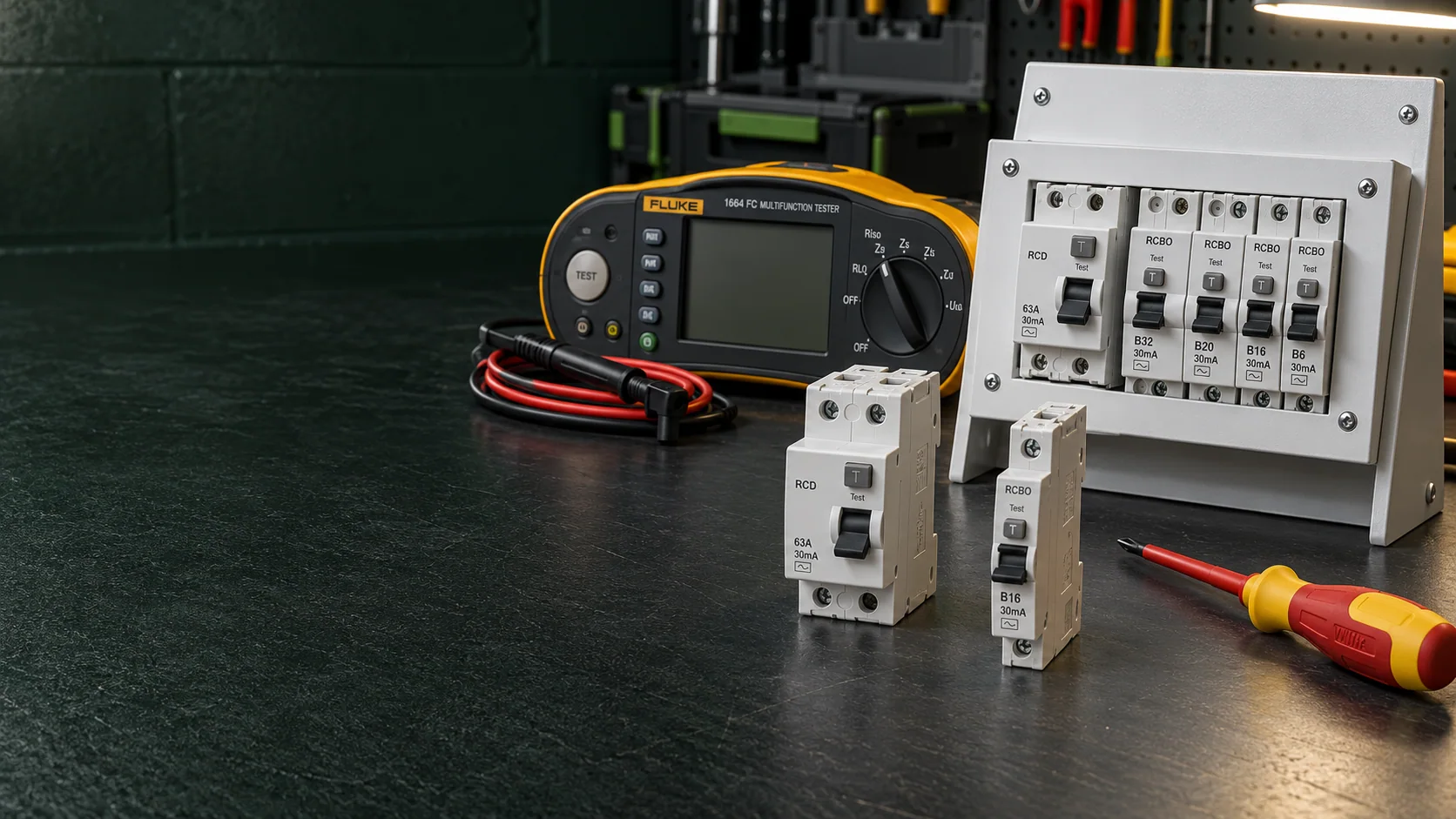
Identify whether an RCD, RCBO or MCB has tripped
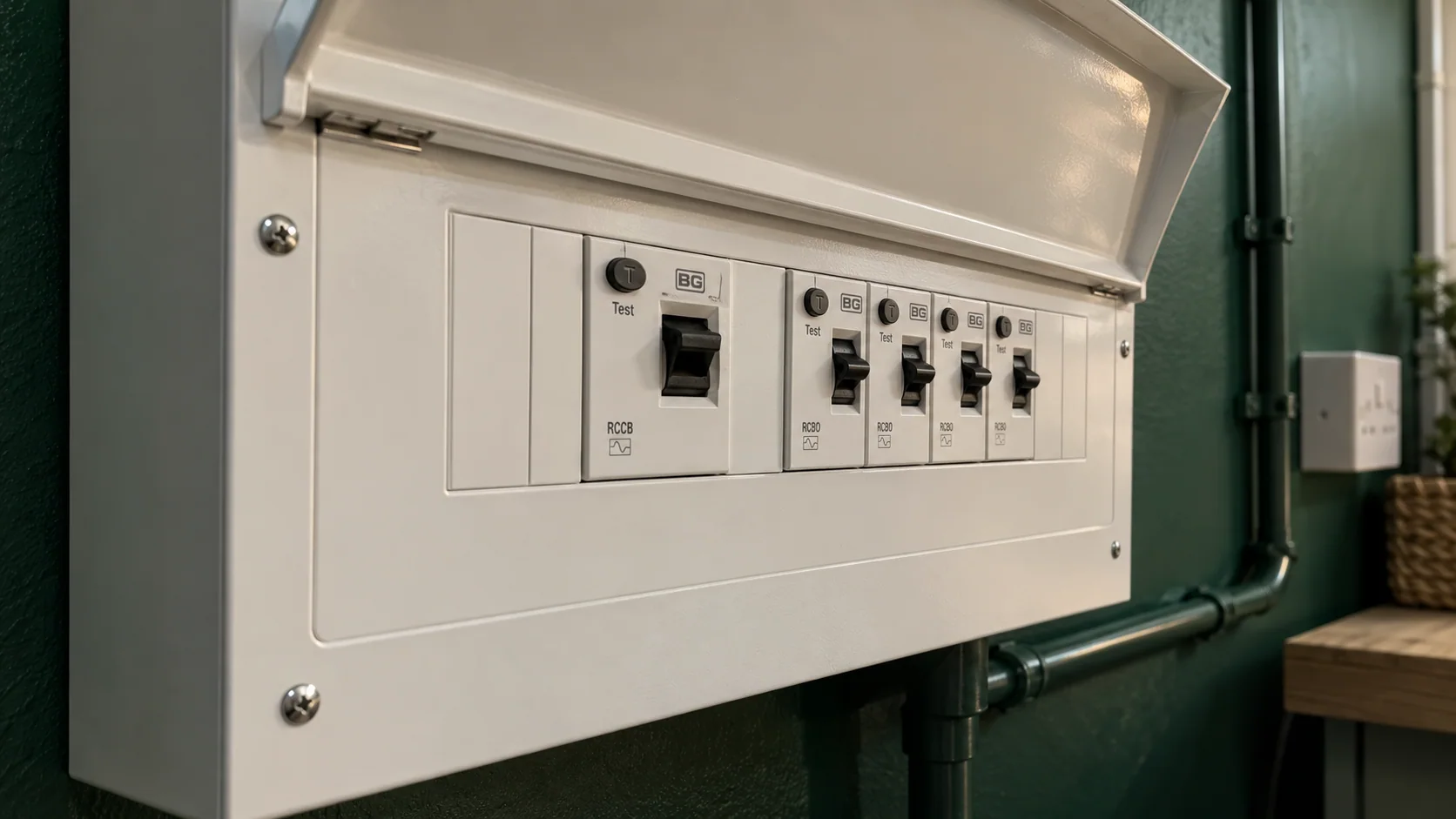
People often describe any loss of power as “the fuse box tripping”. However, the particular device matters because different protective devices respond to different conditions.
| Device | What it does | What its operation can tell you |
|---|---|---|
| RCD, commonly an RCCB in a domestic consumer unit | Detects an imbalance between the current leaving and returning through the conductors it monitors | There may be leakage through an unintended path; an RCCB does not itself provide overload protection |
| MCB | Provides protection against excessive current caused by overload or a short circuit | The investigation concerns an overcurrent condition, rather than residual current detection alone |
| RCBO | Combines residual current and overcurrent protection | Either function may have operated; “the RCBO tripped” does not identify the cause by itself |
The IET explains the distinction between RCCBs and RCBOs.
A Test button alone does not distinguish an RCCB from an RCBO. Nor should you identify a device solely by its width or position. A clear photograph of the visible labels, with all protective covers left in place, is more useful than guessing.
/ 03
What can make an RCD keep tripping
A fault in an appliance or the fixed installation
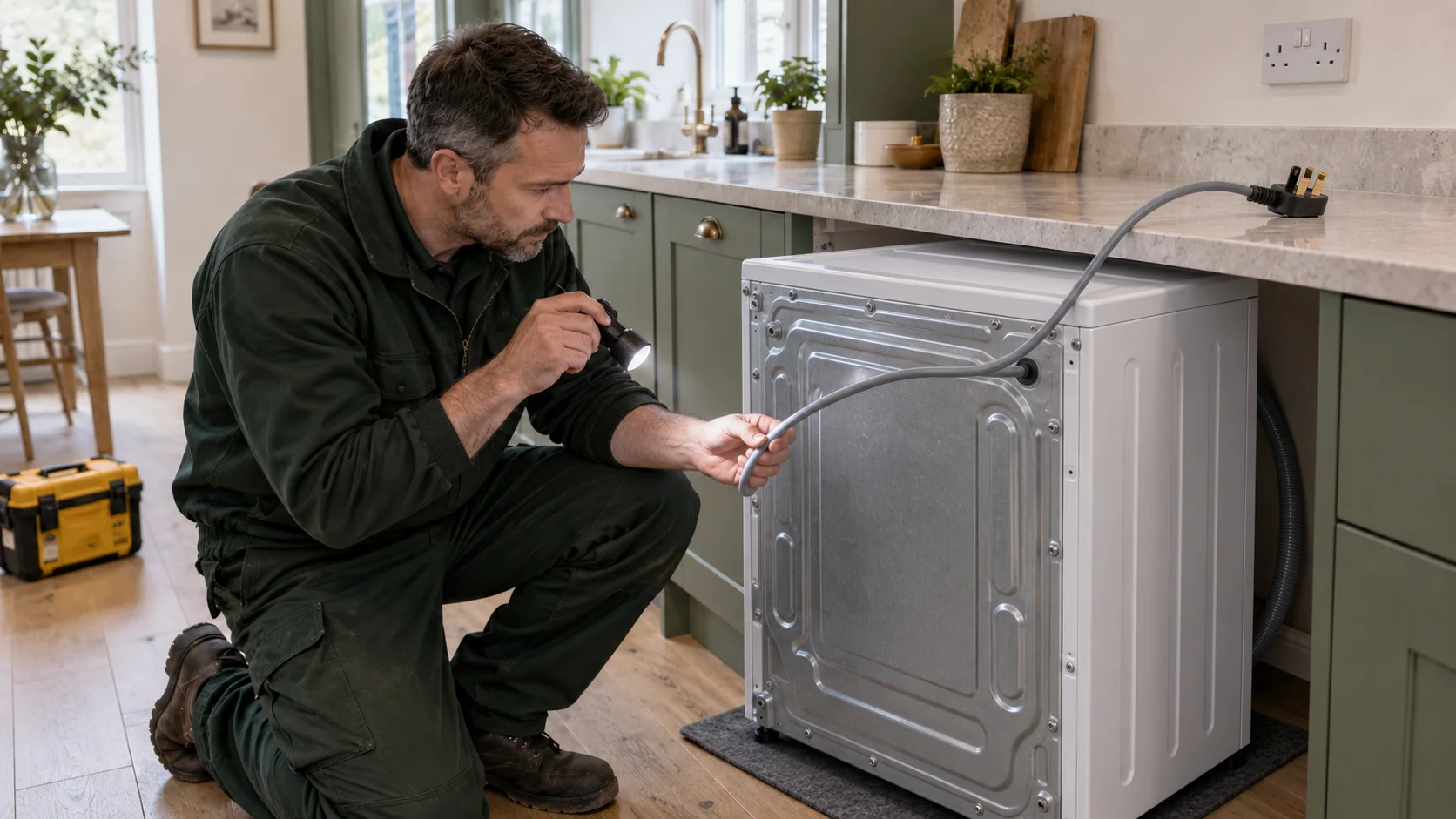
An appliance can develop an electrical fault even when it still appears to perform its normal job. The fixed wiring, an accessory or a connection supplying it can also require attention.
That is why an oven starting at the moment the power fails is useful information, but not a complete diagnosis. The electrician needs to distinguish the appliance from its supply rather than automatically replacing either one. Electrical Safety First advises investigation of repeated RCD tripping because the problem may lie in an appliance or the wiring. Electrical Safety First guidance.
Several small leakage currents adding together
Some electronic equipment produces small protective conductor currents during normal operation. Where several circuits or appliances share one RCD, their combined contribution can become significant.
This is different from drawing too many amps through a socket circuit. The last appliance switched on may contribute to the trip without being the only issue, or even being defective itself.
The installation arrangement and measured leakage matter. An electrician should distinguish an actual insulation fault from accumulated leakage before deciding what to change. The IET discusses earth leakage and unwanted tripping.
A problem with protection or connections
The protective device, its suitability for the connected equipment and the associated connections may also need investigation. Changing the device speculatively can leave the original problem unresolved.
The objective is not to make the installation tolerate a fault. It is to establish why the protection operates and whether the installation and its connected equipment are suitable for continued use.
/ 04
Why an RCD trips with nothing plugged in
“Nothing plugged in” usually describes the accessible sockets, not everything connected to the installation.
Fixed equipment may include a boiler supply, an immersion heater, a cooker, an extractor, heating controls or external lighting. Integrated appliances may also have plugs concealed behind cabinets. An RCD can protect several circuits, so the relevant equipment may not be in the room where you noticed the power loss.
You do not need to dismantle cupboards or pull out built-in appliances to investigate. Instead, tell the electrician what you disconnected and what remained inaccessible or permanently connected. “All accessible countertop appliances unplugged; oven and boiler still connected” is a much more useful description than “everything is off”.
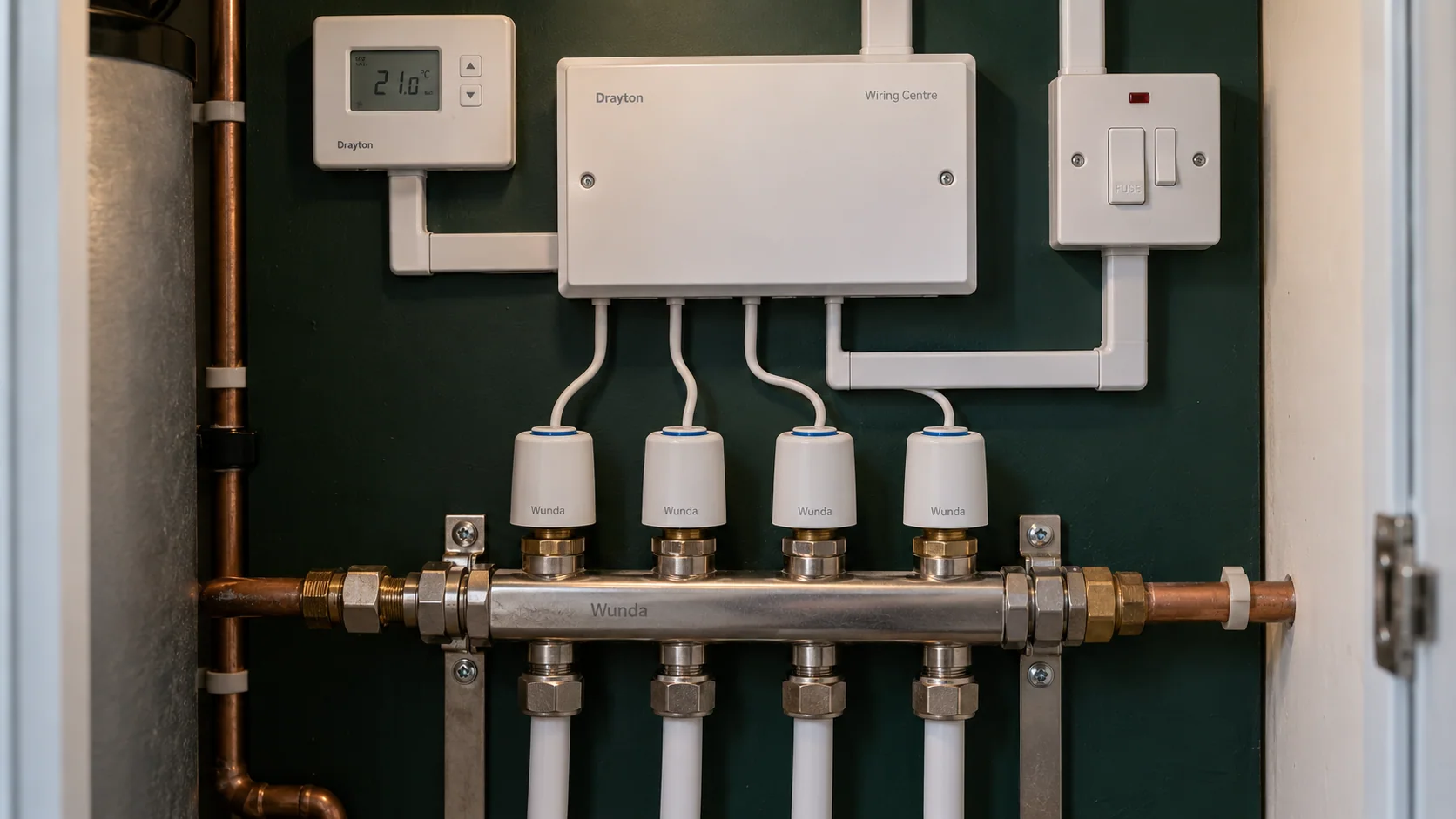
Heating deserves particular attention when describing the system. Electric underfloor heating contains an electrical heating element. Water-based UFH uses circulating water, but its pumps, controls and other components may still require electrical supplies. A trip occurring when heating starts does not identify which component is responsible.
Our underfloor heating troubleshooting guide explains the wider distinction between electrical, control and heating-performance problems.
/ 05
What the timing of a trip can tell you
A pattern can help narrow an investigation. It cannot, on its own, prove that a particular component needs replacing.
| When the trip occurs | Useful information to record | What should not be assumed |
|---|---|---|
| At a similar time overnight | Heating schedules, hot-water settings and equipment running automatically | That no electricity was being used because everyone was asleep |
| After rain or a leak | Which areas were affected and when the trip followed the weather or water event | That a particular outside fitting has been proved faulty |
| When one appliance starts | The appliance, operating mode and whether the trip was immediate or delayed | That the appliance alone is definitely responsible |
| After decorating or building work | Where work took place, what was altered and when the problem began | That timing alone proves who caused the fault |
| At irregular intervals | Dates, times, affected areas and anything different on each occasion | That an intermittent fault is harmless |
RCD tripping at night
Record what was scheduled to operate rather than trying to recreate the trip. For example, note whether hot water was timed to heat overnight or whether the problem coincided with a heating programme.
Keep the description factual. “The RCD operated twice at around 5 am” gives the electrician a starting point. “The boiler is faulty” prematurely removes other possibilities from consideration.
RCD tripping after rain or water damage
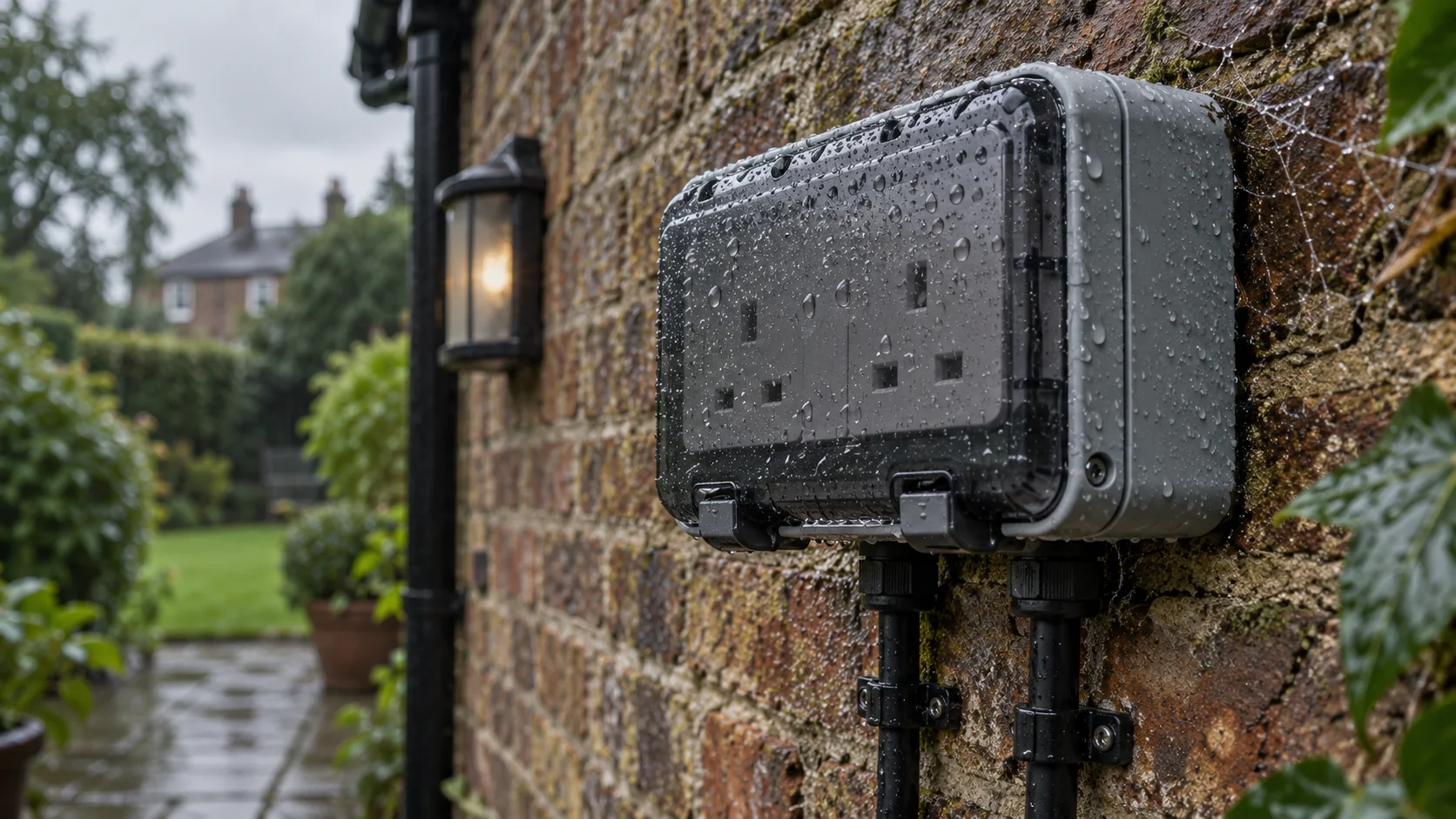
Tell the electrician about external circuits and any recent leaks, including damage in adjoining rooms or the flat above. Do not open outdoor fittings or attempt to dry electrical equipment and put it back into service yourself.
Where flooding has affected electrical equipment, an apparently dry surface is not evidence that it is safe. Electrical Safety First advises professional assessment before affected equipment is used again. Electrical safety after flooding.
/ 06
Tripping after a new consumer unit or recent electrical work
A new consumer unit changes the equipment protecting the circuits. It does not replace every cable, fitting or appliance connected to them.
If tripping begins after replacement work, the assessment should consider the existing installation, connected equipment, the new work and the test results together. It should not begin with the assumption that the new protection is “too sensitive”.
Contact the installer and describe when the problem occurs. Provide the installation certificate and circuit schedule if available, along with details of anything connected or altered since handover.
During a refurbishment, keep a simple timeline: electrical work completed, appliances connected, heating commissioned, joinery fitted and any subsequent drilling or floor work. This can help the people investigating understand what changed without assigning blame before evidence is available.
For future alterations, our kitchen electrical planning guide explains why appliance information, circuit provision and accessible isolation should be coordinated before the room is finished.
/ 07
Safe checks before speaking to an electrician
Keep homeowner checks to observation and ordinary controls. This is not an invitation to work inside the installation.
If there are no warning signs and access is safe:
- Note which device has operated and which rooms or equipment lost power.
- Photograph the visible circuit labels without removing covers.
- Record what was running when the trip occurred.
- Note recent electrical work, new equipment, leaks or weather patterns.
- If a portable appliance is suspected, stop using it. Unplug it only if the appliance, plug and socket are dry, undamaged and safely accessible.
Do not move a suspect appliance to another circuit to see whether it trips that one. Do not disconnect fixed wiring, remove socket fronts or use a household multimeter to investigate mains circuits.
Where the equipment instructions permit an ordinary reset, there must be safe access and no signs of damage, heat or water. If the device will not stay on, stop. Do not force the lever, bypass protection or continue resetting it to keep equipment running.
The IET specifically warns that repeated resetting onto a fault can damage the protective device. IET consumer-unit safety guidance.
If you are unsure what you are looking at, leave the investigation to a competent electrician.
/ 08
Why an RCD will not reset
Failure to reset does not establish that the RCD itself has failed. A fault may still be present in connected equipment or the installation, and the device and its connections also need assessment.
If you have already turned circuit switches off, report exactly what you did rather than continuing to experiment. Switch positions are not proof that every relevant conductor has been isolated or that equipment is safe to open.
For rented or managed properties, follow the landlord’s or managing agent’s urgent reporting arrangements. If essential equipment depends on the affected supply, make that clear when seeking help; do not defeat the protection to restore it.
/ 09
What professional electrical fault finding should establish
A useful investigation should move from the reported symptom to an evidenced explanation. It should also make clear what remains uncertain.
Confirm the affected part of the installation
The electrician needs to establish which protective device operated, what it supplies and whether the reported loss of power matches that arrangement. Existing labels and records are useful, but may need checking against the installation.
Tell them about multiple consumer units, extensions, outbuildings or previous alterations. A room name on an old label may not describe everything now connected to that circuit.
Select appropriate inspections and tests
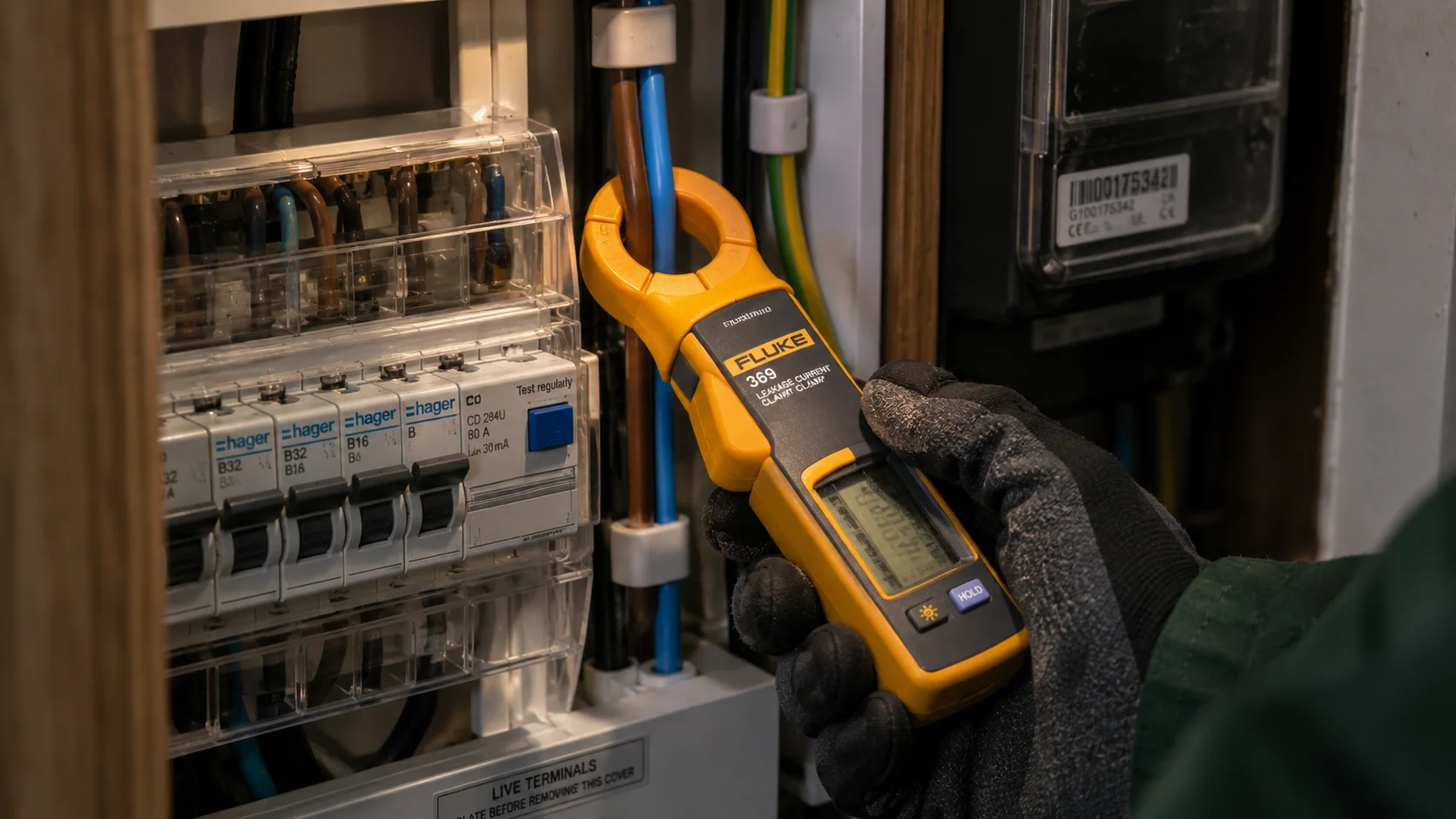
Depending on the findings, work may include inspecting accessible equipment and connections, testing insulation, measuring leakage and checking protective-device operation with suitable instruments.
These are professional activities, not checks to reproduce from an online guide. Electrical work requires appropriate competence and safe isolation; an RCD does not protect against every type of electric shock. HSE electrical safety guidance.
Explain the result and its limits
Ask for a clear account of:
- what was confirmed and what evidence supports it;
- whether the issue concerns an appliance, the fixed installation or both;
- anything left disconnected or requiring further investigation;
- the proposed repair and any access or making good required;
- how the relevant operation will be checked afterwards.
An intermittent fault may require further agreed investigation. If it does not occur during the visit, that should be recorded rather than replaced with an unsupported assurance that everything is fine.
Investigating one reported fault is also not the same as assessing every part of the property’s electrical installation. Agree the scope so that the result is understood correctly.
/ 10
Whether you need a new consumer unit or a rewire
Repeated tripping is a reason to investigate, not an automatic specification for a new fuse box or a full rewire.
The appropriate response might concern one appliance, an accessory, a cable section or a wider installation issue. A consumer unit upgrade may be appropriate where its condition, protection or arrangement warrants it, but it cannot repair a defect elsewhere simply by being new.
Individual RCBO protection can help limit the number of circuits affected by a fault. It is not a cure for defective wiring or equipment. NICEIC explains consumer-unit arrangements and protective devices.
Our consumer unit replacement or full rewire guide explores how evidence should determine the scope. Where replacement is justified, see PEP’s consumer unit replacement service in London.
/ 11
What affects electrical fault-finding costs in London
Before comparing prices, establish what each quotation includes. An attendance charge, an allowance for investigation and the cost of the eventual repair are not necessarily the same thing.
Ask the contractor to explain how the diagnostic stage is charged, what happens if more time is needed and whether parts, follow-up visits and making good are separate. Any additional scope should be agreed before it proceeds.
Useful information for pricing includes the number of affected circuits, whether the problem is continuous or intermittent, available records and access to the relevant equipment. A visible accessory and wiring concealed behind finished joinery present different practical tasks.
There may also be a distinction between identifying a faulty appliance and repairing it. A specialist appliance engineer may be needed once the installation has been assessed.
For a refurbishment, ask for necessary remedial work to be distinguished from optional improvements. That makes it easier to decide what needs attention now and what belongs in the wider project, without treating a provisional diagnosis as a fixed-price repair promise.
/ 13
Frequently asked questions
Why does the RCD trip while the MCBs stay on?
They perform different functions. Residual current can operate an RCD without the overcurrent needed to operate an MCB. The MCBs remaining on does not prove that the circuits are free of faults.
Can the last appliance switched on be working correctly?
Yes. It may add to leakage already present elsewhere, or the timing may coincide with another event. Record the observation without repeatedly recreating the trip to test a theory.
Does the Test button prove that the wiring is safe?
No. It checks operation of the device’s test function, not the condition of all connected wiring and equipment. Follow the manufacturer’s instructions and the installation’s testing notice; obtain professional advice if the test does not operate the device.
Can a faulty RCD be replaced without replacing the whole consumer unit?
Possibly, where diagnosis confirms the fault and a suitable, manufacturer-compatible replacement is available. The condition and arrangement of the consumer unit must also be considered. This is not a DIY replacement task.
Should I wait for another trip before calling?
Do not wait for another event where there are signs of danger or repeated unexplained tripping. A dated note about an intermittent problem is useful even if the power is currently on. The absence of another trip is not a safety assessment.
/ 14
Plan the right electrical work with PEP
PEP focuses on planned residential electrical installations and upgrades in London, including consumer units, rewiring and electrical work coordinated with plumbing and heating.
If repeated tripping is part of a wider concern about an installation or an upcoming refurbishment, send us your postcode, a description of the symptoms, safely taken photographs and any available records. Include what you intend to change as well as what is not working. We can discuss whether the required scope fits our services and how it relates to the project.
Our local electrical pages cover Notting Hill W11, Chiswick W4, Kensington W8, Chelsea SW3 and SW10, Hampstead NW3, Maida Vale W9 and St John’s Wood NW8.
Discuss your planned electrical work with PEP
For an immediate electrical danger, seek urgent assistance rather than waiting for a response to a project enquiry.