1. Understand the property and intended work
We review the existing arrangement, the reason for replacement and any related alterations. The assessment establishes what can be retained and what needs attention.
 Pure Energy ProjectElectrical · Heating · Plumbing07825 268 434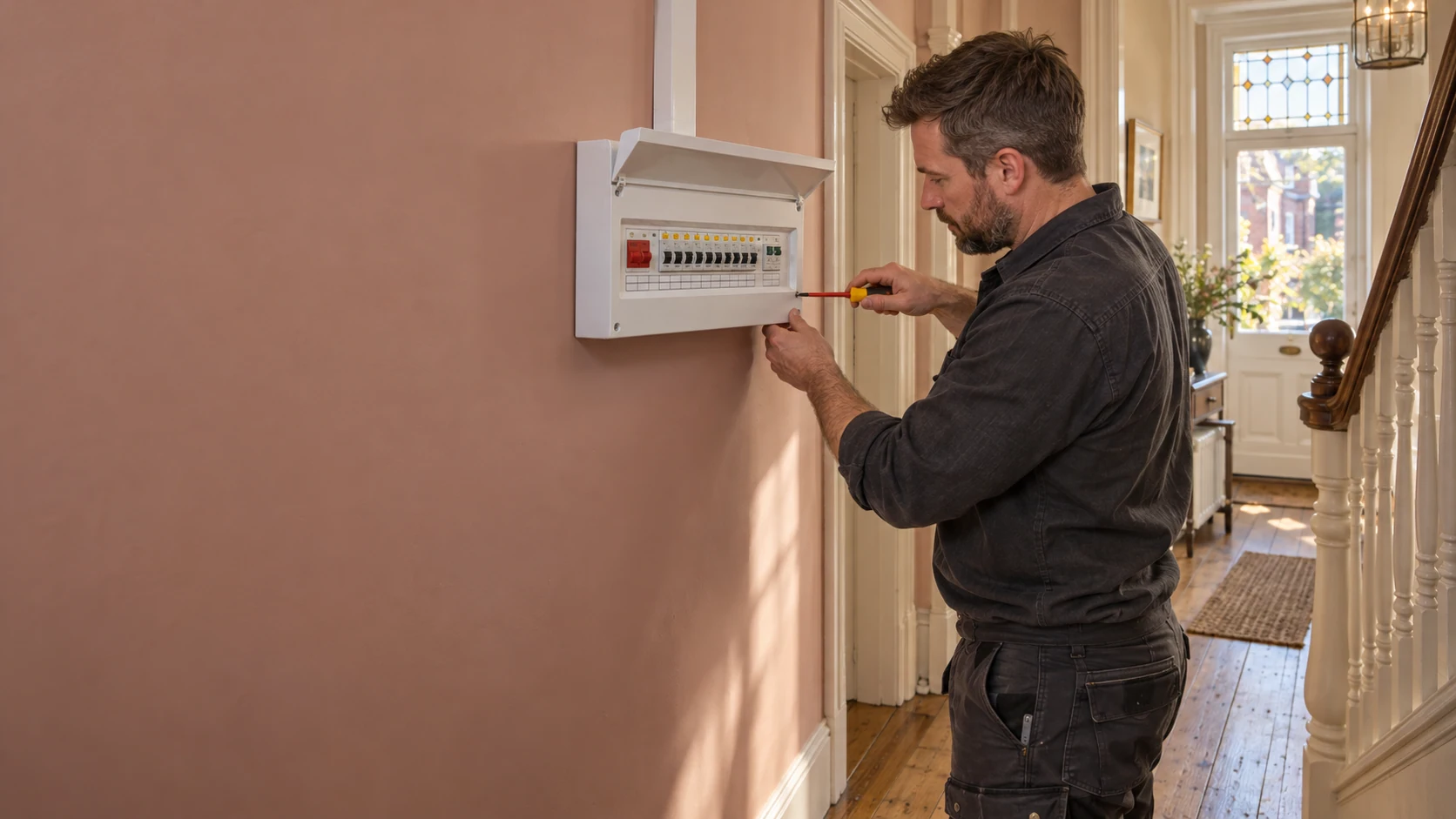
Willesden & Willesden Green · NW10 / NW2
The right protection starts with understanding the circuits behind it.
Replacing a fuse box should leave you with more than a new row of switches. You should know what has been checked, which circuits are being retained and how the finished installation will be tested and documented.
NICEIC-registered Domestic Installer · Family-run London contractor · Trading since 2010
 Domestic Installer
PEP provides consumer unit replacement in Willesden and Willesden Green, covering suitable NW10 and NW2 properties. We assess the existing arrangement, specify appropriate protection and agree the work before organising the changeover.
01 · Know what is being changed
You may be modernising an older fuse board, preparing for a kitchen refurbishment or trying to understand whether your present arrangement is suitable for additional circuits. Those situations do not all need the same answer.
Our starting point is the installation, not a preselected box. The proposed work should distinguish the replacement itself from necessary repairs, new circuits and any changes to the incoming supply arrangements. That makes the quotation easier to understand and the programme easier to plan.
The aim is a properly specified upgrade, with the limits of the work explained before installation day.
02 · Start with the circuits
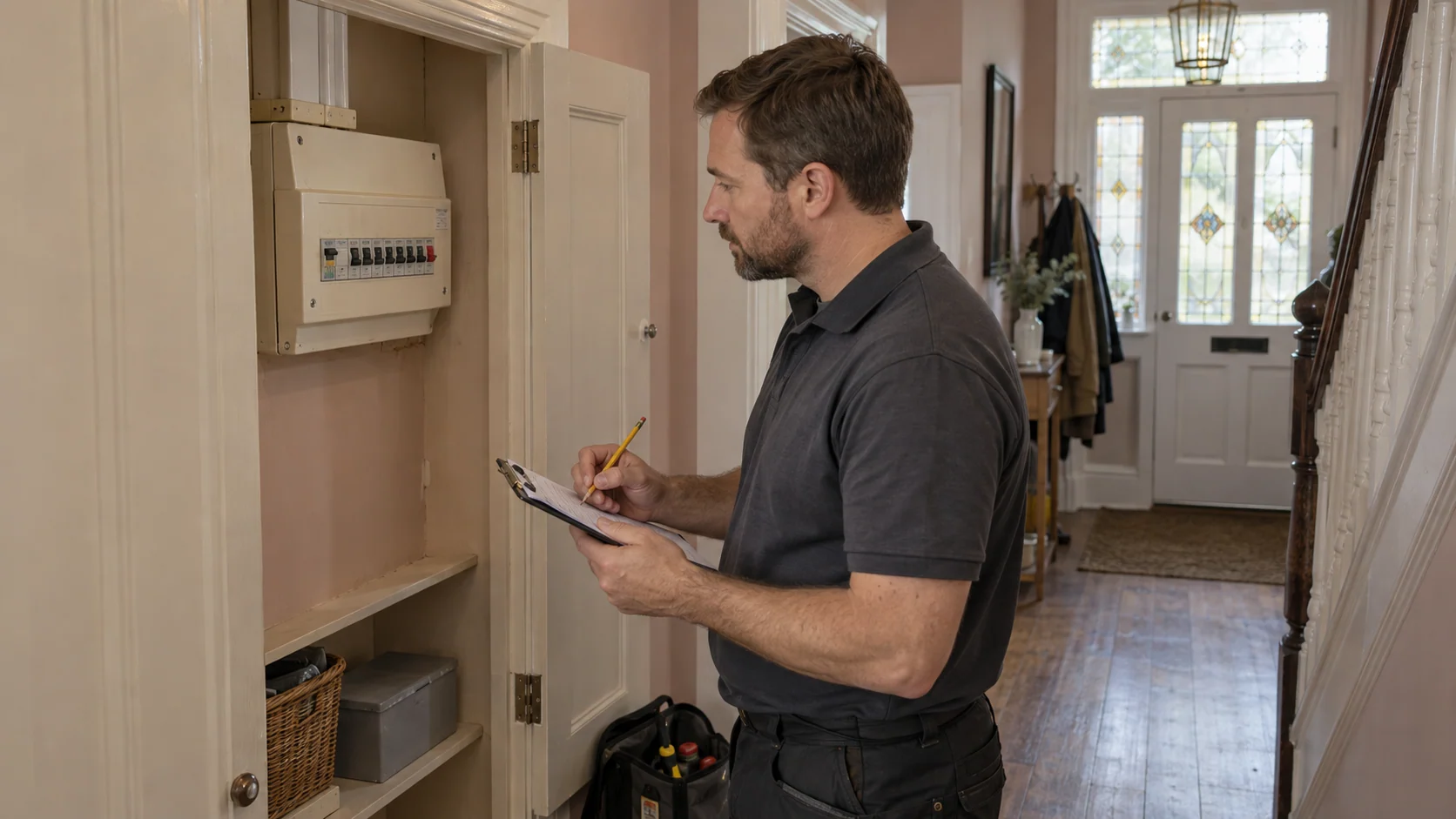
A board labelled “sockets” or “heating” does not necessarily tell the whole story. Previous alterations may have added circuits, changed room uses or left a separate small board serving part of the property.
We establish the arrangement relevant to the replacement: which circuits it supplies, what equipment they serve and whether existing identification is reliable. Tell us about previous alterations, unexplained power loss and appliances planned for the next stage of your refurbishment.
If there is more than one board, we agree which equipment is included. Combining boards, moving a board and replacing one in its existing position are different scopes, with different implications for cabling and access.
03 · Three different decisions
A replacement consumer unit improves the distribution and protection arrangement. It does not replace deteriorated cables hidden in walls or repair a faulty appliance.
Our guide to consumer unit replacement or a full rewire explains the distinction. Where wider cable replacement is appropriate, see our house and flat rewiring service in Willesden.
The right recommendation should explain what the proposed work will solve—and what it will not.
04 · Before anything is disconnected
Connecting existing wiring to new protective devices requires an assessment of that wiring. We also consider earthing, protective bonding, supply arrangements and access for safe isolation.
Electrical Safety First’s guidance strongly recommends an Electrical Installation Condition Report before a planned replacement. If an EICR is declined, a pre-work survey is still required; refusing that assessment means the replacement should not proceed. We explain the assessment needed and agree how it will be arranged.
Findings can change the scope. A defect may need repair, or an affected circuit may need to remain disconnected until it can be made safe. We discuss those implications rather than treating every existing circuit as ready to reconnect.
Photographs help us understand the enquiry, but cannot establish the condition of concealed wiring or replace electrical testing.
05 · Different devices. Different jobs.
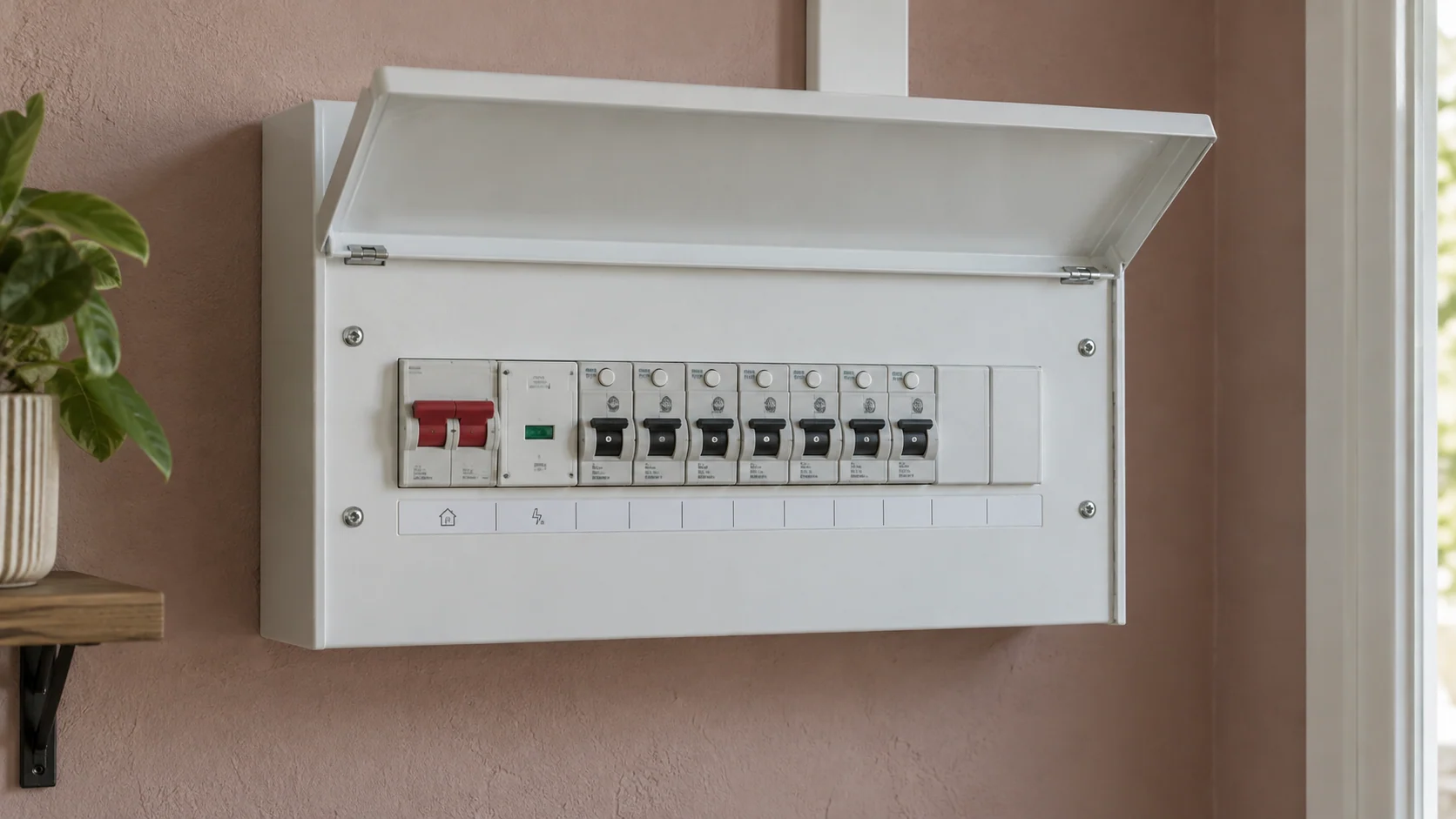
Different protective devices perform different jobs. The specification should make those roles clear without expecting you to become an electrician.
RCBOs combine residual-current and overcurrent protection. Providing individual circuit protection can help contain the effect of a fault to the affected circuit, rather than losing several circuits protected by one shared RCD. It does not guarantee that power can never be interrupted.
Surge protective devices, or SPDs, address transient overvoltages that can affect electrical equipment. They do not replace fault protection or fix an unstable appliance. NICEIC’s consumer-unit guidance provides a useful introduction to modern protection.
We select the enclosure and protective devices as a suitable assembly, taking account of the circuits, connected equipment and applicable requirements. Where arc-fault detection or other protection needs consideration, that belongs in the design and quotation—not as an unexplained addition on installation day.
06 · Plan the next stage
Leaving room for future circuits can be sensible. However, empty positions in a consumer unit do not increase the capacity of the electricity supply, meter tails or existing cables.
A proposed induction hob, electric shower or other substantial load needs consideration as part of the installation’s overall demand. Where changes to equipment controlled by the electricity distributor or metering provider are needed, they require separate arrangements.
Tell us about planned improvements before we specify the board. Our guide to planning kitchen electrics explains why appliance decisions and circuit planning should happen together.
07 · Private installation. Shared access.
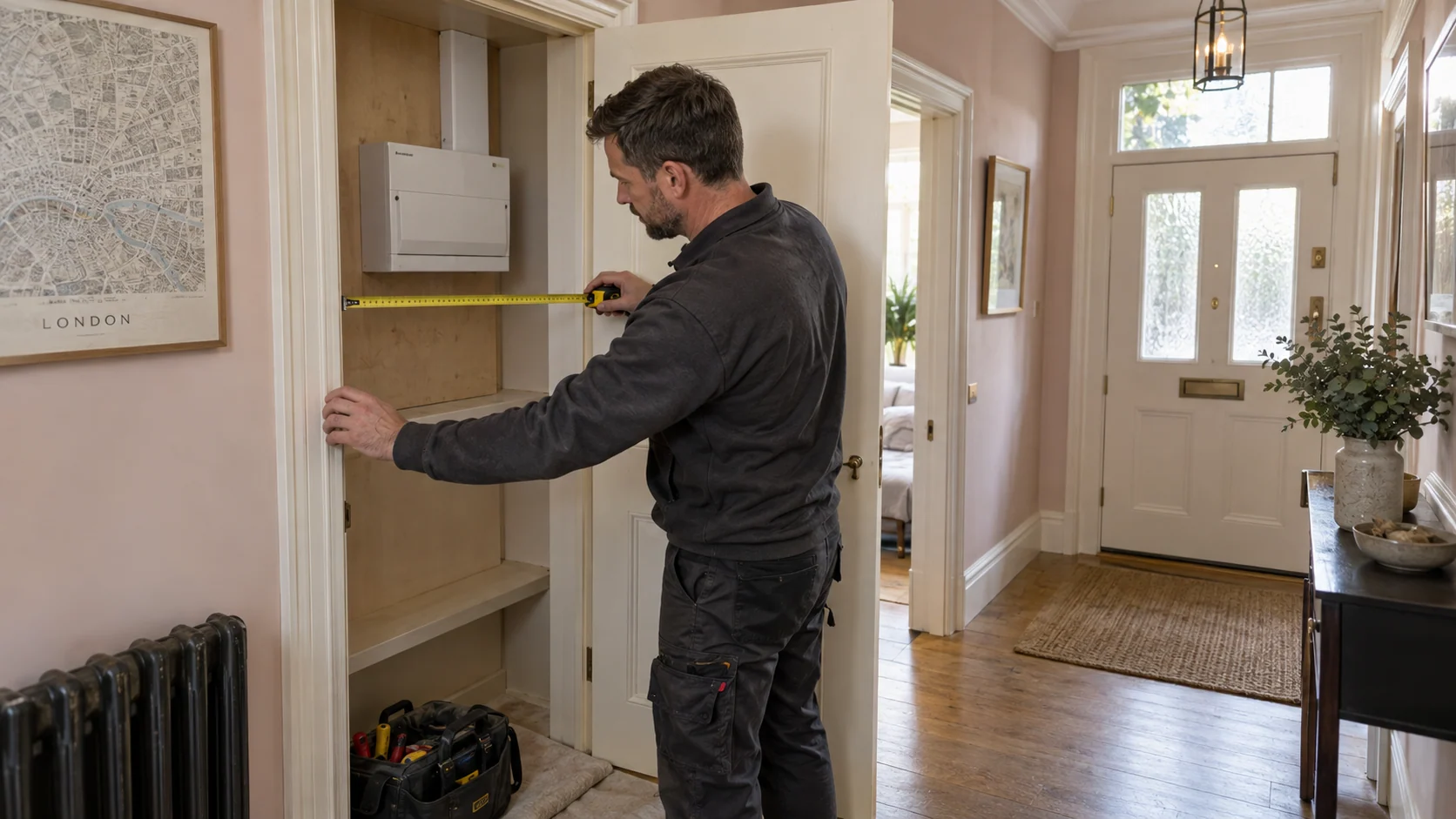
In a flat, your consumer unit may be inside the dwelling while meters and upstream equipment sit elsewhere. Access to a communal cupboard, responsibility for a supply cable and permission to alter shared services cannot be assumed.
We establish the boundary of the proposed work and identify arrangements that need agreement with the freeholder, managing agent or relevant supply provider. Replacing the private board does not automatically include alterations to communal distribution.
Practical details matter too: joinery around the enclosure, space for the new board, cable entry routes and access for future operation. If relocation is being considered, we assess it separately. Any associated opening-up and making good should be clear in the quotation.
08 · A quotation you can understand
The useful price is the one for your agreed installation—not a figure that covers only the enclosure. Two boards with the same number of switches can involve different amounts of investigation, preparation and remedial work.
Your quotation should identify:
We explain the proposed scope and exclusions so you can compare quotations meaningfully. If further defects emerge, we discuss the necessary action and its effect on the programme and cost. Unsafe work cannot simply be reconnected to keep a replacement within an original allowance.
Tell us about your property and the upgrade you are considering.
09 · Assess. Agree. Replace. Verify.
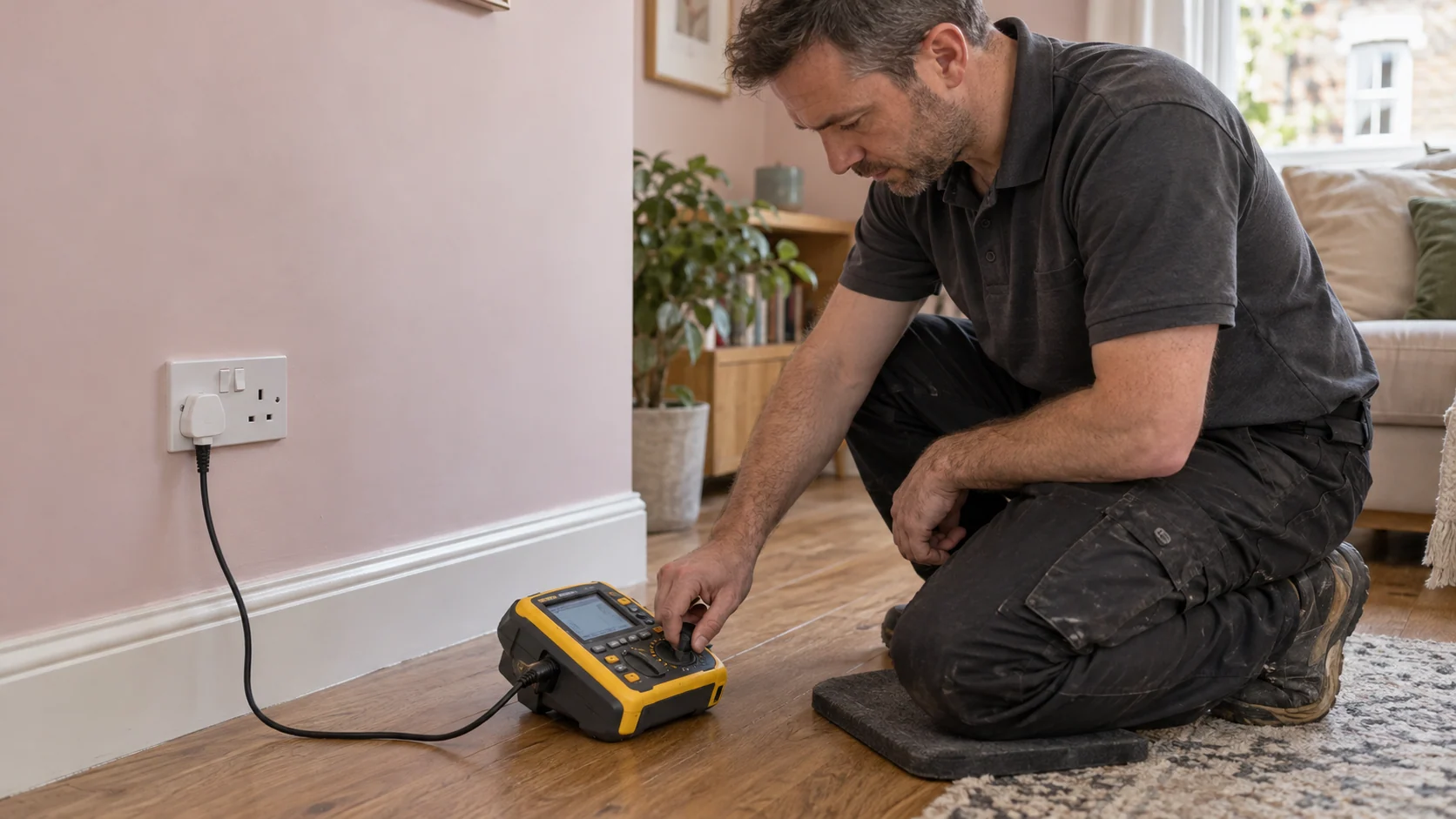
We review the existing arrangement, the reason for replacement and any related alterations. The assessment establishes what can be retained and what needs attention.
The quotation defines the work, access requirements and any dependencies. We plan the power interruption with you, including the effect on heating controls, refrigeration, internet access or other equipment you rely on.
Following safe isolation, the agreed installation work is completed and tested. Reconnection depends on satisfactory results and resolution of relevant defects—not simply on the new enclosure being fitted.
We identify the circuits, explain the controls and testing instructions relevant to the equipment, and confirm the documentation. The timetable depends on the installation; necessary repairs or supply-access arrangements can extend it.
10 · An installation you can understand
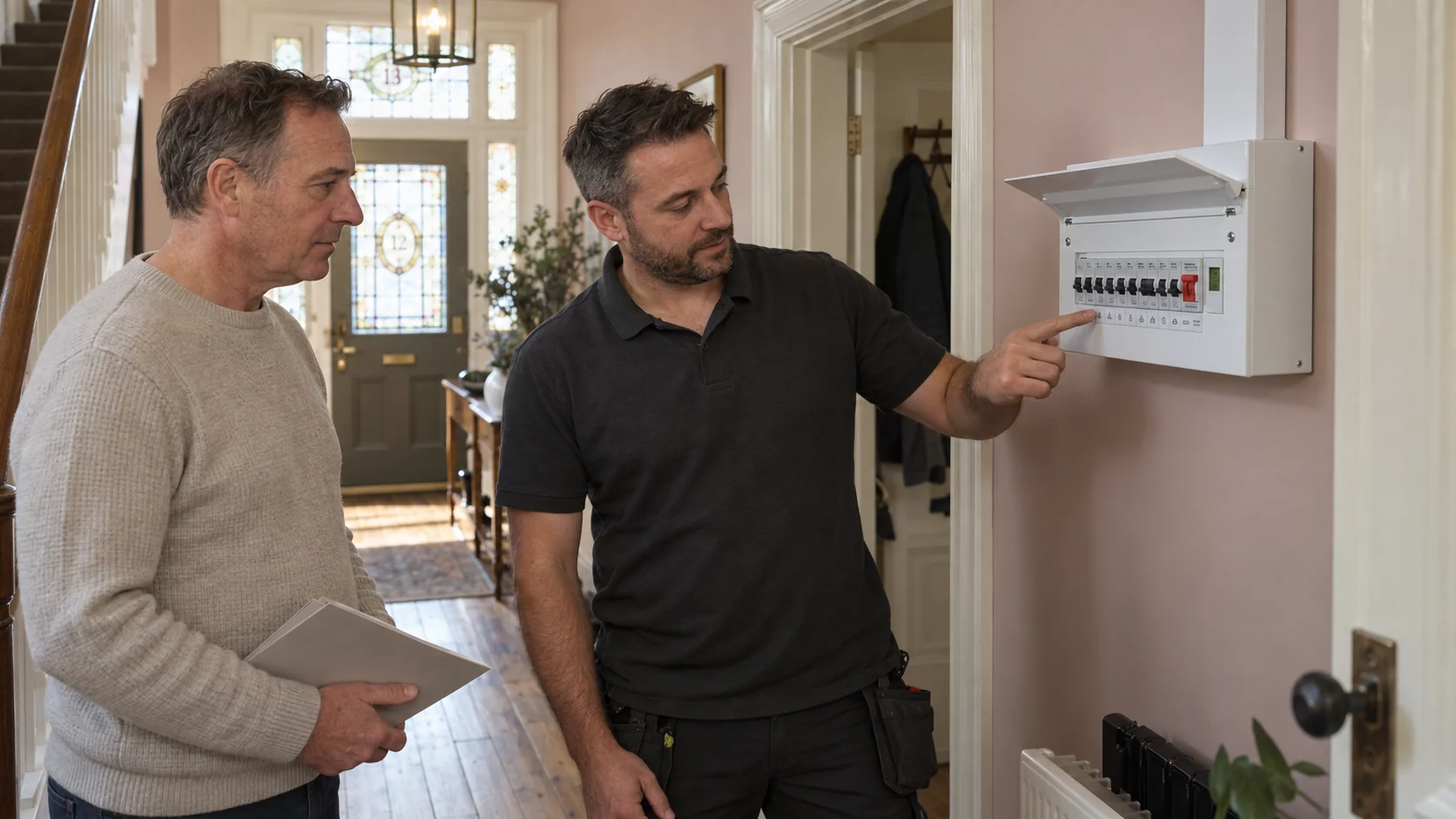
The completed work should be understandable after the electrician has left. Clear circuit identification and an explanation of the protective devices are part of a useful handover.
For the replacement work, we provide an Electrical Installation Certificate with the relevant schedules of inspection and test results. Its scope should describe the work carried out; it should not be mistaken for a separate condition report covering everything in the property.
Domestic consumer unit replacement in England is notifiable under Part P of the Building Regulations. We arrange the applicable notification and explain the separate Building Regulations compliance documentation.
Our work is designed and verified against the applicable BS 7671 requirements. The appropriate standard and documentation are considered for the actual work, not reduced to a generic “certified” label.
11 · One coordinated project
PEP is a family-run London contractor, trading since 2010, and an NICEIC-registered Domestic Installer. We deliver electrical installations alongside plumbing, heating and coordinated building-services work.
That wider perspective is useful when a board replacement forms part of a refurbishment. Our electrical installation service in Willesden covers the related circuits, lighting and controls. Where the programme includes central heating installation in Willesden, electrical interfaces can be considered before access is closed up.
Our Notting Hill residential project illustrates this coordinated approach: PEP delivered electrical infrastructure alongside mechanical services, working with the project’s architectural layouts and specialist designs.
For a standalone replacement, the same principle applies on a smaller scale: understand the interfaces, define responsibilities and leave a documented result.
NW10 · NW2 · Confirm your full postcode
We cover suitable properties in Willesden and Willesden Green across relevant NW10 and NW2 addresses, including enquiries around High Road and Walm Lane.
We also consider Church End, Dudden Hill, southern Dollis Hill and the Mapesbury edge adjoining Willesden Green. Selected Roundwood and Harlesden addresses can be considered according to location and scope. Send your full postcode so we can confirm the arrangements.
For Queen’s Park, Brondesbury and Kensal Rise, see consumer unit replacement in Queen’s Park and nearby areas. Our London consumer unit replacement page explains the wider service.
Before you book
Often, yes—if assessment confirms that the existing circuits are suitable to retain. Where defects or unsuitable circuits are found, repairs or wider rewiring may be needed. A board replacement and a full rewire are not the same service.
No. Its condition, protective measures and the intended work need assessment. Appearance or age alone does not establish the right remedy. The new work must nevertheless meet the requirements that apply to it.
Not necessarily. The cause may be an appliance, wiring defect or another issue. Replacing the board without diagnosis may leave the problem unresolved. Read our guide to why an RCD keeps tripping.
Yes. Their suitability affects the replacement design and what can safely be reconnected. We agree the necessary assessment before the changeover; a photograph or a circuit label is not enough.
No. An RCBO provides residual-current and overcurrent protection for its circuit. An SPD addresses transient overvoltages. They have different roles and are selected as part of the overall design.
No. Space for extra circuits is different from available supply capacity. Additional loads require assessment of the installation and supply, even when the enclosure has unused positions.
Yes, subject to assessment and the necessary access arrangements. We clarify the private installation boundary and any involvement needed from the managing agent, freeholder or supply provider.
Power must be isolated for the replacement. We discuss the expected interruption once the scope is understood. Testing, repairs and access constraints can affect the duration, so a fixed promise before assessment would be misleading.
The number and condition of circuits, protective devices, assessment, remedial work, isolation arrangements and any relocation or making good. We explain what is included and which items sit outside the agreed replacement.
An Electrical Installation Certificate with the relevant schedules for the work, together with the applicable Building Regulations compliance documentation through the notification process. We explain the scope of those documents at handover.
Send your postcode, property type and a short description of why you are considering a new consumer unit. Tell us about any planned kitchen, heating or wider refurbishment work.
If you include photographs, show only what is safely visible without removing covers or touching wiring. We will help establish the next step towards a clearly scoped replacement.
Discuss your Willesden consumer unit replacement · Call 07825 268 434