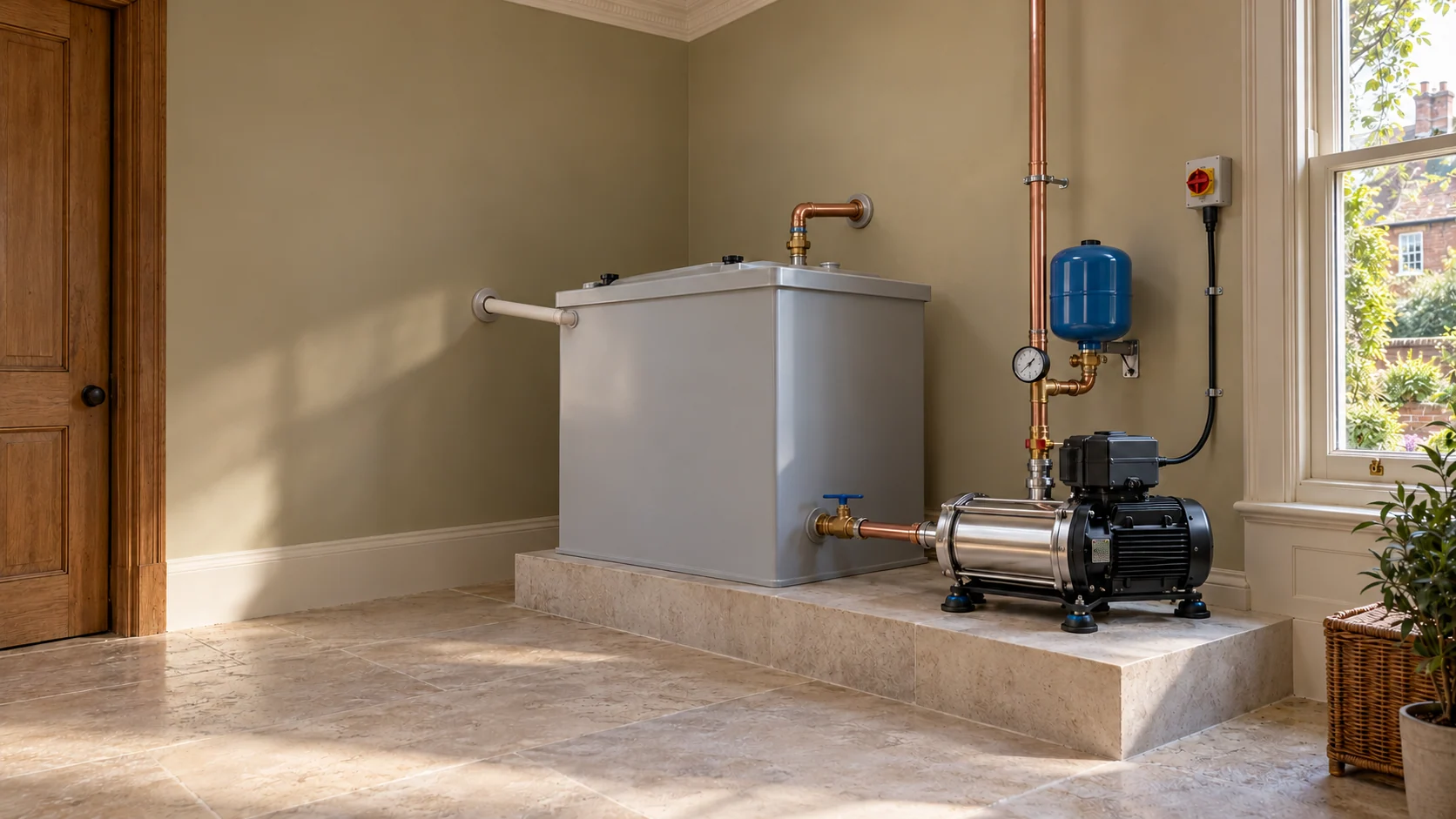
Cold-water break tank and stainless-steel booster pump in a warm olive-coloured period-home utility room.

Booster pumps · Accumulators · Stored-water systems

Water Pressure Booster Installation in Hampstead, NW3

A better morning starts with a water supply designed for everyone using it.

Or call our plumbing team on 07843 676 480.

Mains water boosters · Accumulator installation · Cold-water storage and booster sets

NICEIC

An upstairs shower should be part of the plan, not something you schedule around the kitchen tap. PEP designs and installs water pressure booster systems, accumulators and tank-fed solutions for Hampstead houses and converted flats, matching the equipment to the supply available and the way your home is used.

Whether you are adding a bathroom, upgrading a cylinder or addressing an existing shortfall, we bring water delivery, hot-water capacity, pipework and electrical installation into one coordinated scope.

Hampstead NW3 · Plan for the whole home

A water supply planned for the way your Hampstead home is used

A tall family house, a Belsize Park conversion and a compact flat can have very different water requirements. The starting point is the household, not a pump catalogue.

  • Several floors and bathrooms: plan for the upstairs shower, another bathroom and the other outlets likely to run together.
  • A converted flat: establish whether the restriction is within your property or on a shared supply before choosing private equipment.
  • A refurbishment or extension: agree the water demand and plant space before bathroom fittings, floor finishes and joinery fix the layout.

For each, the aim is an appropriate installation with a clear operating range, accessible components and an agreed scope of work.

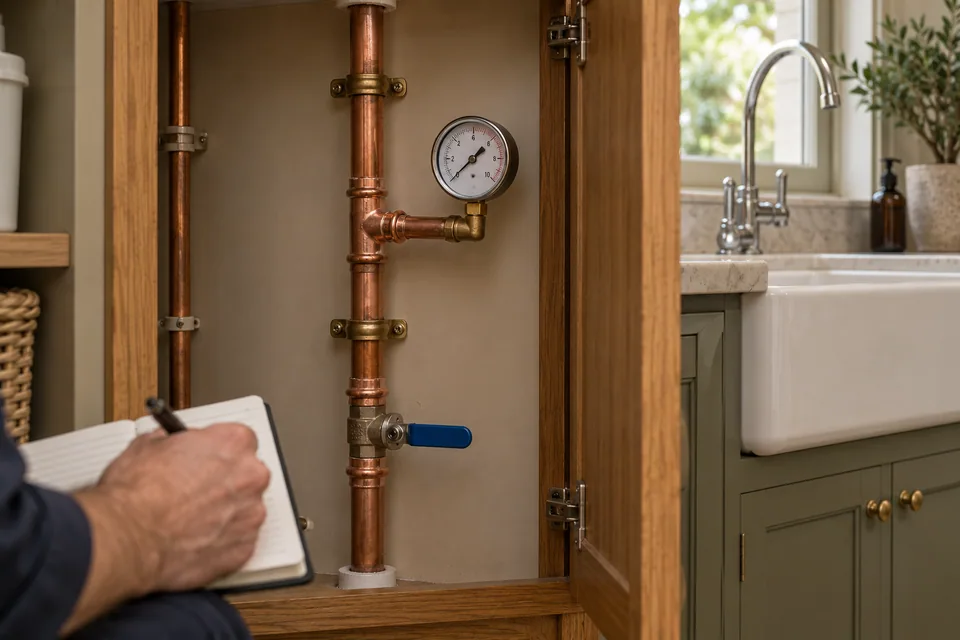
Pressure gauge connected to copper water-supply pipework in an accessible utility cupboard.
Checking the incoming supply before specifying a water booster.

01 · Understand the supply

Measure the supply before choosing a booster

Low water pressure and restricted flow can feel similar at a shower, but they are not interchangeable. A healthy pressure reading with every tap closed does not establish how much water the home can deliver during use.

Our assessment considers static and running pressure, available flow, simultaneous demand, the incoming pipe and the distribution within the property. We also distinguish a whole-home limitation from a problem affecting one fitting or only the hot water.

A restrictive valve, unsuitable pipework or a shared connection may need attention first. In some homes, a larger or separate incoming connection is worth investigating with the water supplier. A bigger pipe can reduce restrictions; it does not increase the pressure in the public main.

Our guide to understanding water pressure and flow explains these differences. The survey establishes which of them matter to your installation.

02 · Select the right arrangement

Booster pumps, accumulators or stored-water systems?

The right arrangement depends on the measured supply, peak demand, available space and the outcome you want. There are four main options to consider.

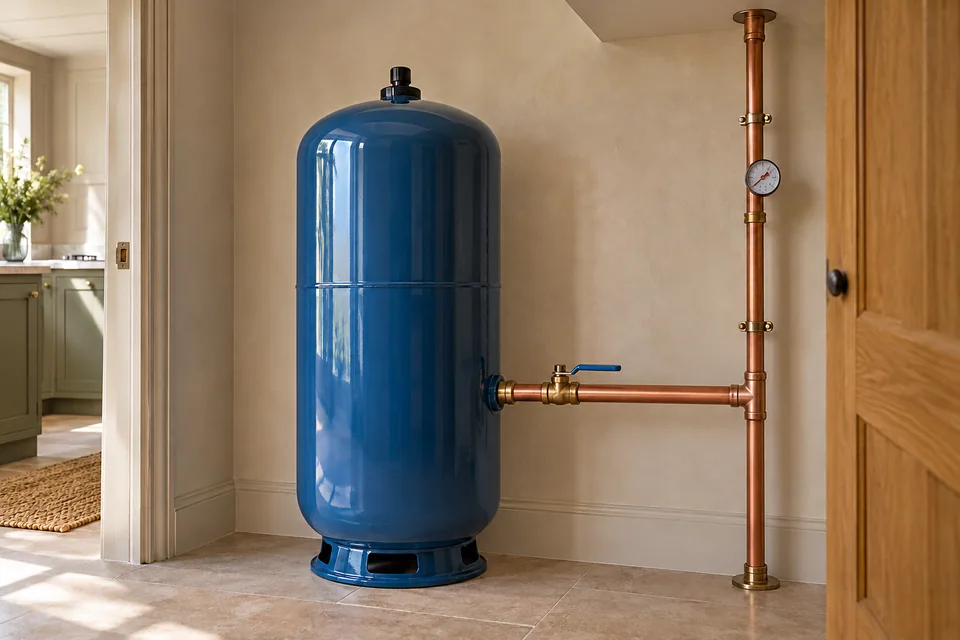
Blue floor-standing water accumulator with a single low-level connection to copper supply pipework.
A pressure accumulator planned around usable reserve and service access.
01

Compact inline mains boosters

A compact booster can suit a modest requirement where the existing supply and the product's permitted operating conditions are appropriate. Its limited delivery must be checked against the intended use; it is not automatically a solution for several high-flow showers.

02

Unpumped accumulators

An accumulator stores water under pressure and releases a usable reserve when demand rises. It can help where supply pressure is suitable but short periods of higher flow are needed. It does not create pressure above its charging supply, and its usable water reserve is smaller than the vessel's nominal capacity.

03

Pump-assisted accumulators

A suitable charging pump and accumulator can be considered where an unpumped arrangement would not meet the requirement. Charging performance, usable reserve and recovery between busy periods still need to be designed together.

04

Break tanks with booster pumps

A cold-water break tank and appropriately selected pump can provide stored water for more demanding use. The tank, refill rate, pump duty and distribution pipework form one system. Storage is finite: sustained consumption above the incoming refill rate will eventually draw down the reserve.

Our water booster and accumulator guide compares these arrangements in more detail.

Demand · Reserve · Refill

Plan the busiest period, not just the strongest tap

For a multi-storey Hampstead home, the useful question is what reaches the outlets when the household is busy. Height and pipework resistance reduce the pressure available upstairs, while simultaneous use increases the flow required.

We establish the intended combination of outlets, then assess the flow and remaining pressure they need. A pump's headline maximum pressure and maximum flow are not normally available together; selection must follow its performance at the required operating point.

Stored-water designs also need a realistic busy-period allowance and time to recover. Simply choosing a larger vessel without checking its usable reserve, incoming refill and the next period of use can leave the original problem unresolved.

03 · Coordinate cold and hot water

Cold-water delivery and hot-water capacity must work together

A water booster improves delivery within the limits of its design; it does not increase a combi boiler's heat output or the amount of hot water stored in a cylinder.

With a combi, the available hot-water flow at the required temperature remains important. With an unvented cylinder, we assess capacity, recovery and the incoming supply together. Hot and cold feeds to mixers must also be compatible with the fittings and system arrangement.

If your project includes unvented cylinder installation in Hampstead, we can coordinate both sides of the design. This is domestic water-supply work, separate from the pressure shown on a sealed central-heating circuit.

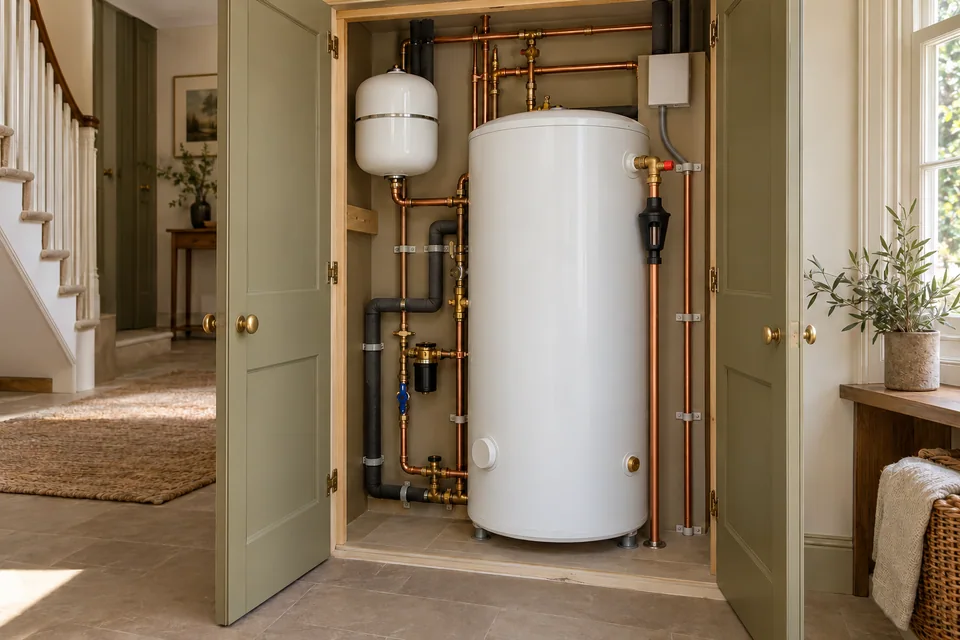
Unvented hot-water cylinder in an accessible plant cupboard with insulated pipework and a visible tundish.
Hot-water storage and incoming water delivery need to be assessed together.

Private supply · Shared responsibilities

Private upgrades in buildings with shared supplies

In a converted house or managed block, the pipe serving your flat may depend on a communal riser or shared incoming connection. Installing equipment within the flat does not remove the need to understand that arrangement.

We identify the proposed connection point, accessible isolation and the boundary between private and shared services. Relevant permissions, access and any interruption affecting neighbours must be agreed with the responsible parties before work starts.

Where the limitation belongs to the building rather than one apartment, a wider solution may be necessary. We explain that distinction instead of treating a private booster as a guaranteed remedy.

Space now · Access later

A practical plant space, with access and noise considered

A suitable location needs more than an empty rectangle on a floor plan. We consider the route into the property, connections, filled weight, floor support and access for inspection, maintenance and eventual replacement.

Pump selection, mounting and pipework routes influence noise and vibration. Bedrooms, neighbouring flats and lightweight partitions all matter; no powered system should be promised as completely silent.

For stored-water equipment, the layout must also accommodate appropriate hygiene measures, inspection access and overflow arrangements. Water leak protection options can be considered alongside the installation, particularly near finished interiors.

During a larger refurbishment, our Hampstead heating and plant-room installations can be coordinated around the same service space. Equipment does not have to occupy a large dedicated room, but it must remain accessible.

04 · A clear installation process

From the initial brief to measured commissioning

PEP brings the plumbing and electrical work together so that the pump, pipework and power supply are planned as one installation.

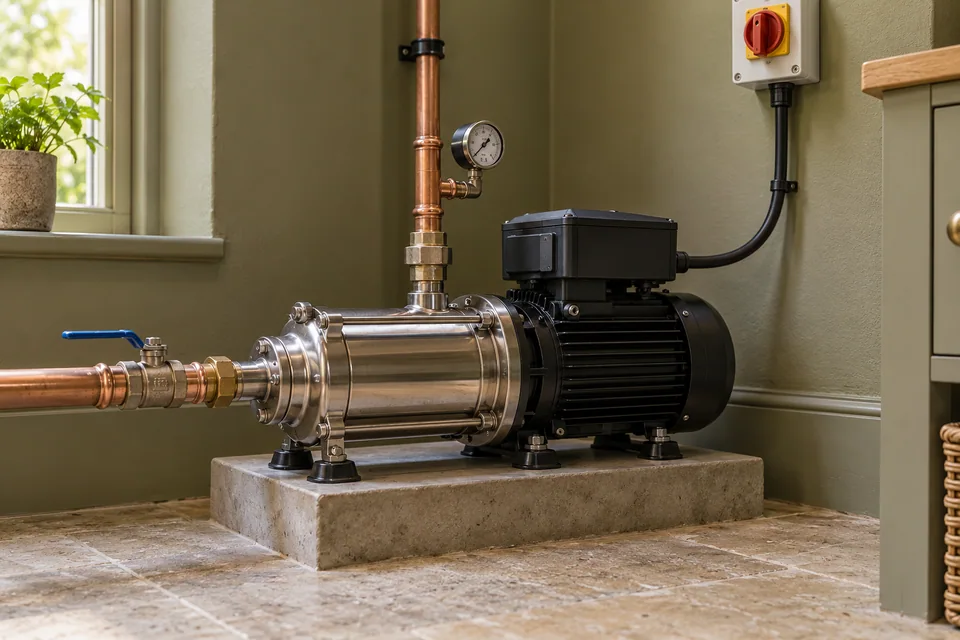
Stainless-steel booster pump on anti-vibration mounts with copper connections and a wired wall isolator.
Accessible pipework, supported equipment and connected controls at the booster.
  1. Establish the brief. We review the property, current symptoms, hot-water arrangement and outlets you want to use together.
  2. Assess and specify. Measurements, access, supply ownership and equipment requirements inform a defined proposal.
  3. Agree the work. The scope identifies equipment, associated alterations, permissions, exclusions and the planned water interruption.
  4. Install and commission. We test operation under the agreed usage conditions and explain controls, isolation, limitations and maintenance at handover.

Where needed, the scope can include wider plumbing installations in Hampstead and electrical installation in Hampstead for the pump's supply, protection and isolation.

For examples of our broader installation work, see PEP heating and plant-room projects across London.

A quotation for the complete scope

Water booster installation cost in Hampstead

The cost of a compact inline installation is not directly comparable with a tank-fed system serving several bathrooms. The equipment is only part of the quotation.

Key factors include the required delivery and storage, changes to incoming and distribution pipework, electrical work, access, support, noise control and any making good. Shared-building arrangements or a new connection can introduce separate responsibilities and costs.

Our proposal sets out the agreed installation, assumptions, exclusions and VAT treatment. Send us the project details first so we can establish the appropriate assessment and quotation, rather than price a pump before understanding the supply.

Requirements · Permissions · Handover

Water regulations, permissions and long-term care

The installation must suit the water supply and comply with the applicable water fittings requirements. Water Regs UK guidance requires notification to the local water undertaker where a pump induces demand exceeding 12 litres per minute, whether connected directly or indirectly to a supply pipe.

A break tank is therefore not an automatic exemption from notification, and a smaller pump is not exempt from all other requirements. The notification and consent position should be established before installation, separately from freeholder or managing-agent permissions.

For listed buildings or protected features, the proposed alterations also need property-specific checks. Long-term care follows the chosen equipment's instructions, including relevant inspection, cleaning and servicing requirements.

Hampstead · Belsize Park · NW3

Hampstead NW3, Belsize Park and nearby homes

We welcome planned installation enquiries from Hampstead Village, Frognal, Redington, Fitzjohns and Netherhall, South End Green, Belsize Park and Belsize Village, including NW3 addresses around Swiss Cottage.

For nearby West Hampstead, South Hampstead, Primrose Hill or Gospel Oak addresses, send your full postcode so we can confirm coverage and the project scope. Our wider London water pressure booster installation service explains the broader offer.

Before you book

Questions before upgrading your water supply

Do I need an accumulator or a booster pump?

That depends on the measured pressure and flow, the duration of peak demand and the space available. An accumulator may support short busy periods; other homes need a pumped or tank-fed arrangement. Some need restrictions corrected first.

Can I use two showers at the same time?

That can be a design objective, but it must be checked against both showers' requirements, other simultaneous use and hot-water production. The number of bathrooms alone is not enough to specify the system.

Will a booster help a weak top-floor shower?

It may, where the available supply and height-related losses are the cause. If only one shower performs poorly, its fittings and local pipework should be assessed before committing to a whole-home upgrade.

Can you install a water booster in a converted flat?

Potentially, subject to supply arrangements, permissions, space, noise and a suitable connection. Communal infrastructure and neighbouring properties must be considered even when the proposed equipment is inside your flat.

Can I retain my existing boiler or cylinder?

Often the existing hot-water equipment can remain, provided its capacity, operating limits and connections suit the proposed arrangement. We check this before specifying the booster rather than assume every project needs a replacement.

Do you consider Stuart Turner and Salamander systems?

Yes. Suitable Stuart Turner Mainsboost and Salamander products can be considered against the project requirements. Selection follows the measurements, equipment documentation and service access, rather than a preference for the largest model.

How much space does a system need?

There is no single footprint. A compact booster, pressure vessel and stored-water system have different requirements. Allowances must include connections, clearances, full operating weight and a practical route for future removal.

What happens during a power cut?

A powered booster cannot provide its normal boosted service without electricity. Any remaining mains-fed supply or stored delivery depends on the layout. We explain that behaviour and any agreed alternative supply arrangements during design.

Will the installation interrupt our water supply?

Connection work normally requires an agreed interruption. Its extent depends on isolation and pipework changes. If shared services are involved, access and notice to affected occupants need to be arranged in advance.

Should we plan the booster before refurbishing the bathrooms?

Yes. Early assessment lets the water supply, hot-water system and chosen fittings be matched before new finishes restrict access. It also helps reserve the right space without sacrificing maintenance access later.

Hampstead NW3 · Plan the next step

Tell us which outlets you want to use together

Send your postcode, property type and floor, the number of bathrooms and a short description of what happens when more than one outlet is used. Let us know whether the issue affects hot water, cold water or both, and whether you have a combi boiler or a cylinder.

If you have refurbishment plans or photographs of accessible equipment and available space, include them. You do not need to dismantle anything or take technical measurements before contacting us.

We will use that brief to establish the next step towards a water-supply upgrade designed around your home.

Discuss your Hampstead water pressure project

Call 07843 676 480 to speak to our plumbing team.