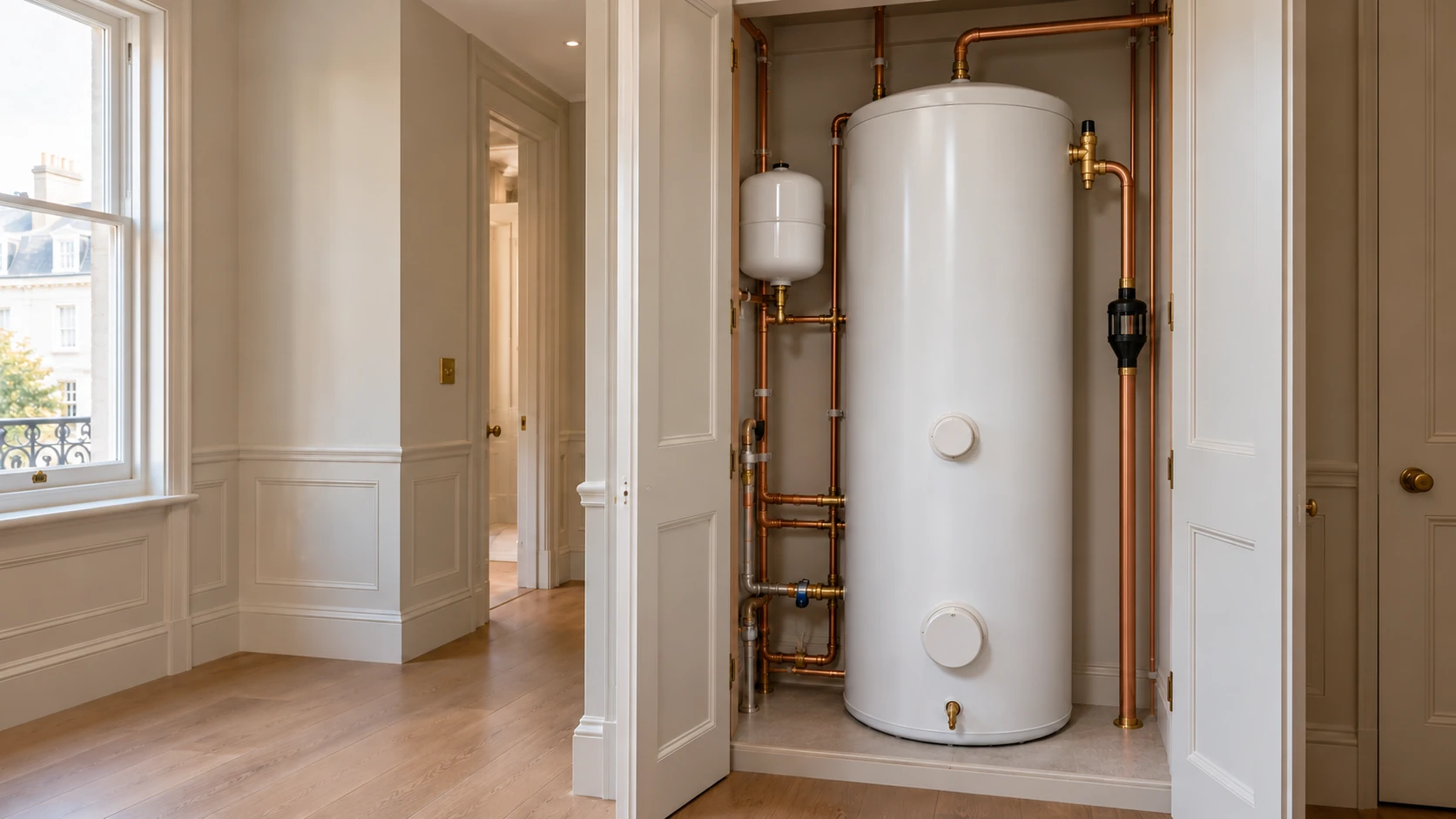


Unvented hot-water cylinder in a panelled service cupboard in a Kensington-style period home

Kensington W8 · Unvented hot-water installation & replacement

Unvented Hot Water Cylinder Installation & Replacement in Kensington, W8

Reliable hot water starts with a well-planned installation.

PEP designs, supplies and installs unvented hot water cylinders for Kensington flats and houses. We bring the cylinder, plumbing, electrical supplies and controls into one coordinated project, from the initial assessment to commissioning and handover.

Discuss your Kensington hot-water project

or call 07843 676 480

Qualified unvented hot-water work
Heating · Plumbing · Electrical controls

Gas Safe RegisterNICEIC

Whether you are replacing an existing cylinder, upgrading a gravity-fed system or preparing for additional bathrooms, we establish what your home needs and what the building can accommodate. That includes the equipment you may be able to keep, the access needed for the work and the arrangements that make the finished system safe and straightforward to maintain.

01 · A focused replacement or a changing home

A replacement, a conversion or a new hot-water installation?

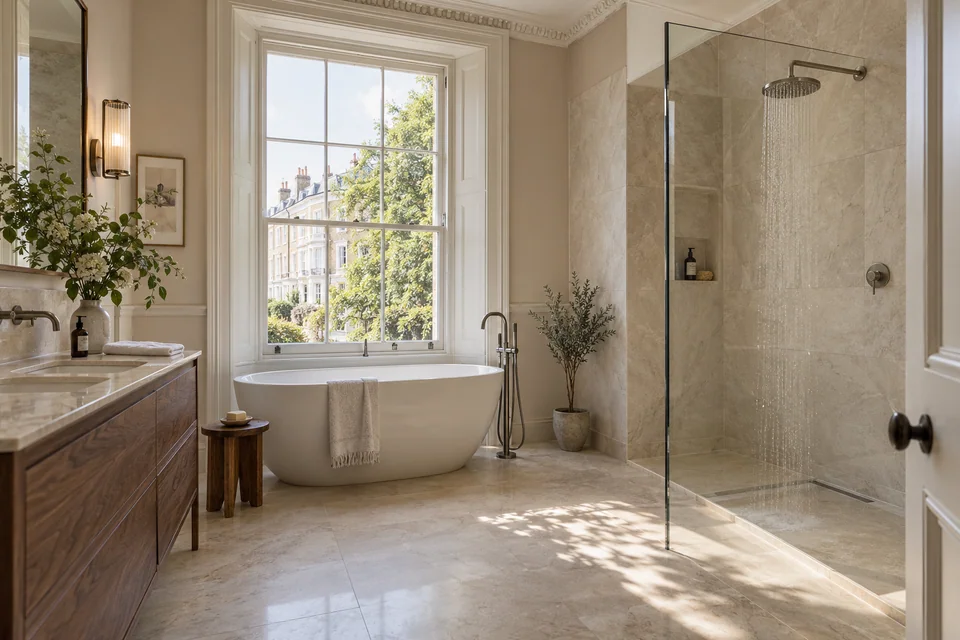
Period-style Kensington bathroom with a walk-in shower, freestanding bath and sash window

Replacing an existing cylinder

A leaking vessel, unreliable performance or changing household needs may prompt replacement. We assess the cylinder and surrounding installation first: a fault in a valve, heater or control does not necessarily mean the whole cylinder has failed. Where replacement is appropriate, the specification addresses the cause of the problem and any limitations in the existing arrangement.
Converting from a vented system

An unvented system takes its cold-water supply from the mains rather than a separate storage cistern feeding the cylinder. Conversion needs suitable supply conditions, compatible equipment and a viable safety-discharge route. Removing the cold-water cistern feeding the cylinder does not automatically remove a separate heating feed-and-expansion tank. Our vented-to-unvented conversion guide explains the distinction.

Planning new storage for a refurbishment

A second shower, larger bath or altered layout can change demand. We review likely simultaneous use, reheating requirements and available plant space before selecting the equipment. A single-cylinder replacement is just as valid a starting point as a complete refurbishment.

02 · Private equipment · Shared building

Plan the work around the flat and the building

In a Kensington mansion flat or converted house, the installation extends beyond the airing-cupboard door. A cylinder may fit its intended position but still need a carefully planned delivery route through shared entrances, staircases or a lift. Removing the old unit can present a different set of constraints.

We assess these practical details alongside the plumbing. Where building management is involved, the programme identifies the access, permissions and isolation arrangements that need resolving before installation.

  • Who controls the relevant water supplies and shared service cupboards.
  • Whether planned isolation affects another property.
  • Delivery access, lift restrictions and protection of communal areas.
  • Working-hour requirements and responsibility for opening up or making good.

We also establish which equipment belongs to the individual home. A communal heating connection, heat interface unit or thermal store should not be treated as an ordinary private cylinder replacement without understanding the system. The quotation should make that boundary clear.

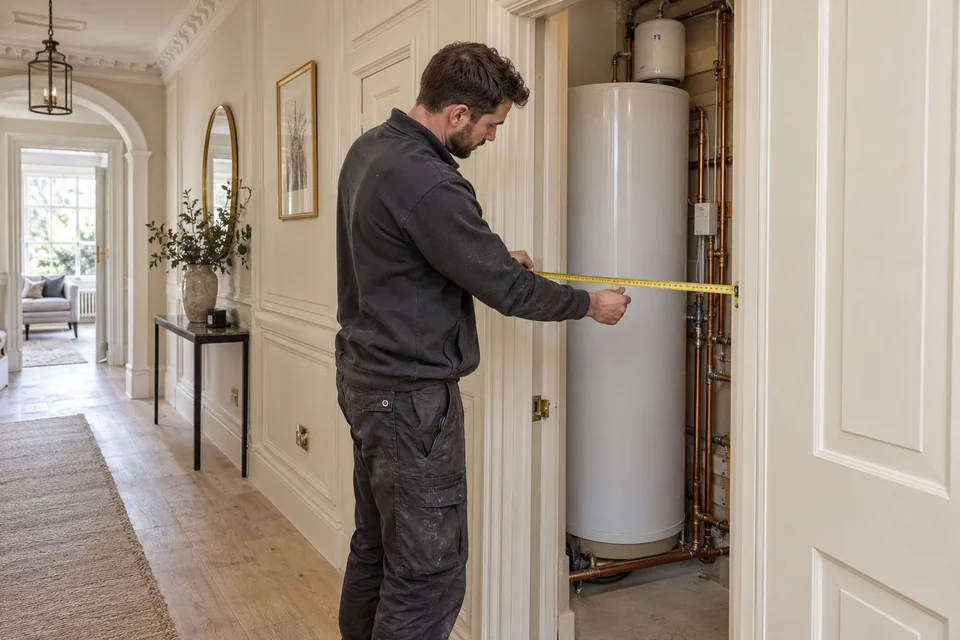
Engineer measuring the clear opening of a hot-water cylinder cupboard in a period home

03 · Supply · Storage · Recovery

Enough hot water means checking more than litres

The right installation balances three things: the water available to the property, the amount stored and the rate at which it can be reheated.

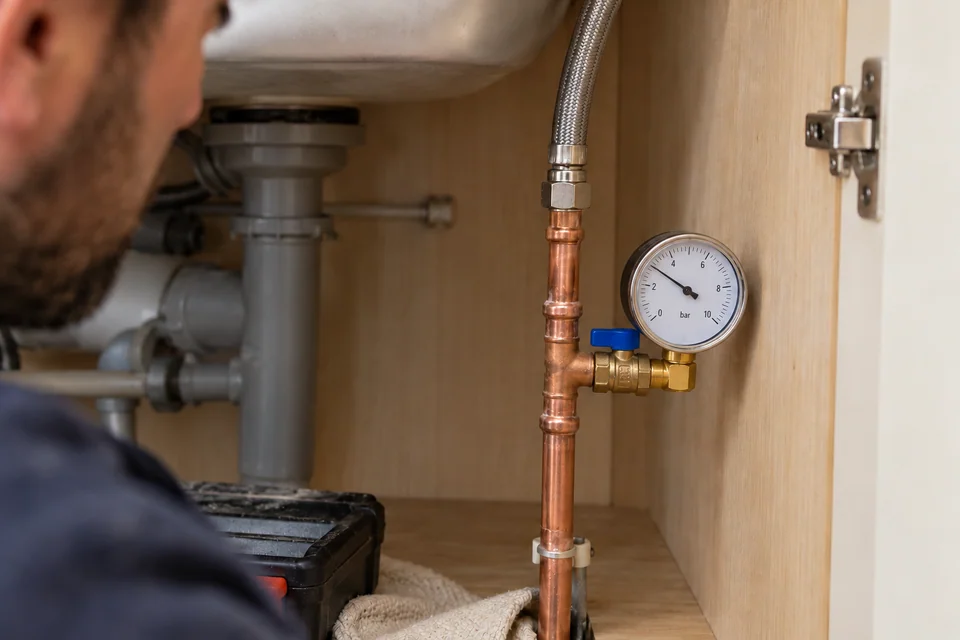
Water pressure test gauge connected to a cold-water service point beneath a kitchen sink

The incoming supply

We assess pressure and flow under relevant operating conditions, including demand from more than one outlet. A pressure reading with every tap closed cannot establish how two showers will perform together. Existing pipework, restrictions and any shared supply also matter.

Usable storage

Cylinder selection considers occupancy, shower flow rates, bath use and the pattern of demand. Choosing capacity from bedroom count alone can leave a household with insufficient hot water or unnecessary storage.

Recovery between periods of use

Reheating depends on the cylinder, heating source and operating conditions. A fast-recovery specification must suit the actual system; it does not compensate for inadequate mains flow or unsuitable distribution pipework.

Our guide to low water pressure and flow explains the supply checks. Where those checks identify a separate supply limitation, water-pressure boosting options can be assessed as part of the wider design. A booster is not automatically required with an unvented cylinder.

04 · Electric and boiler-connected options

Direct electric, indirect and Megaflo cylinder installations

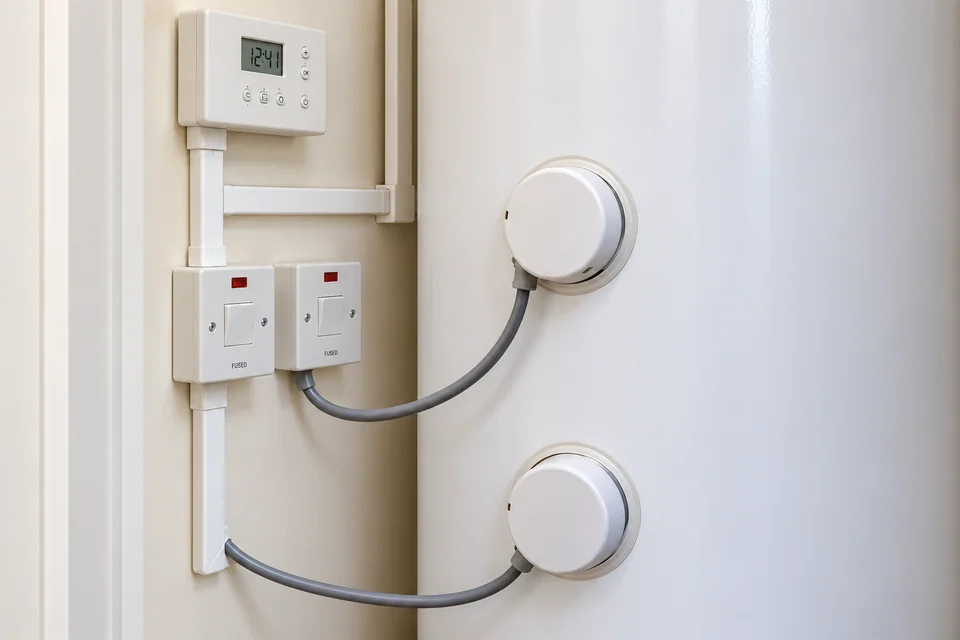
Direct electric hot-water cylinder with wall-mounted immersion controls and enclosed cable routes
01

Direct electric cylinders for flats and homes

A direct cylinder uses electric immersion heaters to heat stored water. The installation must account for the electrical supply, controls, heating schedule and household demand, as well as the water connections. We check the existing arrangement before specifying replacement equipment, including any tariff-related switching that needs to be retained or altered.

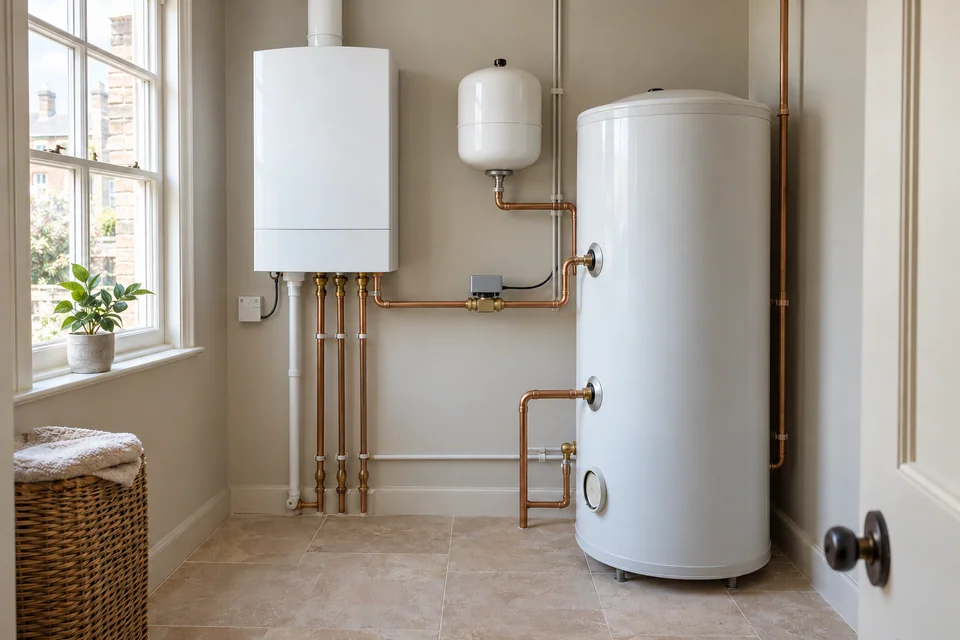
Indirect hot-water cylinder beside a boiler with accessible copper pipework and heating controls
02

Indirect cylinders connected to a boiler

An indirect cylinder transfers heat from a suitable external source through a coil. A serviceable existing boiler may remain, provided its operation, output and controls suit the proposed installation. Replacing the cylinder does not automatically require replacing the boiler.

If a new heat source is also needed, our boiler installation service in Kensington covers that additional scope. A future heat pump needs model-specific cylinder and coil selection; compatibility should be established before purchase.

Megaflo installation and replacement in Kensington

Megaflo is one of the unvented cylinder options we can specify. We select the appropriate configuration, capacity and dimensions for the property, then check the model’s connection, expansion and servicing requirements. The brand name alone does not establish how the installation should be arranged.

A slimline model may help where width is restricted, but its height, connection positions and maintenance clearances still need checking.

05 · Space to install. Space to maintain.

A suitable cupboard needs room for the whole installation

The survey considers the cylinder’s operating weight, support, delivery route and connections, together with access to heaters, valves and controls. Those components must remain reachable after shelves, doors and decorative panels are fitted.

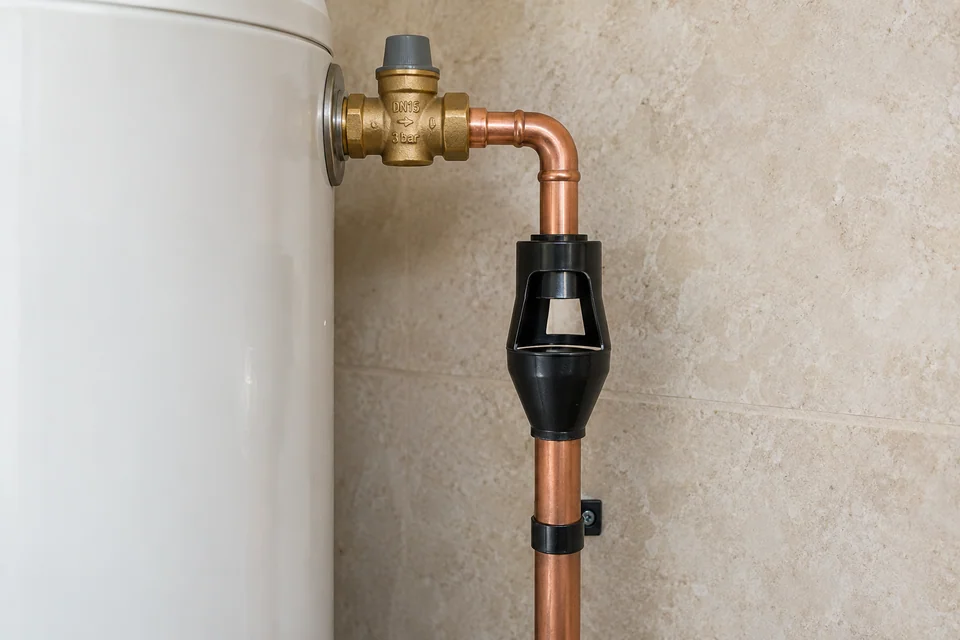
The safety arrangement includes a suitable route for discharge from the protective devices. We establish that route before agreeing a relocation. Its design and termination need to suit the building and the applicable requirements; an existing nearby waste pipe is not, by itself, proof of a suitable solution.

Relocation may also change pipe lengths, hot-water waiting times and the work required to floors or joinery. Where listed-building restrictions, lease conditions or alterations to shared fabric are relevant, the required checks and responsibilities should be agreed early.

A successful replacement leaves space to maintain the equipment — not just space to close the cupboard door.

Close view of an unvented cylinder safety valve, open tundish and descending discharge pipe

06 · Heating · Plumbing · Electrical interfaces

One team for the cylinder, connections and controls

PEP combines heating, plumbing and electrical expertise, including qualified unvented hot-water work. This helps keep the interfaces clear when a cylinder depends on several trades.

The agreed scope can include compatible temperature controls, motorised valves, immersion supplies and coordination with existing heating zones. Our residential electrical service in Kensington supports the power and control requirements; the heating controls guide explains the wider relationship between equipment and demand.

For homes with a secondary hot-water return, we assess its operation and controls alongside the cylinder. A return circuit can reduce waiting at distant outlets, but it is not a pressure booster and its heat losses need managing.

Wider bathroom or distribution alterations connect with our plumbing installation service in Kensington. Projects involving the complete heating system can be developed through our Kensington heating and plant-room service.

07 · From assessment to handover

From the first assessment to working hot water

  1. Understand the requirement. Review the present system, reported problems, household demand and any planned changes.
  2. Check feasibility. Assess supply, equipment compatibility, location, discharge and access, including relevant building-management dependencies.
  3. Agree the specification and quotation. Identify retained equipment, new components, exclusions and the installation programme.
  4. Prepare and install. Protect the agreed work areas, carry out the necessary isolation and complete the specified plumbing and electrical work.
  5. Commission and hand over. Check the completed arrangement, explain normal controls and provide the records applicable to the work.

Before work starts, we agree the expected interruptions to hot water, cold water and electricity. A relocation or conversion can require a different programme from a straightforward replacement. Building access and remedial work can also affect the schedule; these should be discussed before an installation date is confirmed.

08 · A quotation with a defined scope

What affects unvented cylinder installation cost in Kensington?

The useful comparison is the complete scope, not the price of the cylinder alone.

A replacement in the same location may retain suitable connections and equipment. A relocation adds new routes and access work. A vented-to-unvented conversion can involve changes to supplies, controls, showers and tank arrangements. These are different projects and should be quoted accordingly.

Our quotation sets out the proposed equipment and work, including which of the following are included, excluded or subject to further assessment:

  • Cylinder, associated valves, expansion provision and controls.
  • Pipework, electrical work and safety-discharge arrangements.
  • Removal of the old equipment and agreed disposal.
  • Access requirements, opening up and making good.
  • Commissioning, applicable documentation and VAT.

Any additional work identified during assessment should be explained before it is authorised. Send details of the existing installation so we can establish the appropriate next step towards a reliable quotation.

Discuss your cylinder installation requirements

09 · Commissioning · Documentation · Care

Safety, documentation and care after installation

Unvented hot-water work requires the relevant competence and correctly specified safety measures. In England, Approved Document G provides guidance on hot-water safety. We establish the appropriate Building Regulations notification or certification route for the work. Commissioning records and Building Regulations compliance documentation serve different purposes.

At handover, you should understand the normal heating controls, where the installation information is kept and what maintenance the equipment requires. Our unvented cylinder servicing guide explains how routine maintenance differs from fault diagnosis.

Manufacturer cover is specific to the product and its conditions. Protection for the inner vessel may differ from that for valves, heaters, controls and labour. Registration and maintenance requirements should be followed; a long tank warranty should not be read as identical cover for the complete installation.

10 · Kensington W8 and neighbouring addresses

Serving Kensington W8 and neighbouring addresses

PEP undertakes cylinder installation and replacement across Kensington W8, including homes around Kensington High Street, Kensington Church Street, Campden Hill, Kensington Court, Abingdon and Scarsdale, and W8 addresses around Holland Park.

We also consider suitable projects in neighbouring South Kensington SW7 and West Kensington W14. Send the full postcode and a short description of the work so we can confirm coverage and scope. For other areas, see our unvented cylinder installation service across London.

Before you book

Your cylinder installation questions

Can I keep my existing boiler when replacing the cylinder?

It may be possible. We check its condition, compatibility, available output and controls against the new cylinder’s requirements. A replacement cylinder should not become a boiler-replacement project without a clear reason.

Can you replace a direct electric cylinder in a flat?

Yes. We assess the cylinder, immersion supplies, controls, water connections and safety arrangements together. Let us know about any timed or off-peak supply and building-access requirements when you enquire.

Will a new cylinder improve weak flow or supply two showers?

That depends on the supply, distribution and shower demand as well as storage. We assess them together before agreeing the specification. Increasing litres alone will not correct a restricted water supply.

Can the cylinder be moved or replaced with a slimline model?

Possibly. We check the proposed location, support, delivery route, connection layout, service clearances and discharge provision. A narrower cylinder is not automatically a like-for-like fit.

Who arranges access to shared supplies and building isolation?

Responsibilities are agreed before work starts. You may need your managing agent or freeholder to authorise access or isolation affecting shared services. Tell us about building requirements early so they can be included in the programme.

Does a dripping valve mean the whole cylinder needs replacing?

No. A discharge or leak can have different causes. Report it for assessment rather than assuming the vessel has failed. Do not block a discharge pipe or interfere with safety devices.

How long will we be without hot water?

We agree the expected interruption after assessing the job. Access, conversion work, relocation and the time needed for commissioning and initial heating all influence when hot water can be restored.

What installation records and warranty information will I receive?

The handover covers commissioning information, operating instructions and the documentation applicable to the agreed work, together with relevant product registration and warranty details. These should identify what was installed and how it needs to be maintained.

Kensington W8 · Let us plan the right installation

Discuss your Kensington hot-water project

Tell us what you want to change: an existing cylinder that needs replacing, a system that no longer meets demand or hot-water storage for a refurbishment.

Include your postcode, the current heating arrangement, the number of bathrooms and your preferred timing. Photographs of the installation and any safely visible model label help, particularly alongside a wider view of the cupboard and access route. Leave covers and components in place.

We can then establish the right assessment and develop a clear scope for your home — from a focused cylinder replacement to a coordinated heating and hot-water project.

Discuss your Kensington hot-water project