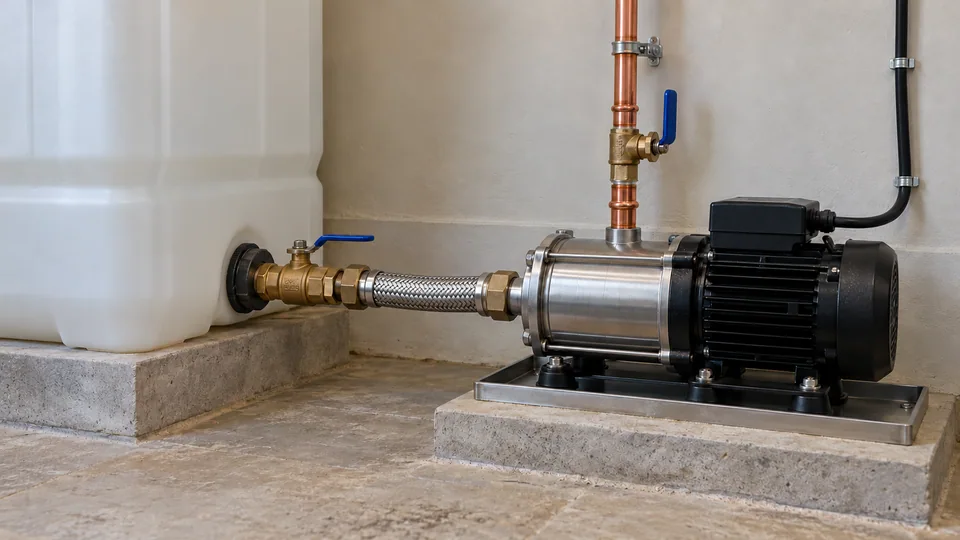
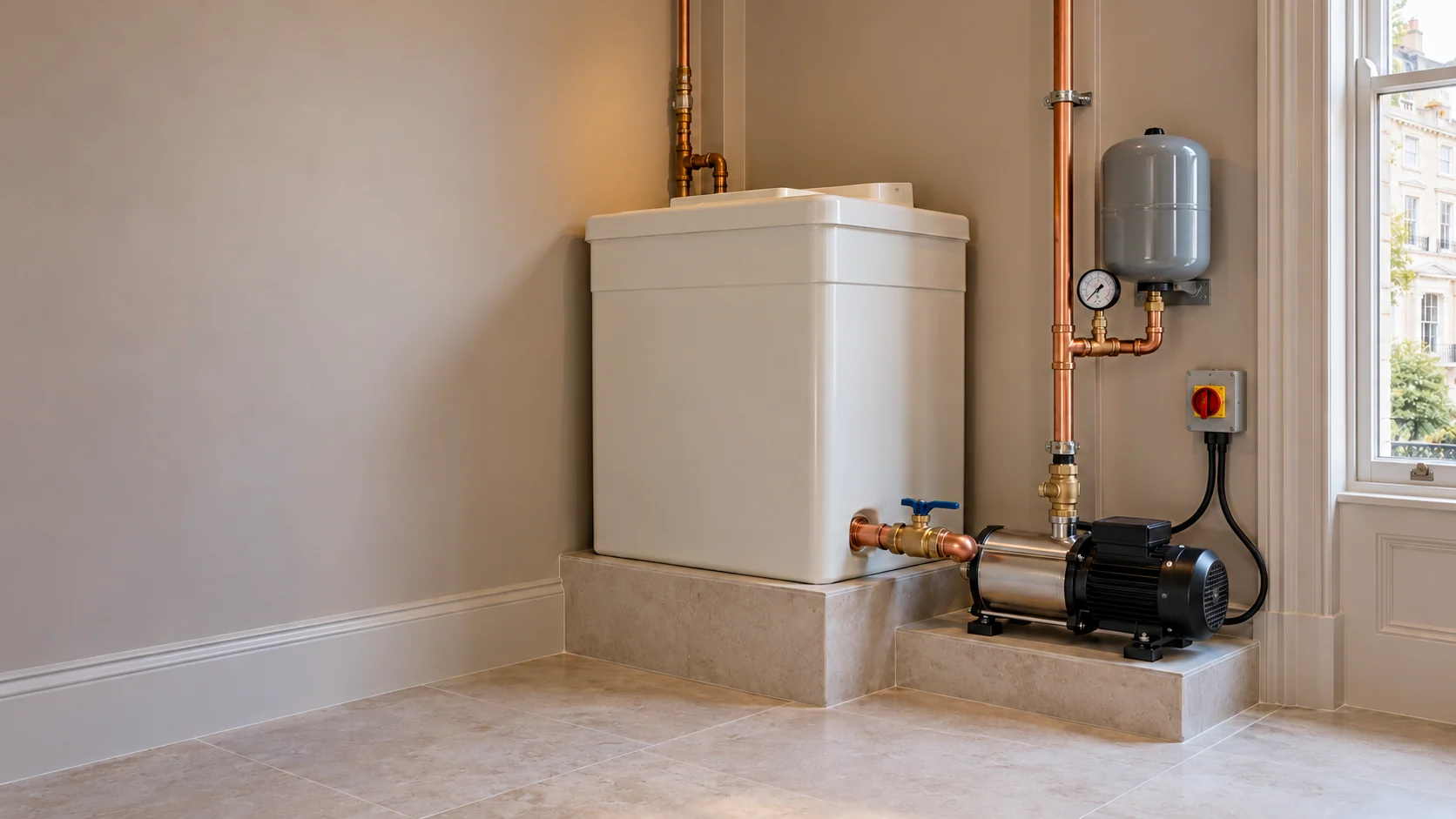
Cold-water storage tank and stainless-steel booster pump with a pressure vessel and copper pipework in a domestic service room

Water pressure boosters & accumulators · Earl’s Court SW5

Water Pressure Booster Installation in Earl’s Court, SW5

A water supply upgrade planned around your home, your building and your daily routine.

Discuss your Earl’s Court water pressure projectCall 07843 676 480

Mains water boosters · Accumulator installation · Cold-water storage and booster sets

NICEIC

PEP provides water pressure booster and accumulator installation in Earl’s Court SW5, helping homeowners plan reliable water delivery for new bathrooms, refurbished flats and changing household needs.

We assess the supply and the installation it serves before selecting equipment. The proposal brings together the appropriate booster or storage arrangement, pipework, electrical connections and commissioning within a clearly agreed scope.

Earl’s Court SW5 · Your home, your planned use

Water delivery planned for your Earl’s Court home

A bathroom refurbishment is the right time to ask what the water supply can support. The shower you have chosen may need more flow than the previous fitting. An additional en-suite may bring two bathrooms into use together. In a converted house, the pipe entering your flat may also be only part of the supply arrangement.

We work with the proposed use of the property, whether that means a compact improvement within an apartment or a larger installation serving a house across several floors. The recommendation should explain what needs changing, where the equipment can go and how the system will perform under the agreed demand.

For a wider refurbishment, our plumbing installation service in Earl’s Court can coordinate the supply upgrade with the new bathroom and kitchen distribution.

01 · Establish the cause

One outlet, your flat or the building?

Similar symptoms can have different causes. Before recommending a pump, we establish which part of the system needs attention.

Where a water-delivery problem appears helps shape the assessment
What you noticeWhat needs checking
One shower or tap is weakThe fitting, local valves and branch pipework may be restricting that outlet. A whole-property booster may not address the cause.
Cold water is satisfactory but hot water is limitedThe hot-water equipment, controls and distribution need assessment alongside the incoming supply.
Several outlets struggle when used togetherAvailable flow, pressure under demand, distribution losses and the required combination of outlets need to be considered together.
Other flats are affected tooThe shared supply or wider delivery conditions may need investigation with the appropriate building manager or water supplier.

A sudden loss of supply should first be checked for an interruption or fault. Permanent boosting equipment should not be the default response to an unexplained change.

Private supply · Shared responsibilities

Know which supply your flat can change

In a mansion block or converted townhouse, the relevant question is not simply whether a pump fits inside the flat. We need to establish which services are private, which are shared and how the proposed work connects to the building’s supply.

That includes the isolation arrangements, any communal riser or existing boosting equipment, and the permissions and access needed for the agreed work. A managing agent may need to coordinate a shutdown or confirm restrictions before installation can proceed.

We define these interfaces early. Work affecting a shared service should not be treated as a private alteration simply because its final connection is inside your home.

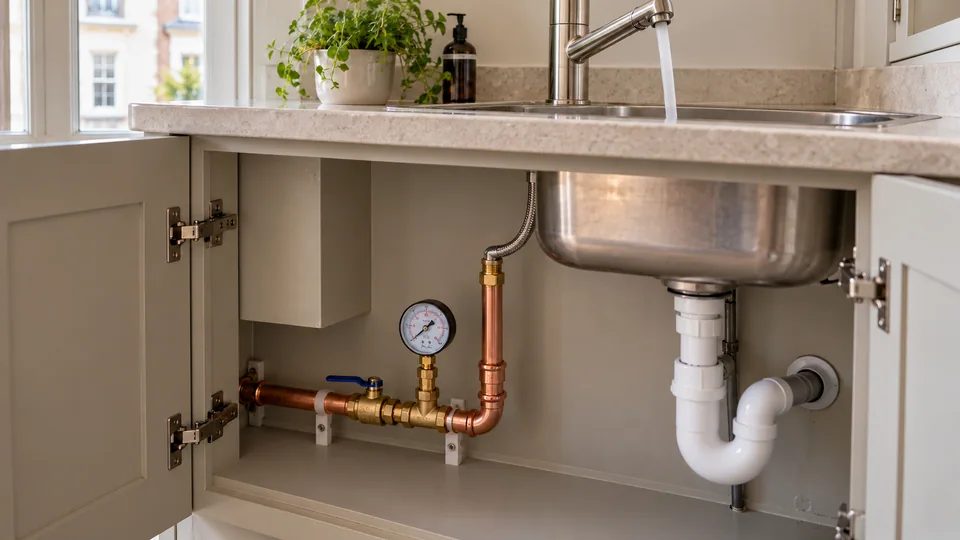
A pressure gauge connected to cold-water pipework beneath a utility sink while the tap runs
Assess pressure under demand, alongside available flow and the intended pattern of use.

02 · Measure under demand

Measure the conditions your new fittings will need

A strong pressure reading with the taps closed does not demonstrate how two showers will work together. Pressure and flow must be assessed under conditions relevant to the intended use.

Our assessment considers the incoming supply, available flow, running pressure and the route to the selected outlets. Pipe sizes, restrictive valves, existing pressure controls and changes in height can affect the result. Where conditions vary, further readings may be needed at relevant times.

We also discuss the household routine. Two bathrooms used separately create a different requirement from two showers and a kitchen tap running together. This agreed pattern of use helps establish the required duty and, where storage is appropriate, the reserve and refill needed.

Our guide to understanding water pressure and flow explains why these measurements answer different questions.

03 · Match the equipment to the requirement

Choose the arrangement, not just a bigger pump

Some properties need an obstruction or distribution problem resolved before boosting is considered. Others benefit from a dedicated system. We explain the suitable approach rather than make every project fit the same equipment.

A compact enclosed inline water booster connected to a dedicated copper supply in an accessible service cupboard
A compact booster may suit a modest improvement; it does not provide a substantial stored reserve.

Compact mains water boosters

A compact inline booster can suit a modest improvement where the incoming conditions and the selected product’s installation requirements allow it. It offers a small footprint without a substantial stored reserve.

Its available delivery still has to be shared between the outlets it supplies. A compact unit is not automatically a solution for several high-demand bathrooms.

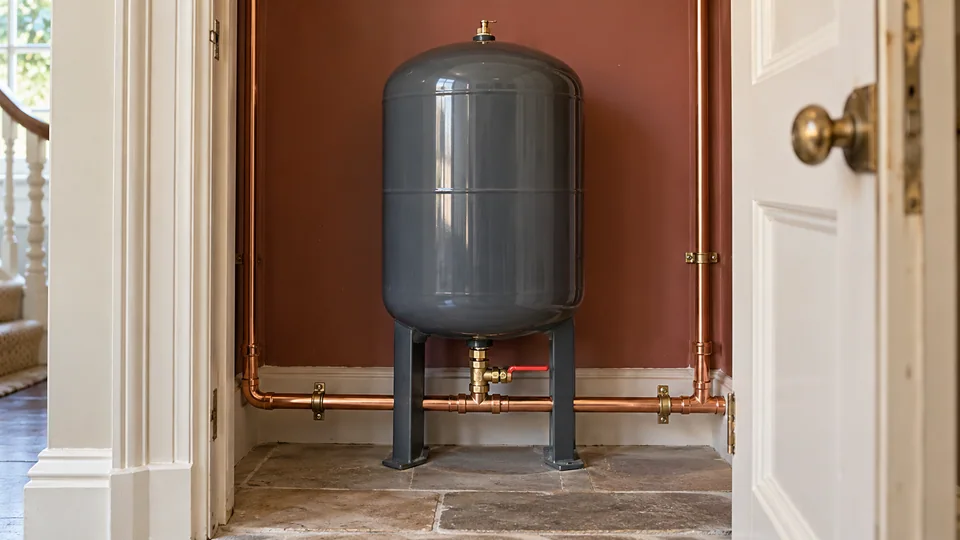
A vertical water accumulator connected by a single bottom branch to clipped copper distribution pipework
Useful stored water depends on charging pressure, usable reserve and replenishment—not nominal vessel volume alone.

Unpumped water accumulators

An accumulator stores water under pressure for release during periods of demand. An unpumped arrangement depends on sufficient incoming pressure to charge the vessel; it does not generate pressure above that charging pressure.

The useful water reserve is smaller than the vessel’s nominal volume and depends on its operating conditions. Selection needs to account for both the reserve available and how it replenishes.

Pump-assisted accumulator systems

A compatible charging pump can form part of an accumulator installation where that arrangement suits the assessed supply and demand. The pump, vessel, pressure controls and associated components must be specified together.

We consider the charging conditions and the period of use the reserve needs to support, rather than treating the vessel and pump as unrelated additions.

Break tanks and water booster sets

A tank-fed system stores cold water in a suitable atmospheric tank and supplies the property through a booster pump. This may be an integrated package or separate equipment arranged within a service space.

It can support demand above the incoming refill rate for a limited period, but storage is finite. Usable capacity, replenishment, pump duty and the duration of simultaneous use all matter. A break tank is not interchangeable with a pressurised accumulator.

For a fuller comparison, see our water booster and accumulator guide.

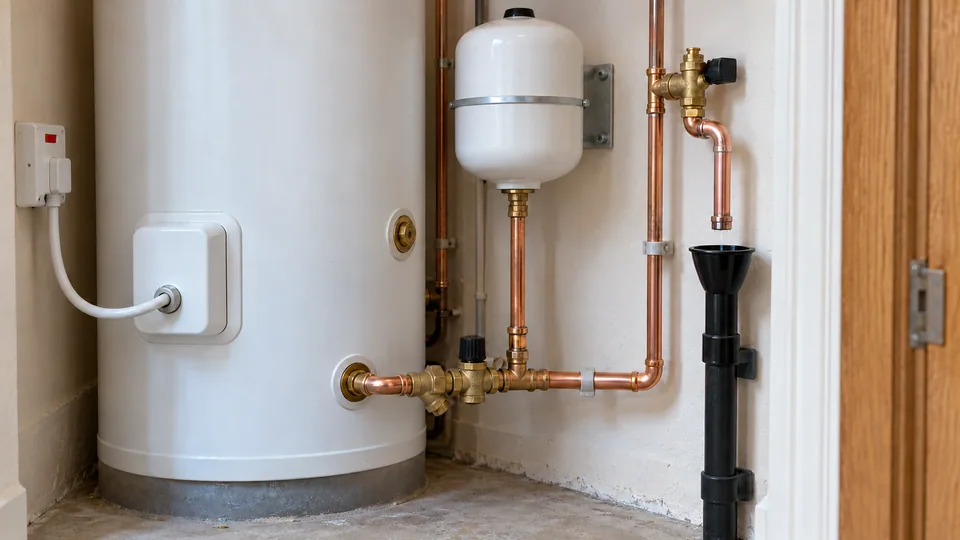
An unvented hot-water cylinder with accessible cold inlet controls and a visible tundish in a domestic service cupboard
Better cold-water delivery still needs to work with hot-water capacity, controls and distribution.

04 · Coordinate supply and hot water

Cold-water improvements still need the right hot-water system

The water reaching a bathroom has to work with the equipment producing its hot water. Improving the incoming supply is not a substitute for checking that equipment’s capacity and operating requirements.

Unvented cylinders

An unvented cylinder relies on its cold-water supply, but stored volume, recovery, pressure controls and distribution also affect performance. Hot and cold supplies to mixers must be considered together.

Where storage needs replacing or reconfiguring, our unvented cylinder installation in Earl’s Court can be coordinated with the supply proposal.

Combi boilers

A suitable booster may improve the water available to a combi boiler, but it cannot increase the boiler’s heating output. More incoming flow does not automatically provide two satisfactory hot showers at the required temperature.

If the hot-water arrangement itself needs changing, our boiler installation service in Earl’s Court can help establish the appropriate scope alongside the supply assessment.

05 · Plan access, support and vibration control

A cupboard that works after installation day

Equipment dimensions are only the starting point. The installed arrangement needs room for connections, isolation, inspection and eventual component replacement.

We consider the delivery route into the property, full operating weight and suitable support before equipment is ordered. In flats, stairs, doorways and access through communal areas can influence which arrangement is practical.

Pump location, mounting and pipe supports also affect noise and vibration. These details deserve attention near bedrooms and neighbouring homes; a powered system should not be promised as silent.

Cold-water storage needs appropriate conditions, water turnover and access for care. Required overflow and drainage arrangements, accessible isolation and the consequences of a leak belong in the plan. Our guide to water leak detection and automatic shut-off explains additional protection that may be appropriate.

For a larger equipment reorganisation, our heating and domestic plant-room installation service in Earl’s Court can bring the connected systems into one wider project.

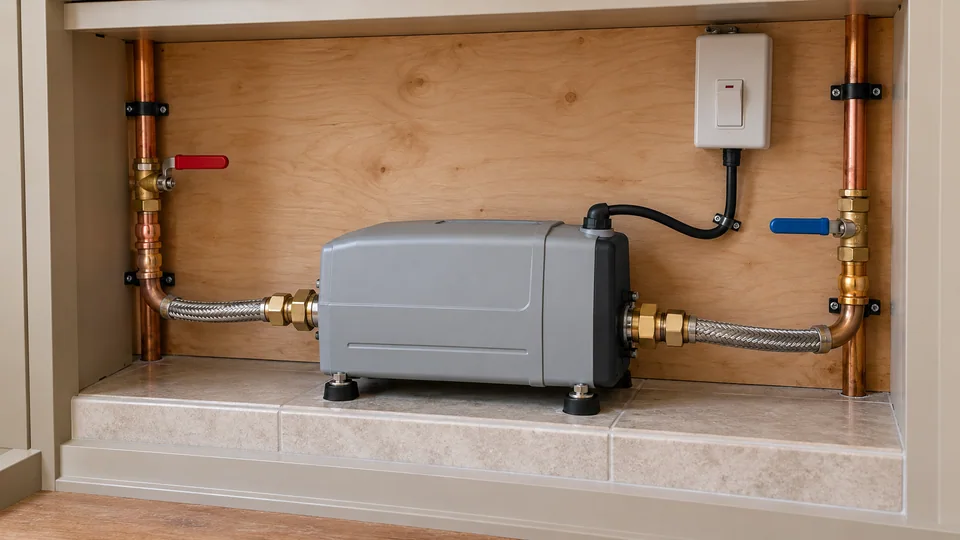
A tank-fed stainless booster pump with accessible isolation valves, supported pipework and anti-vibration mounting
Plan the connections, full operating weight, vibration control and service access—not only the equipment footprint.

One team · A defined installation

One coordinated hydraulic and electrical installation

PEP brings plumbing, heating and electrical work together. That matters when a supply upgrade needs more than a pump connected to the nearest pipe.

Depending on the agreed design, the quotation can cover:

  • Selection and supply of the booster, accumulator or tank arrangement.
  • Associated pipework, isolation and appropriate backflow protection.
  • Electrical supply, local isolation and compatible controls.
  • Connections to the retained or new hot-water installation.
  • Commissioning, operating information and maintenance requirements.

Our electrical installation service in Earl’s Court supports the relevant power and control work. Responsibilities for joinery, structural preparation, decoration and work by other contractors are agreed separately where required.

The quotation · Complete scope, clear exclusions

Water booster installation cost in Earl’s Court

The cost depends on the complete installation, not simply the pump’s purchase price. A compact inline unit and a storage-based system with new distribution pipework are different projects.

The main factors include the required duty, equipment and usable storage, installation access, pipework alterations, electrical work and integration with hot water. Building-management arrangements, specialist access, support and overflow routing may also affect the scope.

Your quotation should identify what is included, any optional work, VAT treatment and exclusions. Supply-pipe replacement, alterations to fitted furniture and making good should not be assumed to form part of every price.

The assessment may justify a smaller alteration instead of a new booster. Equally, choosing a unit solely because it is cheaper can leave the original demand unmet.

From the brief · To the tested handover

From the survey to a tested handover

  1. Describe the property and the change

    Send the postcode, property type, symptoms or renovation plans, and photographs of the supply and available space. We establish what needs assessing on site.

  2. Assess and agree the proposal

    We consider the supply, intended use and installation constraints, then explain the recommended arrangement, location, associated work and limitations in the quotation.

  3. Resolve access and permissions

    Necessary building-management arrangements, relevant water-company requirements and planned supply interruptions are addressed before the affected work proceeds.

  4. Install the agreed system

    We coordinate pipework, equipment, electrical connections and controls around the property and the agreed refurbishment programme.

  5. Test, record and explain

    Commissioning checks performance under the agreed operating conditions, alongside the relevant controls and protective functions. We explain operation, isolation and future care, with applicable readings and manufacturer information provided at handover.

Requirements · Permissions · Future care

Notification, water fittings and future care

Water-company notification and consent requirements, suitable backflow protection and the manufacturer’s installation instructions must be considered for the proposed arrangement.

Water Regs UK guidance states that a pump inducing demand above 12 litres per minute must be notified, whether connected directly or indirectly to the supply pipe. A break tank is not an automatic exemption; a smaller pump still has to meet the relevant requirements.

Future care depends on the selected equipment. Tank inspection, vessel checks and pump maintenance need appropriate access, and storage should suit the property’s usage. We explain these needs so that cupboards and finishes do not conceal essential service points.

Earl’s Court · SW5 addresses

Water pressure booster installation across Earl’s Court SW5

We welcome planned installation enquiries from homes around Earl’s Court Square, Nevern Square, Philbeach Gardens and Kenway Road, including SW5 addresses around Courtfield Gardens, Barkston Gardens and Bramham Gardens.

For properties towards West Brompton station or along Old Brompton Road, include the full postcode. Neighbourhood names overlap with Chelsea and Fulham; the address and actual building arrangements help establish the right next step.

For the wider service, explore water pressure booster installation across London and our London service areas.

Before you enquire

Questions before choosing a water pressure system

Will a booster help if only one shower is weak?

Not necessarily. A local restriction, valve or fitting may be responsible. We establish whether the issue is isolated or affects the wider supply before recommending a whole-property upgrade.

Can a water booster be installed in an Earl’s Court flat?

Potentially, subject to the supply, proposed equipment, available space and building requirements. The assessment includes access, noise, full operating weight and the relationship between private and shared services.

What if my flat shares its incoming supply?

We need to establish the shared arrangement and the scope of the private installation. Any work affecting communal services requires the appropriate coordination and permissions; a pump inside the flat is not automatically a suitable solution.

Can an accumulator work without a pump?

Yes, where sufficient incoming pressure and suitable charging conditions are available. An unpumped accumulator stores a pressurised reserve; it does not create pressure above its charging supply. Reserve and replenishment must match the intended use.

Can a small inline booster serve two bathrooms?

Bathroom count alone cannot answer that. The selected fittings, simultaneous use and available delivery determine suitability. A compact booster has no substantial stored reserve and may not meet the requirement for two showers running together.

Will boosting solve low hot-water flow from a combi boiler?

Only if the water supply is the relevant limitation and the proposed equipment is suitable. Boosting does not increase the boiler’s heating capacity. Its hot-water performance needs checking against the required use.

How much space and service access does the system need?

That depends on the equipment and its instructions. Allow for connections, isolation, maintenance and future removal, not just the tank or pump dimensions. The delivery route and supporting structure also need consideration.

Will the pump disturb neighbours?

Noise and vibration depend on equipment choice, location, mounting and the connected pipework. We consider these factors when planning the installation, particularly near bedrooms and adjoining flats, without promising silent operation.

What affects the installed cost?

The system type, required duty, storage, access, pipework, electrical work and hot-water connections all contribute. The quotation defines the agreed work and exclusions so that equipment-only prices are not mistaken for the complete project cost.

What permissions, notification and handover information are needed?

Requirements depend on the property and proposed system. We identify the relevant interfaces before installation and provide the applicable operating, commissioning and maintenance information for the equipment installed. Building permissions and water-company requirements must be addressed where necessary.

Earl’s Court SW5 · Plan the next step

Tell us what your flat or house needs to supply

Planning another bathroom, choosing new shower fittings or investigating water delivery that no longer suits your home? Send PEP the Earl’s Court postcode and a short description of what is changing.

Useful details include the property type and floor, existing hot-water arrangement, outlets you want to use together and photographs of the incoming supply and available installation space. You do not need to take your own pressure readings before contacting us.

We will help establish the assessment and installation scope needed for a practical proposal.

Discuss your Earl’s Court water pressure projectCall the plumbing team: 07843 676 480