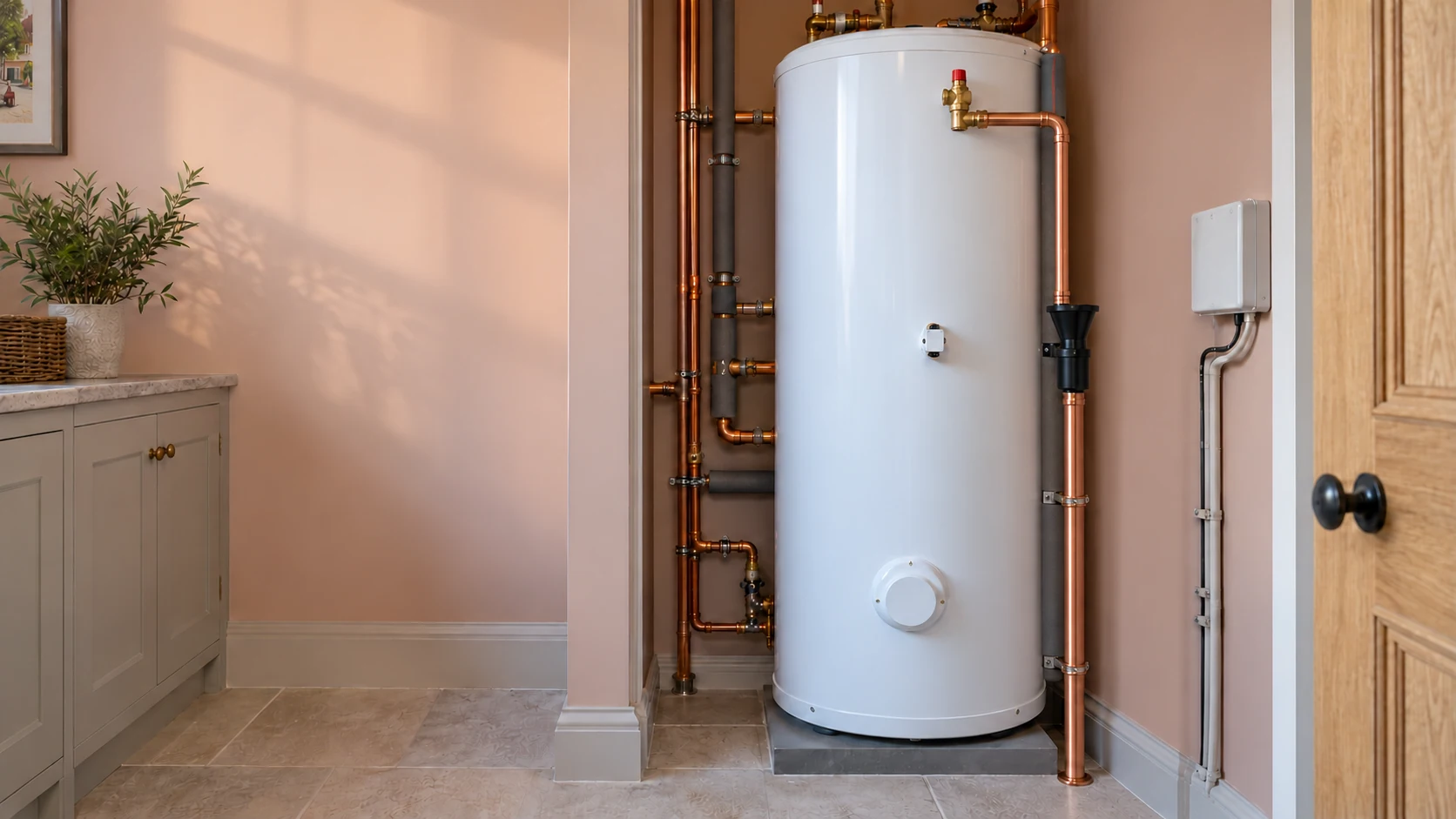


White hot-water cylinder with copper pipework in a warm, period-style utility room.

Stored hot water · Acton W3

Unvented Cylinder Installation & Replacement in Acton

A replacement that fits your home — and the way you use hot water.

A cylinder that needs replacing does not necessarily mean a new boiler. An extra bathroom does not automatically call for the largest tank. And an electric hot-water system in a flat needs a different plan from a boiler-heated installation in a family house.

Discuss your Acton cylinder installation

Plumbing enquiries: 07843 676 480

Cylinder replacement · Direct-electric installations · Vented-to-unvented conversions

Gas Safe RegisterNICEIC

PEP supplies and installs unvented hot-water cylinders across Acton W3. We establish the right scope for your property, from a focused replacement to a new installation, bringing the pipework, heating connections and electrical controls into one coordinated plan.

Choose the right starting point

What do you need the new installation to change?

Replace an existing cylinder

You may have a deteriorating vessel, an unsuitable capacity or equipment that no longer meets the household’s needs. We assess the cylinder and its connections before specifying a replacement. The aim is a dependable installation without extending the work beyond what the property requires.
Renew an electric hot-water system in a flat

If immersion heaters provide your hot water, the cylinder, electrical supply and controls need considering together. We check the existing arrangement rather than assume that every cupboard contains a boiler-heated cylinder or that a matching capacity means a straightforward swap.

Provide for a conversion or refurbishment

A loft shower, another bathroom or a change in occupancy can alter demand. Early planning establishes whether the existing storage remains suitable, whether a vented-to-unvented conversion makes sense and what the incoming supply can support.

A loss of hot water alone is not proof that the vessel needs replacing. An immersion heater, thermostat, valve or control fault may be repairable. The recommendation should follow the cause, not just the symptom.

The property matters

Plan the work around the home, not just the cupboard

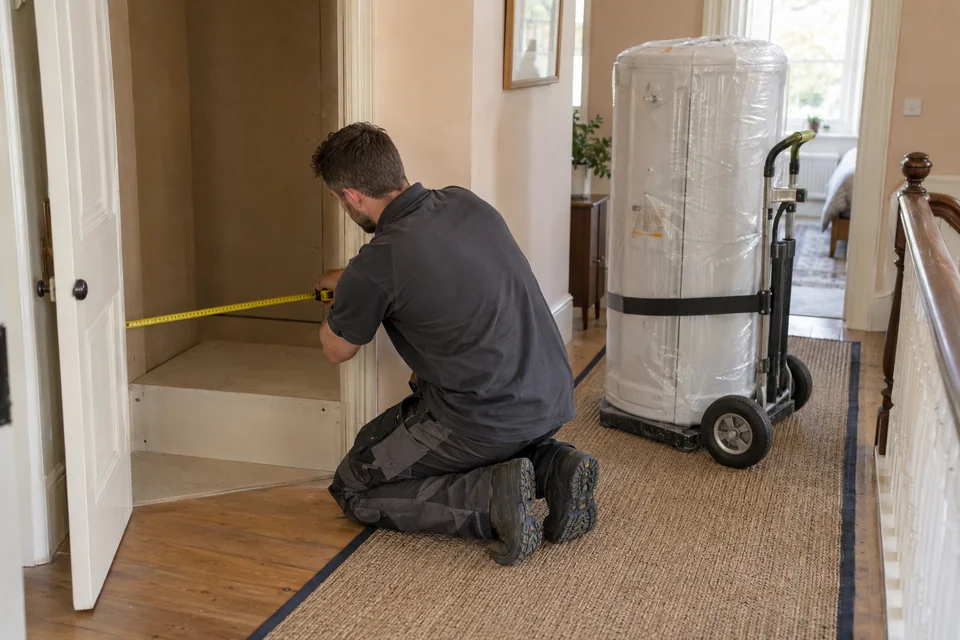
For a converted flat near Churchfield Road or Acton Central, getting equipment through the building may be as important as its dimensions inside the cupboard. Stairs, door openings, shared access and the route for removing the old cylinder belong in the installation plan.

In a house around Poets’ Corner, Acton Vale or West Acton, a refurbishment may offer a chance to improve the hot-water layout before floors and joinery are finished. Decisions about cylinder position and connections should be made while the builder and installer can still coordinate access.

For purpose-built apartments, we first establish what serves the individual flat. A communal heat supply, heat interface unit or thermal store should not be treated as an interchangeable unvented-cylinder installation. Responsibilities and the building’s arrangements need checking before equipment is specified.

Where bathrooms or distribution pipework are also changing, our plumbing installation service in Acton can bring those connections into the same programme.

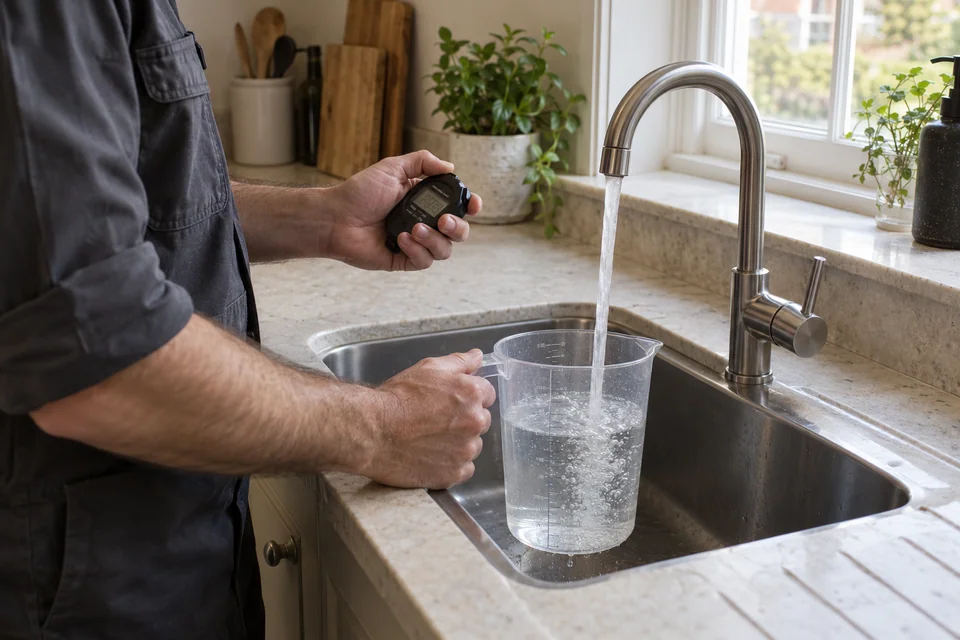
Installer timing water flow into a measuring jug beneath a kitchen mixer tap
Measuring outlet flow is one part of assessing the available water supply.

Performance before promises

Check what the water supply can deliver

An unvented cylinder stores hot water supplied from the mains. Its performance still depends on the available supply and the installation between that supply and your outlets.

We assess pressure and flow under relevant demand, alongside the distribution pipework and fittings. A healthy pressure reading with every tap closed does not establish what will be available when two showers are running.

If a restriction is limiting the system, simply fitting a larger cylinder will not remove it. Our guide to low water pressure and flow explains that distinction. Where assessment identifies a need for additional equipment, the home water-pressure booster guide outlines possible approaches. Any supply improvement is a separately considered part of the project.

Capacity with a purpose

Enough stored water, with the right recovery

A household using two showers each morning has a different pattern from one filling a large bath in the evening. We discuss when water is needed, which outlets will be used together and whether that pattern is likely to change.

Capacity is only part of the choice. Recovery — how the water is reheated after use — depends on the cylinder, heat source and controls. More storage does not automatically mean faster reheating.

We consider the usable reserve, recovery and space together. That produces a specification based on the household rather than a fixed number of litres for each bedroom or bathroom.

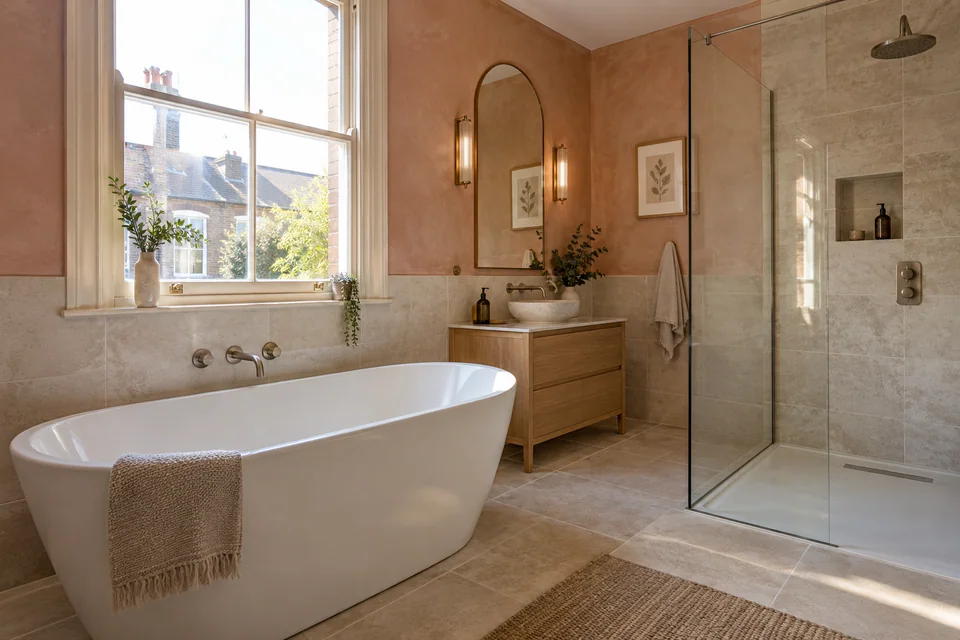
Warm period-house bathroom with a freestanding bath and separate walk-in shower
Storage and recovery should reflect how the household uses baths and showers.

Select the right arrangement

Direct-electric, indirect and Megaflo cylinders in Acton

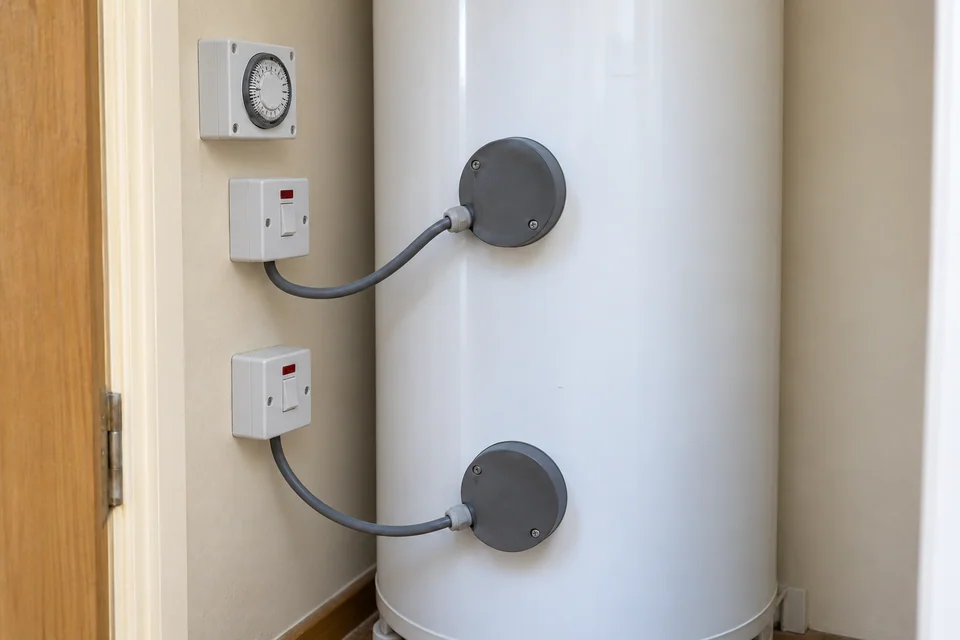
Two closed immersion-heater covers on a direct-electric hot-water cylinder with connected control cables
Direct-electric cylinders need coordinated immersion-heater supplies and controls.

Direct-electric cylinders

A direct cylinder uses electric immersion heaters. The installation needs suitable electrical provision and controls, with heating periods that make sense for the household and any applicable off-peak tariff. The word “electric” does not mean every existing timer, circuit or operating arrangement can be retained.

PEP coordinates the associated electrical services in Acton with the cylinder installation. We consider the supply and control requirements before the equipment is fitted.

Indirect cylinders

An indirect cylinder receives heat through a coil connected to a separate heat source, commonly a boiler. The coil, controls and heat source must suit the application. Where a heat pump is involved, the cylinder needs to be selected for that system; an indirect label alone does not establish compatibility.

Megaflo installation and replacement

Megaflo is a cylinder brand, not a generic name for every unvented system. For a Megaflo replacement in Acton, we identify the existing model and compare suitable options against your current requirements.

The specification should explain the proposed model, capacity, dimensions and installation needs. Different products have different expansion arrangements, component layouts and maintenance requirements. A slimline cylinder may solve a width restriction, but height and working access still matter.

A focused replacement

A new cylinder does not have to mean a new heating system

Before proposing wider changes, we look at the equipment already serving your home. A suitable boiler may continue to heat the new cylinder, provided its condition, heat output and control arrangements support the proposed installation.

The same assessment applies to existing pipework and components. Some can remain; others may need adapting or replacing to suit the new equipment. Safety arrangements are checked against the selected cylinder, not simply carried over because they fitted the old one.

We explain these decisions in the scope. If the heat source also needs changing, our boiler installation service in Acton can be coordinated with the cylinder work. It is a separate decision, not an automatic condition of replacement.

Moving away from gravity-fed storage

Vented-to-unvented conversion: more than a tank swap

Replacing gravity-fed hot-water storage changes how the domestic hot water is supplied. We assess the incoming water, distribution, existing heat source, controls and safety-discharge route before recommending conversion.

Removing a loft cistern also requires understanding what it serves. A domestic cold-water storage cistern and the feed-and-expansion cistern for an open-vented heating circuit have different jobs. Changing the hot-water system does not automatically make both redundant.

Our vented-to-unvented conversion guide explains the wider choices. The installation proposal then identifies the changes your particular home needs.

Installer measuring the width of an empty service cupboard beside a packaged hot-water cylinder
Cupboard dimensions and the access route belong in the installation plan.

Space for the complete installation

A cupboard that works after installation day

The vessel may fit, while the complete installation does not. Valves, connections, controls and maintenance clearances need space too. We check:

  • The delivery route and removal of the existing cylinder.
  • Suitable support for the equipment when filled.
  • Access to components that need inspection or replacement.
  • Pipework, isolation, electrical connections and safety discharge.
  • Any changes to doors, shelves, joinery or surrounding finishes.

For a larger refurbishment, our central heating and plant-room installations in Acton bring the cylinder position into the wider equipment layout. A more extensive plant room is an option for the appropriate project, not a requirement for every replacement.

Know what you are comparing

What affects unvented cylinder installation cost in Acton?

An accessible replacement in the same position can involve a different scope from a vented conversion or a cylinder moved across the property. Model and capacity matter, but so do the existing connections, electrical provision, discharge route and access.

Our proposal sets out the work to be undertaken, including:

  • The specified cylinder and associated components.
  • Equipment to be retained and connections to be altered.
  • The included electrical work and controls.
  • Removal, disposal, commissioning and documentation.
  • Access works, making good, exclusions and the VAT position.

If separate supply improvements, joinery or building work are needed, their responsibilities should be explicit. This gives you a meaningful basis for comparing quotations instead of comparing the cylinder price with an entire installation.

Plan your cylinder replacement

An agreed sequence

From the first assessment to working hot water

1. Establish the requirement

We discuss the existing arrangement, the reason for the work and the result you need. The assessment covers relevant supply, equipment and access conditions before the specification is agreed.

2. Agree the scope and programme

The proposal identifies the installation work and any prerequisites. For flats, these may include shared access or water-shutdown arrangements. Lease, freeholder or managing-agent requirements are checked where relevant, separately from Building Regulations.

3. Install and check the completed arrangement

Competent installation, appropriate safety arrangements and commissioning are part of the work. We coordinate the plumbing and electrical tasks, checking the controls and operation of the completed system. Any gas work is undertaken by appropriately qualified Gas Safe registered engineers; this is distinct from competence in unvented hot-water systems.

4. Hand over an installation you understand

We explain normal operation, provide the relevant commissioning and product information, and address compliance documentation through the applicable notification route. Manufacturer registration is not a substitute for Building Regulations documentation.

Expected interruptions to hot water are discussed before work starts. An occupied-home replacement needs a workable programme, not a blanket promise that every installation takes the same time.

After the installation

Know the controls, the warranty and the maintenance requirements

The handover should leave you clear about operating schedules, normal controls and the maintenance required by the selected manufacturer. Our unvented cylinder servicing guide explains why the cylinder needs attention separately from the boiler.

Warranty terms are specific to the product. Cover for the vessel can differ from that for electrical components, other parts or labour. We distinguish the cylinder’s terms from any separate boiler warranty and identify relevant registration and servicing conditions.

Plumbing · Heating · Electrical

One plan for the connections around the cylinder

The benefit of a coordinated team is practical: the pipe routes, electrical provision and controls are discussed together, and the space left for maintenance is considered before the cupboard is closed in.

PEP brings plumbing, heating and electrical work into an agreed scope. For a replacement, that keeps the focus on the connections that need attention. For a larger project, it helps the installer, builder and finishing trades work to the same arrangement.

See our heating and plant-room work across London for examples of the wider installations we undertake. Our London unvented cylinder installation service sets out the broader service.

Local coverage

Unvented cylinder installations across Acton W3

We cover Acton Central, North Acton, South Acton, East Acton and West Acton, including addresses around Churchfield Road, Poets’ Corner, Acton Vale and Mill Hill Park.

For Acton Green, Bedford Park and other boundary locations, send the full postcode with your enquiry so we can confirm the address and scope. Nearby projects are also covered through our unvented cylinder installation service in Ealing.

Where proposed alterations affect listed buildings, protected features or shared parts of a property, any relevant permissions need resolving before work begins.

Before you decide

Questions about cylinder installation and replacement in Acton

Can you replace the cylinder without changing my boiler?

Often the scope can retain a suitable boiler, but condition, compatibility and controls must be checked. We explain any necessary changes rather than assume the whole system needs replacing.

Does no hot water mean I need a new cylinder?

No. A fault with a heater, valve, thermostat or control may be responsible. Establishing the cause helps determine whether repair or replacement is appropriate.

Can you install a direct-electric cylinder in a flat?

Yes, where the property and services are suitable. Water supply, electrical capacity, controls, access and safety arrangements are assessed together before the installation is specified.

What if my apartment has communal heating or an HIU?

We first identify the equipment and the building’s responsibilities. An HIU or communal system cannot be assumed to accept a conventional cylinder replacement; the proposed work needs assessing against that arrangement.

Will unvented storage solve low water pressure?

Not by itself. Available mains supply, pipework and fittings can limit performance. We assess these before promising an improvement or recommending additional supply equipment.

How do you decide the capacity?

We consider the household’s usage, simultaneous demand, fittings, recovery and space. Bedroom or bathroom count alone does not establish the right size.

Can the new cylinder go in the existing cupboard?

Potentially. The check includes the delivery route, connections and service clearances, not just the cylinder’s diameter and height. Required cupboard alterations are identified in the scope.

Is Megaflo the only option?

No. The appropriate product depends on the system and project. If you prefer Megaflo, we assess a suitable model against the same requirements rather than select by brand alone.

How long will we be without hot water?

That depends on the agreed work and any shared-service arrangements. We discuss the expected interruption before installation; relocation or conversion can involve more work than an accessible replacement.

What is included in your quotation?

The specified equipment and agreed installation tasks, with responsibilities, exclusions and VAT made clear. Additional building work or supply upgrades are not assumed to be included without being identified.

What paperwork will I receive?

Relevant commissioning records, product and warranty information, and compliance documentation through the appropriate route. The documents depend on the work undertaken; one certificate does not cover every aspect of an installation.

Do you cover all parts of Acton?

We take installation enquiries across Acton W3 and nearby addresses. Include your full postcode, property type and a short description of the project so we can confirm the next step.

Acton W3 · Start with the right scope

Tell us what needs to work better

For an unvented cylinder installation or replacement in Acton, send your postcode, whether the property is a house or flat, and what you would like to change. Mention any additional bathrooms, refurbishment dates or access restrictions.

A photograph of the existing equipment, its visible model label and the surrounding cupboard can help the initial discussion. Only photograph what is safely accessible; do not remove covers or disturb connections.

We will establish what needs checking and help define a suitable installation for your home.

Discuss your Acton hot-water project