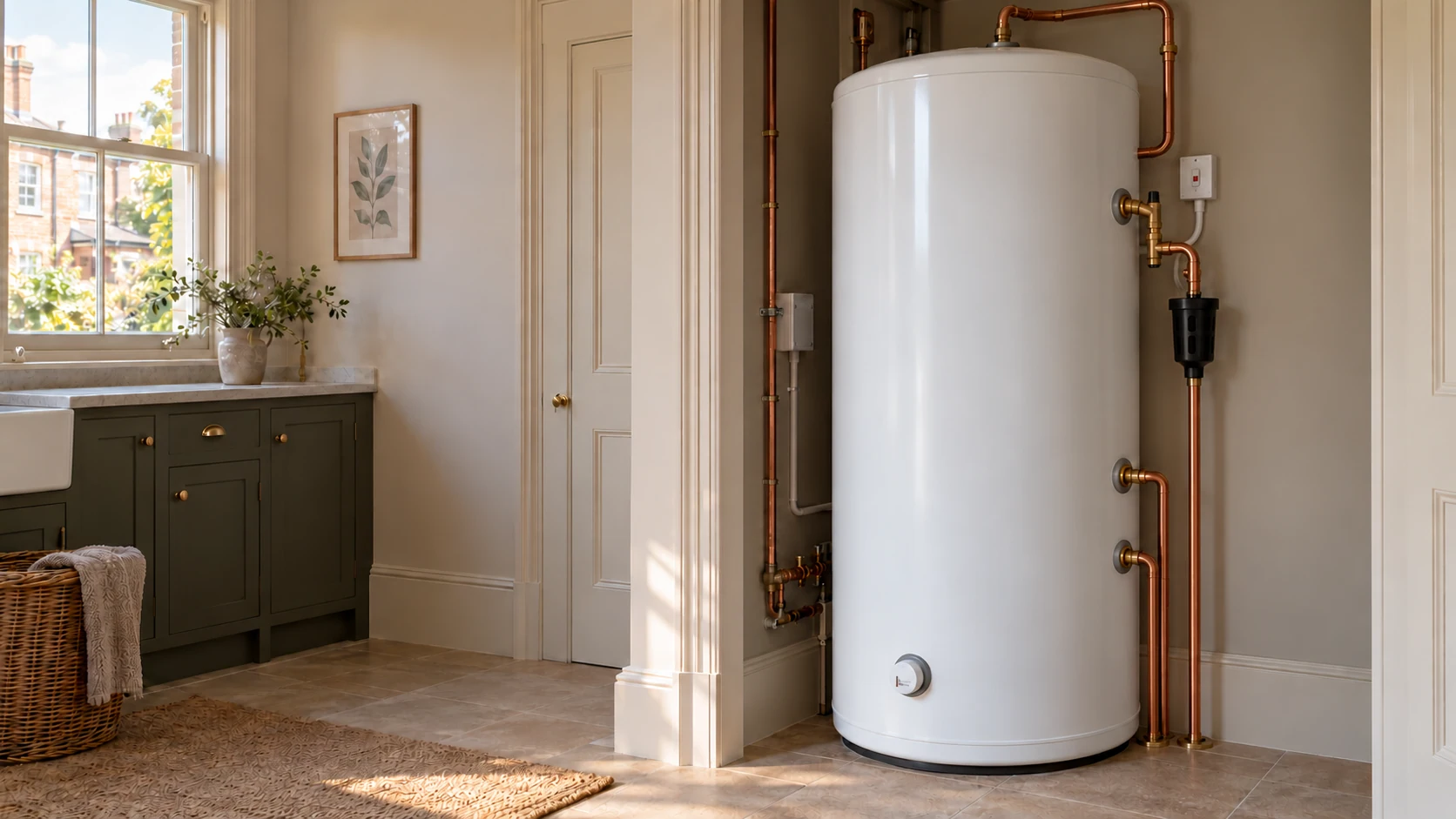


White hot-water cylinder with copper pipework in a warm, period-style utility room.

Stored hot water · Ealing W5 & West Ealing W13

Unvented Cylinder Installation & Replacement in Ealing

Hot water planned for the home you are creating.

A reliable replacement for an ageing cylinder. A properly planned supply for a new bathroom. Or a move away from gravity-fed hot water as part of a refurbishment. Each starts with the same question: what does your home actually need the installation to deliver?

Discuss your Ealing hot-water project

Plumbing enquiries: 07843 676 480

Cylinder replacement · New installations · Vented-to-unvented conversions

Gas Safe RegisterNICEIC

PEP supplies and installs unvented hot-water cylinders across Ealing W5 and West Ealing W13. We assess the existing system, select suitable equipment and coordinate the plumbing, heating connections and electrical work, with a clear installation scope before work begins.

Start with the right project

Which kind of hot-water project are you planning?

Replacing an existing unvented cylinder

If the vessel is deteriorating, leaking or no longer suitable for your household, replacement may be the right next step. We check the surrounding installation as well: a new cylinder should not inherit unsuitable controls, restricted connections or an unresolved fault.

Not every loss of hot water requires a new vessel. Problems involving an immersion heater, thermostat or valve may be repairable. Establishing the cause helps distinguish a necessary replacement from work that would not solve the problem.
Converting from vented hot-water storage

An unvented cylinder takes its cold-water supply from the mains rather than relying on a gravity-fed storage cistern. Conversion can be useful where the supply and property suit it, but it involves more than exchanging tanks. We assess the retained heating system, water distribution, controls and safety arrangements. Our vented-to-unvented conversion guide explains the choices in more detail.

Providing for another bathroom

A second shower may create a different requirement from an occasional guest bathroom. Tell us how the rooms will be used together, not just how many there are. We consider peak demand and recovery before recommending additional storage or a change to the supply.

Plan before finishing

Make the hot-water decisions before the rooms are finished

For an extension in Northfields or a loft bathroom in South Ealing, the cylinder position and pipe routes belong in the early planning. Agreeing them while floors and service routes are accessible gives the installer, builder and joiner a shared basis for the work.

In a period home around Ealing Common or Montpelier, the challenge may be retaining finished rooms while improving what sits behind them. We identify access needs and routes before treating relocation as a simple way to free a cupboard.

For flats around Ealing Broadway and West Ealing, we first establish whether the hot-water equipment serves the individual dwelling or belongs to a communal arrangement. A heat interface unit or thermal store is not automatically interchangeable with an unvented cylinder. Shared supplies, access and any freeholder requirements need considering against the actual work.

Where bathrooms or water distribution are also changing, our plumbing installations in Ealing can be planned alongside the cylinder rather than added as a separate problem later.

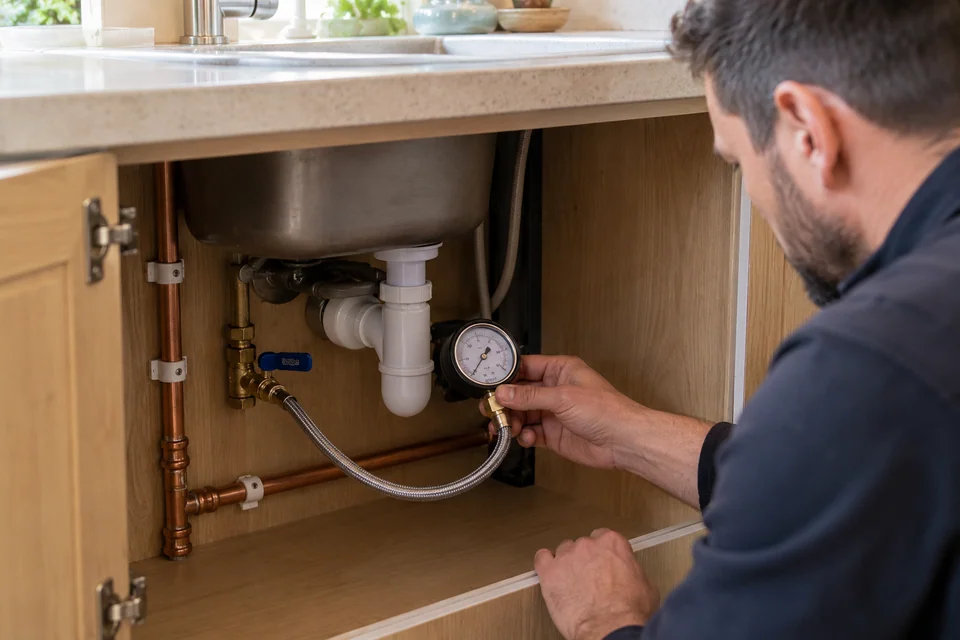
Heating engineer checking a pressure gauge connected to an accessible cold-water service beneath a utility sink
Water-supply checks come before cylinder selection.

Before choosing the cylinder

Will the incoming supply support the result you want?

A larger cylinder can store more hot water. It cannot make a restricted incoming supply deliver more water to the house. Before selecting equipment, we assess the supply under relevant demand and consider the distribution pipework and fittings.

A pressure reading taken with the taps closed is only part of the picture. The useful question is what remains available when the household is drawing water. That assessment informs whether the proposed outlets can work together and whether separate supply improvements are needed.

Our guide to low water pressure explains common limitations. Where the evidence supports an additional solution, we can assess water pressure boosters and storage systems as a separate, specified part of the project. A booster is not an automatic addition to every cylinder installation.

Storage and recovery

Size the hot-water reserve around your day

The right capacity depends on how water is used: a bath followed by showers, two bathrooms used simultaneously, or a household whose demand is spread throughout the day. We consider those patterns alongside the fittings you intend to use.

Recovery matters too. It describes how the stored water is reheated, and depends on the heat source, cylinder specification and controls. A bigger vessel is not a substitute for understanding the available heat input.

We weigh usable storage, recovery, space and running arrangements together. That gives you a reasoned specification instead of a cylinder selected solely from bedroom count or the dimensions of the old unit.

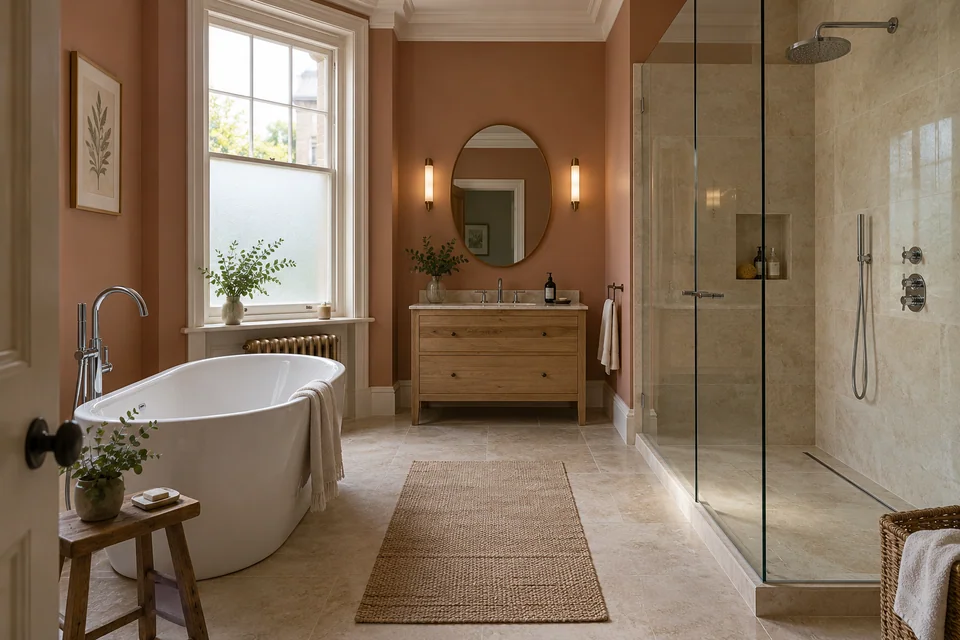
Period-style family bathroom with a freestanding bath and separate walk-in shower
Size stored hot water around the way the home is used.

Choose the right arrangement

Direct, indirect and Megaflo installations in Ealing

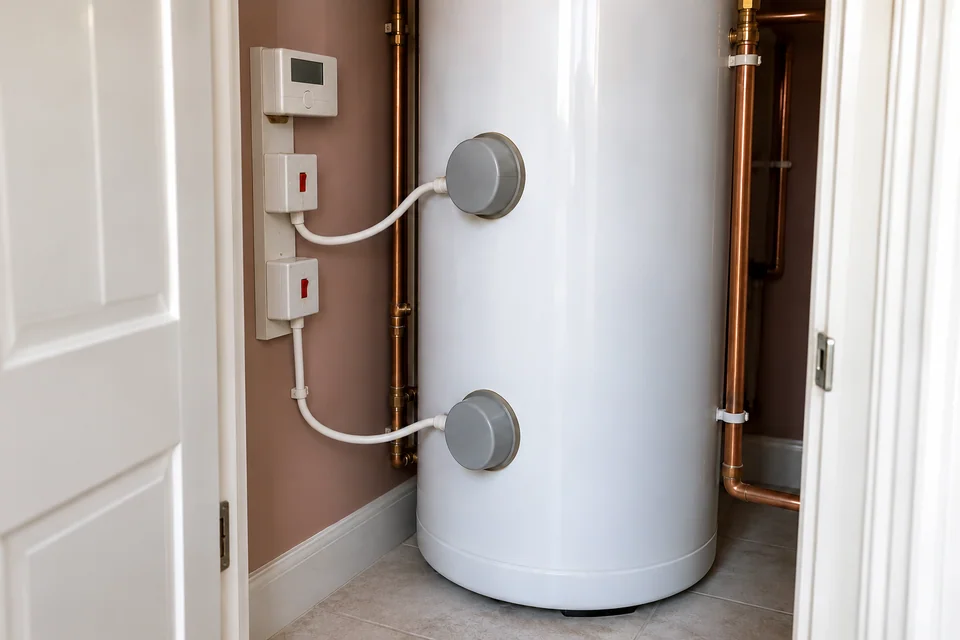
Direct electric hot-water cylinder with two closed immersion covers and neatly terminated wiring in an accessible cupboard
Direct electric storage with accessible immersion controls.

Direct electric hot-water cylinders

Direct cylinders use electric immersion heaters to heat the stored water. They can suit homes without a suitable boiler connection. The proposed installation must account for the electrical supply, controls and expected recovery, including how any off-peak arrangement will actually operate.

PEP coordinates the associated electrical installations and controls in Ealing with the plumbing work. The cylinder and its electrical provision are considered together.

Indirect cylinders heated by a boiler

Indirect cylinders receive heat through a coil connected to a separate heat source. We match the cylinder and controls to that source, including the arrangements for hot-water demand and safe temperature control. Where a heat pump is involved, the cylinder must be specified for that application; suitability should not be assumed from the word “indirect”.

Megaflo installation and replacement

Megaflo is a brand of unvented cylinder, not a description of every mains-fed storage system. If you want a Megaflo replacement in Ealing, we check the exact existing model and installation before recommending the replacement.

Options may include an appropriate Megaflo, Vaillant uniSTOR or another suitable current cylinder. We explain the choice in terms of heating method, capacity, dimensions and installation requirements. Slimline models can help with a narrow space, but height and access still need checking.

One connected system

Keep suitable equipment. Change what the new system needs.

A cylinder upgrade does not automatically require a new boiler. We assess the existing heat source, condition and control arrangements to establish whether it can serve the proposed storage. Retaining suitable equipment can keep the work focused on the actual requirement.

PEP works with Vaillant and Viessmann boiler systems. Compatibility must be checked at model and generation level, particularly where cylinder sensors or manufacturer controls are involved. Our heating controls and compatibility guide covers the broader considerations.

If the boiler also needs replacing, we coordinate that through our boiler installation service in Ealing. We distinguish the cylinder specification and warranty from any separate boiler package.

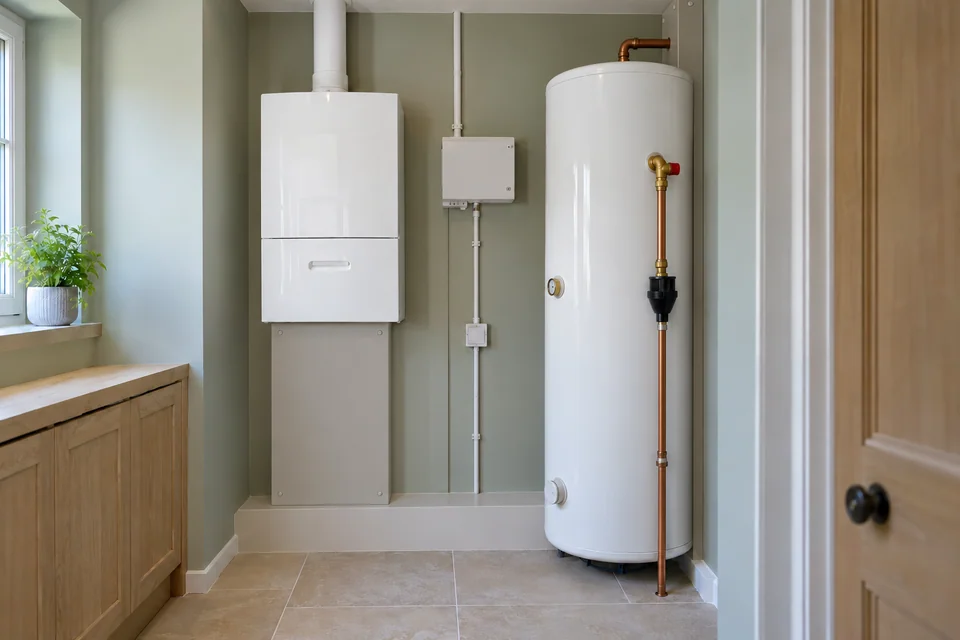
Boiler and indirect hot-water cylinder arranged with accessible controls and orderly pipework in a domestic utility room
The boiler, cylinder and controls need to work as one system.
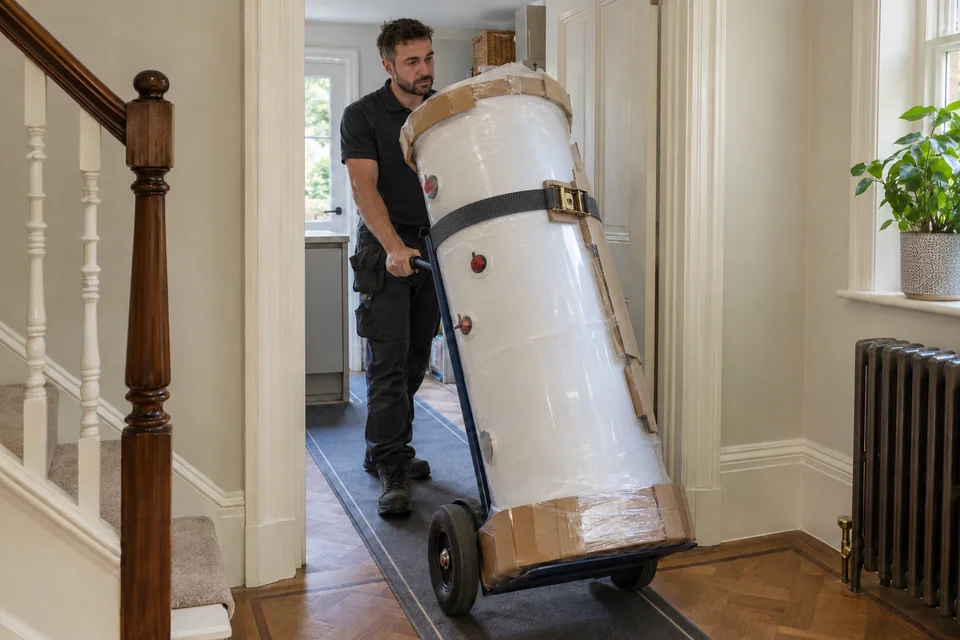
Installer moving a protected replacement hot-water cylinder through a clear doorway on a secured appliance trolley
A replacement needs a workable access route, not just a matching capacity.

Space for the whole installation

Plan a cupboard that remains serviceable

The installation needs more space than the outline of the vessel. Valves, expansion arrangements, electrical connections and future maintenance all affect the layout.

Before agreeing a position, we consider:

  • The route for bringing in the new cylinder and removing the old one.
  • Suitable support for the equipment when full.
  • Access to controls, immersion heaters and replaceable components.
  • Pipe connections, isolation and a suitable safety-discharge route.
  • Any opening up, cupboard alterations or reinstatement required.

These details are particularly important where new joinery is being designed around the equipment. For a more extensive installation, our central heating and plant-room work in Ealing brings the heating and hot-water layout into the same plan.

A clearly defined proposal

A quotation for the installation, not just the cylinder

A useful quotation tells you what will be supplied, what will be retained and what happens to the parts of the home affected by the work. We establish the agreed scope before installation.

  • The specified cylinder and associated components.
  • Changes to the water, heating and safety-discharge connections.
  • The electrical work and controls included.
  • Removal of redundant equipment and responsibility for disposal.
  • Commissioning, handover and applicable compliance documentation.
  • Access works, making good, exclusions and the VAT position.

Where another contractor is responsible for joinery, decoration or building work, that boundary should be clear. The same applies to permissions, shared services and anything that must be resolved before the installation can start.

Talk to PEP about the installation scope

From assessment to handover

From the first assessment to a usable, documented installation

1. Establish the brief

We discuss the current problem, the property and any planned changes. An assessment checks the relevant supply, equipment and access before the specification is finalised.

2. Agree the work and interruptions

The proposal identifies equipment, scope and responsibilities. We discuss the installation sequence and expected loss of hot water or other services so you can plan around the work.

3. Install and commission

The work is carried out by people competent for the relevant tasks, with the hot-water safety arrangements, controls and connections checked as part of commissioning. Any gas work requires appropriately qualified Gas Safe registered engineers; that is distinct from competence in unvented hot-water systems.

4. Explain and hand over

We explain normal operation and provide the relevant commissioning records and product information. The applicable Building Regulations notification route is established for the work; a manufacturer's warranty registration does not replace compliance documentation.

Ongoing maintenance is part of owning an unvented system. Our unvented cylinder servicing guide explains the purpose of servicing. The selected manufacturer's requirements and warranty conditions should guide the maintenance plan.

Compare the complete work

What affects cylinder installation costs in Ealing?

The equipment price is only one part of the total. A replacement in a usable existing position can involve a different scope from a vented conversion, a relocation or an installation for several new bathrooms.

Capacity and model matter, but so do access, pipe alterations, electrical provision, discharge arrangements and the condition of retained components. Work inside a flat may also need coordination around shared access or an agreed water shutdown.

PEP quotes against the assessed project. That lets you compare the complete proposed work rather than a headline “from” price with essential items left outside it. If you already have a specification or another quotation, include it with your enquiry so the scope can be understood.

Plumbing · Heating · Electrical

Plumbing, heating and electrical work with a shared plan

The cylinder sits where these trades meet. A workable plumbing layout needs the right electrical provision; the controls must suit the heat source; and the finished cupboard must still allow maintenance.

PEP brings those requirements into one coordinated installation scope. For a straightforward replacement, that means checking the connections that matter. For a refurbishment, it means resolving the hot-water arrangement with the wider programme before finished surfaces hide the routes.

You can see our heating and plant-room work across London for examples of the wider technical work we undertake. Our London unvented cylinder installation service sets out the broader service.

Local installations

Ealing W5 and West Ealing W13

We cover Ealing Broadway and Haven Green, Ealing Common, Montpelier, North Ealing, South Ealing and Little Ealing, alongside Pitshanger, Brentham and West Ealing. Northfields includes addresses in both W5 and W13; send your full postcode so we can place the project accurately.

For Hanger Hill and other boundary locations, we confirm the address and scope rather than assume the neighbourhood name defines one postcode. If the property is listed or within a conservation area, any relevant consent requirements must be checked for the proposed alterations.

Before you book

Questions about unvented cylinders in Ealing

Can you replace my existing Megaflo?

Yes. Send the model details and a clear photograph of the installation if these are safely accessible. We assess the equipment and connections before specifying a replacement, including whether the current capacity still suits the household.

Will a new cylinder fix a weak shower?

Not necessarily. The incoming supply, distribution pipework, valves or shower itself may be limiting performance. We establish the relevant cause before recommending a cylinder as the solution.

Can I keep my current boiler?

Potentially. Its condition, available heat input and compatibility with the proposed cylinder and controls need checking. A new cylinder is not, by itself, a reason to replace an otherwise suitable boiler.

Can both tanks in the loft be removed?

Only if neither remains necessary. A cold-water storage cistern and the feed-and-expansion cistern for an open-vented heating circuit serve different purposes. Converting the domestic hot water does not automatically convert the heating circuit.

Is a direct electric cylinder suitable for a flat?

It can be, subject to water supply, electrical provision, usable storage, space and safety arrangements. Where the building has communal heating or hot water, we first establish what belongs to the individual flat.

Can the cylinder be moved to another cupboard?

Possibly, after assessing access, support, service connections and discharge. The proposal also needs to identify changes to the existing cupboard and any building or finishing work at the new position.

How long will the installation take?

We confirm the expected programme after assessing the scope. An accessible replacement differs from a relocation or conversion. We explain planned interruptions rather than promise that every property will be completed within the same fixed period.

Do I need freeholder permission?

That depends on the lease, the work and whether shared or retained parts of the building are affected. Check the relevant requirements before work begins. Freeholder consent is separate from the Building Regulations process.

What paperwork and warranty information will I receive?

The handover includes the relevant commissioning and product information, with applicable compliance documentation through the appropriate route. We identify the warranty terms for the specified product; vessel cover can differ from cover for other components and labour.

Does the cylinder need servicing afterwards?

Yes. Arrange servicing to the manufacturer's requirements and keep the records. The maintenance needs of the cylinder are separate from the boiler, even when both appointments can be coordinated.

Ealing W5 & W13 · Plan the next step

Tell us what you need your hot water to do

For an unvented cylinder installation or replacement in Ealing, send your postcode, whether the property is a house or flat, and a short description of the current arrangement. Let us know about additional bathrooms, changes to occupancy or any refurbishment dates.

Photographs of the existing cylinder, its visible label and the surrounding space can help with the initial conversation. Only take them where safely accessible; there is no need to remove covers or disturb equipment.

We will establish what needs assessing and help define the next step towards a suitable, properly coordinated installation.

Discuss your Ealing hot-water project