
Acton W3 · Homes and private residential installations
Water Pressure Booster & Accumulator Installation in Acton W3
A stronger water supply starts with knowing what your property can receive — and what it needs to deliver.
Mains water boosters · Accumulator installation · Cold-water storage and booster sets

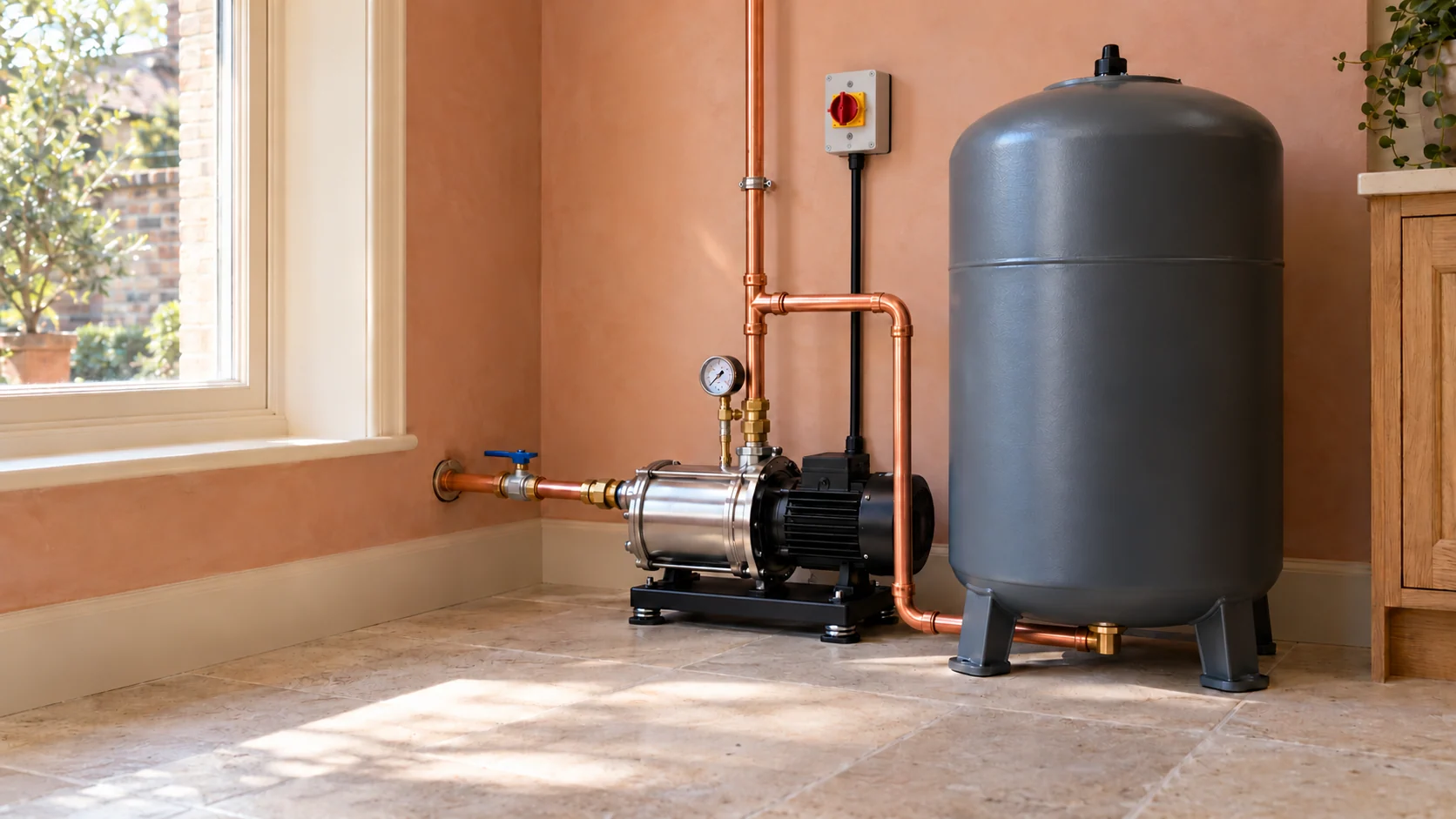
PEP plans and installs water pressure boosters, accumulators and cold-water storage systems for homes in Acton. We assess the incoming supply, the existing installation and the outlets you want to use together before recommending equipment.
For a house, converted flat or wider refurbishment, we bring the associated pipework, electrical provision and hot-water requirements into a clearly defined scope. Where the limitation belongs to a shared building supply, we identify that boundary before proposing private alterations.
Acton W3 · Houses · Converted flats · Refurbishments
A water-supply upgrade that suits your Acton property
A bathroom on the upper floor of a converted house presents different questions from a new en-suite in a family home. In an apartment, the route from the building supply to the flat may matter as much as the equipment inside the cupboard.
We start with the installation you have, rather than choose a pump because of the postcode or the number of bathrooms. Which outlets are affected? Has the problem always existed, or did it begin after other work? Is the supply private, shared or still to be established?
A renovation near Acton Central might offer access to replace a restrictive pipe run. A West Acton house with another bathroom may need a different balance of delivery and reserve. In a managed South Acton apartment, the first step may be checking the building-side arrangements with the responsible party. These are different assessment routes, not assumptions about every property in those areas.
If you are changing bathrooms, kitchens or utility spaces, our plumbing installation service in Acton can coordinate the new layout with the water-supply work.
01 · Understand the actual supply
Measure the supply before adding a booster
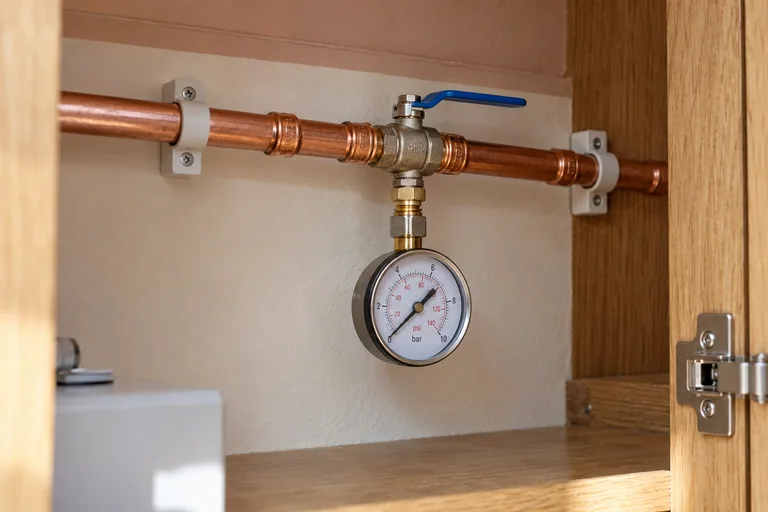
The reading on a pressure gauge is only part of the picture. Static pressure is measured without water being drawn; running pressure describes what remains during use. Flow is the volume delivered over time. Those measurements need to be considered together.
We investigate the relevant supply conditions, accessible valves and pressure controls, existing filters, pipe routes and affected fittings. Where practical, assessment includes the combinations of outlets that matter to the household, not just a single open tap.
The pattern can change the recommendation. One weak outlet may have a local restriction. Several outlets declining together may point towards a supply or distribution limitation. A sudden loss affecting neighbouring homes calls for a different response from a long-standing shortfall within one property.
Thames Water's advice on low pressure and loss of supply explains initial checks where a network issue may be involved. Our guide to low water pressure and flow in London homes helps distinguish the symptoms before installation is considered.
03 · Choose for the measured supply
Booster pump, accumulator or stored-water system?
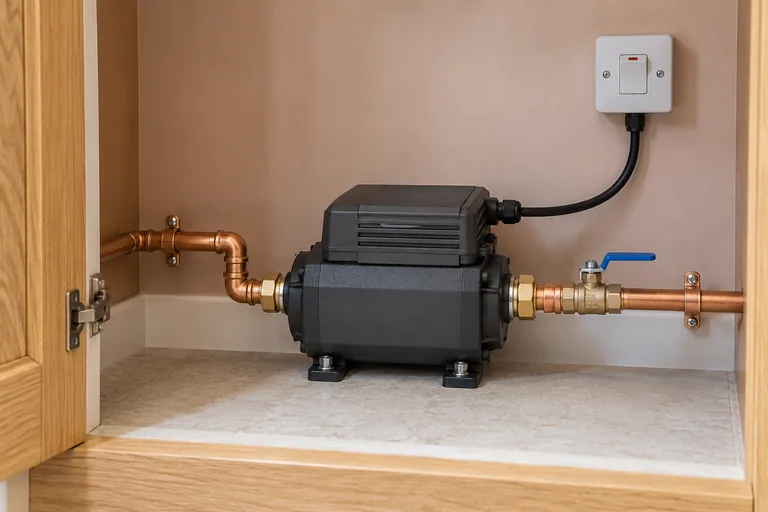
A compact inline mains booster
A compact unit may suit a modest improvement where the incoming supply and installation meet the selected product's requirements. It can be useful where equipment space is limited and the required duty falls within its operating range.
It is not an unlimited whole-house supply. The output available at the fittings depends on the incoming conditions, the pump and the connected installation. A small device should not be specified as though it were a larger storage-and-boosting system.
An unpumped or pumped accumulator
An accumulator holds water under pressure to support a period of use. An unpumped arrangement needs suitable incoming conditions to charge; a pumped system assists charging where that forms part of the design.
The reserve is finite. The vessel's nominal size is not the volume of water it can necessarily deliver, and replenishment matters between periods of demand. Selection needs to follow the required use and the chosen manufacturer's operating conditions.
Cold-water storage with a booster pump
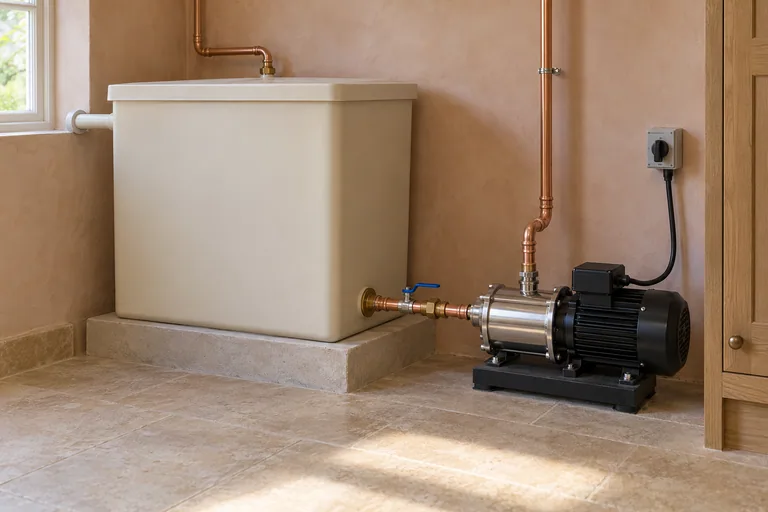
A storage-and-pump arrangement supplies the installation from a reserve of cold water. It may be appropriate where the project needs a different delivery duty or more usable storage than another solution can provide.
The tank, incoming refill, pump, controls and distribution must work together. We assess the intended draw over time; the pump's advertised output cannot establish how long the whole installation will sustain it.
04 · Simultaneous demand · Useful reserve · Refill
Plan for the outlets you actually want to use together
“Two bathrooms” does not define the water demand. A pair of low-flow showers has a different requirement from a large overhead shower used while a bath is filling. Duration matters as well as the number of open fittings.
We ask about the routine you want the installation to support: overlapping showers, a kitchen tap during the morning rush, or consecutive use after the first stored reserve has been drawn down.
A brief improvement can be misleading if the system cannot replenish sufficiently for the next period of use. Where relevant, the proposed duty and commissioning checks should consider usable reserve, refill and sustained demand, alongside the hot-water capacity.
The expected result and any limitations should be discussed before installation, then explained at handover. We do not promise a particular shower performance from bathroom count alone.
05 · Cold-water delivery · Hot-water capacity
Better cold-water delivery must work with the hot-water system
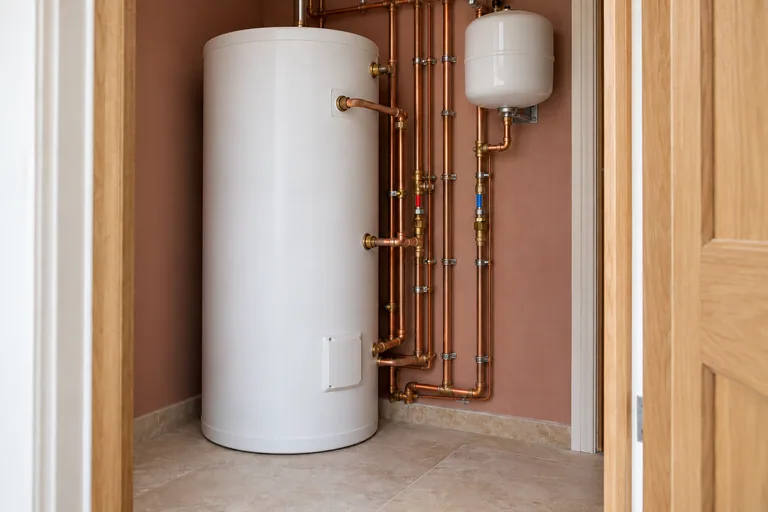
Unvented hot-water cylinders
An unvented cylinder stores heated water; it does not create an unrestricted incoming supply. Cylinder size, recovery, inlet controls and the pipework serving hot and cold outlets all influence the finished result.
If the existing cylinder also needs replacing, our unvented cylinder installation in Acton can be considered alongside the supply improvement. New storage and boosting remain separate decisions, even when they are installed within one coordinated project.
For a change from an older gravity-fed arrangement, see our vented-to-unvented conversion guide. An existing shower pump must not simply be assumed suitable for a different supply arrangement.
Combi boilers
A suitable booster can address a limitation in the cold supply to a combi installation. It cannot add heating capacity to the boiler. Hot-water output remains dependent on the appliance and the temperature rise required.
That distinction matters when another bathroom is planned. If hot-water production is the remaining constraint, the proposal needs to address it rather than leave you with stronger cold delivery and the same hot-water shortfall.
06 · Equipment location · Access · Vibration
Choose a practical location, not just an empty cupboard
Before equipment is selected, consider how it will enter the property, where the connections can run and how someone will reach the serviceable parts afterwards. A vessel's footprint is only one part of the space required.
The assessment may include filled weight and support, suitable environmental conditions, isolation, electrical provision and pipework access. A cold-water storage arrangement also needs appropriate hygiene, overflow and associated connection provisions.
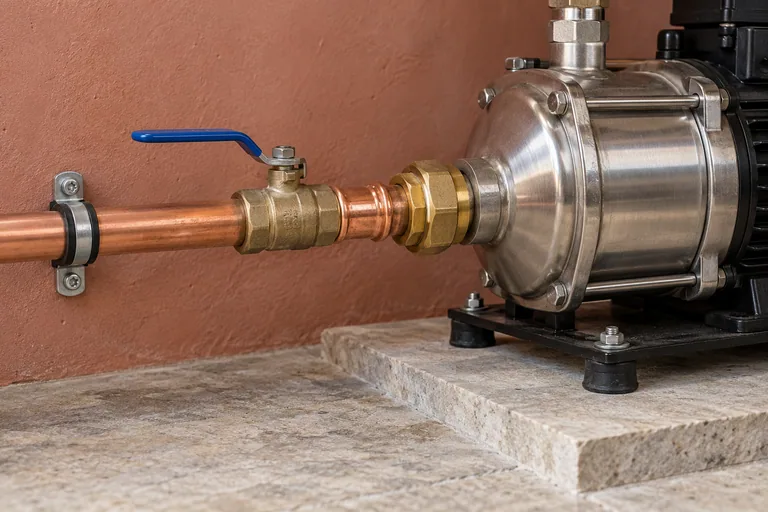
In a conversion or compact apartment, noise and vibration can be important. Mounting, pump selection, operating duty and the connected building services affect what is heard elsewhere. We consider these factors without promising that every pumped installation will be silent.
Where the work forms part of a larger equipment layout, our central heating and plant-room installations in Acton can be coordinated with the water system. You can also view our London heating and plant-room projects.
Plumbing · Electrical · Clear responsibilities
Know what is included in the installation
A useful proposal explains the work around the equipment, not only the model being supplied. PEP coordinates plumbing, associated electrical work and the connections to the retained hot-water installation within the agreed scope.
- The supply findings and intended operating requirements.
- Selected equipment, usable storage considerations and relevant controls.
- Pipework alterations, isolation and connections to existing services.
- Electrical supply and installation tasks where required.
- Access, water interruptions, making good and work by other parties.
- Applicable supplier requirements, commissioning and handover information.
Our electrical installation service in Acton can support the associated provision. If a supplier, managing agent or separate contractor must complete work first, that dependency should be stated clearly.
Complete installation · Defined inclusions
Water pressure booster installation costs in Acton
There is no single installation price that usefully covers a compact inline unit, an accumulator and a tank-and-pump system. They involve different equipment, capacities, connections and space requirements.
Costs also depend on access, pipework changes, electrical work and the condition of retained services. A straightforward private installation is not the same scope as a project requiring shared-service investigation or incoming-supply alterations.
We identify those elements before agreeing the work. The quotation should distinguish inclusions, exclusions, applicable VAT and any provisional investigation or work by others. A price for a small pump replacement is not a reliable comparison for a complete water-supply upgrade.
If refurbishment is already planned, raise the supply question before cabinets and finishes restrict the options. Early coordination makes the practical choices visible while routes and equipment locations can still be discussed.
From first enquiry · To checked handover
How we take an Acton project forward
1. Describe the installation and the problem
Send the postcode, property type and existing hot-water arrangement. Explain which outlets are affected and which should work together. For a flat, tell us what is known about shared services or managing-agent involvement.
2. Assess and define the work
We investigate the relevant supply conditions, equipment and accessible routes. The proposal identifies the selected approach, what remains to be confirmed and the responsibilities around the installation.
3. Install with the connections planned
Work is sequenced around access, other trades and agreed interruptions. Equipment, pipework and associated electrical provision are coordinated rather than treated as unrelated additions.
4. Check operation and explain the system
Commissioning considers the agreed requirements and relevant combinations of use. Handover covers controls, maintenance access and conditions that can affect the available performance.
Supplier requirements · Ongoing care
Check supplier requirements and plan for maintenance
Water Regs UK guidance on pump and booster notification states that the water undertaker must be notified where a pump induces demand exceeding 12 litres per minute. This applies whether the connection to the supply pipe is direct or indirect.
A storage tank is therefore not an automatic exemption. The requirements for the proposed installation, any consent arrangements and responsibility for addressing them need to be established before work proceeds.
Follow the selected equipment manufacturer's care requirements after installation. Keep access to filters, controls and serviceable parts available. If household use or the connected system changes substantially, the original assumptions may need reviewing.
Acton W3 · Full postcodes for boundary locations
Water booster installations in Acton W3 and nearby areas
We welcome planned installation enquiries across Acton Central, the town centre and Churchfield Road area, Poets' Corner, Acton Vale, Acton Town and Mill Hill Park. Our Acton coverage also includes West Acton, relevant Creffield addresses, North Acton and Horn Lane, together with South Acton and Acton Gardens.
Send the full postcode for boundary locations. East Acton includes addresses beyond W3, while parts of the Creffield area meet W5. North Acton and Park Royal also need address-specific confirmation; neither name means that every NW10 property belongs to the same local area.
For neighbouring W5 and W13 projects, see water pressure booster installation in Ealing. W4 addresses around Acton Green and Chiswick are covered by our Chiswick water booster service. For W12 enquiries, our Shepherd's Bush water booster page provides the neighbouring service information.
The London water pressure booster installation service explains the wider offer. Our Acton service coverage brings the related local installations together.
Before you enquire
Questions about water boosters and accumulators in Acton
Can you install a water booster in an Acton flat?
Potentially. We first need to understand the private supply, any shared equipment and the permissions or access relevant to the proposed work. The cause may be within the flat, in shared distribution or elsewhere in the supply.
What if the whole building has weak water delivery?
That needs investigation of the building-side arrangement. The owner or managing agent may need to arrange access or checks on shared pipework and equipment. A private booster should not be assumed to resolve an unidentified communal problem.
Does every low-pressure property need a pump?
No. A valve, fitting or pipework restriction may be the limiting factor. Network problems and hot-water limitations can also require a different response. Assessment should determine whether boosting is appropriate.
Can an accumulator work without electricity?
An unpumped accumulator can charge from suitable incoming conditions without a charging pump. Whether that arrangement is appropriate depends on the supply and required reserve. Pumped accumulators and tank-and-pump systems have different requirements.
How is the accumulator size chosen?
We consider the required duty, charging conditions, usable water reserve and time available for replenishment. The vessel's nominal capacity is not a universal statement of how much usable water it will deliver.
Will a booster let two showers run together?
Only if the supply, selected equipment, distribution and hot-water system can support the intended combination for the relevant duration. The expected result needs establishing before installation, not assuming from the bathroom count.
Can a booster improve hot water from a combi boiler?
It may help if incoming cold delivery is the limiting factor and the arrangement is suitable. It cannot increase the boiler's heat output. Its hot-water capability still needs to match the proposed use.
Should I replace the cylinder at the same time?
Not automatically. The cylinder and water supply should be assessed together, but a storage change and a supply improvement solve different limitations. We explain whether either or both belong in the agreed work.
Can the installation go in a small cupboard?
Possibly, depending on the equipment and required duty. There must be suitable space for connections, support and maintenance, not just enough room to stand the vessel or pump. A more demanding system may need another location.
Will the equipment be silent?
No universal noise promise is appropriate. Equipment selection, mounting, pipework and the building influence sound and vibration. We consider location and likely disturbance when planning the installation.
Does a break tank remove the need to notify the water supplier?
No. Pump notification requirements can apply to indirect as well as direct connections. The relevant requirements and responsibilities must be checked for the proposed arrangement.
What should I send with an Acton installation enquiry?
Provide the full postcode, property type, current hot-water system and the problem or planned changes. Describe simultaneous use and any known shared services. Plans and clear photographs of existing equipment and available space can help establish the next step.
Acton W3 · Plan the right installation
Start with the water delivery your home needs
Whether you are improving an existing installation or planning another bathroom, tell us what needs to work better and how the property will be used.
PEP can assess an appropriate installation scope for the supply, equipment and associated work. For a flat or managed property, include what you know about the building services so the project starts at the right boundary.