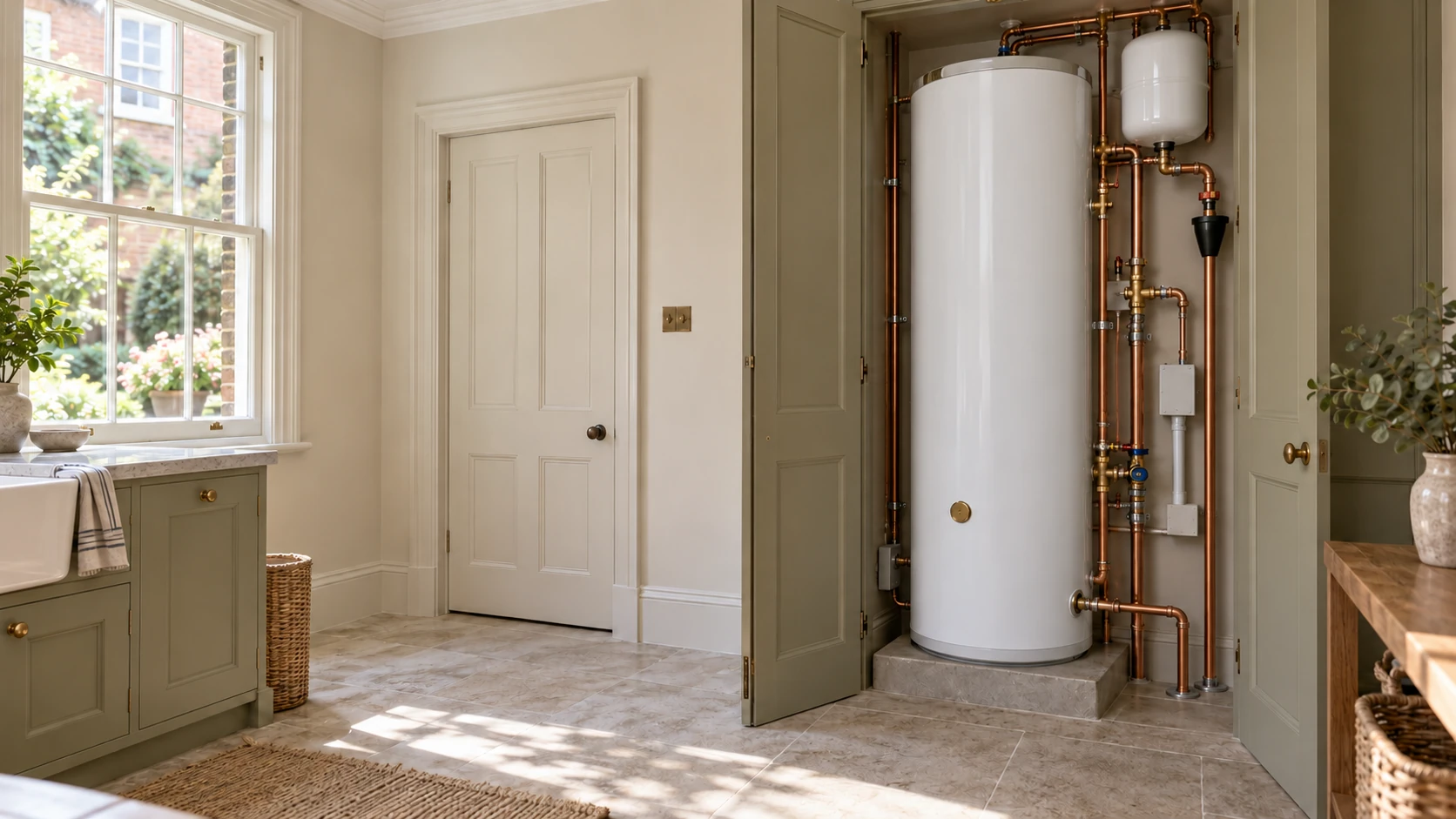
Unvented hot-water cylinder and copper pipework in an Edwardian-style utility room

Chiswick W4 · Hot-water installation & replacement

Unvented Hot Water Cylinder Installation & Replacement in Chiswick, W4

Hot water planned for the home you are creating.

An extra bathroom should make mornings easier. A replacement cylinder should solve the problem that prompted the change. Both start with understanding what your home needs from its hot-water system.

PEP designs, supplies and installs unvented cylinders in Chiswick, bringing qualified hot-water installation, plumbing and electrical controls together. From a straightforward replacement to a renovation with several bathrooms, we plan the equipment, connections and access as one practical installation.

Qualified unvented hot-water work
Heating · Plumbing · Electrical controls

Gas Safe RegisterNICEIC

01 · Replacement · Conversion · A changing home

Replacing a cylinder — or changing what your home needs?

Not every hot-water problem calls for a new cylinder. A failed control, restricted valve or heating fault may be repairable. We establish what is wrong before recommending replacement.

An existing cylinder needs replacing

We review its condition, heating method and performance alongside the surrounding installation. Replacing the vessel is an opportunity to correct unsuitable connections and improve maintenance access, rather than repeat the same limitations.

A gravity-fed system no longer suits the household

A suitable unvented conversion can remove dependence on a cold-water storage cistern for hot-water supply. It first needs a viable mains supply, compatible distribution and a safe installation arrangement. Our vented-to-unvented conversion guide explains what changes and what may remain.

The property is gaining another bathroom

Tell us what is being added and how you expect to use it. The specification should reflect the finished home, not simply match the cylinder already in the cupboard.

02 · Chiswick homes · Planning the next chapter

Plan the hot water before the extra bathroom is finished

A loft en-suite and the family bathroom below may be used at the same time. A large bath can use a substantial part of the stored hot water. Moving a kitchen can change pipe routes without necessarily creating a need for a larger cylinder.

We discuss those details while layouts are still adjustable. This helps establish where equipment belongs, which existing services can stay and what the builder needs to allow for before floors and cupboards are closed.

Our Chiswick coverage includes Bedford Park, Turnham Green, Grove Park, Strand-on-the-Green, Gunnersbury and Acton Green addresses within W4. In a period house, preserving finishes may shape the routes; in a converted flat, access and shared supplies may be the deciding factors.

For a wider refurbishment, our Chiswick central heating and plant-room service brings the heating and hot-water design together. A cylinder replacement can equally remain a clearly defined standalone project.

03 · Three parts of hot-water performance

Two showers need more than a larger cylinder

An unvented cylinder stores hot water under pressure from the incoming supply. It does not manufacture pressure or compensate automatically for an inadequate connection.

We consider three different parts of the performance:

  • Available supply: pressure while water is flowing, sustainable flow and restrictions between the incoming connection and the outlets.
  • Usable storage: the hot water needed for the household’s pattern of showers, baths and other use, allowing for mixing at the outlets.
  • Reheating: how quickly the selected heat source and cylinder can replenish the store between periods of demand.

A static pressure reading alone cannot establish whether two showers will perform well together. Nor should cylinder capacity be selected from bedroom count alone.

Where supply is the limiting factor, we explain the findings before recommending equipment. Our guide to low water pressure and flow explains the distinction; the home water booster guide covers additional options where the assessment supports them. Boosting is a separate design decision, not a standard extra attached to every cylinder quotation.

04 · The right cylinder for the actual system

Direct, indirect, slimline and Megaflo options

Direct electric hot-water cylinders

A direct cylinder heats its stored water using electric immersion heating. In an electrically heated flat, capacity, reheating time, electrical provision and operating schedules all matter. We review the timer and any off-peak arrangement so normal heating and occasional boost functions are understood.

Indirect cylinders connected to a boiler

An indirect cylinder transfers heat through an internal coil. Its performance depends on the coil, boiler, connecting pipework and controls working together. A suitable existing boiler can often be retained; we assess compatibility rather than assume everything needs replacing.

Where the heat source also needs changing, our boiler installation service in Chiswick covers the combined project.

Megaflo installation and replacement

We can assess Megaflo and other suitable unvented cylinders against your requirements. Megaflo is a product range, not a generic description of every pressurised cylinder. The particular model, heating method, expansion arrangement and available space determine suitability.

A slimline model may help with a narrow cupboard, but additional height and service clearances still need checking. If a heat pump is planned later, tell us now: a cylinder suitable for today’s boiler is not automatically appropriate for a future low-temperature heat source.

05 · Space · Delivery · Safe discharge

Choose the location before ordering the cylinder

The cupboard dimensions are only the beginning. We check the delivery route, removal of the old equipment, support for the filled cylinder and access to valves, immersion heaters and controls.

Moving the cylinder can release useful space, but a loft or utility cupboard is not automatically a suitable destination. The pipe routes, maintenance position and safety discharge arrangement must work there too.

We establish a compliant route for discharge from the safety devices before committing to a location. That requirement cannot be left for the final day or treated as an ordinary waste connection.

Any necessary building permissions and alterations to retained finishes are identified as part of planning. For protected buildings or external changes, the requirements depend on the particular property and proposed work.

06 · Private equipment · Shared building

Cylinder replacement in Chiswick flats and conversions

In a flat, the equipment inside the airing cupboard may rely on services controlled elsewhere. We establish what is private, what is shared and whether the managing agent needs to coordinate access or isolation.

The survey also identifies the actual system. A direct electric cylinder, a thermal store and a heat interface unit connected to communal heating are not interchangeable products.

For an appropriate direct-cylinder replacement, we coordinate the plumbing with the required power supply, protection and controls. Where shared services or building rules affect the programme, those dependencies are explained before an installation date is agreed.

07 · Heating · Plumbing · Electrical interfaces

One coordinated installation, from pipework to controls

The cylinder must call for heat correctly, stop heating when required and retain its independent safety functions. The customer should also know which setting controls everyday hot water and when an immersion boost is being used.

PEP coordinates those interfaces with our Chiswick electrical installation team. Our heating controls guide explains the wider choices where a refurbishment includes new zones or control equipment.

On larger layouts, we can assess whether a secondary hot-water circulation arrangement is justified. It can reduce waiting at distant outlets, but adds pipework, controls and heat losses. It should be designed deliberately, not presented as a universal upgrade.

Where the project also includes underfloor heating in Chiswick, space-heating circuits and domestic hot-water demand are coordinated without confusing their different requirements.

08 · A clear sequence from enquiry to handover

From first assessment to working hot water

  1. Understand the brief. We discuss the existing arrangement, the reason for changing it and the household’s expected use. Photos and drawings help, but you do not need a completed refurbishment design to enquire.
  2. Survey and specify. We assess supply, equipment condition, location, access, distribution and heating compatibility. The proposed solution identifies the cylinder and associated work.
  3. Agree the scope and programme. We set out the shutdown, removal, installation and commissioning sequence, together with dependencies on builders or building management.
  4. Install and commission. The work includes the specified connections, controls and safety provisions, followed by checks of the completed arrangement and hot-water operation.
  5. Explain and document. We demonstrate normal use, identify the relevant documentation and explain the maintenance requirements for the selected product.

Broader alterations to bathrooms or distribution pipework can be coordinated through our plumbing installation service in Chiswick, with the additional scope made clear.

09 · Specify the scope before comparing prices

What affects cylinder installation cost in Chiswick?

A replacement in the same position is a different project from relocating a cylinder or converting a gravity-fed system. Even a nominally like-for-like replacement needs checks on the existing safety arrangements and retained services.

Your written quotation should make clear:

  • the cylinder specification and included valves, expansion components and controls;
  • pipework, safety discharge, electrical work and any supply alterations;
  • access arrangements, removal and disposal of the old equipment;
  • commissioning, relevant notification and documentation;
  • making good, exclusions, allowances and the VAT treatment.

We price the assessed installation rather than advertise a figure that assumes every cupboard, connection and discharge route is already suitable. For a renovation, separate cylinder work and wider system changes can be identified so you can compare the scope properly.

Ask PEP to assess your cylinder replacement

10 · Documentation · Product cover · Maintenance

Clear paperwork and product-specific aftercare

Unvented hot-water work requires appropriate competence. We establish the applicable Building Regulations notification or certification route; a commissioning record does not replace compliance documentation.

Manufacturer cover also needs reading accurately. A long warranty on the cylinder’s inner vessel is not the same as identical cover for valves, electrical components or installation labour. We explain the terms for the specified product, including registration and maintenance conditions.

Keep the instructions and installation records accessible. Regular servicing checks the safety equipment and operation; follow the manufacturer’s maintenance schedule. Our unvented cylinder servicing guide explains what ongoing care involves.

Before you book

Before booking your Chiswick cylinder installation

Do I need a bigger cylinder for a loft en-suite?

Not necessarily. The decision depends on existing usable storage, shower demand, simultaneous use and reheating. We assess the new bathroom alongside the rest of the household, rather than add a fixed number of litres for each room.

Will an unvented cylinder run two showers together?

It may be a suitable solution, but the incoming supply and distribution must support the combined demand. Storage determines how much hot water is available; it does not remove a flow restriction.

Can I keep my existing boiler?

Often, subject to its condition, output and compatibility with the proposed indirect cylinder and controls. A direct electric cylinder uses immersion heating instead. We identify which arrangement is appropriate before specifying equipment.

Can the cylinder move into a loft or utility cupboard?

Possibly, after checking access, support, clearances, connecting services and a compliant safety discharge route. An empty space on a drawing is not enough to confirm installation suitability.

Will both tanks in the loft be removed during a conversion?

Not automatically. The cold-water storage cistern serving hot water and the separate feed-and-expansion tank for an open-vented heating circuit have different jobs. Heating arrangements must be assessed separately.

Can you replace a direct electric cylinder in a flat?

Yes, subject to survey and any building-management requirements. We assess the cylinder, electricity supply, timer or off-peak controls, discharge and access as part of the same installation.

How long will we be without hot water?

The shutdown depends on the agreed work, access and condition of retained services. We explain the expected interruption before starting, rather than promise every replacement or conversion can follow the same timetable.

What should I send for an initial enquiry?

Your postcode, reason for the change and photos of the existing equipment and available space are useful. Include proposed bathrooms and timing. Photograph only what is safely visible; do not remove covers or disturb connections.

Chiswick W4 · Plan the work early

Plan your Chiswick hot-water project with PEP

Whether you are replacing an ageing cylinder or preparing a home for another bathroom, start with the installation you need the system to support.

Send your Chiswick postcode, current setup and proposed changes. We will discuss the next assessment step and the information needed for a properly scoped quotation.

For the wider service, explore our unvented cylinder installation and replacement service across London.

Discuss your Chiswick hot-water project