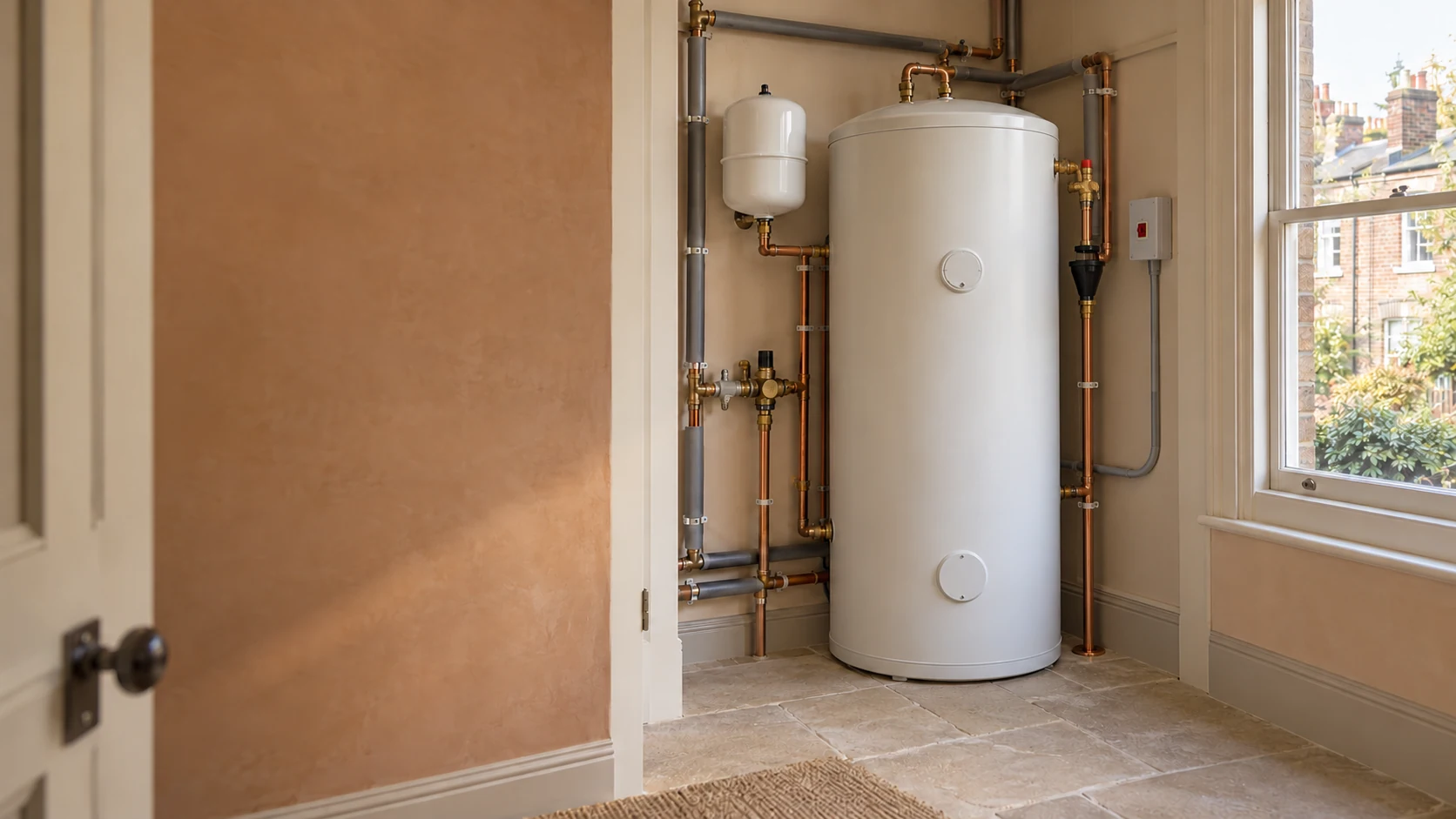
Unvented hot water cylinder with copper pipework and wall-mounted controls in a warm-toned utility alcove.

Hammersmith W6 · Unvented hot water

Unvented Cylinder Installation & Replacement in Hammersmith, W6

Hot water that fits your household. An installation that fits your home.

PEP supplies and installs unvented hot water cylinders for houses and flats in Hammersmith W6. From replacing an existing cylinder to planning hot water for a refurbishment, we coordinate the storage, pipework, heating connections and electrical controls.

Discuss your Hammersmith hot-water project

or call 07843 676 480

Heating · Plumbing · Electrical controls
One coordinated installation

Gas Safe RegisterNICEIC

The starting point is what needs to improve: more usable hot water, a dependable replacement, or an arrangement that supports a different bathroom layout. We assess the water supply and installation space before specifying equipment, then set out the work in a clear quotation.

01 · Where does your project begin?

A cylinder replacement should solve the right problem

Replacing an ageing or failed cylinder

If the vessel needs replacing, the surrounding installation still deserves a proper review. Existing valves, controls and connections may be suitable to retain, or they may need updating with the new equipment.

We separate the need for a replacement cylinder from other faults. Water that stays cold may point to an immersion heater, valve or control problem; poor shower performance may start with the supply. Replacing the vessel is not automatically the right first step.

Changing from gravity-fed hot water

An unvented system takes its supply from the incoming mains rather than the cold-water cistern serving a vented cylinder. The change can suit a renovation, but it needs an assessment of the existing installation, not just a tank swap.

We identify which equipment can be removed and which must remain. A separate feed-and-expansion cistern for the heating is not the same as the cold-water storage serving the hot water. Our vented-to-unvented conversion guide explains the distinction.

Planning around a new bathroom

Adding a shower room or changing the family bathroom gives us a useful opportunity to review demand before new finishes go in. We can include the hot-water work within your plumbing installation in Hammersmith, with the cylinder position and pipe routes agreed while they are still accessible.

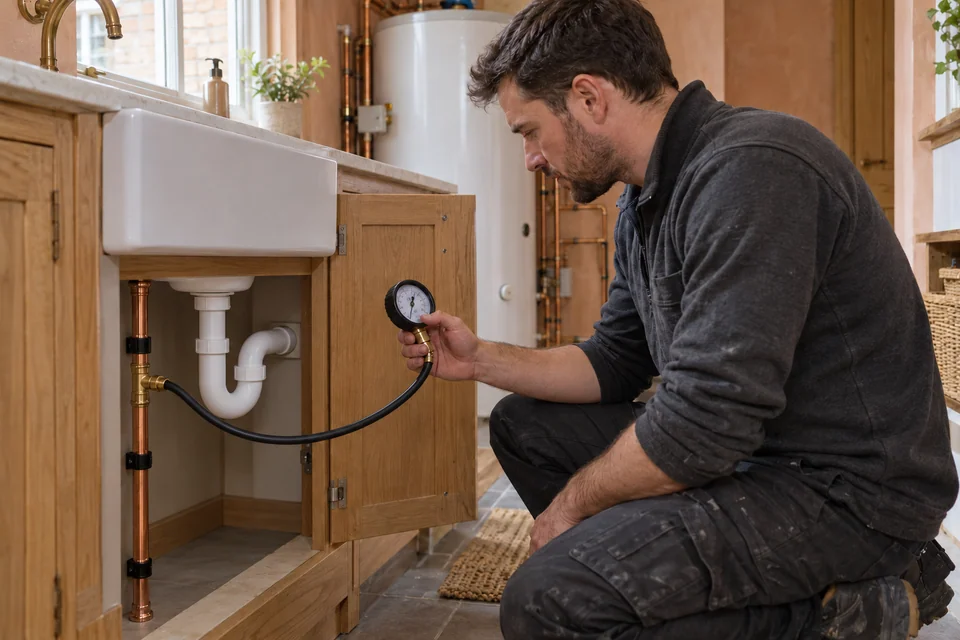
Engineer checking a pressure gauge connected to the cold-water supply beneath a utility sink.
Assess the incoming water supply before selecting a hot-water cylinder.

02 · Understand the available water

Enough stored water and enough flow are different requirements

A cylinder holds a reserve of hot water. The incoming supply and distribution pipework determine how effectively that water can reach the outlets. Increasing the stored volume will not, by itself, overcome a restricted supply.

We consider pressure and flow under use, not just a pressure reading with every tap closed. Shared supplies, restrictions and the arrangement within the property can affect what is available when showers and other fittings operate together.

We also ask how the household uses hot water. Two bathrooms used at different times create a different requirement from two showers running together. Bath size, occupancy and the time available to reheat the stored water help determine a suitable specification.

The proposal should explain both the intended demand and the conditions needed to meet it. For the underlying distinctions, see our guide to water pressure and flow in London homes. If the assessment identifies a supply limitation, water-pressure boosting options can be considered separately; a pump is not a standard addition to every cylinder installation.

03 · Terraces · Conversions · Apartments

Cylinder installation for Hammersmith houses and flats

A house with a changing layout

For a terrace around Brackenbury Village or Ravenscourt Park, a loft bathroom may change demand without requiring the entire heating system to be replaced. We assess the retained equipment alongside the proposed fittings and look at whether the cylinder can remain in its current position.

If the project also reorganises heating zones or moves equipment into a dedicated space, our Hammersmith heating and plant-room service covers the wider installation.

A cylinder inside a converted flat

In a flat, getting the old cylinder out and the replacement in can shape the job as much as the specification. Cupboard openings, stairs, communal entrances and access through finished rooms all need considering.

We establish how the relevant services can be isolated and whether access or shutdowns involve anyone else. Where the proposed work affects shared services or the building fabric, responsibilities and any required permissions need resolving before installation.

A managed apartment or communal system

First, we identify how the flat receives hot water. A private electric cylinder, a boiler-fed cylinder and a heat interface unit connected to communal heating are different arrangements. The equipment in a cupboard should not be replaced on appearance alone.

We define the private installation and the shared-system boundary, with building-management input where needed. That keeps the quotation focused on work that can actually be carried out within the property.

04 · Match the equipment to the home

Direct, indirect and Megaflo cylinder options

Indirect cylinders: working with a suitable boiler

An indirect cylinder receives heat through a coil from a suitable external heat source. When the source is a boiler, its available output, the cylinder’s recovery characteristics and the controls need to work together.

A compatible boiler in serviceable condition may remain. Where it also needs replacing, we can coordinate the cylinder with boiler installation in Hammersmith. The cylinder and boiler are separate products with their own warranty terms.

Direct electric cylinders: storage and scheduling

A direct electric cylinder uses immersion heaters to warm the stored water. The installation must suit the electrical supply, protective arrangements, isolation and intended heating schedule.

We review the normal heating and boost functions against the selected equipment and how the household uses water. Where an electricity tariff offers different rates at different times, the controls need to support the intended schedule; savings should not be assumed from the cylinder type alone.

Megaflo installation and replacement in Hammersmith

For a Megaflo replacement or new installation, we check the particular model and its requirements. Megaflo is a brand, not a specification for every unvented cylinder. Capacity, heating method, dimensions and expansion arrangements must be considered for the chosen product.

If a future heat pump is part of your plans, raise it before the cylinder is selected. Suitability depends on the proposed heat source and cylinder specification, rather than simply whether the cylinder is new.

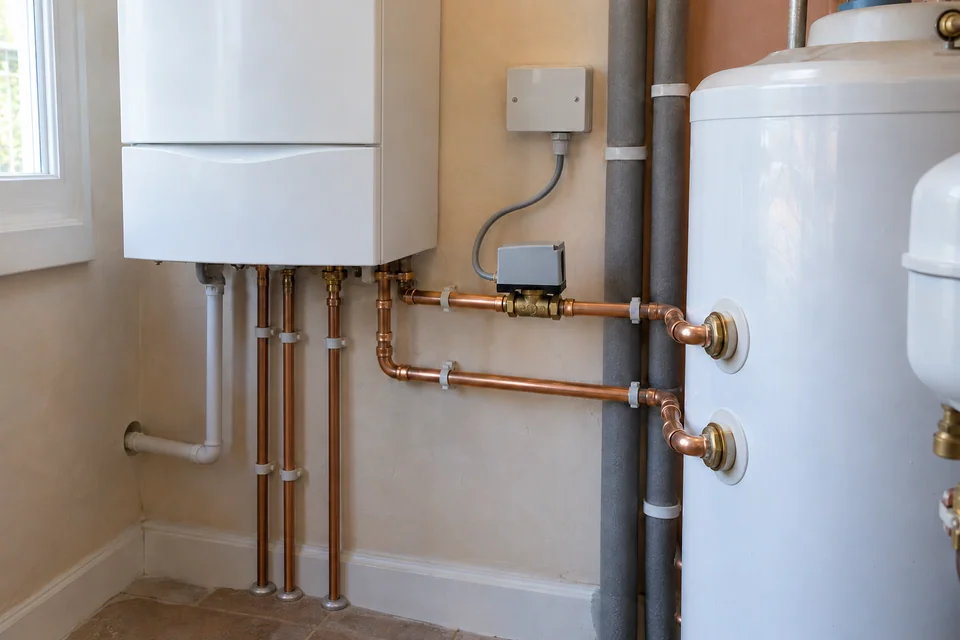
Copper pipework and a motorised zone valve between a wall-mounted boiler and an indirect hot-water cylinder.
Coordinate the cylinder coil, boiler circuit and hot-water controls.

05 · Plan the space around the system

Leave room for installation, servicing and safe operation

A narrow cylinder is not necessarily a straightforward fit. A slimline model may save width while needing more height, and the installation still requires space for connections, controls and maintenance.

Before recommending a location, we consider:

  • the removal and delivery route, including doors and cupboard openings;
  • support for the equipment when filled;
  • access to serviceable components and electrical isolation;
  • pipe routes and the arrangement serving the outlets;
  • a suitable safety-discharge route and termination.

A tidy result must remain usable after the joinery is finished. We discuss these requirements before the cupboard layout is fixed, including any work to boxing or finishes that belongs with another trade.

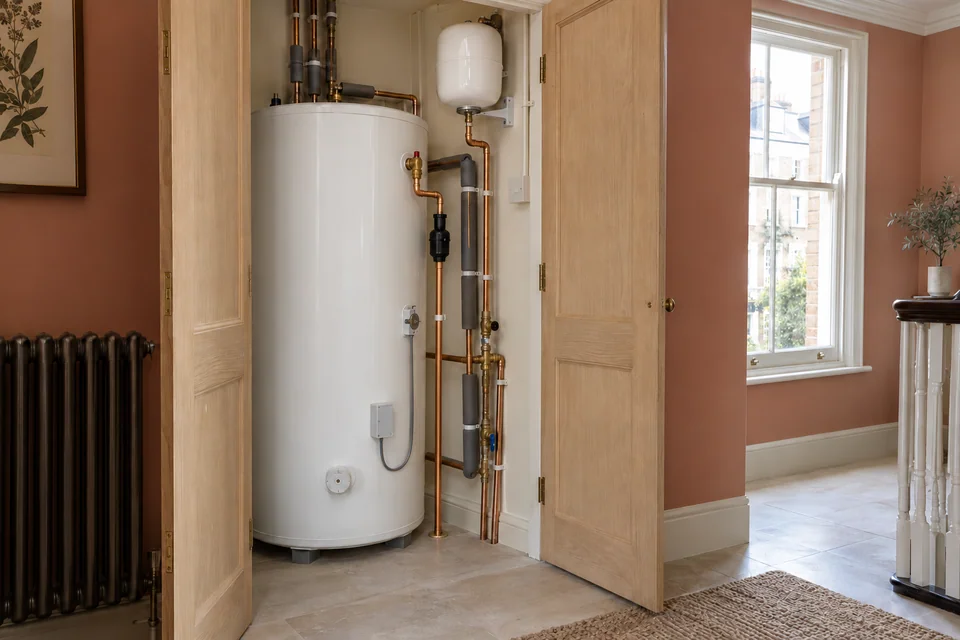
White hot-water cylinder in an open oak utility cupboard with accessible pipework and an expansion vessel.
Plan the cupboard, installation route and future service access together.
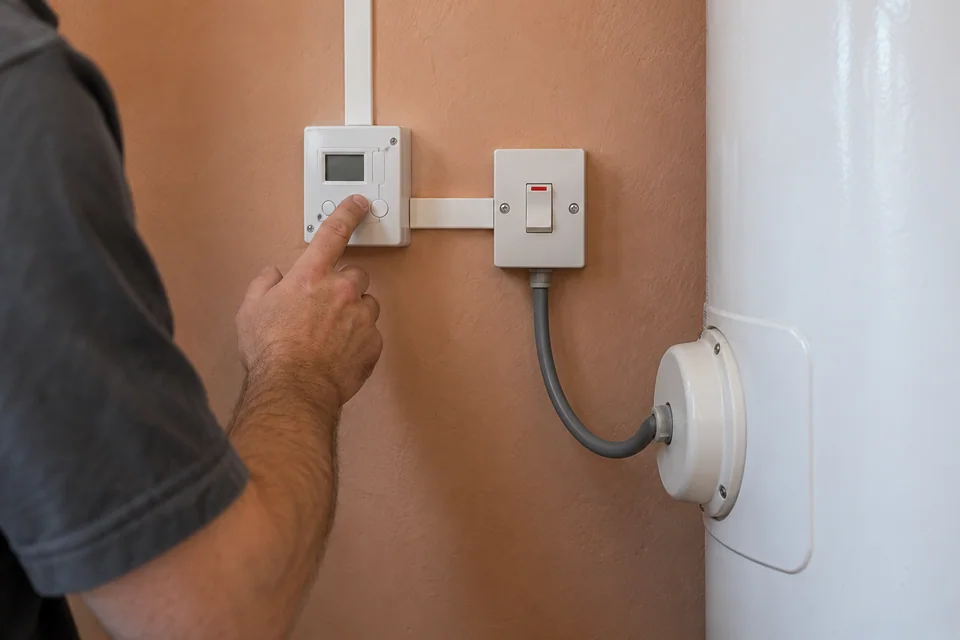
Electrician checking a hot-water timer beside an isolator and a cable connected to the cylinder immersion-heater cover.
Keep hot-water controls accessible and electrical connections properly enclosed.

06 · One coordinated installation

The cylinder and controls need to operate as one installation

Stored hot water is only useful if it heats when required and stops heating correctly. PEP brings qualified unvented hot-water work together with plumbing, heating connections and electrical installation in Hammersmith.

For an indirect installation, we coordinate the cylinder controls, motorised valves and heat-source demand as required by the design. For a direct cylinder, we address the immersion supply and operating controls. Control compatibility is checked against the equipment rather than assumed from the presence of a smart thermostat.

You can see the installation standard behind our work in PEP’s London heating and plant-room projects. These show our wider London work, including how equipment, pipework and controls are organised.

07 · A clear specification. An informed quotation.

What affects cylinder installation costs in Hammersmith?

A replacement in an accessible cupboard is a different job from relocating a cylinder, converting a vented system or arranging work around a shared supply. The cylinder price alone does not describe the completed installation.

Our quotation sets out the agreed equipment and work, including the relevant items below:

  • the cylinder specification and associated controls;
  • removal and disposal of the old equipment;
  • water, heating and safety-discharge pipework alterations;
  • electrical connections, controls and any necessary circuit work;
  • access arrangements and protection of working areas;
  • testing, commissioning and the applicable documentation;
  • making-good responsibilities, exclusions and VAT treatment.

Where a supply improvement or wider refurbishment is needed, it should be identified rather than hidden inside a headline cylinder price. We explain the expected interruption to hot water and any related electrical or heating shutdowns before the work is booked.

Ask PEP to assess your cylinder installation

08 · Assessment to handover

From the first assessment to working hot water

1. Understand the existing arrangement

We establish what is installed, what needs to change and how the property is used. Supply conditions, demand and installation access inform the recommendation.

2. Agree the specification and practical arrangements

The proposed equipment, retained components and required alterations form the written scope. We also agree access, any building-management coordination and the sequence of shutdowns. Tell us early about essential hot-water needs.

3. Install and commission the system

The agreed installation is completed and checked, including the relevant water connections, heating or electrical interfaces, controls and safety arrangements. The time needed depends on the actual work; a conversion or relocation should not be treated as a simple like-for-like change.

4. Explain the controls and hand over the records

We explain normal operation, any boost function and the maintenance arrangements for the selected equipment. The handover includes the applicable installation and commissioning records, rather than leaving you to work out unfamiliar controls.

09 · Safety, documentation and ongoing care

Safety, documentation and care after installation

Unvented hot-water work requires appropriate competence and a compliant installation. In England, Approved Document G addresses hot-water safety. We establish the relevant Building Regulations process for the work; commissioning records and compliance documentation serve different purposes.

Manufacturer cover also needs to be understood properly. The vessel, controls, immersion heaters and other components may have different terms. We identify the requirements for the selected product, including registration and maintenance, rather than applying one warranty period to the whole installation.

Plan ongoing servicing in accordance with the manufacturer’s instructions. Our unvented cylinder servicing guide explains the checks and records to consider after installation.

10 · Hammersmith · W6

Unvented hot-water installations across Hammersmith W6

We cover Hammersmith Broadway, the King Street area, Hammersmith Grove, Brackenbury Village, Ravenscourt Park and the residential streets around St Peter’s Square and the riverside.

For an address around Brook Green or a neighbouring boundary, send the full postcode so we can confirm the location and discuss the work. Brook Green includes addresses in both W6 and W14; the postcode should not be assumed from the neighbourhood name.

For the wider service, see unvented cylinder installation in London.

Before you book

Questions before replacing your hot-water cylinder

Can you replace the cylinder without replacing my boiler?

Often, yes, provided the retained boiler is serviceable and suitable for the proposed indirect cylinder and controls. We assess that relationship before recommending a combined replacement. A direct electric cylinder does not rely on a boiler to heat its stored water.

Will an unvented cylinder improve weak shower pressure?

It may improve performance compared with a gravity-fed arrangement, but the result depends on the available supply and distribution. We check the conditions under use. A larger cylinder alone does not resolve an undersized or restricted incoming supply.

Can an unvented cylinder be installed in a flat?

It can be suitable, subject to the supply, space, safe installation arrangements and any relevant building restrictions. We also establish whether the flat has its own hot-water equipment or is served by a communal system.

How do I know whether I have a cylinder or an HIU?

The equipment label, existing records and building-management information can help. Send a photograph taken without removing covers if you are unsure. We confirm the arrangement before proposing work; an HIU is not simply another type of storage cylinder.

Will a slimline model fit my existing cupboard?

Possibly, but width is only one measurement. Height, connections, removal access and servicing space must also work. We compare the full installation requirements with the available space.

What size cylinder do I need for two bathrooms?

That depends on occupancy, the fittings, whether they run together and how quickly the system can reheat the water. We discuss the busiest period of use rather than choose a volume from bathroom count alone.

Can you replace a direct electric cylinder?

Yes. The replacement is assessed alongside the electrical supply, immersion arrangement, controls and heating schedule. Any required electrical alterations are identified in the scope.

How long will we be without hot water?

We explain the expected interruption after assessing the installation. Changes to pipework, access restrictions or shared-service arrangements can extend the programme. Any essential requirements should be raised before dates are agreed.

Is every leaking or underperforming cylinder a replacement job?

No. A fault in a connection, valve, heater or control may be repairable without replacing the vessel. The source of the problem should be established first; persistent problems should not simply be ignored.

What paperwork should I receive?

The handover should include the relevant commissioning and installation records, applicable Building Regulations documentation and product information. Warranty registration and future servicing requirements should also be clear. We identify what applies to the agreed work.

Hammersmith W6 · Let us plan the right installation

Tell us what needs to change in your Hammersmith home

Send your postcode, property type and a short description of the problem or planned refurbishment. Photos of the existing cylinder, accessible label and surrounding cupboard are helpful, together with any bathroom plans and your preferred timescale.

You do not need to know the technical name of the system. Do not remove electrical covers or operate safety valves to gather information. We will explain the next assessment step and prepare the installation scope around what the property needs.

Plan your Hammersmith cylinder installation with PEP