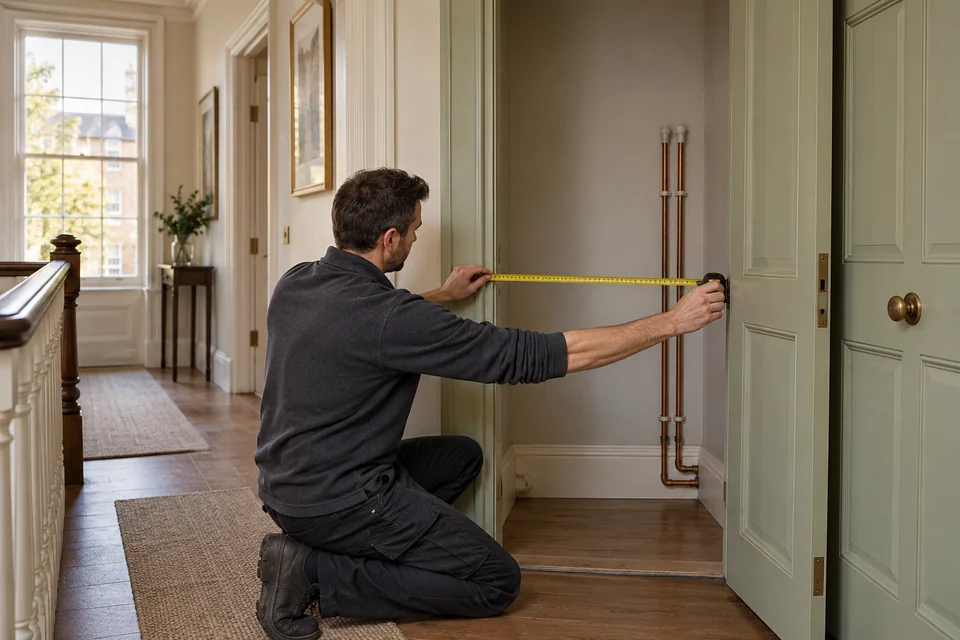
Unvented hot-water cylinder with copper pipework and controls in a sage-green utility room

St John’s Wood NW8 · Unvented hot-water systems

Unvented Cylinder Installation & Replacement in St John’s Wood, NW8

Hot water planned for the busiest morning. Not just the empty cupboard.

PEP designs, supplies and installs unvented hot water cylinders in St John’s Wood. From a straightforward replacement to a multi-bathroom refurbishment, we bring the water supply, cylinder, pipework and controls into one considered installation.

Discuss your St John’s Wood hot-water project

or call 07843 676 480

Heating · Plumbing · Electrical controls
One coordinated installation

Gas Safe RegisterNICEIC

Replacing a Megaflo, upgrading a gravity-fed system or choosing an electric cylinder for a flat? We establish what your home needs, what can stay and what must change — then set out the work in a clear proposal.

01 · Where does your project begin?

Three starting points. One properly specified installation.

Replace an existing cylinder

A leaking vessel or a change in household demand may justify replacement. Unreliable hot water does not always mean the cylinder itself has failed: an immersion heater, valve or control fault may be repairable.

Where replacement is appropriate, we review the capacity, connections and surrounding equipment. Repeating the old specification is only sensible if it still suits the property.

Convert from vented to unvented hot water

An unvented cylinder stores hot water under pressure, supplied by the main or a suitably designed water-supply system. It can replace gravity-fed storage where the available supply and installation arrangements are suitable.

The conversion may remove the need for the hot-water feed cistern. It does not automatically remove a separate feed-and-expansion tank serving the heating. Our vented-to-unvented conversion guide explains the distinction.

Plan storage around a refurbishment

A new bathroom or changed floor plan is the right time to reconsider storage and service routes. We can coordinate the cylinder work with plumbing installations in St John’s Wood, before cupboards, bathroom fittings and finished surfaces make those decisions harder.

02 · Storage · Recovery · Supply · Distribution

Start with the morning when everyone needs hot water

A shower running upstairs, another bathroom in use and a bath to fill afterwards: that is a useful installation brief. “A cylinder for a four-bedroom house” leaves too much unanswered.

We consider four separate questions:

  • Storage: how much usable hot water is needed during the busiest period?
  • Recovery: how quickly can the heat source replenish that supply?
  • Incoming water: what flow and pressure are available while outlets are running?
  • Distribution: can the pipework deliver the intended performance to each bathroom?

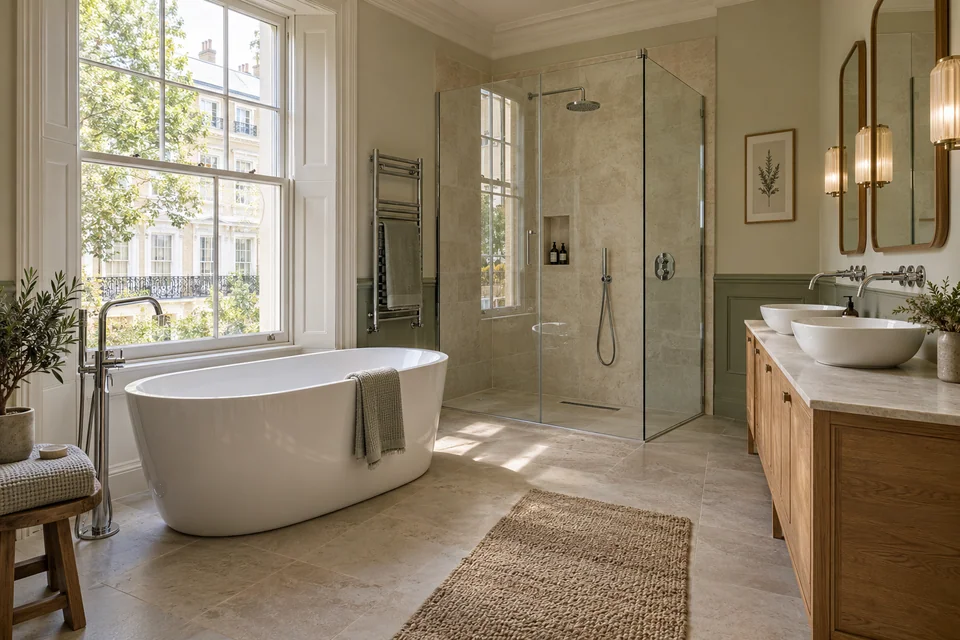
Your shower fittings, bathing habits and likely simultaneous use matter as much as the room count. We agree those expectations before choosing equipment, so the proposal explains the performance being designed for rather than simply offering more litres.

Period-home bathroom with a separate shower, bathtub and double vanity
Bathroom fittings and simultaneous use inform the hot-water brief.
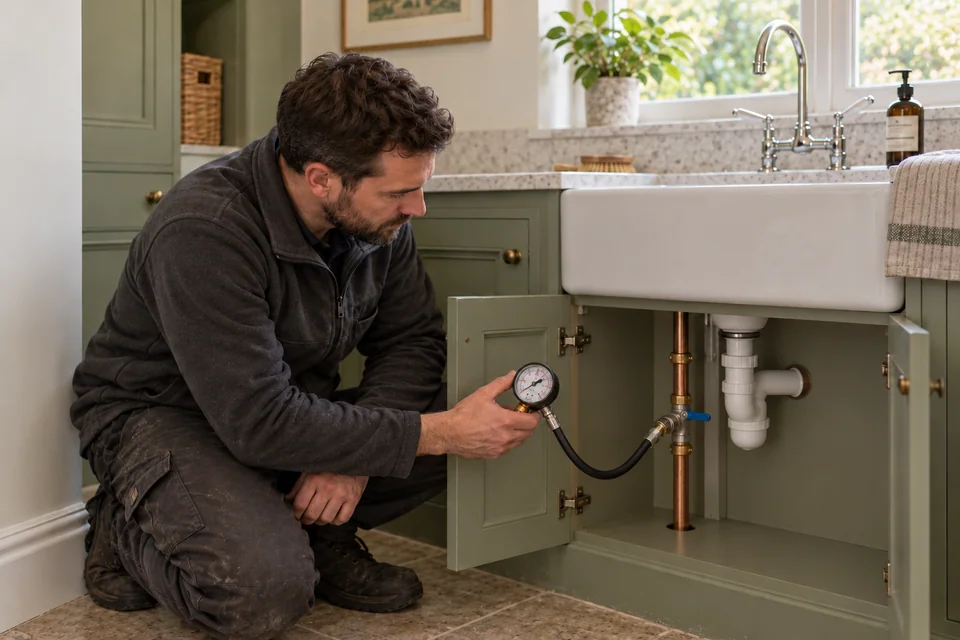
Heating engineer checking a pressure gauge connected to a service point inside an open under-sink cupboard
Water-supply assessment before cylinder selection.

03 · Understand the available water

A new cylinder is not a water-pressure booster

A high pressure reading with every tap closed does not prove that the supply will support two showers. Nor does a good reading at the building entrance establish what reaches an upper-floor apartment.

We assess the water available at the proposed installation under use, considering restrictions, elevation and shared demand where relevant. Replacing the vessel cannot correct every limitation upstream of it.

If the supply needs improvement, that becomes a separate part of the design. Our guides to low water pressure and water pressure boosters and storage explain the options. Boosting is considered where justified, with the appropriate supply arrangements and permissions; it is not an automatic extra on every cylinder quote.

04 · Match the equipment to the home

Megaflo, boiler-fed and direct electric cylinder installations

Megaflo installation and replacement in St John’s Wood

Megaflo is a cylinder brand, not a separate heating method. Its ranges include direct electric and indirect options, so specifying “a Megaflo” is the beginning of the selection, not the end.

We assess suitable current models alongside alternatives such as Vaillant uniSTOR. Capacity, heat source, dimensions, expansion provision and maintenance access all influence the choice. A narrower cylinder may help with a tight position, but its height and connection clearances still need checking.

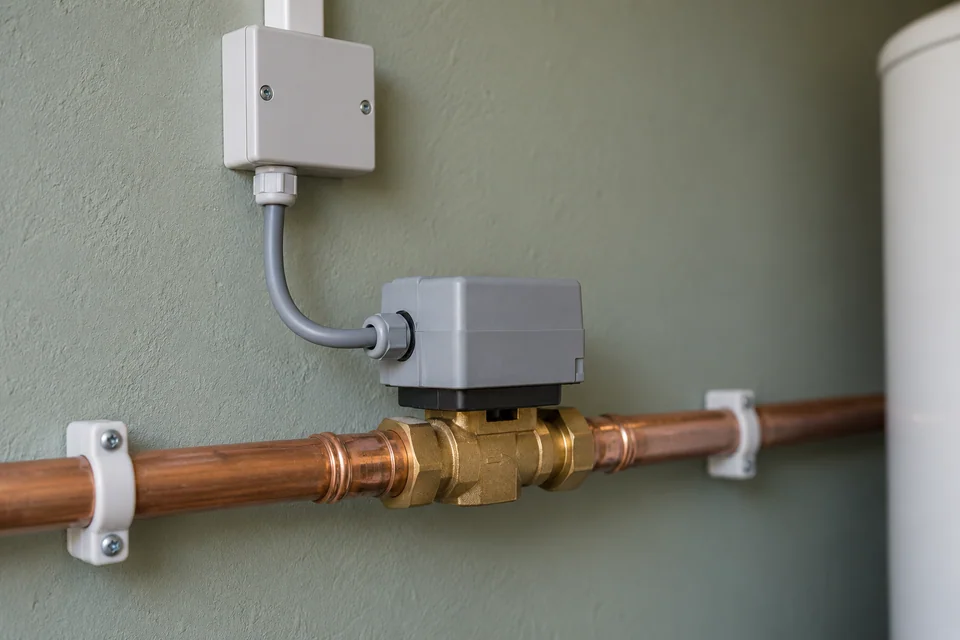
Motorised two-port valve in copper pipework with its cable connected to a closed wiring box
Indirect-system control: motorised valve and wiring interface.

Indirect cylinders heated by a boiler

An indirect cylinder uses an internal coil to transfer heat from a suitable external source. We assess the retained boiler, reheating performance and control arrangement together, including compatibility with existing Vaillant or Viessmann systems.

A cylinder replacement need not become a boiler replacement. If the boiler is suitable, it can remain. If changing it is part of your plans, our boiler installation service in St John’s Wood covers the wider work. A future heat pump requires a suitable cylinder and controls specification; compatibility should not be assumed.

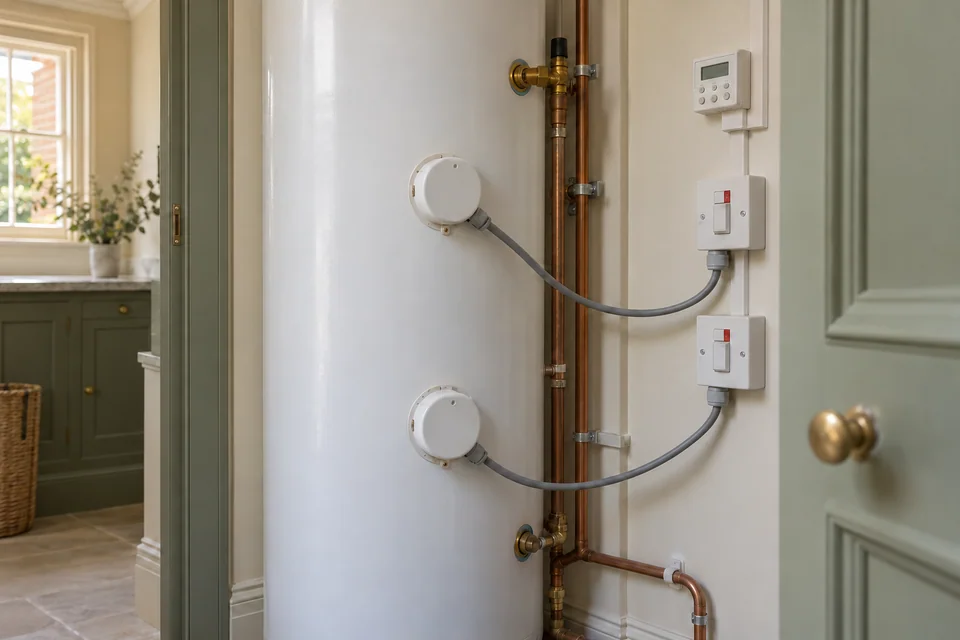
Direct electric hot-water cylinder with two immersion covers and wall-mounted heating controls
Direct electric storage: immersion connections and controls.

Direct electric cylinders for flats and houses

Direct cylinders use electric immersion heaters. We include the relevant power supplies, isolation and controls in the assessment, along with normal heating and any boost function.

The heating schedule should reflect your actual tariff, available supply and daily demand. We explain how the selected system reheats and how to use its controls, rather than leave a new cylinder dependent on an unsuitable timer.

05 · From storage to the point of use

Think beyond the cylinder cupboard to the furthest bathroom

In an extended house or a home arranged over several floors, the distance between storage and outlets can be as important as the cylinder itself. If cooled water is sitting in a long pipe run, a new cylinder in the same position will not necessarily shorten the wait at the tap.

We consider the distribution layout, pipe sizing, insulation and opportunities to improve routes during the work. A dedicated hot-water return circuit may be appropriate in some larger installations, but only after checking the cylinder, layout, controls and energy implications.

Recirculation can add heat loss and equipment as well as convenience. We do not prescribe it simply because a house has several bathrooms. The aim is a proportionate solution to the problem you actually experience.

Where the project includes wider distribution or equipment changes, our heating and plant-room installations in NW8 bring that work into the same plan.

06 · Plan for the building, not just the vessel

Different buildings need different installation plans

Houses, villas and multi-storey refurbishments

St John’s Wood includes substantial period houses as well as smaller homes and conversions. For a house project, we check the cylinder position, support for its filled weight, removal route and access to the services it needs.

Moving storage to a utility room or plant room can release useful space, but the new location must work for pipe routes, safety discharge and maintenance. We identify opening-up and making-good requirements before a move is agreed.

Mansion flats and managed buildings

In a flat, the private installation may depend on shared water services and building access. We establish where isolation is available, who controls it and whether work could affect neighbouring properties.

Lift dimensions, stair turns, permitted working hours and protection of common areas can influence the programme. The lease and any required freeholder or managing-agent consent must be considered; Building Regulations compliance does not replace those permissions.

Tell us if the property has communal hot water or a heat interface unit. Those systems need a different assessment from replacing a private unvented cylinder. Conservation or listed-building requirements also depend on the specific property and proposed alterations, not the postcode alone.

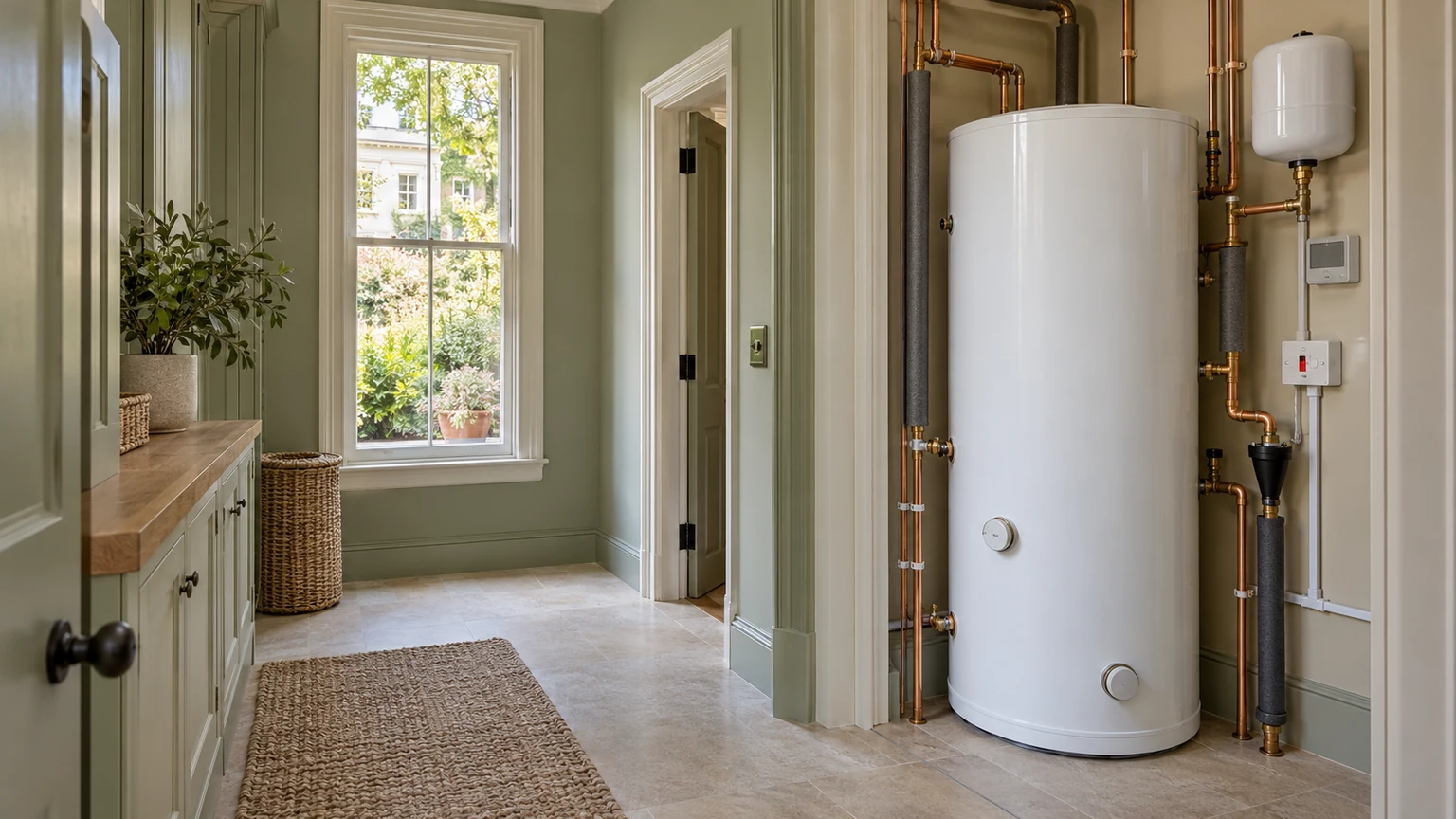
Installer measuring the clear doorway width of a service cupboard in a period home
Checking access before ordering the new cylinder.

07 · One coordinated scope

The plumbing, electrical supplies and controls belong in the same scope

A hot-water project can cross several trades even when the cylinder stays in its cupboard. PEP coordinates the pipework, immersion connections and control interfaces, so those responsibilities are settled before installation.

For an indirect system, that includes how the cylinder thermostat, valves and heat source respond to demand. For a direct electric system, it includes the relevant circuits, controls and boost arrangement. Commissioning checks how the connected system operates, not just whether the vessel fills.

Our electrical services in St John’s Wood support the agreed power and control work. For a broader upgrade, our guide to heating controls and system integration explains the decisions involved.

Explore our heating and plant-room projects across London for examples of PEP’s installation work.

08 · A clear specification. An informed quotation.

What does unvented cylinder installation cost in St John’s Wood?

The meaningful comparison is the completed installation, not the cylinder price alone. An accessible replacement differs from converting a gravity-fed system, moving storage or altering shared-service connections.

Our proposal sets out the selected equipment and the work included:

  • Cylinder model, capacity, expansion arrangements and safety components.
  • Pipework, isolation and the required safety-discharge route.
  • Electrical connections, control changes and retained-system interfaces.
  • Removal and disposal of redundant equipment, with access and protection arrangements.
  • Commissioning, handover and the applicable compliance process.

Separate building work, joinery, decoration and management charges should be identified rather than left implicit. We make the price and VAT basis clear and distinguish confirmed work from anything requiring further investigation.

For an initial discussion, send the cylinder model, postcode and reason for the project. Photographs help us prepare; a site assessment establishes the details needed to finalise the installation.

Request a cylinder installation assessment

09 · Assessment to handover

A clear sequence from assessment to handover

  1. Define the outcome. Tell us what is failing, what is changing and which outlets you expect to use together.
  2. Check the constraints. We assess supply, access, space, retained equipment and the safe installation arrangements.
  3. Agree the proposal. Equipment, work boundaries, permissions and any dependencies are recorded before the installation is scheduled.
  4. Install and commission. The agreed plumbing and electrical work is completed, tested and checked for correct operation.
  5. Explain the system. We show you the controls and provide the relevant records and maintenance information.

Water and power interruptions are discussed in advance. Let us know if the home will remain occupied or a building manager must arrange isolation; both can affect the sequence and duration of the work.

10 · Safety, documentation and ongoing care

Hot-water safety and records that stay with the installation

Unvented installations require appropriate competence in pressurised hot-water systems and the safety requirements addressed by G3. Correct controls, expansion provision and a suitable discharge arrangement are essential parts of the installation, not optional accessories.

We establish the applicable Building Regulations notification route for the work. Product commissioning records and regulatory compliance documentation have different purposes; both need to be addressed through the appropriate process.

Manufacturer warranties also need reading accurately. Cover for the vessel can differ from cover for valves, electrical components and labour. The selected model’s terms, registration and maintenance requirements should remain with the handover information.

Keep service points accessible after cupboards or joinery are finished. Megaflo recommends annual servicing; follow the requirements for the equipment installed. Our unvented cylinder servicing guide explains what ongoing care involves.

11 · St John’s Wood · NW8

Unvented cylinder installations across St John’s Wood NW8

We welcome installation and replacement enquiries across St John’s Wood, including the Abbey Road and Grove End Road area, homes around Hamilton Terrace and Acacia Road, and properties near St John’s Wood High Street and Wellington Road.

Whether the project is a cylinder replacement or part of a substantial refurbishment, send the full postcode and property details so we can confirm coverage and access. For work elsewhere, see our unvented cylinder installation service across London and London service areas.

Before you book

Questions before choosing your new cylinder

Can I keep my boiler when replacing the cylinder?

Yes, where its condition, output and controls suit the proposed system. We check the combination before specifying the cylinder. Replacing hot-water storage does not by itself justify replacing a serviceable boiler.

What size cylinder do I need for two or more bathrooms?

Bathroom count is only a starting point. We consider the fittings, simultaneous use, stored volume and reheating performance, alongside the measured water supply. That provides a more useful specification than choosing capacity by bedroom count alone.

Will a Megaflo improve a weak upstairs shower?

It depends on the cause. A suitable conversion from gravity-fed hot water may improve performance, but an unvented cylinder cannot create flow that the supply does not provide. Restrictions and the shower arrangement need assessment too.

Can you replace a direct electric cylinder in a mansion flat?

Yes, subject to assessing the equipment and building arrangements. The scope covers the required water connections and electrical interfaces, with access, shared isolation and any necessary permissions resolved before work.

Will a new cylinder make hot water reach distant taps sooner?

Not necessarily. Waiting time may come from the pipe run between storage and the tap. We consider distribution separately; a different cylinder alone may leave that delay unchanged.

Can the cylinder move to another part of the house?

Potentially. We need to establish suitable support, service routes, safety discharge and maintenance access. The proposal should also account for the effect on distribution and any building work required.

What if my flat has communal hot water or an HIU?

Tell us before arranging a conventional cylinder replacement. The heat source, ownership and permitted alterations may differ, and the managing agent may need to be involved. We first establish what equipment and responsibility sit within your property.

How long does installation take, and will the water be off?

The programme depends on the agreed work and access. We explain expected interruptions after assessment, including any shared-service shutdown. Relocation or conversion can involve more stages than a replacement in the existing position.

What should I check when comparing quotations?

Check the exact model, connections, electrical work, discharge provision, removal, commissioning and exclusions. Confirm the VAT basis and responsibility for making good. A lower equipment price does not necessarily mean a lower completed-project cost.

What information will I receive afterwards?

The relevant operating and commissioning information, warranty requirements and servicing guidance, with applicable compliance documents through the agreed process. Keep those records with the property and make sure future maintenance access remains available.

St John’s Wood NW8 · Let us plan the right installation

Tell us what your hot-water system needs to do next

More reliable mornings. Another bathroom. A replacement that fits without inheriting the old problems. Tell us the outcome, and we will help define the installation.

Send your St John’s Wood postcode, property type and floor level, current cylinder and heat source, bathroom plans and preferred timing. Photographs of the visible model label, cupboard and connections are helpful — do not remove covers or disturb the equipment.

Discuss your St John’s Wood hot-water project