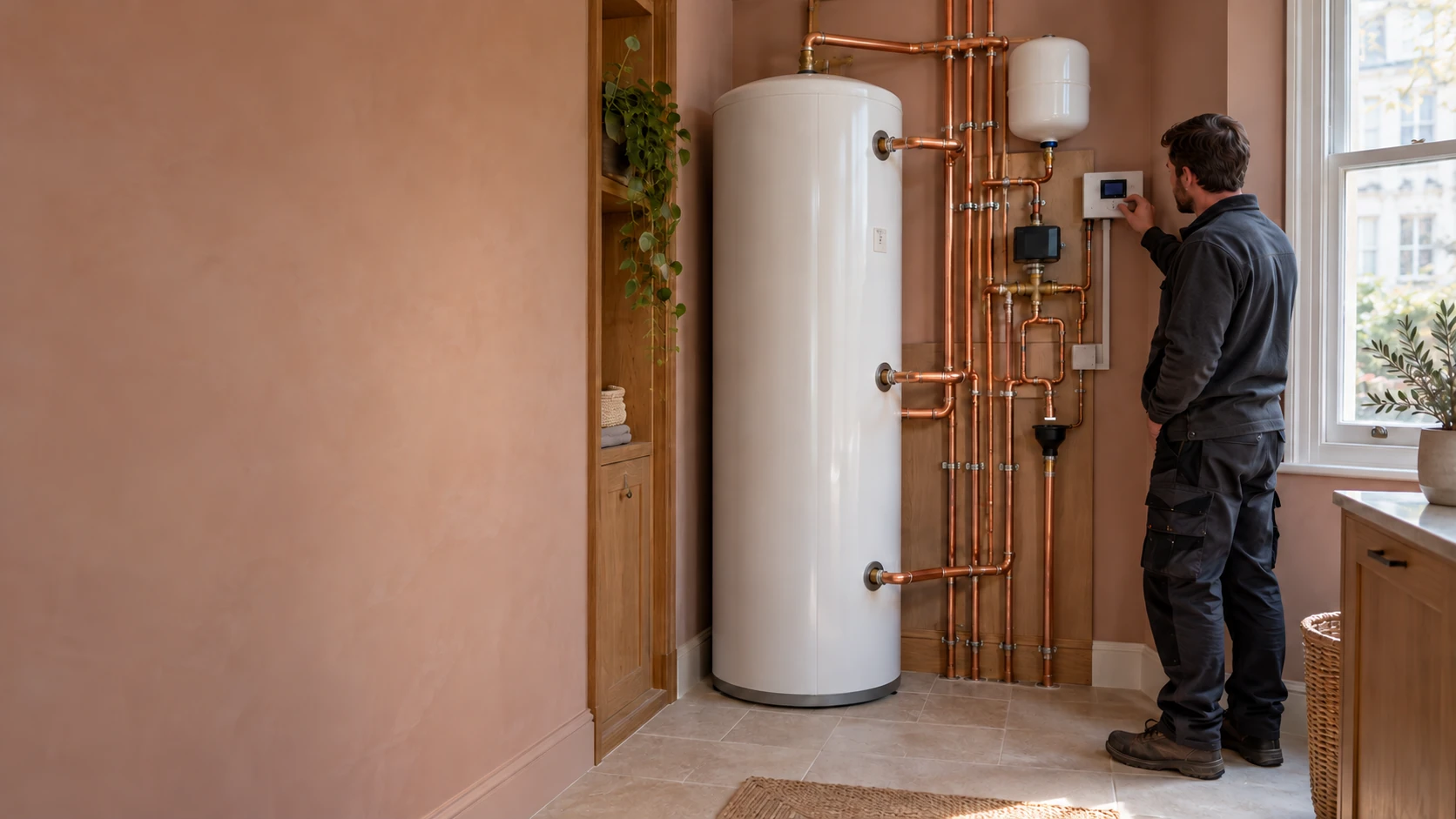


Heating engineer checking controls beside an unvented hot water cylinder in a warm-toned utility room

Notting Hill W11 · Installation · Replacement · Conversion

Unvented Hot Water Cylinder Installation & Replacement in Notting Hill, W11

A better hot-water system starts with understanding the home it serves.

A busy family bathroom, a new shower on the top floor or an ageing cylinder in an apartment: the right installation must suit the whole arrangement, not simply the cupboard.

PEP designs, supplies and installs unvented hot water cylinders in Notting Hill W11. We bring plumbing, heating and electrical work together, from a carefully assessed replacement to the hot-water infrastructure within a complete refurbishment.

Qualified unvented hot-water work
Heating · Plumbing · Electrical controls

Gas Safe RegisterNICEIC

01 · Installation · Replacement · Conversion

Three starting points. One properly considered installation.

01

Replacing an existing cylinder

If the cylinder is ageing, leaking or no longer meeting demand, we assess the installation before recommending its replacement. A faulty valve, immersion heater or control can cause problems without the vessel itself needing renewal. Where replacement is justified, the surrounding equipment, pipework and safety arrangements are reviewed too.
02

Installing storage during a refurbishment

Adding bathrooms or changing the layout is the time to reconsider capacity, recovery and distribution. We plan the cylinder alongside the heat source, services and joinery, before a finished cupboard makes maintenance access difficult.

03

Converting a vented hot-water system

Moving from gravity-fed storage to an unvented arrangement can suit a home being modernised, provided the supply and existing installation support it. The hot-water and central-heating circuits are assessed separately; converting one does not automatically mean replacing or sealing the other.

Our vented-to-unvented conversion guide explains the wider decisions.

PEP project · Notting Hill W11

Real installation experience within a five-storey Notting Hill home

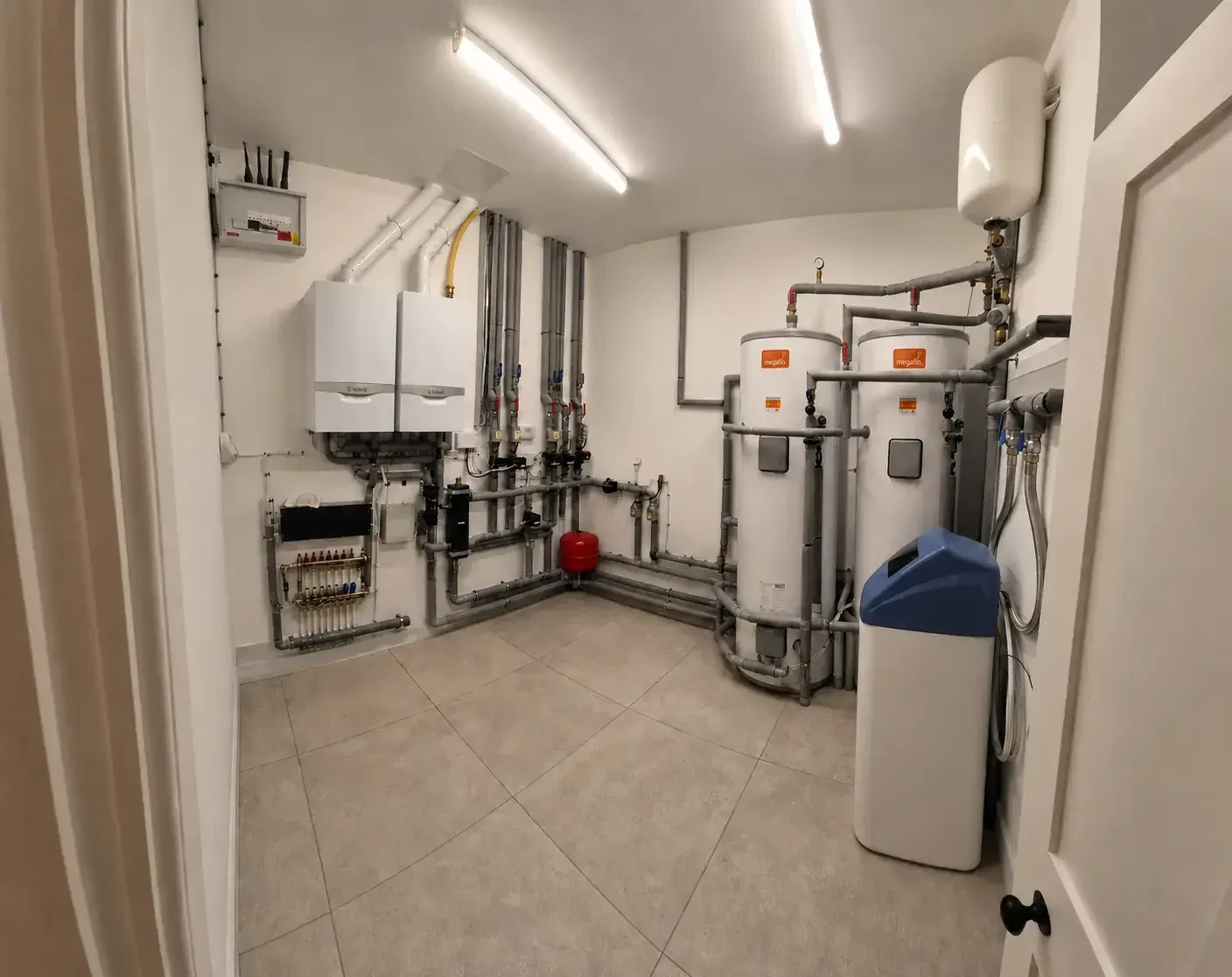
Actual PEP Notting Hill plant room installation with twin boilers and hot water cylinders
Existing PEP Notting Hill project: the completed plant room within a five-storey residence.

Our published Notting Hill project brings together the plumbing, heating and electrical infrastructure of a five-storey private residence. PEP acted as lead designer and contractor for these installations, with a coordinated plant room incorporating boilers, cylinders and distribution equipment.

The genuine project photographs show the work behind the finished rooms. They also illustrate why cylinder position, connections and access need to be resolved as part of the wider building, rather than squeezed into whatever space remains.

Your home may need a single cylinder, not a large plant room. The same attention to coordination applies: specify the requirement, arrange the services properly and leave the installation accessible.

Explore our Notting Hill installation project.

02 · The property shapes the specification

Designed for townhouses, converted flats and changing bathroom layouts

In a multi-floor house, bathrooms may be far from the hot-water store, with several outlets used together. In a converted flat, the priorities may be a narrow cupboard, a shared incoming supply and limited access through communal areas.

We consider the property you have, not a standard arrangement assumed from its postcode. That includes retained equipment, planned bathrooms, pipe routes and the responsibilities of a freeholder or managing agent where relevant.

If the flat uses communal heating, a heat interface unit or a thermal store, we establish how that system works before proposing a cylinder. Not every hot-water installation is suitable for a conventional standalone replacement.

03 · Assessment before specification

Water supply first. Cylinder selection second.

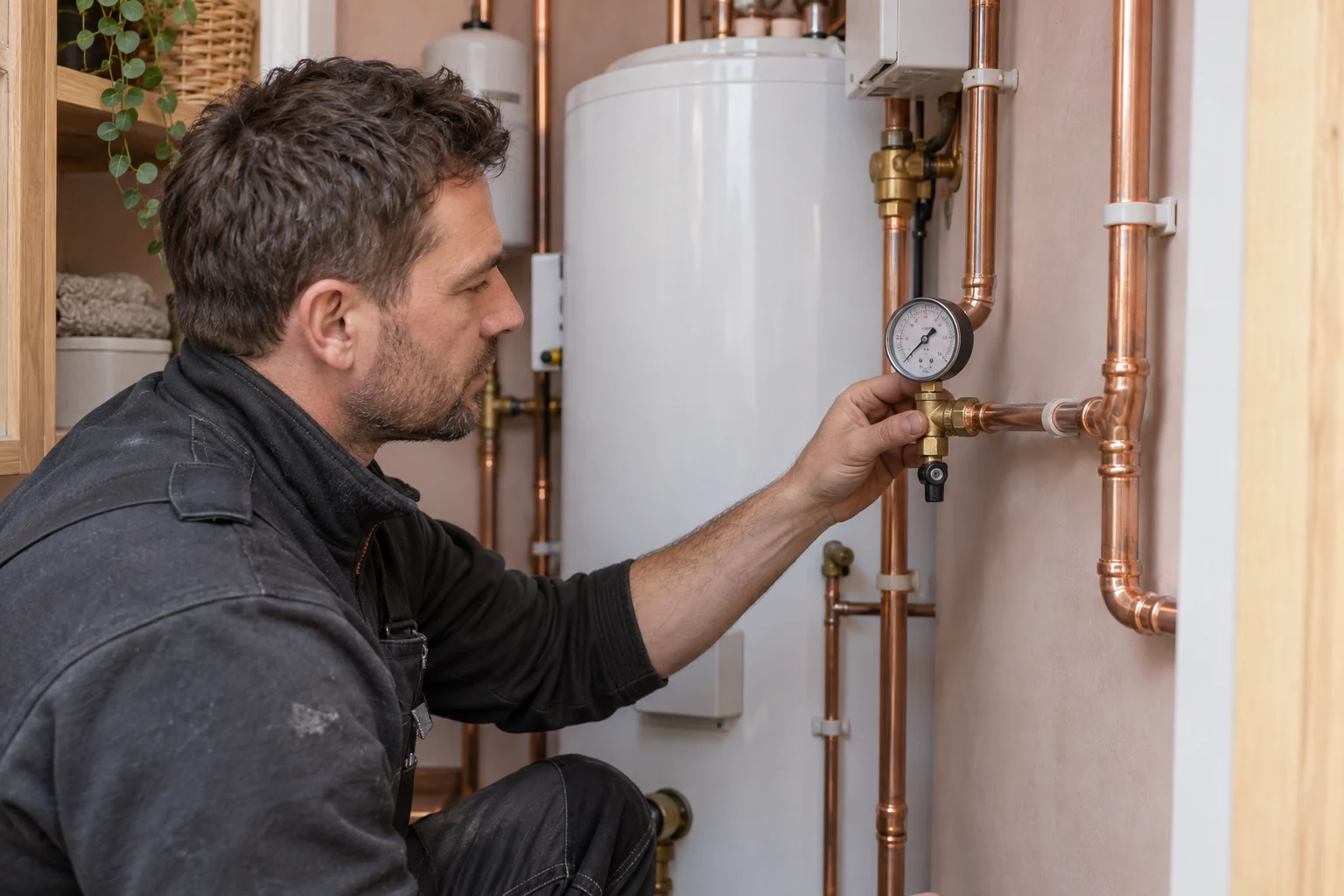
Engineer checking a connected water pressure test gauge on a domestic cold-water supply
Assess the available supply before promising hot-water performance.

An unvented cylinder stores hot water supplied from the mains or a suitably designed supply arrangement. It cannot create incoming flow that the property does not have.

We assess pressure and available flow under operating conditions, alongside restrictions in the supply and distribution pipework. The aim is to understand what happens when the household actually uses water, rather than rely on a pressure reading with every tap closed.

Storage, recovery and simultaneous demand are considered together. A deep bath and two high-flow showers can place different demands on a system from bathrooms used at separate times. Choosing the largest cylinder that fits is not a substitute for that assessment.

If the supply is limiting performance, we identify the cause. Our guides to low water pressure and water pressure boosters and storage explain the options; a booster is not automatically required for every cylinder installation.

04 · Choose the heating method and suitable cylinder

Direct, indirect and Megaflo cylinder installations

01

Direct electric cylinders for apartments

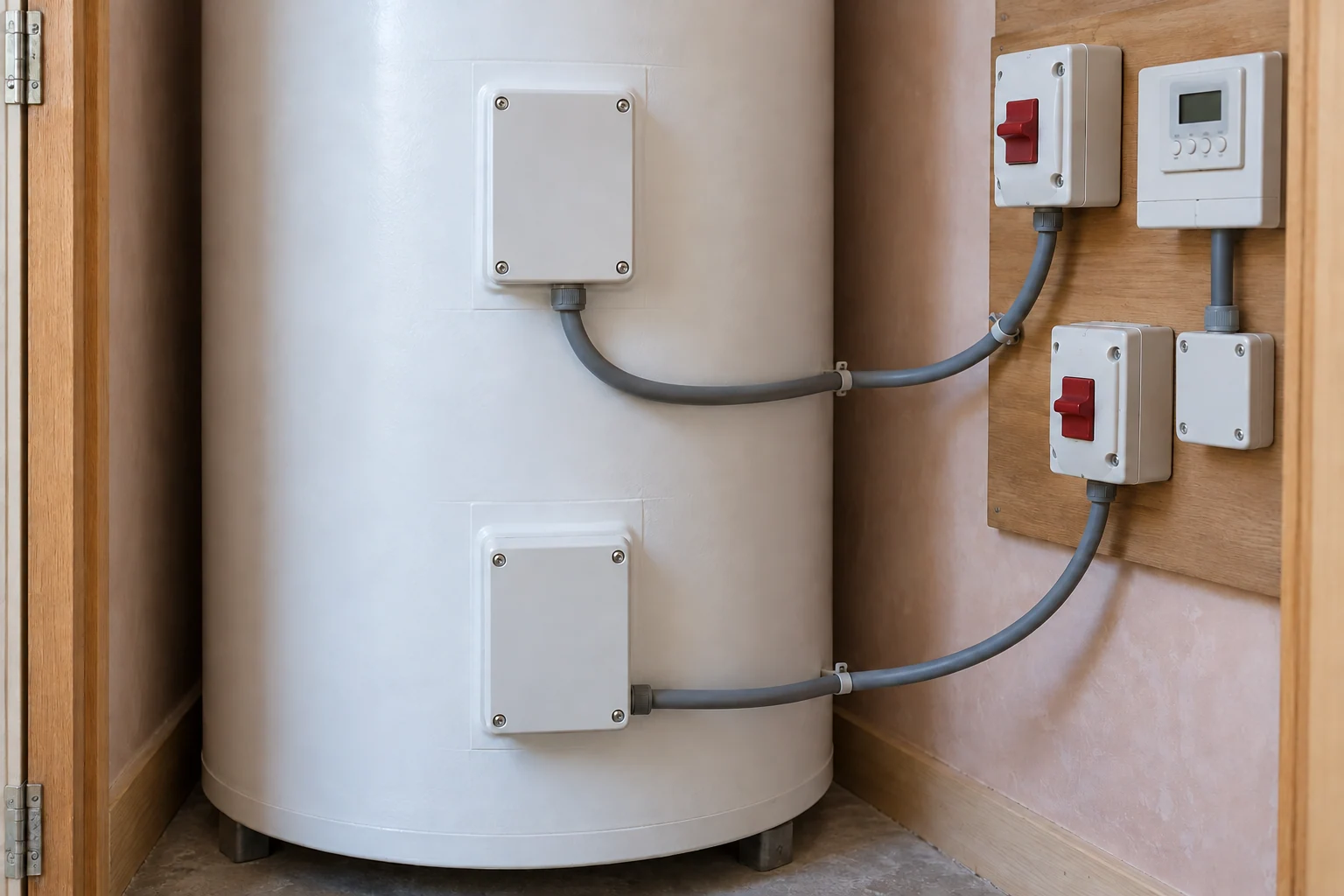
A direct cylinder uses electric immersion heaters to heat the stored water. Selection includes capacity, electrical provision, heating schedules and any suitable off-peak tariff arrangement. We also consider how boost heating will be used and whether the existing connections and controls remain appropriate.

02

Indirect cylinders connected to a boiler

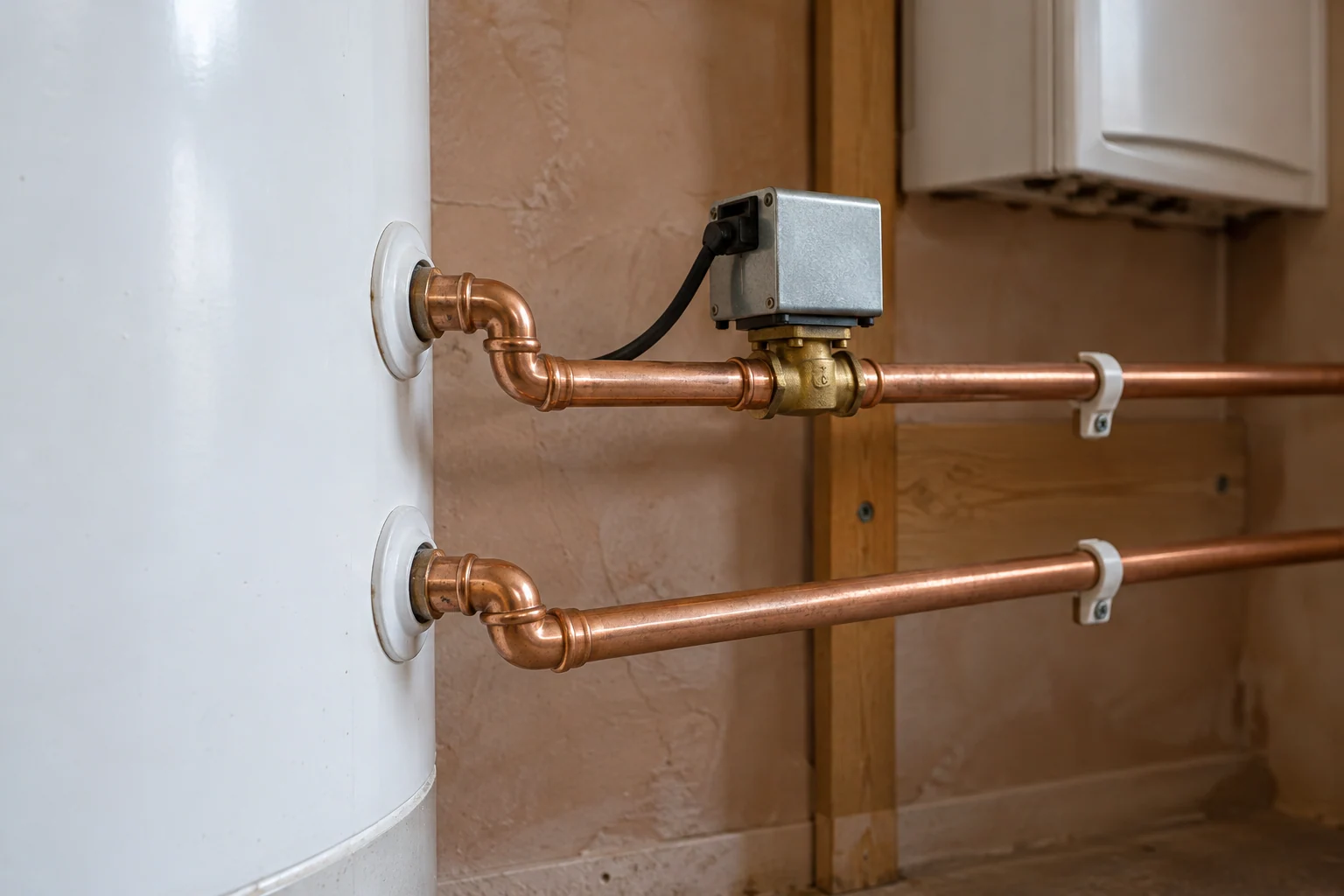
An indirect cylinder is heated through a coil connected to an external heat source, commonly a boiler. The coil, boiler output and operating controls must be compatible. We assess retained equipment before assuming a cylinder upgrade requires a new boiler.

If both are being replaced, our boiler installation service in Notting Hill covers the coordinated heat-source upgrade.

03

Megaflo installation and replacement in W11

Megaflo is a product range, not another name for every unvented cylinder or a type of boiler. We consider the suitable model alongside other appropriate options, checking dimensions, usable storage, recovery and expansion arrangements.

For an existing Megaflo replacement, the surrounding valves, controls and discharge provision are assessed rather than automatically carried over. The familiar name matters less than whether the selected installation suits the home.

Two closed immersion heater covers with connected electrical isolators on a direct hot water cylinder
Direct electric: accessible immersion connections and electrical controls.
Separate copper flow and return connections to an indirect cylinder coil with a motorised zone valve
Indirect: separate primary coil flow and return, with a motorised zone valve.

05 · Space · Delivery route · Service access

The cupboard must accommodate the installation, not just the cylinder

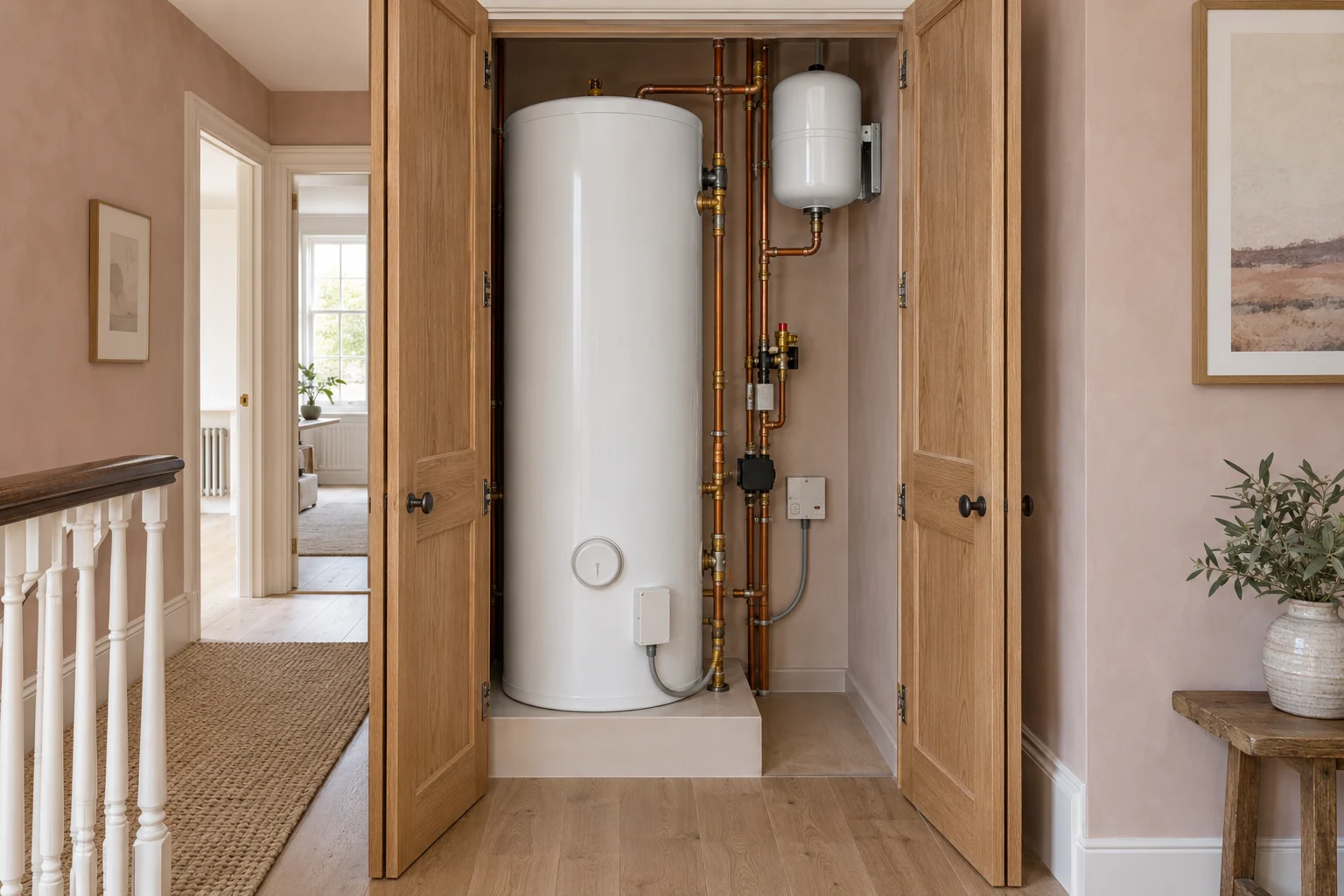
Unvented hot water cylinder in an open oak service cupboard with accessible connections
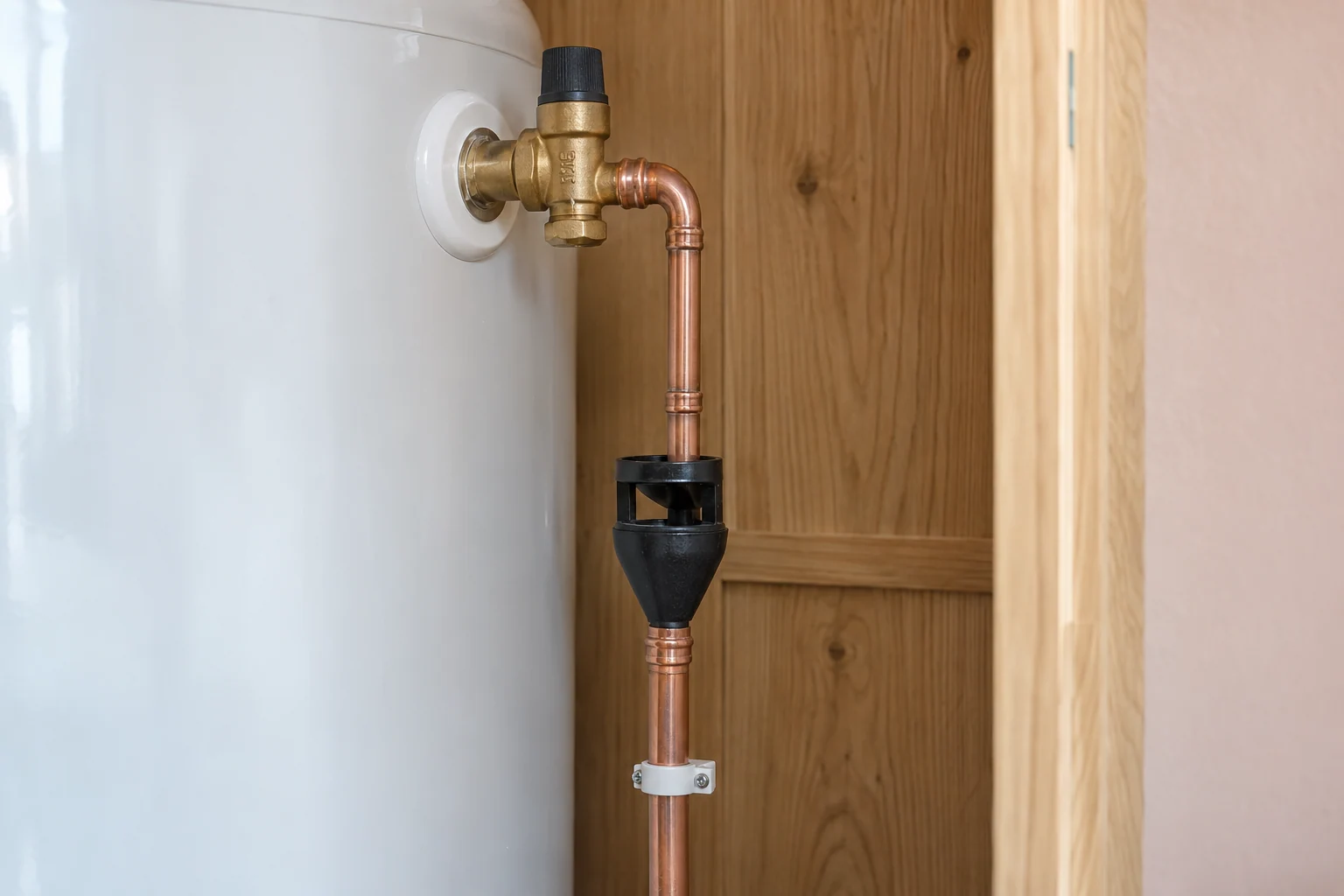
Plan the complete assembly and future access, not only the cylinder dimensions.

A vessel can fit on paper yet leave no room to inspect a valve or replace an immersion heater. We check the complete assembly, including clearances, electrical connections, expansion provision and future servicing.

The delivery route matters too: doorways, stairs, cupboard openings and shared access can constrain the choice. A slimline option may help, but its height and performance still need checking. The support beneath the cylinder must be appropriate for its filled weight.

A suitable discharge route from safety devices is an essential design requirement. Relocation is therefore more than moving a tank: the new position needs workable services, access and safety arrangements.

Where work affects shared areas, protected building fabric or finished rooms, we identify permissions, opening-up and making-good responsibilities before agreeing the scope.

06 · One coordinated installation

Plumbing, electrical connections and controls under one coordinated scope

PEP combines qualified unvented hot-water work with heating, plumbing and electrical installation. That helps when a cylinder must work alongside motorised valves, immersion supplies, heating zones and modern boiler controls.

We plan the normal operating sequence while preserving the independent safety functions. Commissioning checks the relevant interactions, not simply whether the cylinder heats once.

For a larger house, a controlled secondary circulation arrangement may be appropriate to reduce waiting at distant outlets. Its benefit must be balanced against heat loss, insulation, pump operation and maintenance; it is not an automatic addition.

See our heating controls guide for the wider integration principles.

07 · Assessment to commissioning

What happens during your cylinder installation?

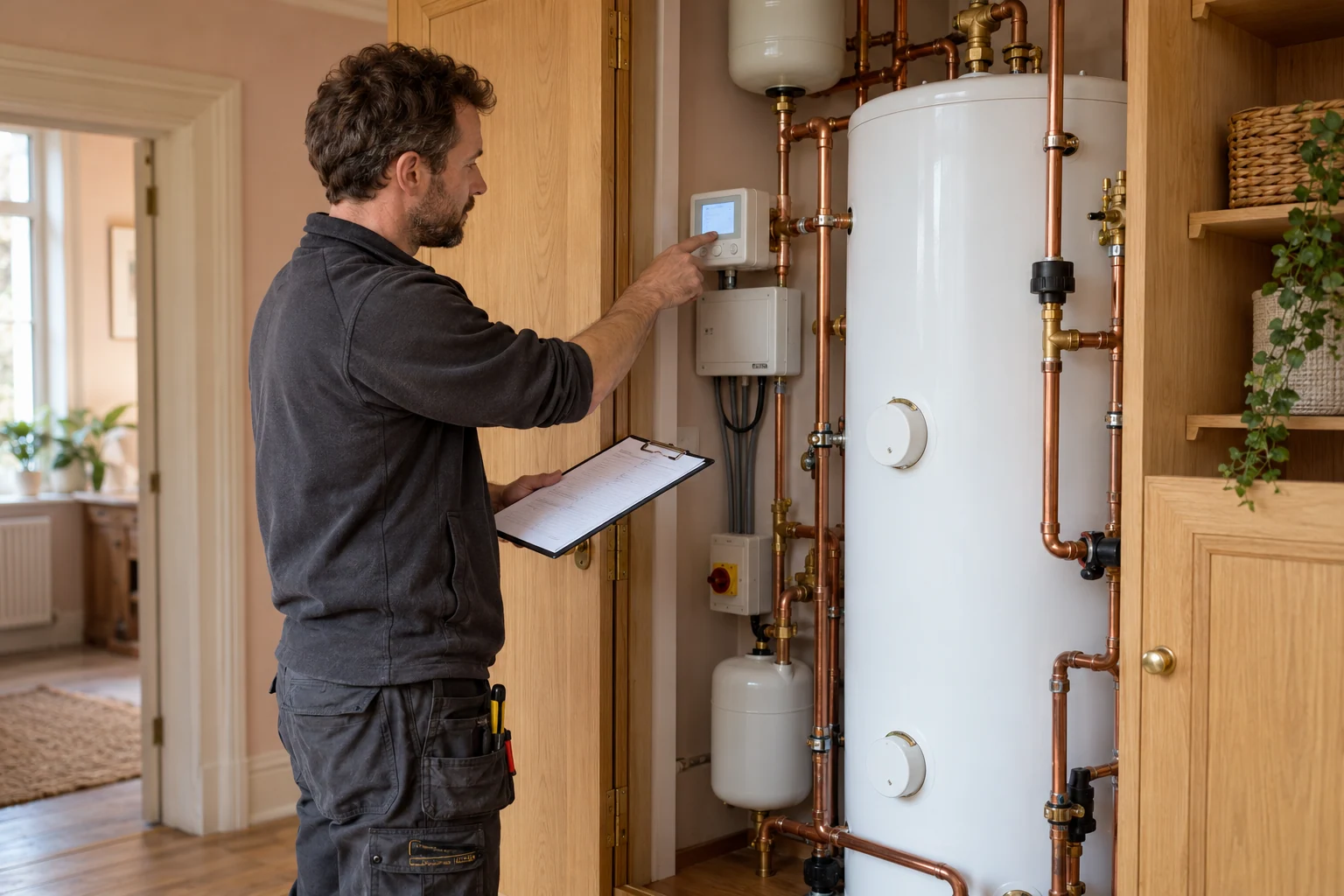
Heating engineer checking the controller beside a completed hot water cylinder installation
Commissioning includes checking the controls and explaining normal operation.

1. Assess the existing arrangement

We establish what is installed, what needs to improve and the practical conditions on site. For a refurbishment, proposed bathroom layouts and drawings help define demand before equipment is ordered.

2. Agree the specification and scope

The proposal identifies the cylinder, associated equipment, required connections and responsibilities. We clarify permissions, access, exclusions and the expected interruption to water and electricity.

3. Prepare and install

Removal, pipework, electrical connections and controls are coordinated around the agreed programme. Equipment is positioned for operation and maintenance, with any opening-up or making-good work handled according to the quotation.

4. Commission and hand over

We complete the applicable manufacturer checks and confirm heating operation, watertightness, controls and safety arrangements. The handover explains schedules, any immersion boost function and maintenance, with relevant commissioning records and compliance documentation.

A conversion or relocation may involve more work than a straightforward replacement. We confirm the programme after assessment rather than promise every installation can be completed within the same fixed timescale.

08 · Compare the complete scope

What affects unvented cylinder installation cost in Notting Hill?

The cylinder price is only one part of the quotation. Replacing an accessible unit in the same position differs from converting a gravity-fed system, upgrading the supply or moving storage to another floor.

The relevant scope may include:

  • The specified cylinder, valves and associated equipment.
  • Supply, distribution and boiler connection changes.
  • Immersion supplies, controls and electrical work.
  • Discharge arrangements, access and support.
  • Removal, disposal, commissioning and documentation.
  • Agreed opening-up, making good, exclusions and VAT treatment.

We set out the proposed work so that you can compare complete scopes, not a low headline price against a fully specified installation. Photographs help establish the starting point; a confirmed specification depends on the necessary assessment.

09 · Safety · Documentation · Product terms

Safety, documentation and product warranty

Close-up of a cylinder relief discharge connection and open tundish with a visible air gap
Relief discharge, inspection access and maintenance form part of the installation planning.

Unvented installation requires appropriate competence and the applicable Building Regulations process. We establish the notification or certification route for the work and distinguish compliance documentation from commissioning records. Approved Document G provides the relevant hot-water safety guidance for England.

Manufacturer cover is product-specific. A long warranty on the cylinder vessel does not necessarily cover valves, electrical components or labour for the same period. We explain the selected product's terms, registration and maintenance requirements; see Megaflo's warranty guidance for that range.

Our unvented cylinder servicing guide explains the ongoing checks and records to plan for.

Before you book

Your Notting Hill cylinder installation questions

Can I retain my existing boiler?

Potentially. Its condition, compatibility, output and controls need checking against the selected cylinder. If suitable equipment can remain, replacing the hot-water store does not automatically mean replacing the boiler.

Will an unvented cylinder improve weak showers?

It can provide a different arrangement from gravity-fed storage, but the result depends on the available supply, pipework and outlets. We assess these before promising performance. A larger cylinder alone cannot remove an incoming supply restriction.

Which cylinder size do I need for several bathrooms?

Bathroom count is only a starting point. Bath size, shower flow, overlapping use and recovery all affect the choice. We assess the demand the installation must meet rather than use a single litres-per-bedroom rule.

Can you replace an electric cylinder in a converted flat?

Yes, subject to assessing the existing arrangement, electrical provision and access. Shared supplies, communal heating and building-management requirements can affect what is suitable and when work can proceed.

Can both loft tanks be removed during a conversion?

Not automatically. The cold-water storage cistern and heating feed-and-expansion tank have different functions. A tank can be removed only when the completed design no longer needs it and any other services it supplies have been addressed.

Can the cylinder move into a different cupboard?

Sometimes, but the new location needs suitable support, access, services and a compliant discharge arrangement. We assess the complete relocation rather than recommend a cupboard because the vessel appears to fit.

How long will we be without hot water?

That depends on removal, connections, access and commissioning. We agree the expected interruption and programme after assessment, including any preparatory work needed before installation.

Does a leaking valve mean I need a new cylinder?

No. A valve, expansion or control issue may be repairable without replacing the vessel. Leakage or unexplained discharge needs professional assessment. Do not block, cap or bypass a safety outlet.

Notting Hill W11 · Plan the work early

Plan your Notting Hill hot-water installation with PEP

We cover Notting Hill W11, including projects around Pembridge, Ladbroke Estate, Portobello Road, Kensington Park Road and the W11 parts of Westbourne Grove and Holland Park Avenue. Send the full postcode so we can confirm the location and scope.

Tell us what is installed, what you want to improve, how the bathrooms are used and when the work is planned. Photographs of the existing label, connections and cupboard are helpful; do not remove covers or disturb components.

Whether you need an assessed replacement or hot-water storage planned into a refurbishment, involve PEP before the equipment and layout are fixed.

Discuss your cylinder installation and quotation