Existing cylinder replacement:
select a suitable successor and check which surrounding components can remain.
 Pure Energy ProjectElectrical · Heating · Plumbing07825 268 434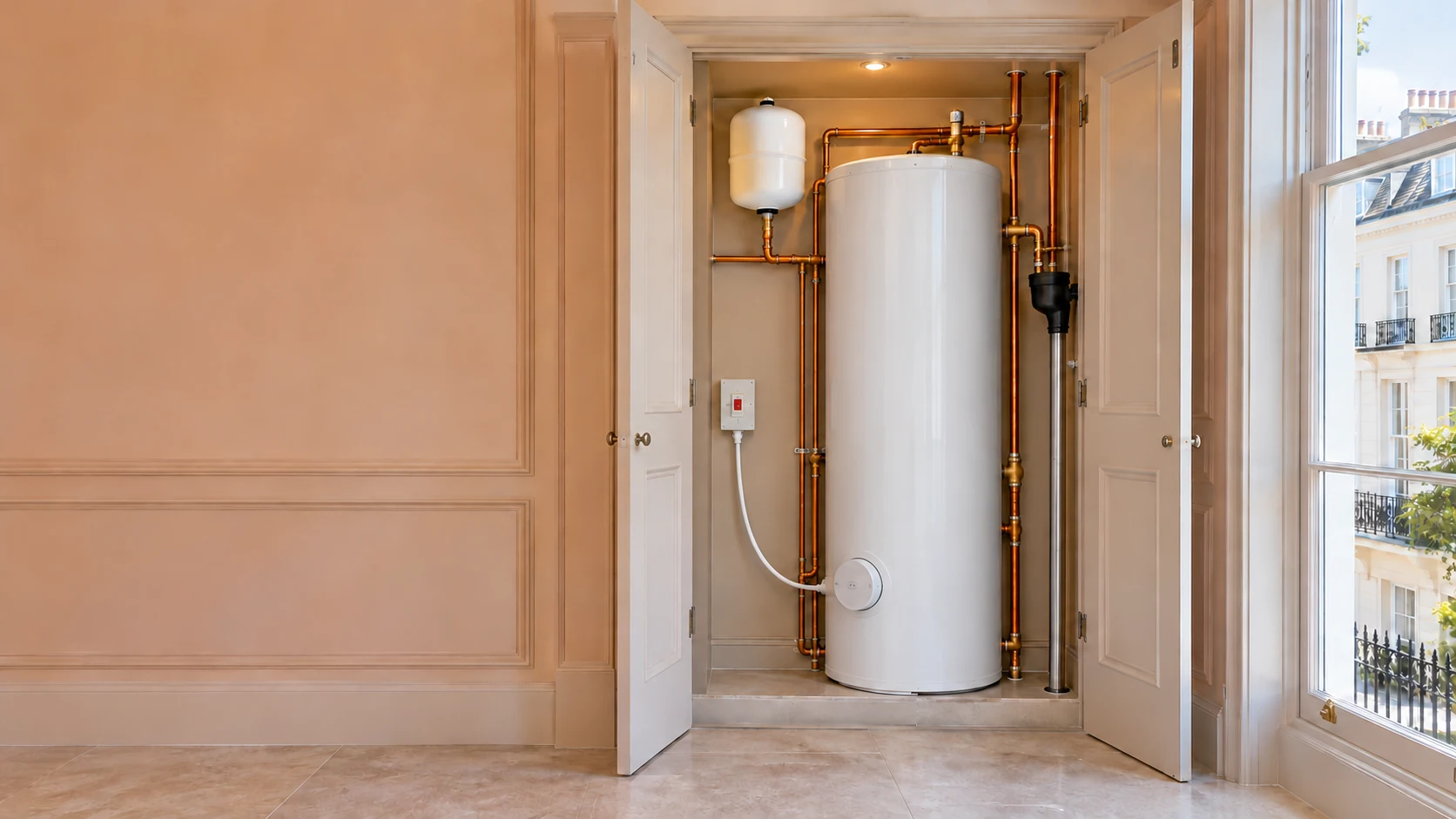
Paddington · Bayswater · Lancaster Gate · W2
Hot water for the way you live. An installation that works with your home.
PEP installs and replaces unvented hot-water cylinders in Paddington W2, with direct-electric and boiler-fed options for houses, converted flats and apartments. Whether your existing cylinder needs replacing or a refurbishment calls for a different hot-water arrangement, we bring the plumbing, heating, electrical connections and controls into one coordinated plan.
Plumbing enquiries: 07843 676 480
Looking beyond W2? Explore our unvented cylinder installations across London.


The starting point is your home: the water supply, the space available and how your household uses hot water. From there, we specify the equipment, explain the alterations and agree a clear installation scope.
Start with the right scope
A leaking cylinder body, inadequate storage or an unsuitable existing arrangement may justify replacement. No hot water, an unreliable timer or disappointing shower performance does not, by itself, prove that the cylinder has reached the end of its life.
The cause may lie in an immersion heater, controls, a valve, the expansion provision or the water supply. We establish what needs changing before proposing equipment.
select a suitable successor and check which surrounding components can remain.
assess whether mains-fed storage suits the property and identify the necessary alterations.
plan storage, recovery and distribution around the revised layout and demand.
The aim is the right scope of work, whether that means retaining a serviceable system or installing a replacement that addresses its limitations.
Your home · Your building
In a converted property around Sussex Gardens or Gloucester Terrace, the cylinder may be inside the flat while parts of the supply or pipe route are shared. A mansion-block apartment or a newer home around Paddington Basin can present a different set of access and building-management requirements.
We identify the equipment serving your home, how it can be isolated, and whether the proposed work touches communal services. Delivery access, stairs or lifts, permitted working hours and protection of common areas belong in the plan before installation day.
If the building uses communal heating or a heat interface unit (HIU), that is not automatically a conventional domestic-cylinder replacement. We establish the arrangement and the limits of the work first. A private hot-water cylinder and a shared water supply can also coexist; one does not tell us everything about the other.
Choose the right arrangement
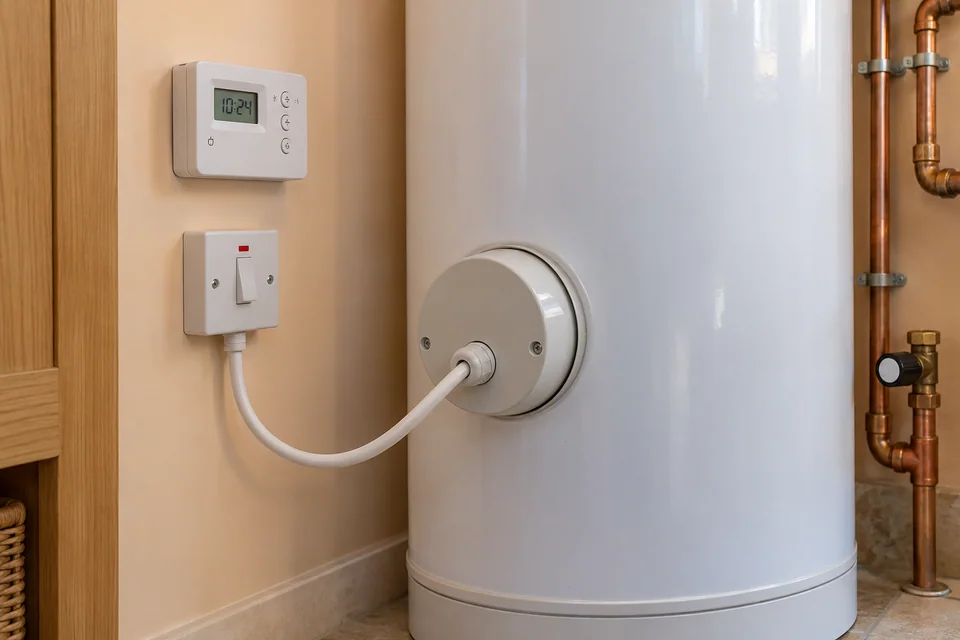
A direct-electric cylinder heats stored water using immersion heaters. It can suit a home without a boiler-fed hot-water circuit, but the replacement needs to match the electrical supply, controls and household demand.
We review the existing circuits, isolation, timer and any off-peak arrangement. More storage is not a substitute for enough recovery time, and a new cylinder does not automatically resolve an unsuitable electrical connection.
Supply · Demand · Storage · Recovery
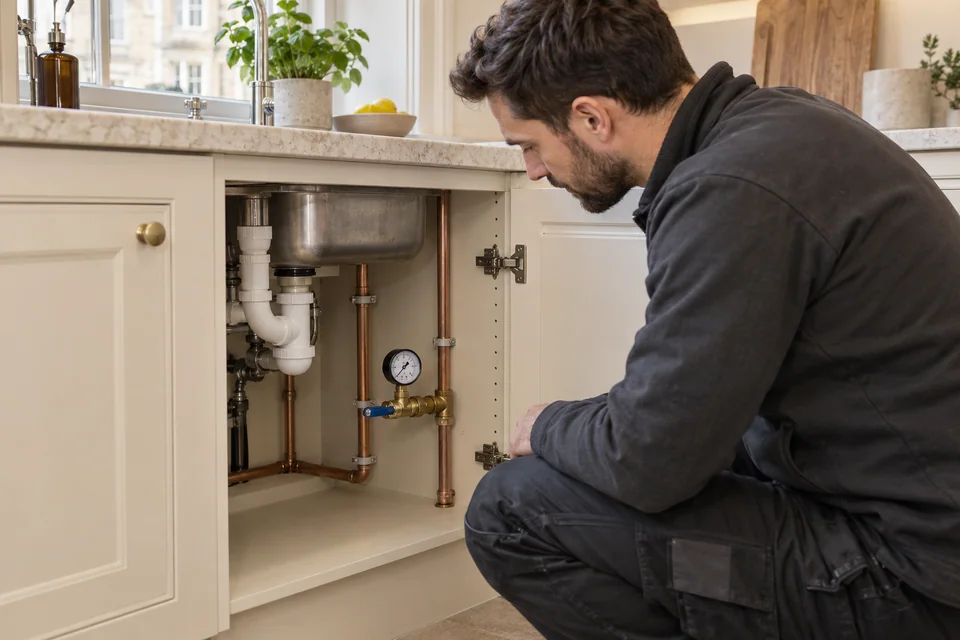
An unvented cylinder stores hot water supplied from the mains; it is not a pressure booster. Successful sizing means looking at several separate questions:
Two bathrooms do not automatically require a particular cylinder size. Shower flow rates, bath use and the household routine can make more difference than the room count.
If the incoming supply is the restriction, fitting a larger cylinder alone will not remove it. Our guide to understanding low water pressure explains the distinction. Where measurements justify a separate improvement, we can discuss suitable home water-pressure boosting options, subject to the property and supply arrangements.
Space now · Access later
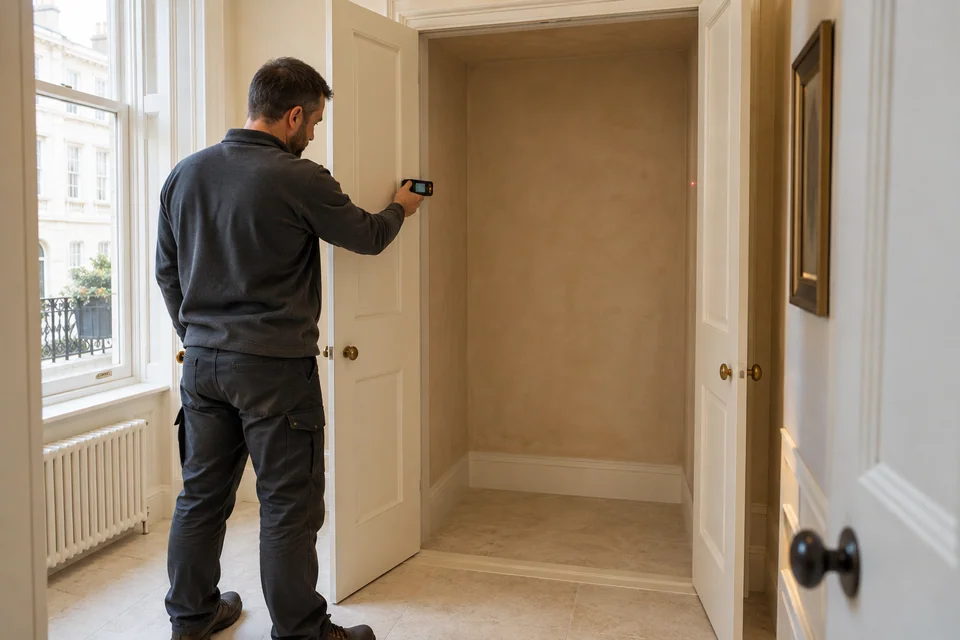
A cylinder that fits the cupboard on paper can still be the wrong choice. We check the route into the property, door openings, the available height and width, and the support for the filled cylinder.
The valves, pipework, controls and expansion provision need space too. Immersion heaters and other serviceable parts must remain accessible, and the safety discharge arrangement needs a suitable route. These details are model-specific; not every cylinder uses the same expansion design.
Moving the cylinder to a different cupboard may be possible, but it changes the pipe routes, electrical work and discharge planning. Those changes should be understood before the old equipment is removed.
Retain · Replace · Coordinate
A cylinder replacement does not automatically mean a new boiler, complete re-pipe or wholesale change of controls. Equally, the old connections should not be reused simply because they are already there.
We review their condition and suitability for the selected equipment, then separate retained items from replacements in the quotation. This includes the hot-water distribution, primary connections where present, safety components and electrical controls.
If the work accompanies a bathroom or kitchen refurbishment, our plumbing installations in Paddington service can coordinate the new distribution. For a wider heating upgrade, we can integrate the cylinder with heating and plant-room installation in Paddington.
From gravity-fed to mains-fed
A conversion replaces a gravity-fed hot-water arrangement with suitable mains-fed storage. It can change how the home delivers hot water and may release space occupied by a redundant cold-water storage cistern.
That depends on what the existing tanks serve. A separate feed-and-expansion tank may still be required by the heating system, so removing every tank is not an automatic part of the job.
We assess the supply, existing pipework, cylinder location and safety arrangements before recommending a conversion. Read our vented-to-unvented conversion guide for a fuller explanation of the options.
One coordinated installation
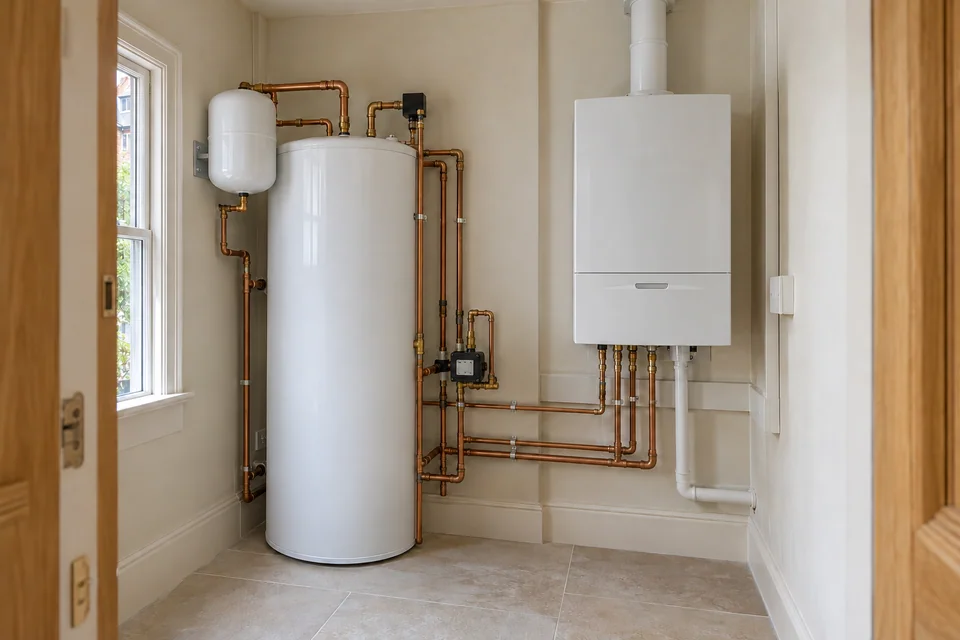
The cylinder is only one part of the installation. A direct-electric system needs appropriate power and timing; an indirect system needs the boiler, valves and cylinder controls to work together.
PEP brings those disciplines into the same project. Our electrical installation and controls in Paddington service supports the electrical scope where required, with responsibilities agreed alongside the plumbing work. You have a clear plan for the complete installation rather than an unresolved list of connections left for someone else.
Understand the complete cost
The useful comparison is the cost of a complete, suitable installation — not the cylinder price alone. We distinguish three common scopes:
a suitable new cylinder with the necessary connection and safety-component work.
changes to pipework, controls, electrical provision, access or the discharge arrangement.
a more substantial change to the hot-water layout and its supporting services.
Your quotation should identify the selected equipment, installation work, commissioning and removal of redundant equipment. We set out what is included, any additional work or exclusions, and the VAT position.
Building-management charges, access arrangements, joinery or making good can also affect the overall project. Where these apply, responsibilities need to be agreed rather than assumed. Photos help us understand the enquiry; final scope depends on the installation assessment.
From assessment to handover
A straightforward replacement and a relocation involving communal access do not carry the same programme. We discuss the likely duration for your job, not a universal installation time.
Commissioning · Compliance · Care
Unvented hot-water work requires appropriate competence and correctly specified safety provisions. Installation and commissioning must follow the manufacturer’s instructions and applicable Building Regulations, including the hot-water safety requirements associated with G3.
The appropriate building-control or competent-person-scheme route is established for the work. Commissioning records, electrical certification where applicable, and Building Regulations compliance documentation are different documents; product registration does not replace them.
Leaseholder consent or building-management approval may also be relevant, particularly where shared services, common areas or a regulated building are involved. These requirements depend on the building and proposed work.
Manufacturer cover is specific to the product. Cylinder-vessel, component and labour cover can differ, with registration and servicing conditions. We explain the applicable terms rather than promise a single guarantee period for every installation. Our unvented cylinder servicing guide explains why continuing maintenance matters.
Local installations · W2
We cover Paddington and surrounding W2 addresses, including Lancaster Gate, Bayswater, Queensway, Craven Hill, Tyburnia and Connaught Village. Enquiries are also welcome from Paddington Basin, Merchant Square, Sheldon Square and the W2 parts of Royal Oak and Westbourne Green.
Send your full postcode so we can confirm the location and practical access. For neighbouring areas, see cylinder installation in Maida Vale and Little Venice or cylinder installation in Notting Hill.
Before you book
Yes. We review the cylinder, electrical supply, isolation and controls together, alongside storage needs and available space. Any necessary electrical alterations are identified in the scope.
Often, provided it is suitable and compatible with the proposed indirect cylinder and controls. Replacing the hot-water cylinder alone does not automatically require a new boiler.
It can offer a different supply arrangement from gravity-fed hot water, but it cannot create pressure or flow that the incoming supply cannot deliver. Measurements establish what improvement is realistic.
We identify what serves the flat and who controls it. An HIU, communal plant or shared supply may require coordination with building management and a different scope from a private-cylinder replacement.
Possibly. We measure the equipment, fittings and maintenance clearances, as well as the delivery route. Matching the old cylinder’s nominal capacity is not enough to confirm a fit.
Check your lease and building requirements before work is booked. Consent may be needed for alterations, particularly where communal services or common areas are affected. This is separate from Building Regulations compliance.
There is no single answer based on bathroom count. We consider the fittings, simultaneous use, bathing habits, available supply and recovery from the heat source.
Not necessarily. A competent engineer should investigate the fault and safety components. A repair may be appropriate. Do not obstruct a discharge or interfere with safety controls.
The specified equipment and agreed work, with the treatment of associated plumbing, electrical alterations, commissioning, removal and making good clearly set out. Additional items, exclusions and VAT should be explicit.
That depends on the scope, access and any shared-service restrictions. We explain the expected interruption when planning the work; relocation or conversion can involve more than a straightforward replacement.
The relevant commissioning and compliance records, product information and guidance on normal operation and servicing. Manufacturer warranty conditions are explained for the selected model.
Yes. They form part of our W2 coverage alongside Paddington. Include your full postcode and building details when you contact us.
Paddington W2 · Plan the next step
Send PEP your postcode, a brief description of the project and photos of the cylinder, its label and the surrounding cupboard. Let us know the floor level, number of bathrooms, whether the hot water is electric or boiler-fed, and your preferred timescale.
Photograph only what is safely accessible; there is no need to remove covers. We will discuss the next steps towards a properly specified installation and a clear quotation.