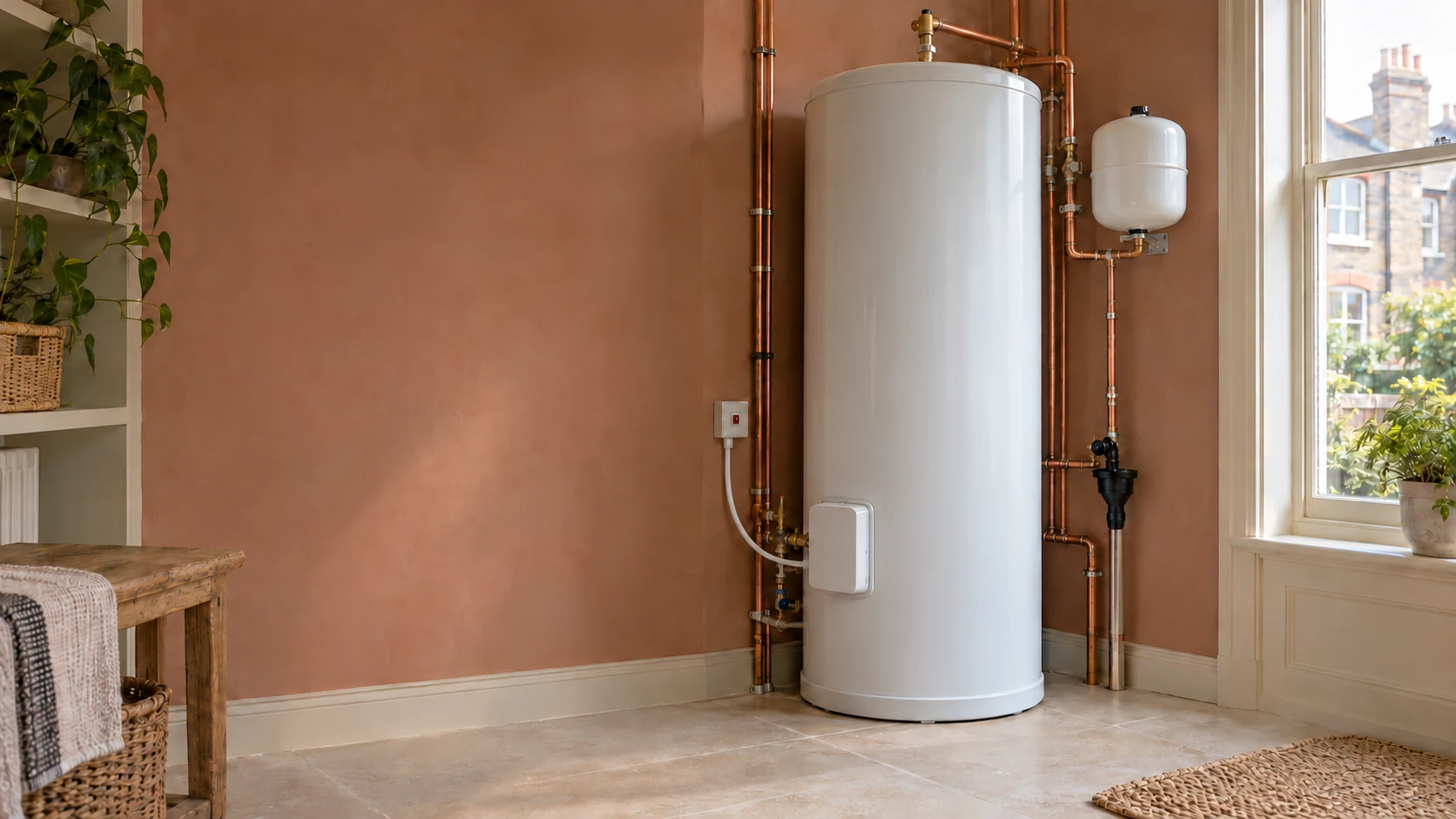


White hot-water cylinder with copper pipework in a warm, period-style utility room.

Willesden & Willesden Green · NW10 / NW2

Unvented Cylinder Installation & Replacement in Willesden

Hot water planned around your household. Installation planned around your home.

PEP installs and replaces unvented hot-water cylinders in Willesden and Willesden Green. From a direct-electric cylinder in a flat to an indirect system serving a family house, we bring the water supply, storage, pipework and controls into one considered installation.

Plumbing enquiries: 07843 676 480

Cylinder replacement · New installations · Vented-to-unvented conversions · Coordinated plumbing and electrical work

Gas Safe RegisterNICEIC

We establish what your home needs, what the existing system can support and which equipment can stay. You receive a defined scope before work begins, with the changeover and handover planned as carefully as the cylinder itself.

Start with the right project

A replacement cylinder, a conversion — or a fault that needs repairing?

The right starting point is the problem you want to solve. Perhaps the cylinder is leaking, the household regularly runs out of hot water, or a refurbishment will add another bathroom. Each situation calls for a different assessment.

Replace an existing cylinder

We assess the current unit, its connections and the surrounding installation. Where replacement is justified, the new specification should address the reason for changing it, not simply reproduce the old capacity and layout.
Install a new hot-water arrangement

A conversion or substantial renovation allows the storage position, distribution and controls to be planned together. Decisions made before cupboards, bathrooms and finished surfaces are fixed can prevent awkward compromises later.

Establish whether repair is the better answer

No hot water does not automatically mean a failed cylinder. A heating element, control, valve or heat-source fault may be responsible. We distinguish a repairable problem from a genuine replacement requirement before recommending new equipment.

Private homes · Shared services

Your hot water, your flat — and the services you may share

In a house, the boundaries of the installation may be straightforward. In a converted property or managed block around Willesden Green, the cylinder may belong to one flat while its incoming water supply, access route or surrounding services are shared.

We establish where your installation begins, how it can be isolated and whether access or agreement is needed from a freeholder or managing agent. Any work affecting communal areas, protected features or shared pipework needs to be identified before a replacement date is agreed.

Communal heating and heat interface units require a different assessment from a private cylinder connected to your own boiler. We do not assume that an individual unvented installation is the appropriate replacement for either.

If the project also changes bathroom, kitchen or utility connections, our plumbing installations in Willesden can be coordinated with the hot-water work.

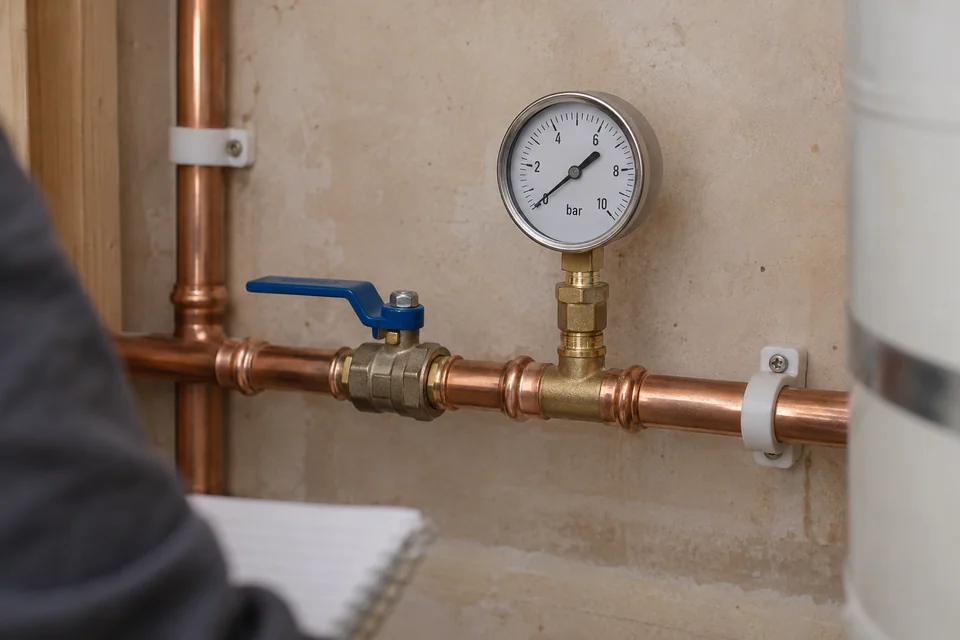
Pressure gauge connected to a test point on copper water-supply pipework
Checking the incoming supply before selecting the hot-water arrangement.

Supply · Storage · Recovery

Plan for the busiest part of the day

A useful specification starts with how the home is occupied: back-to-back morning showers, a bath in the evening, visiting family, or two bathrooms used together. The number of bedrooms alone cannot describe that demand.

We consider four connected questions:

  • Supply: what pressure and flow reach the property while water is being drawn?
  • Storage: how much usable hot water is needed between reheating periods?
  • Recovery: how quickly can the selected heat source replenish that store?
  • Distribution: can the pipework and outlets deliver the intended performance?

An unvented cylinder stores water supplied from the mains; it is not a pressure booster. A larger store can help with duration, but cannot by itself overcome a restricted incoming supply or undersized distribution pipework.

Our guide to understanding low water pressure and flow explains the distinction. If measurements identify a supply limitation, we can discuss appropriate next steps, including home water-pressure booster options where suitable. Boosting is a separate design decision, not an automatic addition to every cylinder installation.

Keep the right equipment

Keep what works. Define what must change.

A cylinder replacement need not become a complete heating replacement. A suitable existing boiler, sound pipework and compatible controls may remain, subject to their condition and the requirements of the proposed arrangement.

Equally, a new cylinder should not be connected to unsuitable valves, an inadequate electrical supply or an unverified safety discharge route simply because they served the previous unit. We identify the necessary changes and explain their purpose in the scope.

Where a new heat source is genuinely part of the project, our boiler installation service in Willesden can be planned alongside the cylinder. For a wider hydraulic redesign, we also undertake central heating and plant rooms in Willesden.

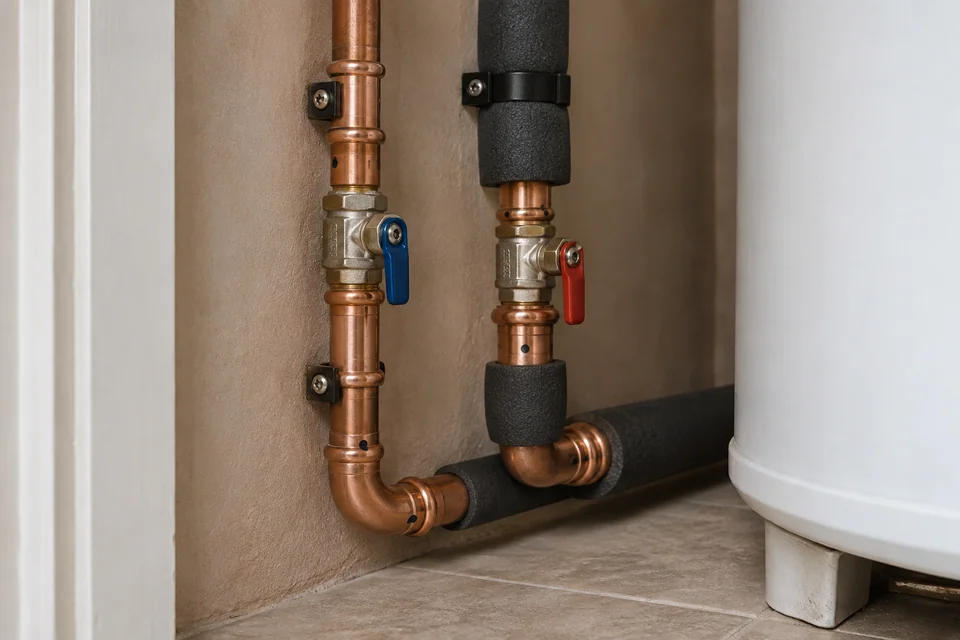
Neatly clipped copper press-fit pipework with insulation and accessible isolation valves
A considered connection layout with accessible components and service space.

Choose the right arrangement

Direct-electric, indirect and Megaflo cylinder options

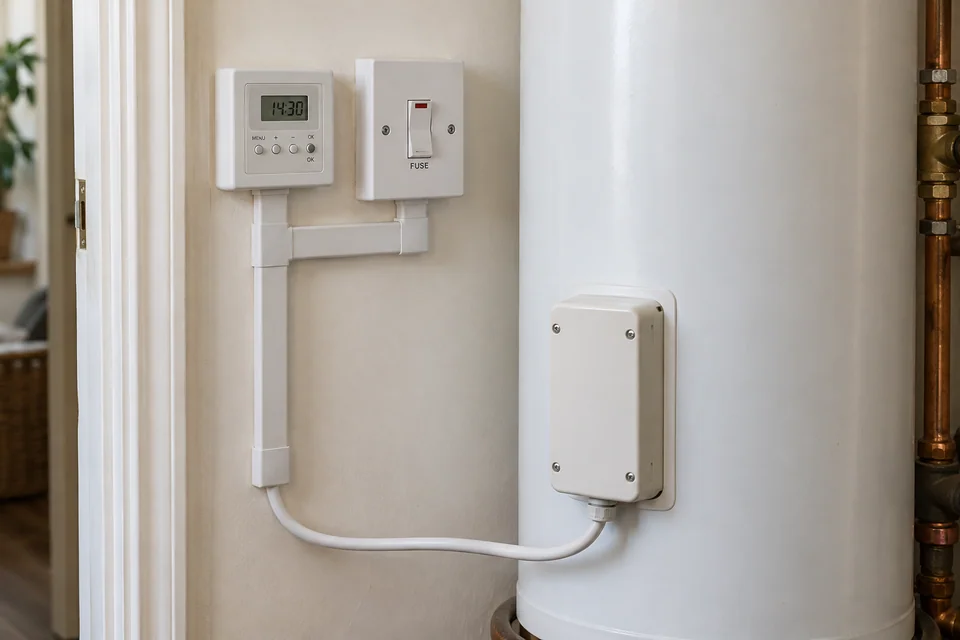
Closed hot-water timer and fused switch beside an electric cylinder with protected cable routing
Coordinating the hot-water schedule, electrical supply and cylinder connections.

Direct-electric hot water

A direct-electric cylinder heats its stored water using immersion heaters, without requiring a separate boiler for that task. It can suit a flat with an individual electric hot-water supply. Selection includes the available electrical capacity, heating schedule, household routine and tariff arrangements.

The immersion supply, local isolation and controls must suit the chosen equipment. Our electrical services in Willesden allow those connections to be considered with the plumbing, rather than left as an unresolved extra.

Indirect hot water

An indirect cylinder receives heat through a coil from a compatible external heat source. The coil, controls and recovery performance must match that source. A boiler installation and a heat-pump installation do not automatically use the same cylinder specification.

Megaflo installation and replacement

Megaflo is a cylinder brand, not the name of every unvented system. We consider Megaflo and other suitable options against the installation requirements, dimensions and ongoing maintenance needs. Expansion arrangements and warranty terms vary by model, so the proposed product is identified in your quotation.

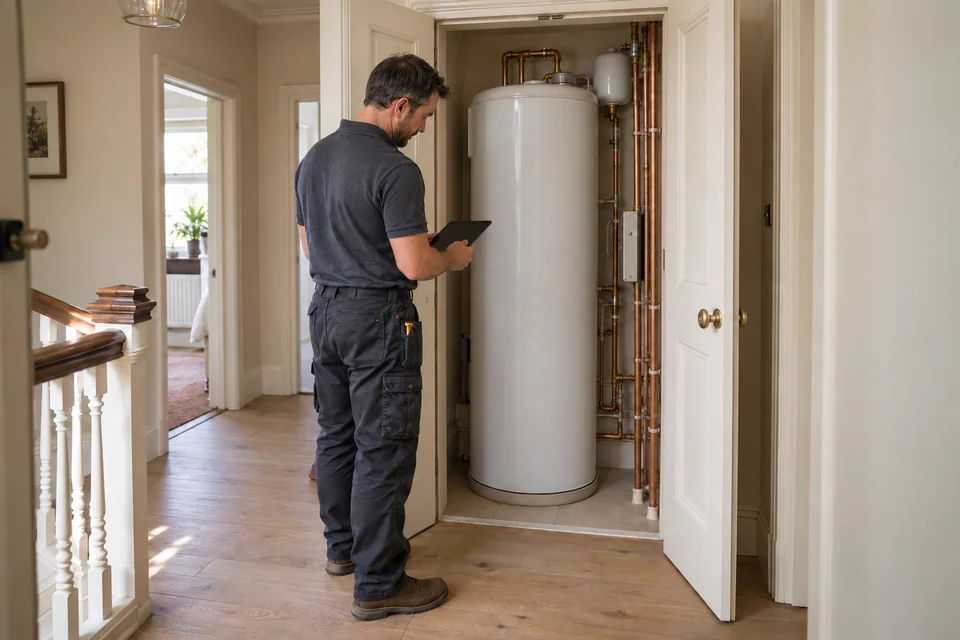
Installer assessing a utility cupboard containing a hot-water cylinder
Allowing space for installation, removal and ongoing maintenance.

Access now · Maintenance later

Check the route in — and the space to maintain it

The cylinder must reach its final position without the delivery becoming a building project of its own. Door openings, stair turns, landing space and the route for removing the old unit matter, particularly in upper-floor flats and homes with fitted cupboards.

At the installation position, we assess support for the filled weight, access to serviceable components, pipe connections and a suitable safety discharge route. The visible tundish and the discharge pipework beyond it are part of the installation, not finishing details to resolve afterwards.

A unit that fits tightly into an empty cupboard may leave no practical room for valves or future maintenance. We discuss those clearances, protection of the home and any joinery or making-good requirements before the layout is settled.

From gravity-fed to mains-fed

Changing from vented to unvented hot water

A vented-to-unvented conversion changes how domestic hot water is supplied and stored. It involves assessing the incoming main, existing distribution, new safety arrangements, controls and the consequences of removing redundant equipment.

The cold-water storage cistern serving a vented hot-water system has a different role from a heating feed-and-expansion cistern. Converting the hot water does not automatically convert the central heating to a sealed system, or make both cisterns redundant.

We set out which components will be retained, altered or removed for your property. For the wider comparison and assessment process, see our vented-to-unvented conversion guide.

A clearly defined proposal

Unvented cylinder installation cost in Willesden: what is included?

A straightforward replacement, a relocated cylinder and a conversion from a vented system involve different work. A useful quotation makes that distinction clear instead of presenting the equipment price as the cost of the whole installation.

Following assessment, the written scope identifies:

  • The proposed cylinder type, model and capacity.
  • Required valves, safety components, expansion arrangements and pipework.
  • Electrical connections, immersion heaters and control alterations.
  • The safety discharge route and any changes needed to it.
  • Removal and disposal of the old unit and other agreed redundant equipment.
  • Commissioning, documentation and the applicable Building Regulations notification arrangements.
  • VAT, agreed access requirements, and any building work or making good included or excluded.

Supply upgrades, relocation and alterations to shared services can materially change the scope. Where an item depends on further investigation or another party's approval, we identify it rather than quietly treating it as included.

Arrange an assessment of your cylinder project

From assessment to handover

A planned changeover, with a clear handover

1. Assess and specify

We review the existing installation, household demand, supply conditions and access. The specification brings the equipment and its connections together, with any outstanding dependencies made clear.

2. Agree the installation sequence

We discuss occupancy, the expected hot-water interruption and any work by others. A replacement in an occupied home needs a different programme from an empty property undergoing renovation; the timetable follows the agreed scope.

3. Install, commission and explain

The completed system is checked and commissioned, with its operation demonstrated at handover. You should know how the normal hot-water schedule works, what the controls do and which maintenance records to keep.

Unvented work requires the appropriate competence and compliance with the applicable hot-water safety requirements, including G3. We confirm the notification route and relevant documentation for the installation. The commissioning record, Building Regulations compliance documentation and manufacturer warranty registration serve different purposes; one should not be mistaken for all three.

We also explain the selected cylinder's servicing requirements and warranty conditions. Our unvented cylinder servicing guide covers the ongoing care of the system. Safety valves, discharge arrangements and electrical components are work for a competent professional, not DIY adjustments.

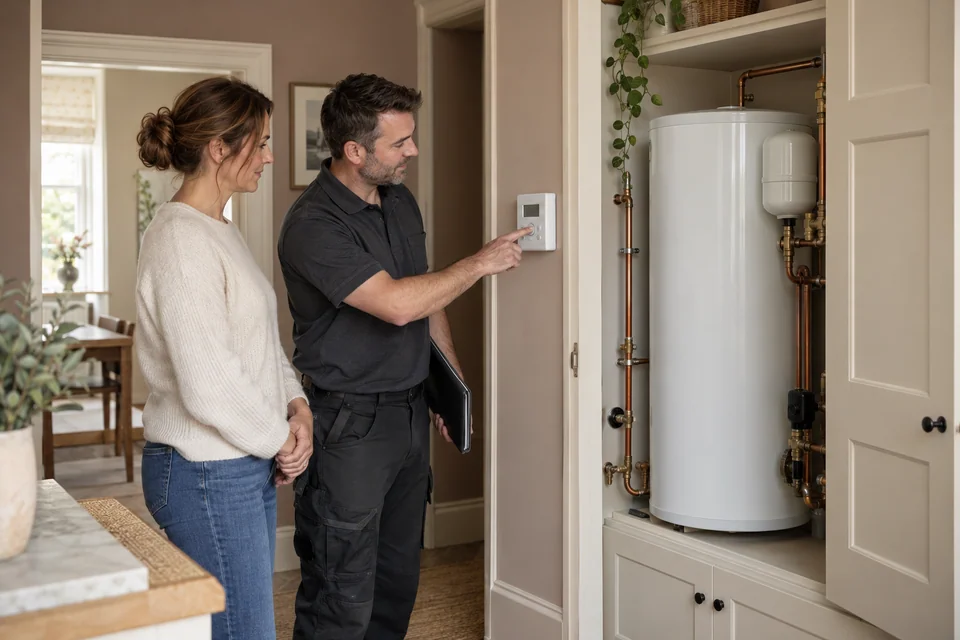
Installer explaining a closed hot-water control panel to a homeowner beside a utility cupboard
A clear handover covering the controls, operating schedule and maintenance information.

Plumbing · Heating · Electrical

Heating, plumbing and controls coordinated by PEP

A cylinder sits at the meeting point of several trades. Pipework can be complete while the controls remain unresolved; an electrical connection can be ready while the water supply still limits the intended performance. PEP considers those interfaces within the installation scope.

Our team combines qualified unvented hot-water work with heating, plumbing and electrical expertise. That matters whether the job is a focused replacement or one part of a larger refurbishment: the retained equipment, new components and operating controls need to work together.

Explore our London heating and plant-room projects for examples of the wider work we undertake. This local service forms part of our unvented cylinder installations across London.

Local installations

Willesden, Willesden Green and nearby addresses

We cover Willesden and Willesden Green, including the High Road and Walm Lane areas and relevant NW10 and NW2 addresses. We also consider projects around Church End, Church Road, Dudden Hill and nearby Harlesden and Roundwood.

For southern Dollis Hill, the Gladstone Park edge or Mapesbury near Willesden Green, send the full postcode and project details so we can confirm coverage. Postcode districts extend beyond neighbourhood boundaries.

For Queen's Park, Brondesbury and Kensal Rise, see our unvented cylinder installation service in Queen's Park.

Before you book

Questions about hot-water cylinder installation in Willesden

Can you replace the cylinder without replacing my boiler?

Yes, where the existing boiler is suitable and compatible with the proposed arrangement. We check its connection and control requirements rather than assuming both appliances must be replaced together.

Does a lack of hot water always mean the cylinder needs replacing?

No. The cause may be a component or control fault rather than the cylinder itself. Diagnosis comes first; replacement is recommended when it addresses the actual condition or requirement.

Can you replace a direct-electric cylinder in a Willesden flat?

Yes. We assess the cylinder, available space, water supply and electrical connections together. The heating schedule also needs to suit how you use hot water and the tariff available to you.

What if my water supply or heating is shared with other flats?

Tell us at the enquiry stage. We establish the private and communal boundaries, access and isolation arrangements, and any approvals needed. Shared heating or an HIU cannot simply be treated as a private boiler-and-cylinder system.

Will a larger cylinder allow two showers to run at once?

Not on its own. Storage affects how long hot water is available; simultaneous shower performance also depends on the incoming supply, pipework and outlets. Those conditions need checking before a capacity recommendation.

Can the new cylinder fit in my existing cupboard?

Possibly, but we check more than height and diameter. The route in, valves, discharge connections, filled weight and maintenance access all influence whether the position is suitable.

What changes when converting from vented to unvented hot water?

The hot-water storage moves to a mains-fed arrangement with the appropriate controls and safety provisions. Which tanks and pipes become redundant depends on their existing functions; the central heating is assessed separately.

What is included in the price, and what may cost extra?

Your quotation defines the cylinder, connections, removal, commissioning and agreed associated work. Relocation, supply alterations or building work may add to the scope. We distinguish included work, exclusions and unresolved items before proceeding.

What paperwork and maintenance information will I receive?

The handover covers the commissioning record, operating instructions, relevant compliance documentation and product warranty information. We explain the manufacturer's maintenance requirements so you can arrange the appropriate ongoing care.

Do you cover Willesden Green NW2 as well as Willesden NW10?

Yes. Both are covered by this service. Send your full postcode, property type and a short description of the proposed work so we can confirm the appropriate next step.

Willesden NW10 & NW2 · Plan the next step

Tell us about your hot-water installation

Send your Willesden or Willesden Green postcode, the property type and what you would like to improve. Include the existing cylinder type or model if known, its heat source, the number of bathrooms and any difficulties with access or shared services.

Photographs of the unit, visible controls and surrounding space can help us understand the starting point. Only take pictures from a safe, accessible position without removing covers. Let us know whether the home will remain occupied and your preferred timing.

We will use those details to establish the next assessment step and develop a properly scoped installation proposal.

Discuss your Willesden cylinder installation