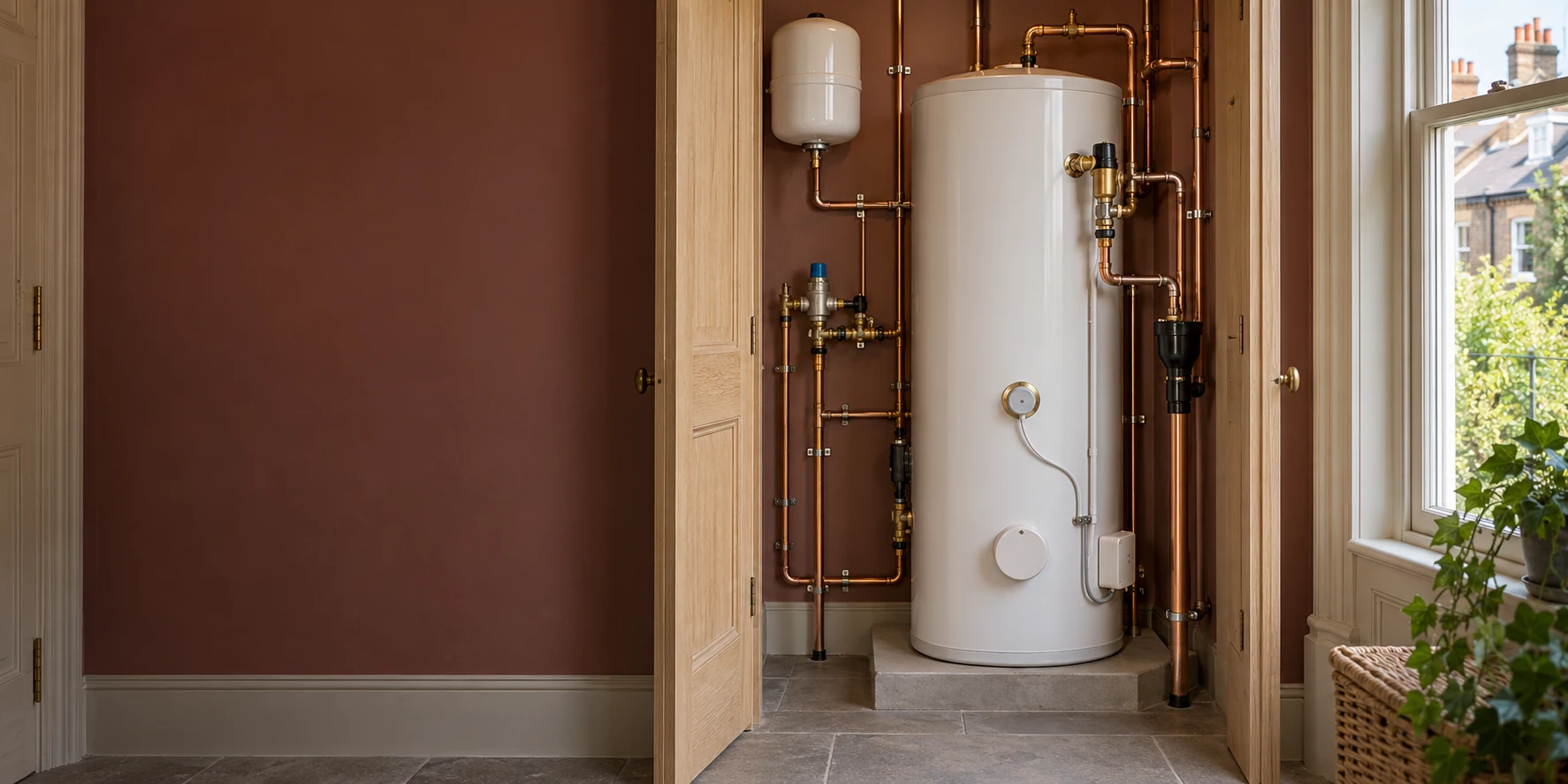


White hot-water cylinder with copper pipework in an oak-framed utility alcove with burgundy walls.

Hot-water installations · Queen’s Park NW6

Unvented Cylinder Installation & Replacement in Queen’s Park, NW6

Hot water that keeps pace with a changing home.

A loft bathroom, a larger household or a cylinder reaching the end of its serviceable life can all change what you need from your hot-water system. The right installation starts with those demands—not simply the capacity printed on the old tank.

Discuss your Queen’s Park hot-water project

Plumbing enquiries: 07843 676 480

New installations · Cylinder replacement · Vented-to-unvented conversions

Gas Safe RegisterNICEIC

PEP designs, supplies and installs unvented hot-water cylinders in Queen’s Park. We bring water supply, storage, heating performance, electrical connections and controls into one agreed scope, whether you are replacing a cylinder or planning the hot water for a wider refurbishment.

Start with the right project

Replacing a cylinder—or changing what your home needs?

The work around the cylinder can differ considerably between projects. We establish which situation applies before recommending equipment or describing the installation as a straightforward replacement.

Replacement of an existing unvented cylinder

A deteriorating or leaking vessel may need replacing. But inconsistent temperatures, slow recovery or poor flow can also involve the controls, immersion heater, valves or water supply. We assess the cause so that a new cylinder is not fitted around an unresolved problem.

Where replacement is appropriate, we check which associated components can remain and which need changing. The proposal covers the installation around the vessel, not just its purchase and delivery.
More hot water for an additional bathroom

A new en-suite changes the calculation when it will be used at the same time as the family bathroom. We consider the outlets, household routine and available supply alongside storage and recovery. That helps establish what the system can deliver before bathroom fittings and cupboard layouts are finalised.

Converting an older vented arrangement

An unvented installation can replace gravity-fed hot-water storage where the property and supply are suitable. We assess the connections, retained heating system and safety arrangements before deciding what can be removed. Our vented-to-unvented conversion guide explains the wider choices.

Queen’s Park homes

Plan the hot water before the new rooms are finished

In a Queen’s Park house gaining a loft bathroom or rear extension, the useful questions arise early: will existing pipework serve the new outlets, where can the cylinder go, and which routes will become inaccessible once the building work is complete?

For period houses around Salusbury Road, Harvist Road and Chevening Road, protecting retained rooms can be as important as fitting the new equipment. We consider routes and access alongside the installation, so the scope identifies where opening up or work by other trades may be required.

A converted flat presents different decisions. Shared supplies, communal areas and freeholder or managing-agent requirements need checking against the proposed work. A communal heat network or thermal store should not be assumed to accept a standard cylinder swap.

Where the project also changes bathrooms, kitchen connections or water distribution, our plumbing installations in Queen’s Park can be coordinated with the hot-water work.

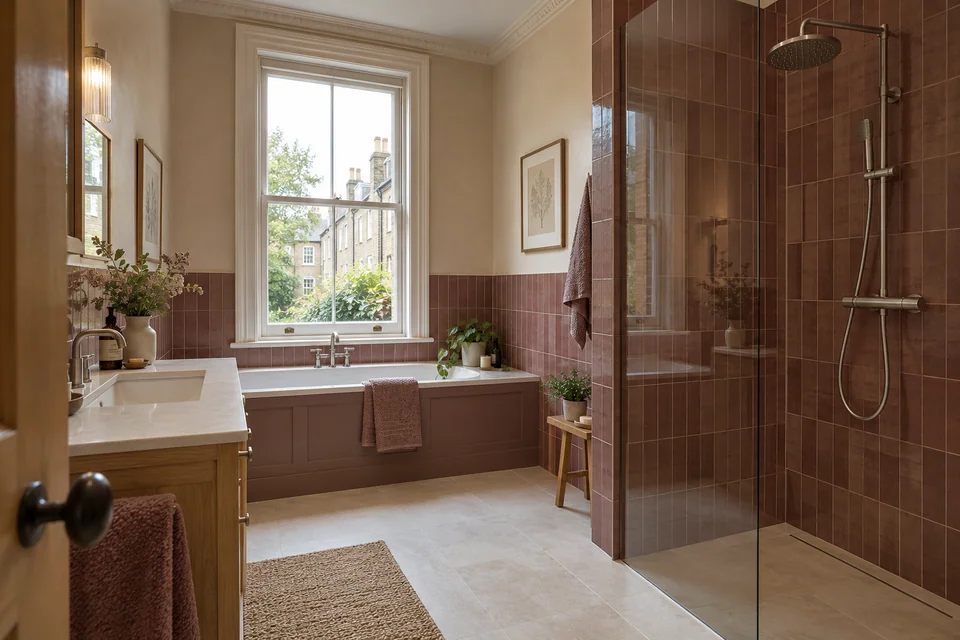
Period-style bathroom with a bath beneath a sash window, an oak vanity and a walk-in shower with rose tiles.
Bathroom plans help define the hot-water demand the system needs to serve.
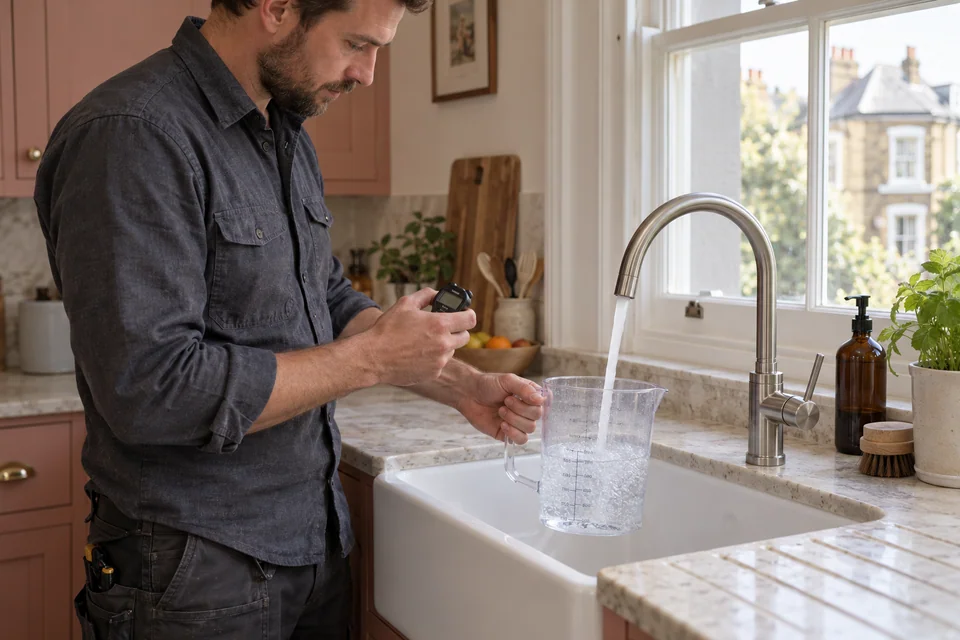
Engineer checking water flow at a kitchen mixer using a measuring jug and stopwatch.
A practical outlet-flow check as part of the water-supply assessment.

Before choosing the cylinder

Supply, storage and recovery: three different questions

Enough hot water is not determined by cylinder size alone. We assess three connected parts of the system.

What the water supply can deliver

Pressure measured with every outlet closed does not show the flow available during use. We check the incoming supply under relevant demand and consider restrictions in the pipework and fittings. An unvented cylinder does not manufacture pressure or remove a bottleneck in the incoming main.

How much usable hot water you need

Occupancy, baths, shower flow rates and simultaneous use affect storage requirements. Two bathrooms used one after another are a different demand from two showers running together. We size around the intended use rather than prescribing a cylinder from bedroom count alone.

How quickly the hot water can recover

Recovery depends on the cylinder’s heating arrangement and the available heat input. Storage and recovery need to work together; choosing the largest vessel that fits can create unnecessary compromises in space and reheating time.

Our guide to understanding low water pressure explains the supply side. If separate improvements are needed, we assess suitable options before proposing water pressure boosters or storage systems.

Choose the right arrangement

Direct, indirect and Megaflo cylinder installations

Direct electric cylinders

A direct cylinder heats stored water using electric immersion heaters. For a flat without a suitable boiler connection, this may be an appropriate arrangement. Selection includes storage capacity, recovery, electrical provision and operating controls—not just matching the old cylinder’s dimensions.

Indirect cylinders connected to a heat source

An indirect cylinder transfers heat through a coil connected to an external source, commonly a boiler. We assess the cylinder, available heat input and controls together. If a heat pump forms part of the project, the cylinder must be suitable for that application; a standard boiler-fed model is not automatically interchangeable.

Megaflo installation and replacement in Queen’s Park

Megaflo is a specific range of unvented cylinders, rather than another name for every mains-fed hot-water system. We assess the appropriate model against the installation, including capacity, dimensions, heating method and expansion arrangements.

The specification may include Megaflo, Vaillant uniSTOR or another suitable cylinder. We explain why the proposed equipment suits the project instead of choosing a familiar badge before checking the requirements.

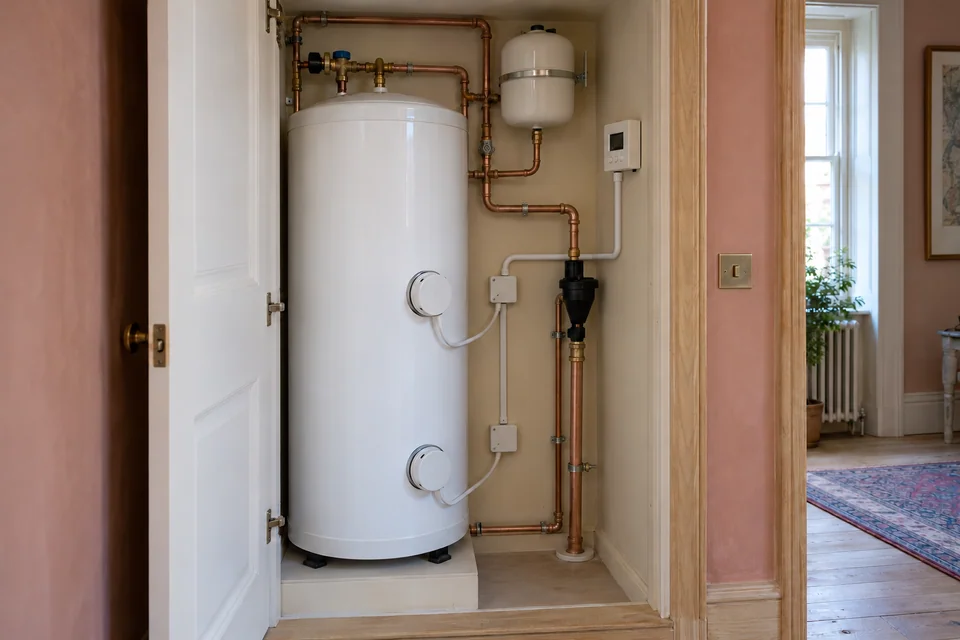
Direct electric hot-water cylinder with two immersion heater covers and wall-mounted controls in a utility cupboard.
Direct electric hot-water storage with accessible immersion connections and controls.
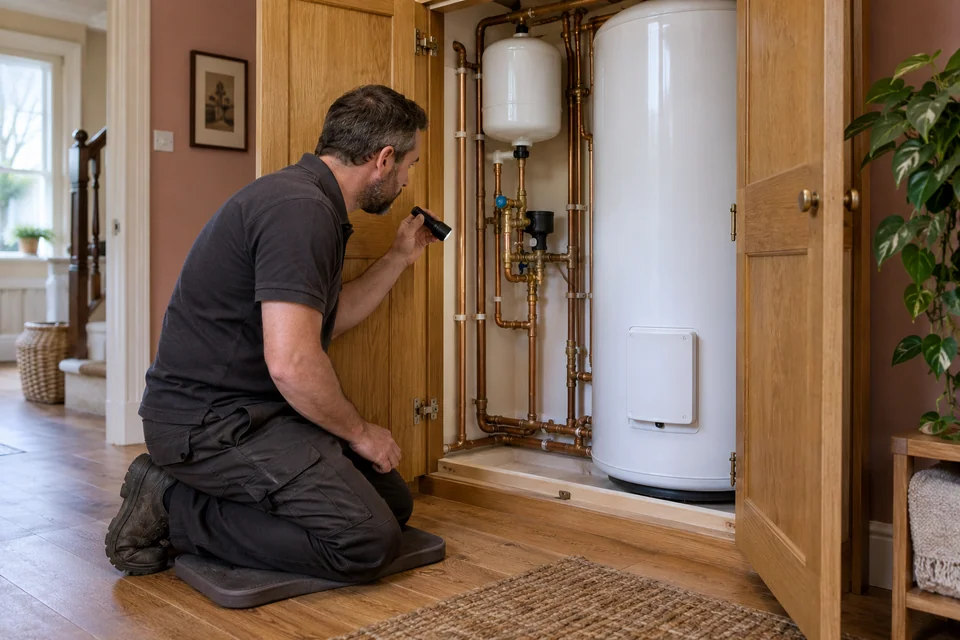
Engineer using a torch to inspect accessible pipework beside a hot-water cylinder in an open cupboard.
Working space around the cylinder matters after installation as well as on fitting day.

Space for the whole installation

A cylinder must fit the cupboard—and the installation around it

A cylinder that fits on a drawing still needs a practical route into the property, suitable support when full and enough space for its connections and maintenance.

We assess:

  • Doorways, stairs and the route for removing the existing cylinder.
  • The complete equipment footprint, including valves and any external expansion vessel.
  • Access to immersion heaters, controls and components that may need replacement later.
  • Pipe routes, isolation points and a suitable safety-discharge arrangement.
  • Responsibilities for joinery, opening up and reinstatement.

Planning the cupboard around a maintainable installation is especially useful during refurbishment. It avoids making every future service dependent on dismantling fitted furniture.

One connected system

The cylinder, boiler and controls need to work together

A replacement cylinder does not automatically require a replacement boiler. We assess the condition and suitability of retained equipment, including the connections and control sequence needed to heat the new cylinder correctly.

For Vaillant and Viessmann systems, compatibility depends on the particular boiler, cylinder, sensors and controller—not the manufacturer’s name alone. Where a new heat source is also required, our boiler installation service in Queen’s Park covers that part of the project.

PEP can coordinate the electrical installation and controls in Queen’s Park with the hydraulic work. This includes the relevant immersion supply, switching and control connections within the agreed scope. Our guide to heating controls and system compatibility explains these relationships in more detail.

Where hot water is part of a larger refurbishment, we can plan it alongside central heating and plant rooms in Queen’s Park, with equipment access and responsibilities agreed from the outset.

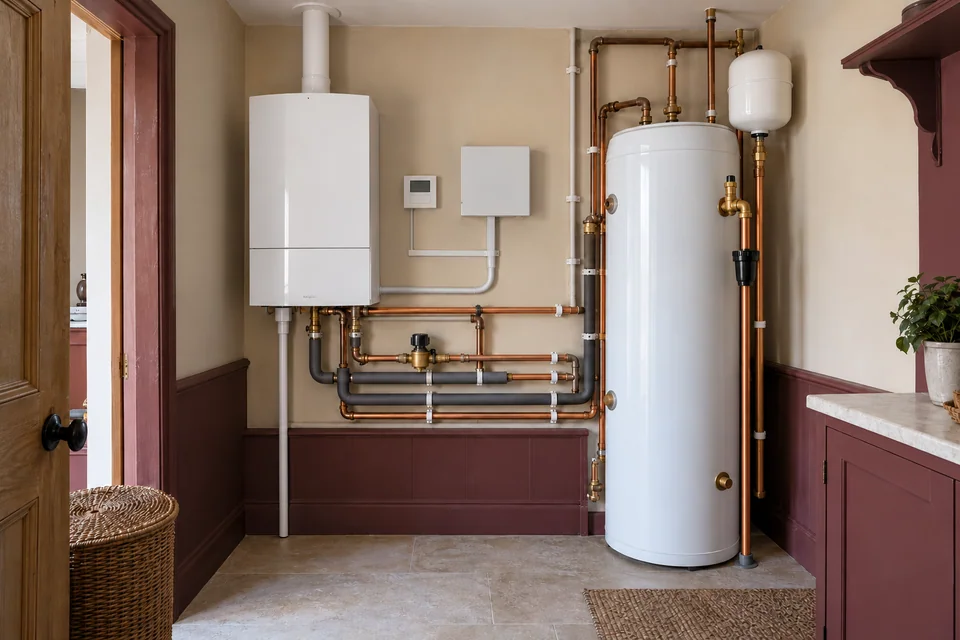
Wall-hung boiler, hot-water cylinder and wall-mounted controls arranged in a residential utility room.
The heat source, stored hot water and controls considered together.

A clearly defined proposal

Know what the cylinder installation includes

Two quotations for a cylinder of the same capacity may cover different work. Our written proposal identifies the selected equipment and the associated installation, so you can understand what is included before making a decision.

The scope sets out:

  • The cylinder model and the associated valves, expansion equipment and safety components to be installed.
  • Existing equipment and pipework proposed for retention, subject to the assessment.
  • Water connections, relevant heating connections and changes to the discharge route.
  • Electrical work and controls included in the project.
  • Removal and disposal arrangements for the old equipment.
  • Commissioning, handover documentation and any exclusions or work by others.

Before installation day, we agree access and the expected interruption to water, hot water and electricity. Temporary provision is discussed where needed rather than assumed to be included.

Ask PEP about your cylinder installation

From assessment to handover

From the first assessment to a working installation

1. Understand the existing system

We review the current equipment, household demand, planned changes and practical access. Photos and drawings help us prepare, while the assessment establishes the conditions that affect the final specification.

2. Agree the equipment and the work

The proposal brings together the cylinder, connections and controls. We explain retained components, responsibilities and any information or permissions required before installation.

3. Install and check the complete arrangement

We complete the agreed work and commission the system to the applicable manufacturer’s instructions. The checks cover the relevant water connections, heating operation, controls and safety arrangements.

4. Hand over a system you understand

We demonstrate normal operation, explain the controls and provide the relevant records and maintenance information. The handover should make clear how to use the installation and arrange its ongoing care.

Compare the complete work

What affects unvented cylinder installation costs in Queen’s Park?

The cylinder’s purchase price is only one part of the installed cost. An accessible replacement with suitable existing connections is a different job from relocating equipment or converting a vented system.

The main cost factors are the model and capacity, the condition of retained components, access, pipework alterations, discharge provision, electrical requirements and controls. Changes to the incoming supply or substantial work to the surrounding cupboard can also affect the budget.

We define these items in the quotation, including the applicable VAT treatment and any exclusions. That gives you a more useful comparison than an installation headline that leaves the associated work uncertain.

If new bathrooms or a loft conversion are still at design stage, involving us before first fix can help avoid paying to reopen finished routes later.

Beyond installation day

Safety, documentation and maintenance are part of the plan

Unvented hot-water storage requires competent installation, appropriate safety devices and a correctly designed discharge arrangement. The work must also follow the applicable Building Regulations process. We establish these requirements as part of the project, not as an afterthought once the cylinder is in place.

At handover, the relevant commissioning records and operating information accompany the installation. Building Regulations documentation and manufacturer warranty registration serve different purposes and should not be confused with one another.

Warranty terms depend on the selected product. Cover for the cylinder vessel may differ from cover for immersion heaters, valves, other components and labour. We explain the applicable conditions rather than applying a boiler warranty headline to the hot-water system.

Service access remains important after the installation is complete. Our unvented cylinder servicing guide explains the maintenance considerations and records to keep, alongside the manufacturer’s instructions for your cylinder.

Plumbing · Heating · Electrical

One coordinated scope for plumbing, heating and electrical work

Hot-water projects cross trade boundaries. The cylinder can be correctly piped but poorly controlled; an electrical alteration can miss a requirement of the heating design. PEP considers these connections together, with the responsibilities set out in the agreed work.

Our heating and plant-room work across London provides examples of the wider installations we undertake. For the full service overview, see unvented cylinder installation in London.

Whether you need a standalone replacement or a coordinated refurbishment package, the aim is the same: suitable equipment, accessible installation and controls that operate as intended.

Local installations

Queen’s Park NW6 and nearby areas

We welcome unvented cylinder installation and replacement enquiries across Queen’s Park NW6, including homes around Salusbury Road, Harvist Road, Kingswood Avenue and Chevening Road.

We also welcome enquiries from nearby Brondesbury, Brondesbury Park, South Kilburn and Kilburn Park, as well as Kensal Rise NW10 and Queen’s Park Estate W10.

Send your full postcode with a brief outline of the work so we can confirm arrangements for your property.

Before you book

Questions before changing your hot-water cylinder

Can I keep my current boiler with a new cylinder?

Often, provided it is suitable and in serviceable condition. We assess its available output, connections and controls against the proposed cylinder. A hot-water upgrade does not automatically mean replacing the heat source.

Will a larger cylinder allow two showers to run together?

Not on its own. Combined outlet demand must be supported by the supply and distribution, as well as sufficient usable storage and recovery. We assess those factors before recommending a capacity.

Can you replace a direct electric cylinder in a flat?

Yes. We assess the existing arrangement, electrical provision, controls and available space. Any shared services or building-management requirements are identified so the proposed work has a clear boundary.

Can a slimline cylinder solve a tight cupboard problem?

It may help, but a narrower vessel can have different height and access requirements. We check the full installation, the route into the property and the space needed to service it—not just the diameter.

Do both loft tanks disappear in a vented-to-unvented conversion?

Not necessarily. The cold-water storage serving the old hot-water arrangement and the feed-and-expansion cistern for an open-vented heating circuit have different functions. A retained open-vented heating system may still need its own cistern.

Do I need a G3-qualified installer?

The installer needs the relevant competence for unvented hot-water work. G3 training relates to this specialist area; Gas Safe registration alone does not establish it. The appropriate Building Regulations notification or approval route also needs to be addressed.

How long will the hot water be off?

That depends on the work and access. A replacement, relocation and full conversion can require different programmes. We agree the expected interruptions before starting, including any temporary arrangements specifically included in the quotation.

Will an unvented cylinder fix low water pressure?

It may change the performance of a gravity-fed system, but it cannot overcome every supply or pipework restriction. The cause needs checking before either a cylinder or a separate supply upgrade is recommended.

Do I need permission for work in a leasehold flat?

The answer depends on your lease and the proposed alterations, particularly where shared services or the building fabric are affected. Check the relevant freeholder or managing-agent requirements before work is agreed; these are separate from Building Regulations.

Do you cover Kensal Rise and Queen’s Park Estate?

We welcome enquiries from these nearby areas, as well as Brondesbury and Brondesbury Park. Include the full postcode and project details so we can confirm the arrangements for your address.

Queen’s Park NW6 · Plan the next step

Tell us what needs to change

Replacing an ageing cylinder, planning a new en-suite or reorganising the hot water during a renovation? Tell PEP what you have now and what you need the finished installation to do.

Send your postcode, whether the property is a house or flat, and details of the existing cylinder and heat source if known. Photographs of the label and surrounding space are helpful—there is no need to remove covers or disturb any components.

We can then discuss the assessment and the next steps towards a properly defined installation.

Discuss your Queen’s Park hot-water project