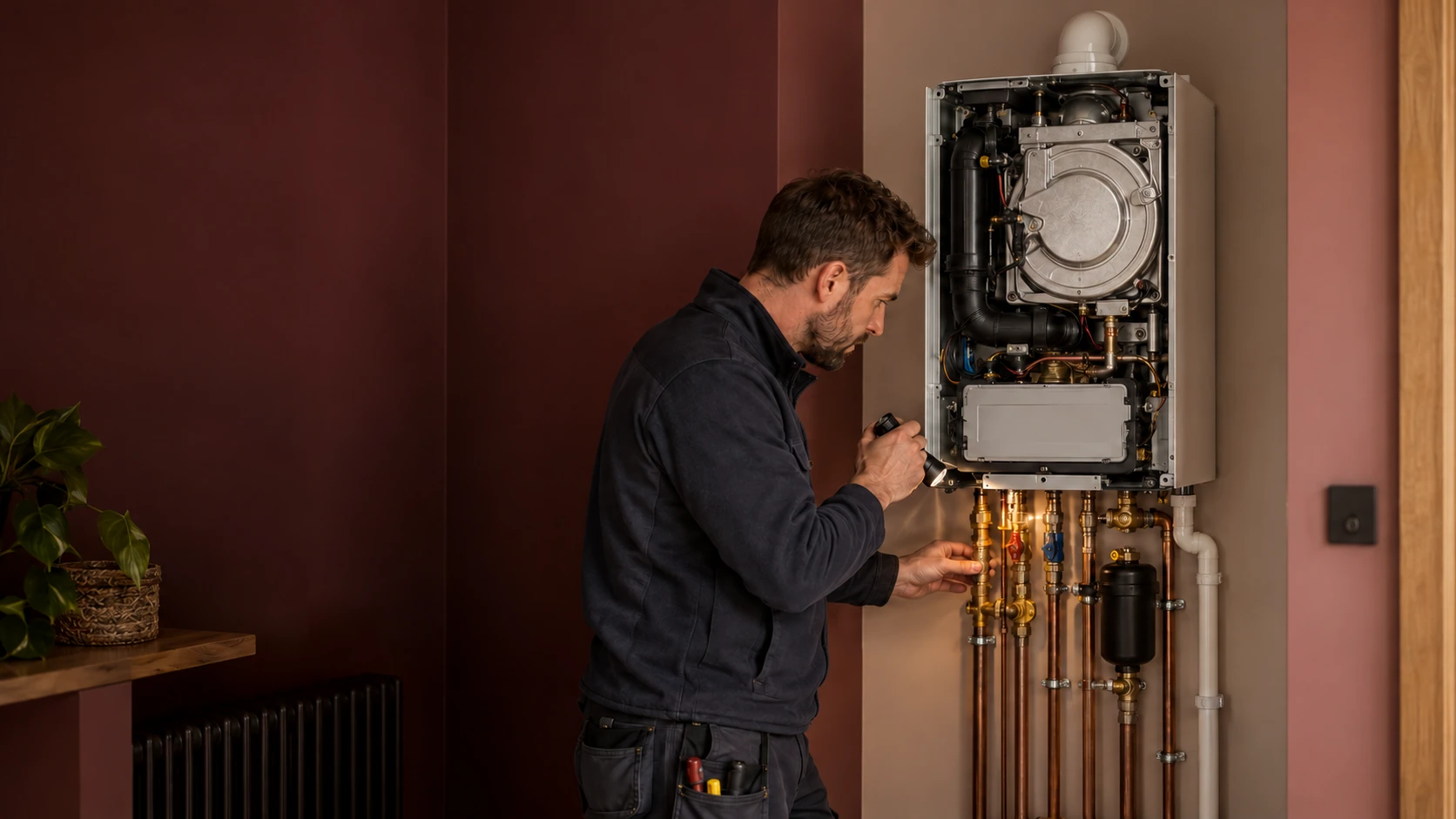
Heating engineer inspecting an open boiler and copper connections against a burgundy wall, with the flue directed into the wall behind the appliance.

Boiler installation · Shepherd’s Bush W12

Boiler Installation in Shepherd’s Bush, W12

Reliable heating starts with the right installation.

Vaillant & Viessmann Registered InstallersExtended manufacturer cover included on qualifying installations.

ONE COORDINATED TEAMPlumbing · Heating · ElectricalFrom first fix to handover
Gas Safe RegisterNICEIC

A dependable boiler should make everyday life straightforward: comfortable rooms, hot water when you need it and controls that work around your household.

PEP installs and replaces boilers throughout Shepherd’s Bush, from individual flats around the Green to family homes near Askew Road and Wendell Park. We handle straightforward replacements, planned relocations and complete changes to the heating and hot-water system.

As Vaillant and Viessmann Registered Installers, we combine current-generation appliances with properly specified pipework, controls, system cleaning and commissioning. Extended manufacturer cover is included at no additional warranty charge on qualifying PEP installations.

Whether your existing boiler is becoming unreliable or you are planning a refurbishment, we establish what your home needs before recommending what to install.

Registered installers. Carefully specified cover.

Vaillant and Viessmann Registered Installers

A good boiler is an important starting point. Matching it to the property — and setting it up correctly — is what turns that appliance into a dependable heating system.

PEP installs current Vaillant and Viessmann boilers, with the model, output, controls and protection package selected together.

Vaillant

Vaillant boiler installation

We specify Vaillant installations around the available space, heating demand and hot-water arrangement. That may mean a combi boiler for a flat or a system boiler working with a separate cylinder.

Selected Vaillant installations qualify for a 10-year manufacturer guarantee when the required protection package and registration conditions are met. We identify the applicable cover in your quotation. Vaillant’s extended-guarantee information.

Viessmann boiler installation

We also install Viessmann boilers for both straightforward replacements and more involved heating upgrades. Selection considers the appliance’s heating performance, domestic hot-water capability and compatibility with the proposed controls.

Extended manufacturer warranties of up to 12 years are available on selected Vitodens models; other models carry different options. Your quotation states the warranty included with your chosen installation. Viessmann’s product-warranty information.

Extended cover without a separate warranty charge

For qualifying PEP installations, the agreed extended manufacturer cover forms part of our installation package, without an additional warranty charge to you.

Cover remains subject to the relevant manufacturer’s conditions, including registration and servicing requirements. Annual servicing is separate unless expressly included, and boiler cover should not be confused with protection for every existing component in the heating system. Vaillant guarantee conditions, Viessmann warranty conditions.

The property and the household

Different W12 homes need different answers

A boiler replacement in a converted flat presents different questions from an installation supporting an extended family home.

In a flat, the deciding factors may be the existing cupboard, the flue route, access through communal areas and the performance of the incoming water supply. A replacement must remain accessible for servicing after the kitchen doors and surrounding joinery are back in place.

In a house undergoing refurbishment, tomorrow’s requirements matter too. An additional shower room, a larger kitchen or new underfloor heating can change the specification. These plans should be discussed before the boiler is ordered.

Tell us what equipment you have, rather than worrying about the terminology. Photographs of the appliance and its surroundings are a useful starting point.

Choose the complete arrangement

Which boiler system suits your home?

The right choice depends on heat loss, hot-water demand, available space and the existing installation. Bedroom count alone does not answer those questions.

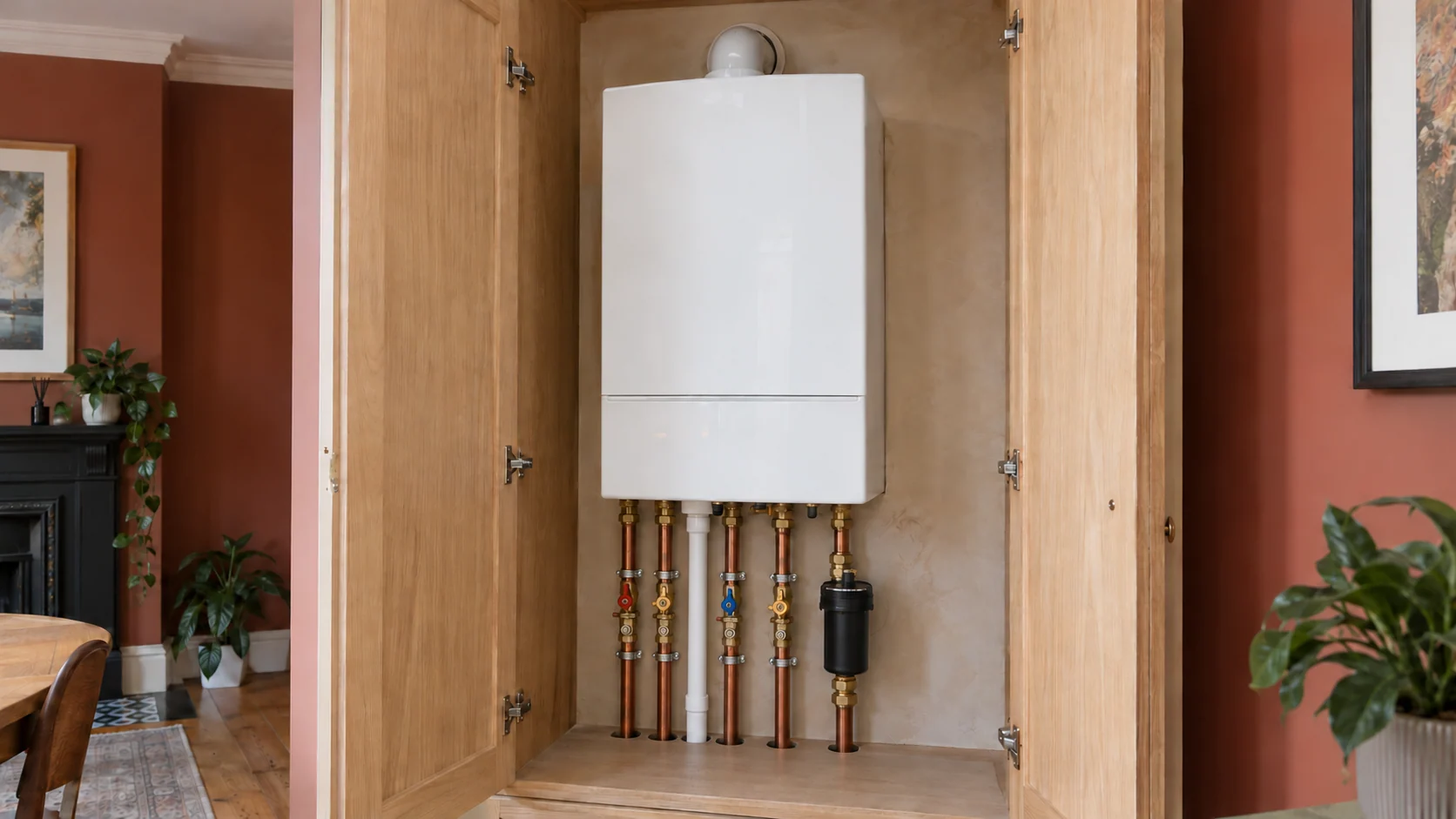
Wall-mounted boiler inside an open oak service cupboard with accessible copper connections and a separate condensate pipe.
Space-conscious installationA useful cupboard should still be serviceable.

Combi boilers: heating and hot water without a separate cylinder

A combi heats domestic hot water as it is needed. Where the incoming supply and household demand are suitable, this can be a practical arrangement for flats and smaller houses, particularly where storage space is limited.

However, a larger combi cannot create water flow that the incoming supply does not provide. We assess pressure and flow under demand, alongside the number of outlets likely to run together.

One shower used at a time is a different requirement from two showers running while someone uses the kitchen tap. Choosing a boiler means understanding that pattern, not simply selecting the highest output available.

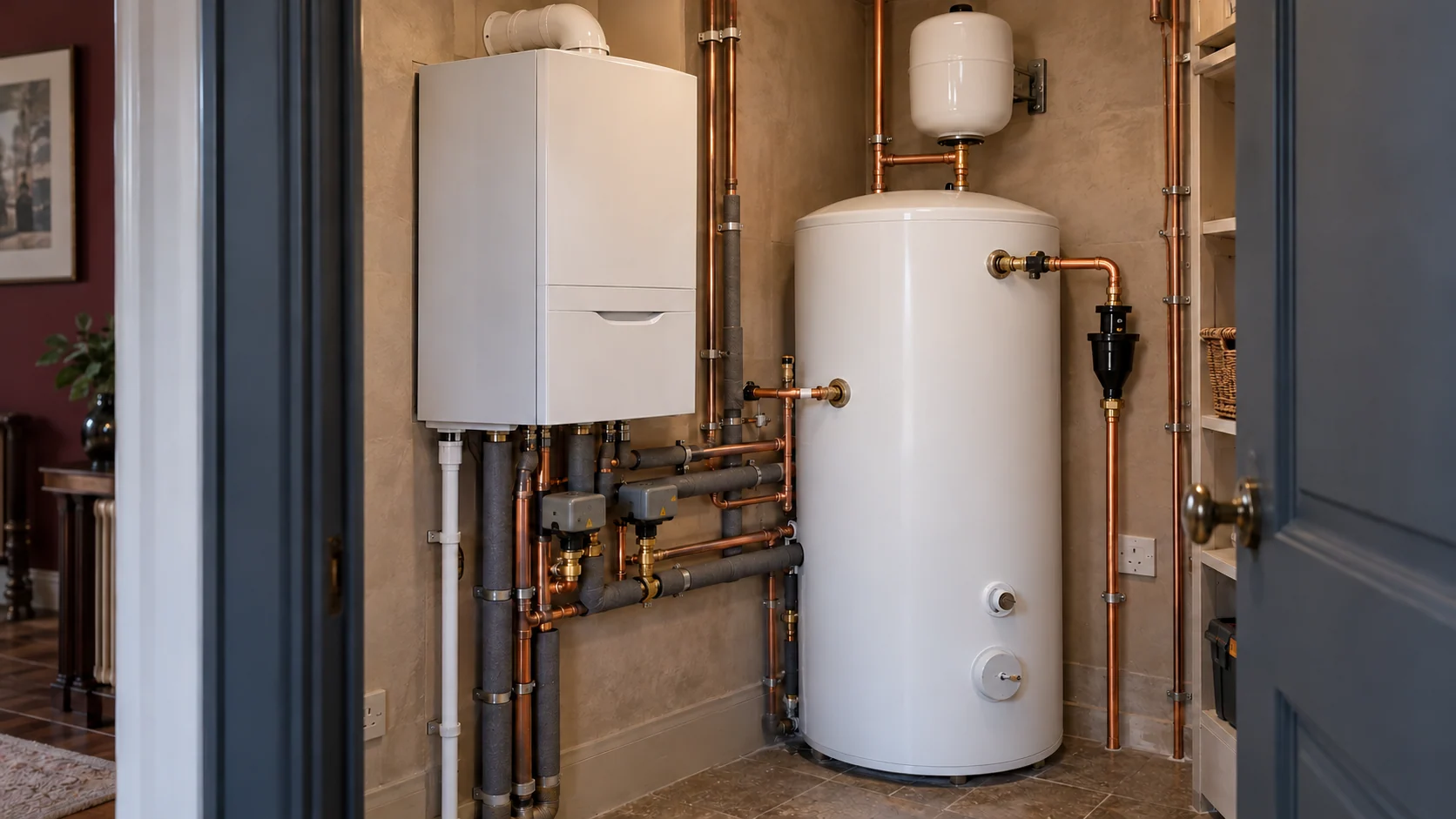
System boiler beside a hot-water cylinder with an expansion vessel, insulated pipework and a visible tundish.
System boiler & hot-water storagePlan for the way hot water is used.

System boilers: a considered option for stored hot water

A system boiler works with a separate hot-water cylinder. This can suit households with greater simultaneous demand, provided the cylinder, water supply and distribution pipework are appropriately designed.

We consider usable storage, recovery performance, available space and the household’s routine. Where an existing cylinder remains suitable and serviceable, it does not automatically need replacing with the boiler.

If a change from gravity-fed hot water is being considered, our guide to vented-to-unvented hot-water conversion explains the wider requirements.

Conventional boilers: retaining a suitable arrangement

An existing conventional system may still be appropriate for the home. Replacing the heat source does not always justify removing a cylinder, altering every pipe route or changing the entire system layout.

Where conversion is worthwhile, we assess the retained pipework and components before changing their operating conditions. Older installations need particular attention when a proposed conversion involves pressurising previously open-vented heating pipework.

Our conventional-to-combi conversion guide explains when removing tanks and a cylinder can make sense — and when another arrangement deserves consideration.

Three scopes. One considered approach.

Replacing, relocating or converting your boiler?

These projects involve different levels of work. We make the distinction clear before preparing the installation proposal.

Replacement in the same position

Replacement in the same position can be the most straightforward option when the location remains suitable. We still assess the existing flue, gas supply, connections, drainage and controls; matching the old boiler’s dimensions is not enough.

Relocation

Relocation may free up useful kitchen space or support a new layout. The proposed position needs a workable flue route, suitable condensate drainage, adequate gas supply and proper servicing access.

System conversion

System conversion changes how heating or hot water is produced and distributed. It may involve removing redundant storage, introducing a cylinder or adapting the existing heating arrangement.

You do not need a major renovation to work with PEP. A carefully planned replacement of one ageing boiler is just as important as a larger installation.

Resolve the details before the finishes

The details we resolve before installation

Flue position and access

The flue must be appropriate for the selected appliance and the building. We assess its route, terminal position and inspection requirements, including where it passes through concealed spaces.

An existing opening does not automatically make the old arrangement suitable for a new boiler. In flats, shared areas and external access may also affect the work.

Condensate drainage and gas supply

A new position needs a properly planned condensate route using suitable materials. We also assess whether the gas supply is adequate for the proposed appliance and other connected loads.

These details belong in the survey, not as problems discovered after the kitchen has been fitted.

Cupboards, joinery and retained finishes

A boiler can fit inside a cupboard yet still lack the clearances needed for installation or maintenance.

We consider the appliance, valves, filter and service access together. Where new cabinetry is planned, the heating layout should be agreed before the joinery dimensions are finalised.

Building permissions and responsibilities

For leasehold or managed properties, relevant freeholder or managing-agent requirements should be established before work starts. Alterations affecting shared services, external walls or communal access may need coordination.

We identify the technical information needed for the proposed installation and distinguish it from permissions that the property owner must obtain.

Assess. Clean. Protect.

A new boiler deserves a clean, properly prepared system

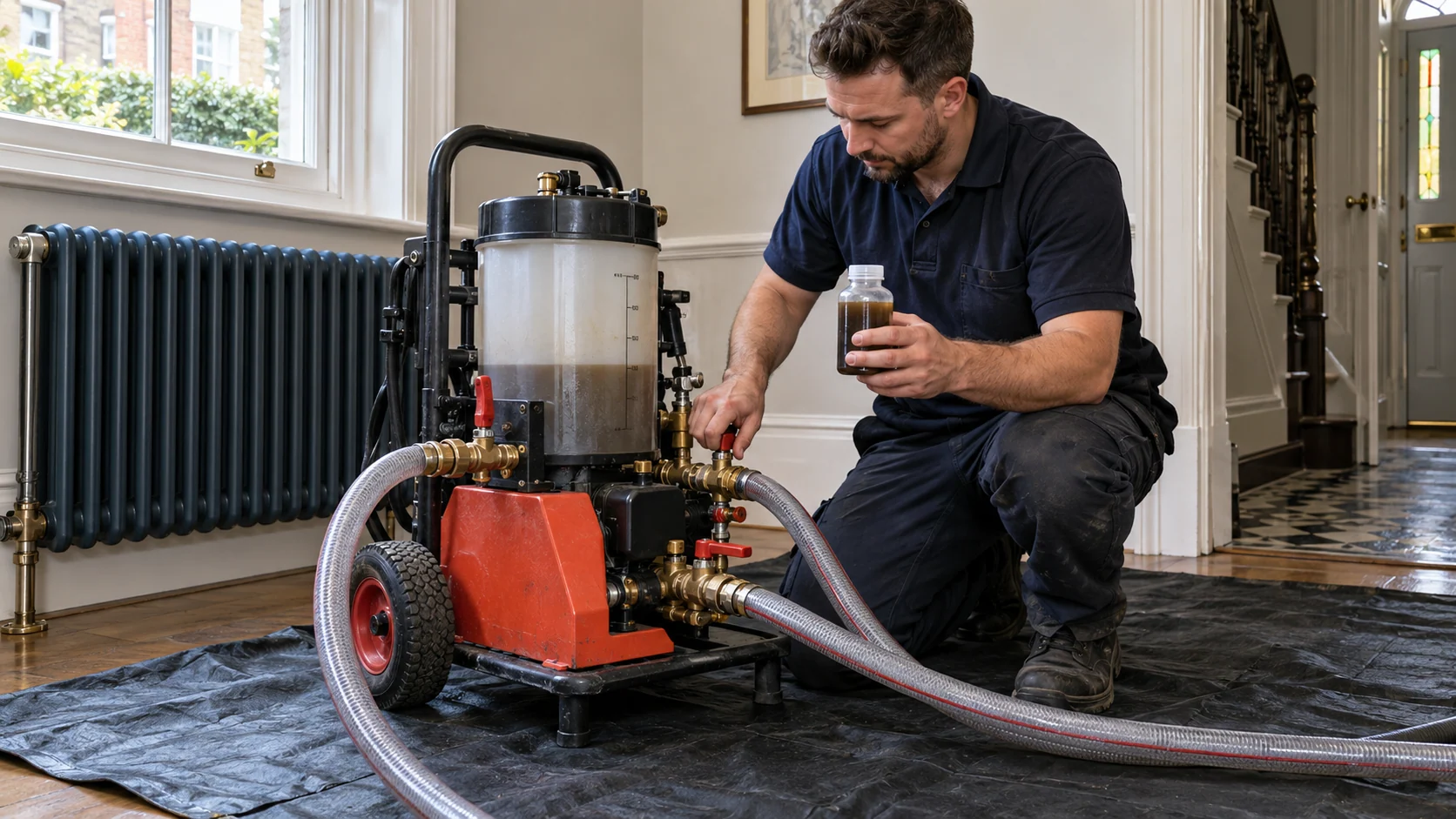
Heating engineer checking a powerflushing machine and a sample of heating water on a protected floor.
Heating circuit preparationThe new boiler is only part of the system.

Connecting a new appliance to neglected heating water can undermine the installation from the outset.

PEP’s boiler installation offer includes a full-system PowerFlush, with the existing system assessed beforehand to confirm suitability and the appropriate cleaning approach.

We examine the condition of retained radiators, valves and pipework, then agree any limitations or repairs needed before cleaning proceeds. System protection, filtration and water treatment are specified alongside the boiler.

Cleaning has an important role, but it does not repair a defective valve, correct undersized pipework or make a badly deteriorated radiator sound again. Those issues need identifying separately.

For more detail, see our PowerFlush service in London.

Compatible controls, properly configured

Controls that make the boiler work properly

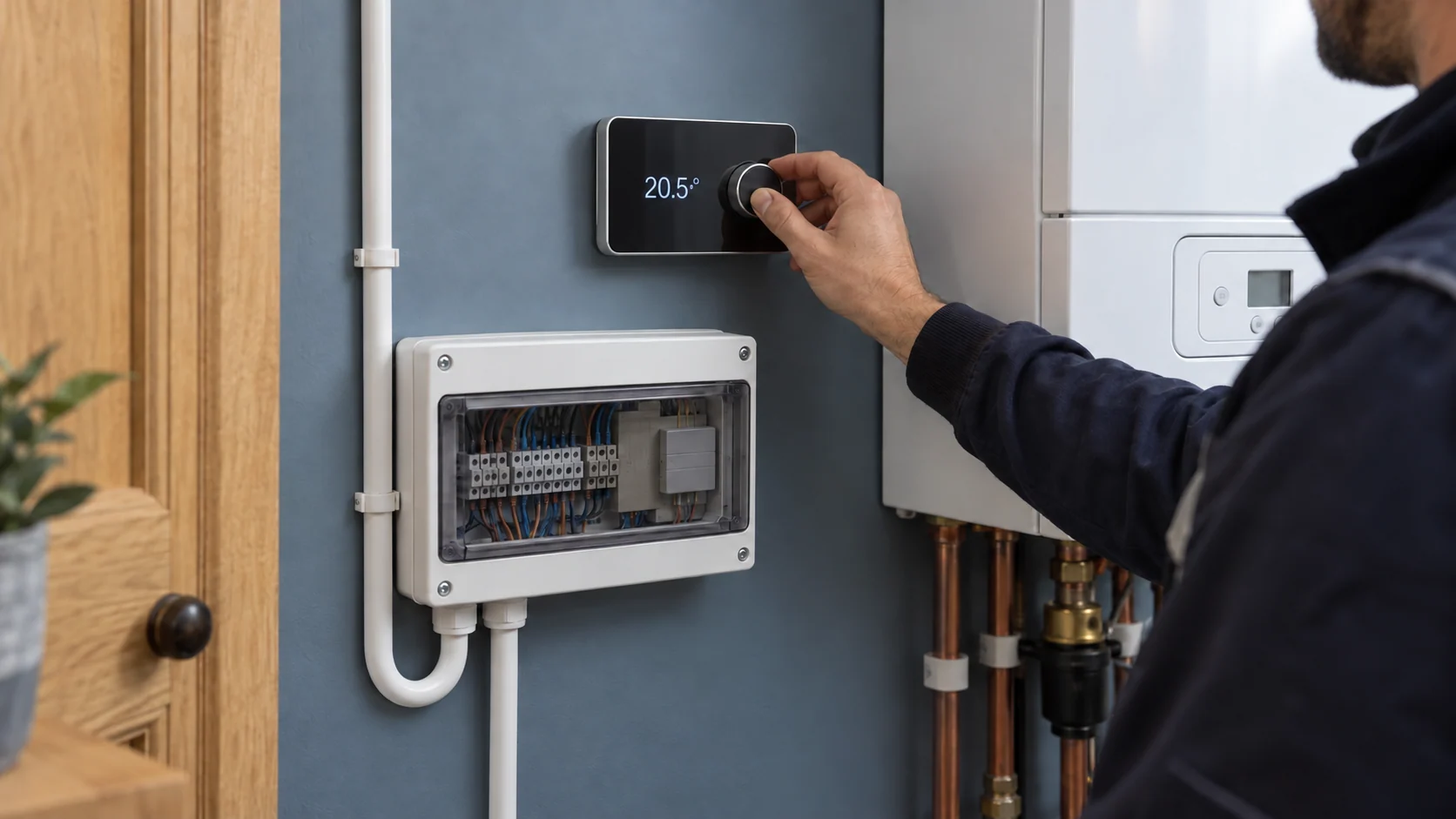
Technician adjusting a wall-mounted heating controller above an enclosed wiring centre beside a boiler.
Control and coordinationA joined-up approach to heating demand.

A replacement boiler is an opportunity to improve how the heating responds, not simply to replace the appliance on the wall.

We select controls around the chosen Vaillant or Viessmann model and the system they will operate. Depending on the installation, this can include compatible modulating controls, weather compensation, room control and clearly defined heating zones.

A thermostat with an app is not automatically the best technical match. Basic on/off switching and communication that allows the boiler to adjust its output are not the same thing.

Where radiators and underfloor heating share a heat source, the controls and hydraulic arrangement need to work together. Hot-water demand must also be coordinated where a cylinder is present.

Our smart heating controls guide explores these choices in more detail.

Understand the installed price

What affects boiler installation costs in Shepherd’s Bush?

The appliance is only one part of the installed price.

A replacement in an accessible existing position is a different project from moving a boiler upstairs, altering the flue route or converting the hot-water system.

The quotation needs to account for:

  • The selected boiler, output and manufacturer-cover package.
  • Flue components and any specialist access required.
  • Gas, heating, hot-water and condensate alterations.
  • Controls, filtration and system preparation.
  • Any cylinder work or conversion requirements.
  • Building access, removal and agreed making good.

PEP provides a written scope identifying what is included and any exclusions or assumptions. VAT treatment should be clear, and optional improvements should be distinguishable from work required for the proposed installation.

If concealed conditions reveal additional work, we explain the issue and agree the revised scope before proceeding with that additional work.

For the broader service, visit our London boiler installation and replacement page.

Survey to commissioning

From first enquiry to a working installation

  1. Tell us what needs to change

    Send your postcode, the existing boiler model if known and photographs showing the appliance with its cover in place, nearby pipework and surrounding space.

    Let us know about bathrooms, a hot-water cylinder, recurring problems and any planned alterations.

  2. We assess the property

    The survey establishes the installation constraints and the household’s heating and hot-water requirements. It also helps distinguish a boiler problem from an issue elsewhere in the system.

  3. We agree the specification

    You receive a proposal setting out the boiler, controls, associated work and manufacturer cover. We discuss access, the programme and the expected interruption to heating and hot water.

  4. We install, test and commission

    Our Gas Safe registered engineers complete the agreed gas installation work. Commissioning includes the relevant appliance checks, operating settings and verification that the connected system and controls function as intended.

  5. We explain and document the result

    We demonstrate the controls, explain routine operation and provide the applicable commissioning information.

    Manufacturer registration and Building Regulations notification are separate processes. We arrange the relevant registration and notification for the installation and explain which documentation to retain. Government guidance on competent-person certification.

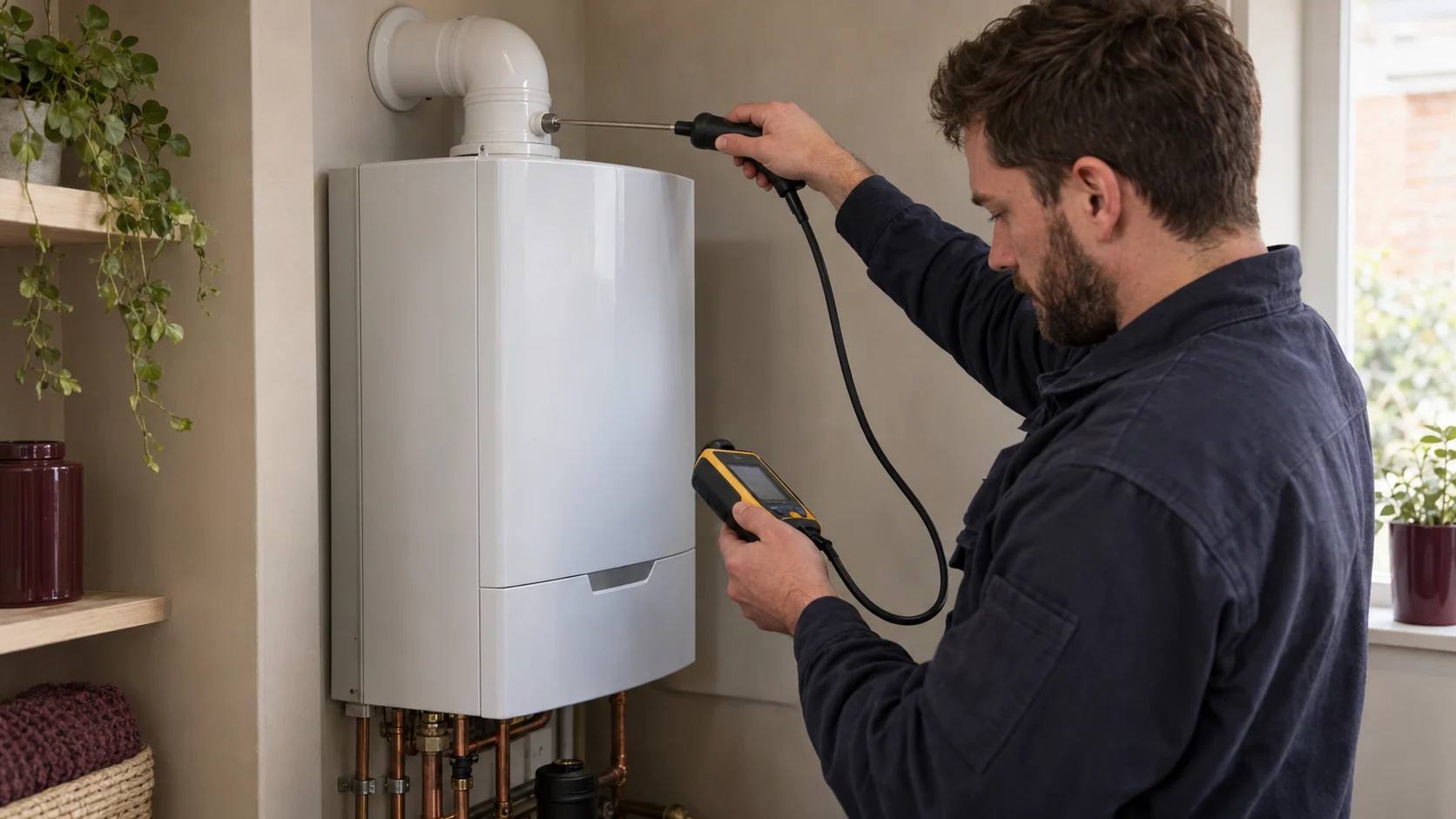
Heating engineer using a flue-gas analyser at a boiler sampling port with the appliance casing closed.
Testing and handoverCheck the appliance. Verify the system. Explain the controls.

Plumbing · Heating · Electrical

One team for the work around the boiler

Boiler installations often overlap with other improvements: replacing bathroom pipework, reorganising a utility cupboard or introducing another heating zone.

PEP brings plumbing, heating and electrical installation work together, helping the interfaces between those trades receive attention early. If your project extends beyond the boiler, our Shepherd’s Bush plumbing service can be considered alongside the heating specification.

You can also explore our London heating and plant-room projects to see examples of our broader installation work.

The aim is a system that is understandable, accessible and properly finished — whether the project involves one appliance or a more extensive refurbishment.

Shepherd’s Bush & nearby neighbourhoods

Boiler installation throughout Shepherd’s Bush and W12

We cover Shepherd’s Bush Green and Market, White City, Wood Lane, Askew Road, Wendell Park, Wormholt and Cathnor Park, including the W12 sections of Goldhawk Road and Uxbridge Road.

Our service covers addresses across W12 0, W12 7, W12 8 and W12 9. Send the full postcode when enquiring, particularly for streets that cross neighbourhood boundaries.

For nearby properties, we also provide boiler installation in Hammersmith, Chiswick and Notting Hill.

Before booking the work

Frequently asked questions

Does an older boiler always need replacing?

No. Age is one consideration, alongside condition, repair history, parts availability and suitability for the household. A fault elsewhere in the heating system should not automatically lead to a boiler replacement recommendation.

Can I keep my existing radiators?

Often, yes. We assess their condition, output and compatibility with the proposed installation. Replacing the boiler does not mean every radiator must be changed, although individual repairs or upgrades may be worthwhile.

Is a combi suitable for two bathrooms?

Sometimes, but bathroom count alone is not enough. The deciding factors include simultaneous use, incoming water performance and the required hot-water flow. A stored-water arrangement may be more appropriate where demand regularly overlaps.

Can the new boiler stay in my kitchen cupboard?

Potentially. The appliance must have the required clearances, suitable connections and access for servicing. Filters and valves also need space. We check the complete arrangement rather than the boiler casing alone.

How long will the installation take?

That depends on the scope. An accessible replacement usually involves less work than a relocation or system conversion. We agree the anticipated programme after assessment and explain when heating and hot water will be unavailable.

Is extended manufacturer cover included?

Yes, on qualifying PEP installations. Your quotation identifies the agreed period and package, included without a separate warranty charge. Continuing cover depends on compliance with the manufacturer’s conditions.

What if my flat has communal heating?

Check whether the equipment is an individual gas boiler or an HIU connected to shared heating. We can review the information you provide, but an HIU should not be treated as an ordinary boiler replacement or altered independently of the building’s arrangements.

Can I get an initial assessment from photographs?

Photographs help us understand the likely project and prepare useful questions. They do not replace checks of the water supply, gas installation, flue route or other conditions that may require an on-site survey.

Your next installation, properly planned

Let’s plan your new boiler properly

Replacing a boiler should leave you with more than a newer appliance. It should give you an installation suited to the home, controls you understand and a clear record of what has been fitted.

Speak to PEP about boiler installation in Shepherd’s Bush, W12, including Vaillant and Viessmann replacements, relocations and system conversions.